Results by title
79 books match the query 'Media & Communications' and 4 start with f
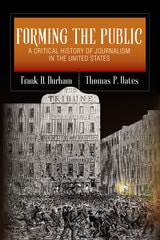
Forming the Public
A Critical History of Journalism in the United StatesFrank D. Durham and Thomas P. Oates
University of Illinois Press, 2024
Weaving eyewitness history through US history, Forming the Public reveals what understanding the journalism landscape can teach us about the nature of journalism’s own interests in race, gender, and class while tracing the factors that shaped the contours of dominant American culture.

Freedom for Publishing, Publishing for Freedom
Timothy Garton Ash
Central European University Press, 1995

Friday Night Fighter
Gaspar "Indio" Ortega and the Golden Age of Television BoxingTroy Rondinone
University of Illinois Press, 2013
Friday Night Fighter relives a lost moment in American postwar history, when boxing ruled as one of the nation's most widely televised sports. During the 1950s and 1960s, viewers tuned in weekly, sometimes even daily, to watch widely recognized fighters engage in primordial battle; the Gillette Cavalcade of Sports Friday Night Fights was the most popular fight show. Troy Rondinone follows the dual narratives of the Friday Night Fights show and the individual story of Gaspar "Indio" Ortega, a boxer who appeared on prime-time network television more than almost any other boxer in history. From humble beginnings growing up poor in Tijuana, Mexico, Ortega personified the phenomenon of postwar boxing at its greatest, appearing before audiences of millions to battle the biggest names of the time, such as Carmen Basilio, Tony DeMarco, Chico Vejar, Benny "Kid" Paret, Emile Griffith, Kid Gavilan, Florentino Fernández, and Luis Manuel Rodriguez.
Rondinone explores the factors contributing to the success of televised boxing, including the rise of television entertainment, the role of a "reality" blood sport, Cold War masculinity, changing attitudes toward race in America, and the influence of organized crime. At times evoking the drama and spectacle of the Friday Night Fights themselves, this volume is a lively examination of a time in history when Americans crowded around their sets to watch the main event.
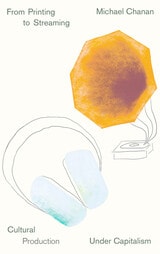
From Printing to Streaming
Cultural Production under CapitalismMichael Chanan
Pluto Press, 2022
A radical and comprehensive analysis of the commodification of artistic creation and the struggle to realize its potential in the digital age.
For mainstream economics, cultural production raises no special questions: creative expression is to be harvested for wealth creation like any other form of labor. As Karl Marx saw it, however, capital is hostile to the arts because it cannot fully control the process of creativity. But while he saw the arts as marginal to capital accumulation, that was before the birth of the mass media.
Engaging with the major issues in Marxist theory around art and capitalism, From Printing to Streaming traces how the logic of cultural capitalism evolved from the print age to digital times, tracking the development of printing, photography, sound recording, newsprint, advertising, film, and broadcasting, exploring the peculiarities of each as commodities, and their recent transformation by digital technology, where everything melts into computer code. Chanan demonstrates how these developments have had profound implications for both cultural creation and consumption.