Results by title
1107 books match the query 'Memoirs' and 56 start with f

FDR's Moviemaker
Memoirs And ScriptsPare Lorentz
University of Nevada Press, 1992
"The films of Pare Lorentz are acknowledged masterpieces of world cinema. They are groundbreaking documentary records of our country in the hard years of the Depression." —William M. Drennen, Jr.
In the depths of the Great Depression, the U.S. Government produced a series of films about the pressing problems facing the nation—drought, flood, poverty, and slums. Starting with a minuscule initial budget of $6,000, Lorentz, a young film critic from New York who had never made a motion picture, was hired to head the project. The first fruit of his labor, The Plow That Broke the Plains, was a moving and dramatic account of the Dust Bowl that met with immediate and critical acclaim. Lorentz followed up his first film with The River, a history of the Mississippi River Basin and the effect of the Tennessee Valley Authority on the area. Both films demonstrated the potential of the documentary as a powerful impetus to social change, prompting widespread discussion not only of the problems they presented but also of the documentary form itself. This book combines the autobiographical history of a creative communicator and pioneer documentary filmmaker with the full scripts of The Plow That Broke the Plains, The River, Ecce Homo, and The Fight for Life.
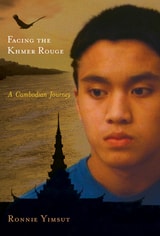
Facing the Khmer Rouge
A Cambodian JourneyRonnie Yimsut
Rutgers University Press, 2011
As a child growing up in Cambodia, Ronnie Yimsut played among the ruins of the Angkor Wat temples, surrounded by a close-knit community. As the Khmer Rouge gained power and began its genocidal reign of terror, his life became a nightmare. In this stunning memoir, Yimsut describes how, in the wake of death and destruction, he decides to live.
Escaping the turmoil of Cambodia, he makes a perilous journey through the jungle into Thailand, only to be sent to a notorious Thai prison. Fortunately, he is able to reach a refugee camp and ultimately migrate to the United States, where he attended the University of Oregon and became an influential leader in the community of Cambodian immigrants. Facing the Khmer Rouge shows Ronnie Yimsut’s personal quest to rehabilitate himself, make a new life in America, and then return to Cambodia to help rebuild the land of his birth.
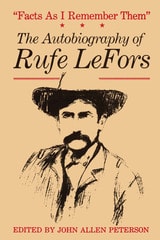
Facts as I Remember Them
The Autobiography of Rufe LeForsEdited by John Allen Peterson
University of Texas Press, 1986
The rivers of the Texas Panhandle, the Canadian, and the forks of the Red break through the Cap Rock at the eastern edge of the Staked Plains. It’s rough, bleak country, with few trees and a great expanse of sky. Storms that form on the Great Plains and in the Rocky Mountains sweep through with nothing much to slow them down. And the small dusty towns that serve this vast ranchland cling to the waterways as they have for over a hundred years, since their early settlement. Their names aren’t well known now, but they were once focal points in a rugged country where buffalo hunters, trail drivers, outlaws, and ordinary folks alike passed through.
Rufe LeFors was one such "ordinary" man. With his father and older brothers, he was among the first to settle this country, drawn to West Texas by tales of open land and good grass. His life story, set down near the end of his long and adventurous life, is the best sort of insider's history, the chronicle of a life lived fully amid the exciting events and rough landscape of the frontier's final years.
Rufe LeFors recorded his story over the course of a decade, finishing up in 1941 in his eighty-first year. His memoirs span the period from the War between the States to the early twentieth century, when the Panhandle was still scarcely settled, a true frontier. In his time LeFors was trail driver, pony express rider, and rancher. He traveled for a year with Arrington's Texas Rangers, and he wore the badge of deputy sheriff in the wild west town of Old Mobeetie. He rode a fast horse after claims in the Cherokee Strip, spent time as a horse trader, and finally settled in Lawton, Oklahoma, where, after some twenty years as a deputy, he was elected to the office of sheriff.
LeFors knew how to tell a story. Whether it is an account of an outlaw's capture or the rescue of a white girl from prairie fire by a Comanche brave, he weaves into his narrative all the color, drama, and character of the event. His version of the death of Billy the Kid adds another perspective to that much celebrated episode in western history. His encounters with Temple Houston, the governor's flamboyant son, rancher Charles Goodnight, and Ranger Captain Arrington add to our fund of knowledge about those legendary frontier figures. LeFors wanted to get the facts—as he remembered them—straight. With his sharp eye for texture and detail and keen ear for language and timing, he created a narrative that wonderfully captures the flavor of his life and exciting times.
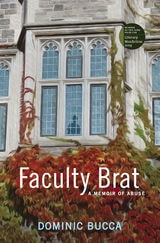
Faculty Brat
A Memoir of AbuseDominic Bucca
University of Iowa Press, 2020
At the most prestigious preparatory schools in the United States, the children of educators are referred to as “faculty brats.” Though generally lacking the privilege of the institution’s wealthy students, faculty brats enjoy access to the school’s extensive grounds and facilities and are part of everyday campus life.
Dominic Bucca’s art teacher mother married his music teacher stepfather twice, and the young boy wondered if the union might be twice as strong as a result. Instead, this faculty brat quickly discovered that the marriage was twice as flawed. When Dominic was nine years old, his stepfather began sexually abusing him in the faculty housing attached to the boys’ dorm his parents oversaw. Years later, he found escape by reaching out to his biological father, and learned to split his life between two realities.
For nearly twenty-five years, Bucca hid the secret of his stepfather’s abuse from his mother and sisters. When he decided to tell, hoping to prevent his stepfather from continuing to teach young boys, Bucca discovered the limits of both his family and the legal system.
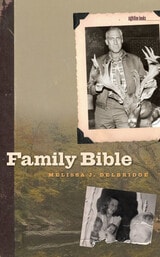
Family Bible
Melissa J. Delbridge
University of Iowa Press, 2008
"Swimming and sex seemed a lot alike to me when I was growing up. You took off most of your clothes to do them and you only did them with people who were the same color as you. As your daddy got richer, you got to do them in fancier places." Starting with her father, who never met a whitetail buck he couldn't shoot, a whiskey bottle he couldn't empty, or a woman he couldn't charm, and her mother, who "invented road rage before 1960," Melissa Delbridge introduces us to the people in her own family bible. Readers will find elements of Southern Gothic and familiar vernacular characters, but Delbridge endows each with her startling and original interpretation. In this disarmingly unguarded and unapologetic memoir, she shows us what really happened in the "stew of religion and sex" that was 1960s Tuscaloosa.
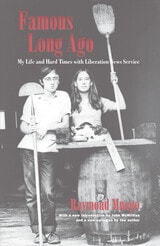
Famous Long Ago
My Life and Hard Times with Liberation News ServiceRaymond Mungo
University of Massachusetts Press, 2012
Originally published in 1970, Raymond Mungo's picaresque account of his adventures with Liberation News Service in the wild years of 1967 and 1968 has been variously described as youthful, passionate, lyrical, demented, and an iconic symbol of the sixties counterculture. A review in The Nation described it as “hip Huck Finn.”
A college editor at the height of the Vietnam War, Mungo found himself smack in the middle of a mad swirl of activism and dissent, vigorously protesting everything from the draft to abortion laws to the university itself. Then he connected with Marshall Bloom to cofound LNS in Washington, D.C., as a news service catering to the burgeoning underground press. One thing led to another, until LNS, like so many other radical organizations, eventually disintegrated into violently warring factions. Mungo's memoir tracks its development and destruction with wicked humor and literary panache.
In an introduction to this new edition, John McMillian discusses the enduring appeal of Famous Long Ago and situates it within its broader historical context, while the author provides his own retrospective take in a new afterword.
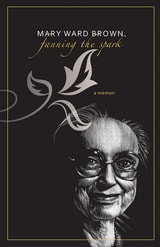
Fanning the Spark
A MemoirMary Ward Brown
University of Alabama Press, 2009
Where ordinary lives kindle extraordinary reckonings.
In 1986, after years of publishing stories in literary magazines and periodicals, Mary Ward Brown published her first book, the story collection Tongues of Flame. It soon received regional and national attention, and the following year won the PEN/Hemingway Award for fiction. Mary Ward Brown was sixty-nine years old. Though she would go on to write and publish many more stories and a well-received second collection, It Wasn’t All Dancing, Mary Ward Brown’s late acclaim hardly hints at the rich and varied life that prepared the way for her success.
Fanning the Spark is the story of her life as a writer—her upbringing in rural Alabama; the joys of college, marriage, and motherhood; the sorrows of becoming a widow; and a lifelong devotion to writing, writers, and literature, and the company of those who shared those loves, nurturing and feeding her interior life in the face of many challenges, losses, and obstacles, both emotional and material.
Here, in prose every bit as eloquent, evocative, and incisive as her stories, are her remembrances of loved ones; her letters fraught with worry to her son in Vietnam; periods of emotional isolation and unbidden silence; her invaluable friendships with renowned writers, editors, and agents; her love of community and place; and immeasurable delight with every award, speech, and public reading, the many recognitions she has garnered late in life. Above all, it is the story of the competing demands of art and of life, the constant struggle between her need to write and the practicalities of family, duty, and day to day living.
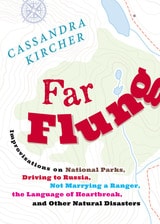
Far Flung
Improvisations on National Parks, Driving to Russia, Not Marrying a Ranger, the Language of Heartbreak, and Other Natural DisastersCassandra Kircher
West Virginia University Press, 2019
Cassandra Kircher was in her twenties when she was hired by the National Park Service, landing a life that allowed her to reinvent herself. For four years she collected entrance fees and worked in the dispatch office before being assigned as the first woman to patrol an isolated backcountry district of Colorado’s Rocky Mountain National Park. There, Kircher encountered wonder and beauty, accidents and death. Although she always suspected the mountains might captivate her, she didn’t realize that her adopted landscape would give her strength to confront where she was from—both the Midwest that Willa Cather fans will recognize, and a childhood filled with problems and secrets.
Divided and defined by geographic and psychological space, Far Flung begins in the Rockies but broadens its focus as Kircher negotiates places as distant as Alaska’s Kenai Peninsula, Russia’s Siberian valleys, and Wisconsin’s lake country, always with Colorado as a heartfelt pivot. These thirteen essays depict a woman coming to terms with her adoration for the wilds of the West and will resonate with all of us longing to better understand ourselves and our relationships to the places and people we love most.
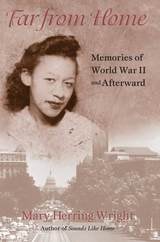
Far from Home
Memories of World War II and AfterwardMary Herring Wright
Gallaudet University Press, 2005
“She’s got no more business there than a pig has with a Bible.” That’s what her father said when Mary Herring announced that she would be moving to Washington, DC, in late 1942. Recently graduated from the North Carolina School for Black Deaf and Blind Students, Mary had been invited to the nation’s capital by a cousin to see a specialist about her hearing loss. Though nothing could be done about her deafness, Mary quickly proved her father wrong by passing the civil service examination with high marks. Far from Home: Memories of World War II and Afterward, the second installment of her autobiography, describes her life from her move to Washington to the present.
Mary soon became a valued employee for the Navy, maintaining rosters for the many servicemen in war theaters worldwide. Her remarkable gift for detail depicts Washington in meticulous layers, a sleepy Southern town force-grown into a dynamic geopolitical hub. Life as a young woman amid the capital’s Black middle class could be warm and fun, filled with visits from family and friends, and trips home to Iron Mine for tearful, joyous reunions. But the reality of the times was never far off. On many an idyllic afternoon, she and her friends found somber peace in Arlington Cemetery, next to the grave of the sole Unknown Soldier at that time. During an evening spent at the U.S.O., one hearing woman asked how people like her could dance, and Mary answered, “With our feet.” She became a pen pal to several young servicemen, but did not want to know why some of them suddenly stopped writing.
Despite the close friends and good job that she had in Washington, the emotional toll caused Mary to return to her family home in Iron Mine, NC. There, she rejoined her family and resumed her country life. She married and raised four daughters, and recounts the joys and sorrows she experienced through the years, particularly the loss of her parents. Her blend of the gradual transformation of Southern rural life with momentous events such as Hurricane Hazel creates an extraordinary narrative history. The constant in Far from Home remains the steady confidence that Mary Herring Wright has in herself, making her new memoir a perfect companion to her first.
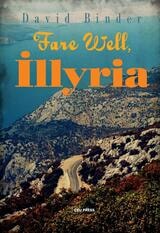
Fare Well, Illyria
David Binder
Central European University Press, 2014
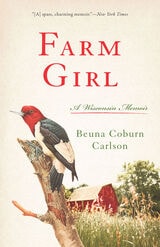
Farm Girl
A Wisconsin MemoirBeuna Coburn Carlson
University of Wisconsin Press, 2020
Farm Girl is Beuna "Bunny" Coburn Carlson's loving tribute to the gently rolling hills of western Wisconsin. With an inviting and fluid voice, she shares intimate moments of happinesses from her childhood: collecting butternuts for homemade maple candy, watching her father read by the flickering light of a kerosene lamp, and the joy of finding a juicy orange at the bottom of a Christmas stocking. Underlying each vignette is the courage of a strong family surviving adversity and finding comfort in one another. Hers is a memoir that readers can dip in and out of with pleasure.
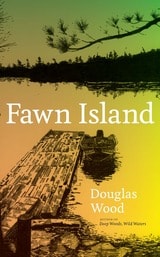
Fawn Island
Douglas Wood
University of Minnesota Press, 2018
Fawn Island is a place where crows serve as alarm clocks, white-throated sparrows leave the tracks of their songs upon the evening hush, and chickadees help a woodsman learn to whistle. The island is also a jumping-off place for journeys large and small, earthly and spiritual-to nearby Mallard Island, Gull Island, or Bald Rock, by sea kayak into the wild recesses of sprawling Voyageurs National Park, or on a midnight paddle in which the paddler can reach the silent wilderness of the stars themselves. In his latest book, best-selling author Douglas Wood guides the reader on a deep journey into the heart of the North Woods.
For Wood, Fawn Island is not merely a charming wilderness hideaway; it is the entry to realms of thought and meaning as well. From its pine-clad shores he probes for insights into the nature of neighborliness and independence, of community and solitude. Out of an ancient Ojibwe legend comes an exploration of personal loss and life after death. Wood questions the notion of being a “force of nature” and the concept of the passage of time in the context of seemingly eternal trees, lakes, rock ledges, and stars. From beneath the ascending trunks of pines comes an inquiry into the principles of optimism and, finally, a personal response to the eternal question: Is the universe a friendly place?
Embedded in the text like roots of the island’s pines is Wood’s gentle, self-effacing humor and the author’s own original pen-and-ink drawings that superbly evoke the poetry and mystery of this “small bit of rock and tree,” this “lucky place” in the wilderness.

Fear Icons
EssaysKisha Lewellyn Schlegel
The Ohio State University Press, 2018
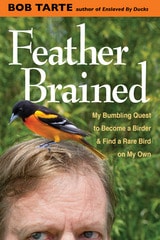
Feather Brained
My Bumbling Quest to Become a Birder and Find a Rare Bird on My OwnBob Tarte
University of Michigan Press, 2016
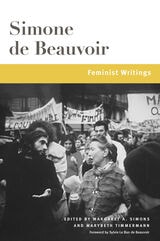
Feminist Writings
Simone de Beauvoir; Edited by Margaret A. Simons and Marybeth Timmermann; Foreword by Sylvie Le Bon de Beauvoir
University of Illinois Press, 2015
By turns surprising and revelatory, this sixth volume in the Beauvoir Series presents newly discovered writings and lectures while providing new translations and contexts for Simone de Beauvoir's more familiar writings. Spanning Beauvoir's career from the 1940s through 1986, the pieces explain the paradoxes in her political and feminist stances, including her famous 1972 announcement of a "conversion to feminism" after decades of activism on behalf of women.
Feminist Writings documents and contextualizes Beauvoir's thinking, writing, public statements, and activities in the services of causes like French divorce law reform and the rights of women in the Iranian Revolution. In addition, the volume provides new insights into Beauvoir's complex thinking and illuminates her historic role in linking the movements for sexual freedom, sexual equality, homosexual rights, and women's rights in France.
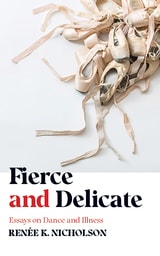
Fierce and Delicate
Essays on Dance and IllnessRenée K. Nicholson
West Virginia University Press, 2021
Renée Nicholson’s professional training in ballet had both moments of magnificence and moments of torment, from fittings of elaborate platter tutus to strange language barriers and unrealistic expectations of the body. In Fierce and Delicate, she looks back on the often confused and driven self she had been shaped into—always away from home, with friends who were also rivals, influenced by teachers in ways sometimes productive and at other times bordering on sadistic—and finds beauty in the small roles she performed. When, inevitably, Nicholson moved on from dancing, severed from her first love by illness, she discovered that she retained the lyricism and narrative of ballet itself as she negotiated life with rheumatoid arthritis.
An intentionally fractured memoir-in-essays, Fierce and Delicate navigates the traditional geographies of South Florida, northern Michigan, New York City, Milwaukee, West Virginia, and also geographies of the body—long, supple limbs; knee replacements; remembered bodies and actual. It is a book about the world of professional dance and also about living with chronic disease, about being shattered yet realizing the power to assemble oneself again, in a new way.

Find Your Story, Write Your Memoir
Lynn C. Miller and Lisa Lenard-Cook
University of Wisconsin Press, 2013
Bronze winner, Foreword Book of the Year, Writing Guides
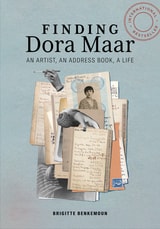
Finding Dora Maar
An Artist, an Address Book, a LifeBrigitte Benkemoun
J. Paul Getty Trust, The, 2020
“[A] spirited and deeply researched project…. [Benkemoun’s] affection for her subject is infectious. This book gives a satisfying treatment to a woman who has been confined for decades to a Cubist’s limited interpretation.” — Joumana Khatib, The New York Times
Merging biography, memoir, and cultural history, this compelling book, a bestseller in France, traces the life of Dora Maar through a serendipitous encounter with the artist’s address book.
In search of a replacement for his lost Hermès agenda, Brigitte Benkemoun’s husband buys a vintage diary on eBay. When it arrives, she opens it and finds inside private notes dating back to 1951—twenty pages of phone numbers and addresses for Balthus, Brassaï, André Breton, Jean Cocteau, Paul Éluard, Leonor Fini, Jacqueline Lamba, and other artistic luminaries of the European avant-garde.
After realizing that the address book belonged to Dora Maar—Picasso’s famous “Weeping Woman” and a brilliant artist in her own right—Benkemoun embarks on a two-year voyage of discovery to learn more about this provocative, passionate, and enigmatic woman, and the role that each of these figures played in her life.
Longlisted for the prestigious literary award Prix Renaudot, Finding Dora Maar is a fascinating and breathtaking portrait of the artist.
This work received support from the French Ministry of Foreign Affairs and the Cultural Services of the French Embassy in the United States through their publishing assistance program.
Finding Higher Ground
A Life Of TravelsCatharine Savage Brosman
University of Nevada Press, 2003
Essayist Catharine Savage Brosman explores the relationship of human beings to their environment, traveling from American deserts to dense European urban settings. Whether sipping wine in a Parisian café, partying with the jet set in Aspen, or contemplating the arid desert West that she loves, Brosman inhabits these settings, and many others, with a sense of adventure and discovery. To read these essays is to enjoy the company of a lively, thoughtful, original mind. Brosman’s "higher ground" is that place we all seek, where we can find and express our own best selves.
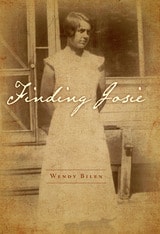
Finding Josie
Wendy Bilen
Wisconsin Historical Society Press, 2008
With a focus squarely on the Midwest, Wendy Bilen pieces together the history of her grandmother, Josie Broadhead, born in 1911 and raised on the North Dakota prairie. Josie married a Wisconsin farmer and moved to a large dairy farm outside La Crosse; along the way she began taking in people in need of a home: ". . . beggars and drunks and children of drunks, mentally ill children and children with mentally ill parents. Brothers and cousins and sisters and in-laws and strangers."
By taking on these challenges that no one else wanted, Josie left an almost mythical legacy. Years after Josie's death, Bilen embarks on a journey to unearth Josie's story and quickly realizes that the search is about her, too. As she discovers her grandmother's complicated nature ("a woman proud and humble, loving and unaffectionate, strict and visionary, joyful and troubled, a woman held together by contradictions like an arch and its capstone"), she learns much about herself and her own choices. And as she breathes life into Josie and her family, friends, and neighbors, the author evokes a powerful sense of place of small towns and farms, of prairie, of Josie's home, all of which feel both fresh and satisfyingly familiar.
Much more than mere memoir or family history, this dual story about Bilen's journey illuminates the surprising ways our lives intersect with our ancestors'. An extraordinary story about a seemingly ordinary woman, Finding Josie will inspire readers to explore their own family history in their own way.
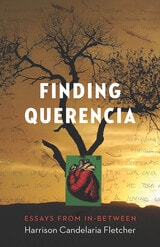
Finding Querencia
Essays from In-BetweenHarrison Candelaria Fletcher
The Ohio State University Press, 2022
With its roots in the Spanish verb querer—“to want, to love”—the term querencia has been called untranslatable but has come to mean a place of safety and belonging, that which we yearn for when we yearn for home. In this striking essay collection, Harrison Candelaria Fletcher shows that querencia is also a state of being: the peace that arises when we reconcile who we are. A New Mexican of mixed Latinx and white ethnicity, Candelaria Fletcher ventures into the fault lines of culture, landscape, and spirit to discover the source of his lifelong hauntings. Writing in the persona of coyote, New Mexican slang for “mixed,” he explores the hyphenated elements within himself, including his whiteness. Blending memory, imagination, form, and language, each essay spirals outward to investigate, accept, and embrace hybridity. Ultimately, Finding Querencia offers a new vocabulary of mixed-ness, a way to reconcile the crosscurrents of self and soul.
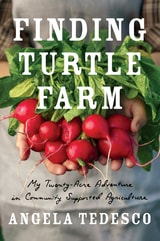
Finding Turtle Farm
My Twenty-Acre Adventure in Community-Supported AgricultureAngela Tedesco
University of Minnesota Press, 2022
The story of starting and running an organic farm—told by the woman who owned one of the first Community-Supported Agriculture operations in the Upper Midwest
On a twenty-acre farm in Iowa in 1995, Angela Tedesco planted the seeds (quite literally) of a quiet revolution. While American agriculture had strayed so far afield, her farm would raise food that served the earth and the community as well as the palate. In Finding Turtle Farm, Tedesco recounts this adventure in all its down-and-dirty work and wonder, from plan and plot to harvest, with nods along the way to the vagaries of weather, pests, and human nature.
Introducing Community-Supported Agriculture to Iowa, Tedesco’s Turtle Farm educated its customers along with providing seasonal boxes of produce—an undertaking that continues here, as Tedesco describes what it takes to establish and run an organic operation, bringing to bear all her experience growing up on a family farm, studying chemistry and horticulture, and shepherding a religious education program. From ordering seeds and tending greenhouses to surviving floods and a personal health crisis, Tedesco tells a story of transforming a piece of land and the life within it. She includes practical information about harvesting and preserving food, the discoveries of research conducted on the farm and bonds established between farmers, and even recipes to make delicious use of the produce in your CSA box.
Looking forward to a healthier, happier future when crops are more than mere commodities and food feeds the soul of a community, Finding Turtle Farm is an enlightening, hard-won, and ultimately hopeful account of what it means to meet the most basic of human needs.
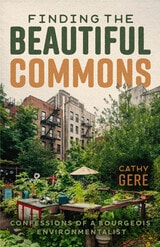
Finding the Beautiful Commons
Confessions of a Bourgeois EnvironmentalistCathy Gere
University of Chicago Press, 2027
A call to pleasurable and sustainable action that centers our shared stewardship of shared spaces.
Environmentally-conscious decision-making can seem like an exercise in self-denial: don’t fly, don’t drive, don’t eat meat. But bringing our tote bags to the grocery store will never be enough to solve the climate crisis, nor will dropping out of society. Many of us crave a collective movement that acknowledges the value of comfort, a framework for making choices that are inherently imperfect, but ones we can live with.
In Finding the Beautiful Commons, historian Cathy Gere offers a relatable and inspiring guide to environmental action in a consumerist culture. Recounting her experiences as a young activist at the Greenham Common Women’s Peace Camp in Berkshire, as an anarchist and guerrilla gardener in a New York City squat, and as an academic working to decarbonize the University of California system, Gere argues for initiatives grounded in common property—streets, libraries, parks, and other shared spaces—where our communal interests can drive sustainability. These are also sites where we can put bourgeois values like beauty and personal enjoyment to good use protecting local landscapes and resources.
Funny, wise, and honest about the contradictions of life during climate crisis, Gere shows us that the commons we already know—the everyday infrastructure of mass transit, natural reserves, and public beaches—is the very foundation for a livable future.
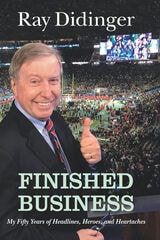
Finished Business
My Fifty Years of Headlines, Heroes, and HeartachesRay Didinger
Temple University Press, 2021
Ray Didinger opens his lively memoir Finished Business with the Philadelphia Eagles’ upset win in Super Bowl LII. When the Eagles finally hoist the Lombardi Trophy, Didinger does his best to straddle the emotions of a working reporter and a long-suffering Philly fan. His ability to do that is why he has built up such a loyal following.
Didinger began following the Eagles as a kid, hanging out in his grandfather’s bar in Southwest Philadelphia. He spent his summers at the team's training camp in Hershey. It was there he met his idol, flanker Tommy McDonald. He would later write a play, Tommy and Me, about their friendship and his efforts to see McDonald enshrined in the Pro Football Hall of Fame.
Didinger has been covering the Eagles as a newspaper columnist or TV analyst since 1970. Over the years, he wrote sports for the Philadelphia Bulletin and the Philadelphia Daily News. He later produced Emmy Award–winning documentaries for NFL Films before transitioning to sports talk radio and TV analysis.
In five decades, across multiple media platforms, he has interviewed everyone from Hank Aaron, Wayne Gretzky, Muhammad Ali, Julius Erving, Jack Nicklaus, to Mike Schmidt, as well as writing film scripts for Hollywood stars such as Bruce Willis and Alec Baldwin. He went to the White House with the U.S. Olympic team and even explored the bizarre world of professional wrestling.
His stories, told in his familiar, breezy style, capture his enthusiasm for sports and his affection for the fans who still mourn the pennant that eluded the Phillies in 1964. Didinger has become synonymous with Philadelphia sports, and his memoir is as passionate as an autumn Sunday at Lincoln Financial Field.
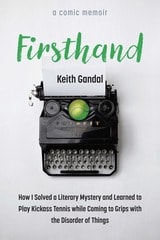
Firsthand
How I Solved a Literary Mystery and Learned to Play Kickass Tennis while Coming to Grips with the Disorder of ThingsKeith Gandal
University of Michigan Press, 2024
Keith Gandal combines this scholarly detective story with a comic personal narrative about how a midlife crisis accidentally sent him on a journey to write a research monograph that many in his profession—including at times himself—were dubious about. While researching how Hemingway, Fitzgerald, and Faulkner faced their forgotten crises of masculinity, Gandal discovers that his own crisis is instrumental to his creative process. Incorporating stories from Gandal’s comic romp through the hyper-competitive world of middle-aged men’s tennis, adopting pitbulls, and discussing Michel Foucault, Firsthand gives readers an inside look at how to acquire accurate knowledge—about the world, about history, and about oneself.
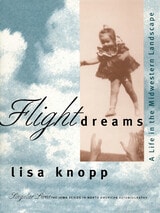
Flight Dreams
A Life in the Midwestern LandscapeLisa Knopp
University of Iowa Press, 1998
“When I was eleven the world was filled with birds,”writes Lisa Knopp of her girlhood in Burlington, Iowa. Picking up where she left off in her first book, Field of Vision, Knopp knits together sections of her life story through a pattern of images drawn from nature. The most prevalent of these unifying themes are metaphors of flight—birds, wind, moving upward and outward and across the midwestern landscape from Nebraska and Iowa to southern Illinois.
Reminiscent of Thoreau's introspective nature writing and Dillard's taut, personal prose, each chapter in Flight Dreams stands alone as a distinct narrative, yet each is linked by profoundly personal descriptions of dreams, the natural world, defining experiences, and chance encounters with people that later prove to be fateful. Part Eastern meditation, part dream sequence, part historical reconstruction, Flight Dreams testifies to a deep understanding of how the natural world—its visible and invisible elements—guides our destinies.
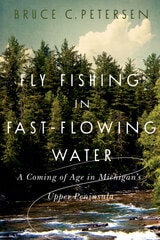
Fly Fishing in Fast-Flowing Water
A Coming of Age in Michigan's Upper PeninsulaBruce C. Petersen
Michigan State University Press, 2027
With its rugged forests and swift rivers, Michigan’s Upper Peninsula offers the perfect setting for fly fishing. Following in the footsteps of Ernest Hemingway’s character Nick Adams, Bruce C. Petersen creates a unique coming-of-age memoir that departs from the typical story of growing from teen to adulthood. Instead, Petersen explores his seventh decade, chasing trout in the challenging waters of Northern Michigan while grappling with what it means to grow old. In this absorbing memoir, he relives his most memorable days as a fly fisher and offers thoughtful reflections on the healing power of nature, aging gracefully, and the unstoppable passage of time.
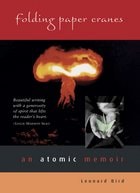
Folding Paper Cranes
An Atomic MemoirLeonard Bird
University of Utah Press, 2005
Among the monuments to tragedy and hope in Hiroshima’s Peace Park stands a statue of Sadako Sasaki holding a crane in her outstretched arms. Sadako was two years old when the atomic bomb was dropped on her city; she was diagnosed with leukemia ten years later. According to popular Japanese belief, folding a thousand paper cranes brings good fortune. Sadako spent the last months of her young life folding hundreds of paper cranes. She folded 644 before she died.
As he journeys from the Geiger counters, radioactive dust, and mushroom clouds of the Nevada desert to the bronze and ivory memorials for the dead in Japan, Bird—himself a survivor of radiation-induced cancer—seeks to make peace with his past and with a future shadowed by nuclear proliferation. His paper cranes are the poetry and prose of this haunting memoir.
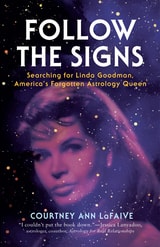
Follow the Signs
Searching for Linda Goodman, America’s Forgotten Astrology QueenCourtney Ann LaFaive
University of Iowa Press, 2026
In 1973, Goodman’s daughter was found dead and the police declared it a suicide; Goodman believed otherwise. She spent years depleting her fortune, chasing down leads that might uncover the real truth about her beloved daughter’s death. Headlines criticized and discredited Goodman, ultimately overshadowing the revolutionary nature of her work.
Courtney Ann LaFaive first discovered Goodman’s books as a teenager. Reading her astrological wisdom decades after its heyday, LaFaive contemplates the redemption of Goodman as a literary and spiritual figure, all the while reckoning with her own impulsive forays into love and relationships. Follow the Signs asks what it means when facts become stranger than fiction and who we become when we must walk away from those we love.
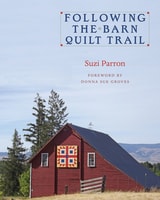
Following the Barn Quilt Trail
Suzi Parron
Ohio University Press, 2016
Suzi Parron, in cooperation with Donna Sue Groves, documented the massive public art project known as the barn quilt trail in her 2012 book Barn Quilts and the American Quilt Trail Movement. The first of these projects began in 2001, when Groves and community members created a series of twenty painted quilt squares in Adams County, Ohio. Since then, barn quilts have spread throughout forty-eight states and several Canadian provinces.
In Following the Barn Quilt Trail, Parron brings readers along as she, her new love, Glen, their dog Gracie, and their converted bus Ruby, leave the stationary life behind. Suzi and Glen follow the barn quilt trail through thirty states across thirteen thousand miles as Suzi collects the stories behind the brightly painted squares. With plentiful color photographs, this endearing hybrid of memoir and travelogue is for quilt lovers, Americana and folk art enthusiasts, or anyone up for a good story.
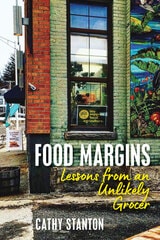
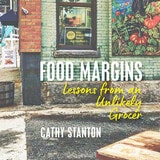
Food Margins
Lessons from an Unlikely GrocerCathy Stanton
University of Massachusetts Press, 2024
Winner of the 2025 New England Society Book Award for Specialty Titles
Winner of the 2024 Readable Feast Award for Social Consciousness
Named one of Food Tank's 20 Food Systems Reads that Will Inspire You this Summer
In a food industry shaped by the abundance, cheapness, and convenience that giant corporations can offer, small-scale ventures struggle to survive, as anthropologist Cathy Stanton discovered when she joined the effort to save a small food co-op in a former mill town in western Massachusetts. On the margins of the dominant system, Stanton found herself reckoning with its deep racial and class inequities, and learning that making real change requires a fierce commitment to community and a willingness to change herself as well.
Part memoir and part history lesson, Food Margins traces the tangled economic and political histories of the plantation, the factory, and the supermarket through the life of one New England town. Stanton tells a complex and compelling story of a rural community imagining and creating a viable alternative to the mainstream in a time of increasingly urgent need to build a more socially and ecologically just food system.
Food Margins
Lessons from an Unlikely GrocerCathy Stanton
University of Massachusetts Press, 2024
Winner of the 2025 New England Society Book Award for Specialty Titles
Winner of the 2024 Readable Feast Award for Social Consciousness
Named one of Food Tank's 20 Food Systems Reads that Will Inspire You this Summer
In a food industry shaped by the abundance, cheapness, and convenience that giant corporations can offer, small-scale ventures struggle to survive, as anthropologist Cathy Stanton discovered when she joined the effort to save a small food co-op in a former mill town in western Massachusetts. On the margins of the dominant system, Stanton found herself reckoning with its deep racial and class inequities, and learning that making real change requires a fierce commitment to community and a willingness to change herself as well.
Part memoir and part history lesson, Food Margins traces the tangled economic and political histories of the plantation, the factory, and the supermarket through the life of one New England town. Stanton tells a complex and compelling story of a rural community imagining and creating a viable alternative to the mainstream in a time of increasingly urgent need to build a more socially and ecologically just food system.
Footloose in Farm Service
Autobiographical Recollections of John DickieMarjory Harper
Aberdeen University Press, 2013
For Decades I Was Silent
A Holocaust Survivor's Journey Back to FaithBaruch G. Goldstein
University of Alabama Press, 2008
A survivor's powerful testament to faith, memory, and the triumph of the human spirit.
A fascinating memoir about a Holocaust survivor's loss of and journey back to faith. In 1939, Baruch Goldstein was a religiously observant adolescent resident of the Jewish community in Mlawa, a town that was then in East Prussia. After war broke out, the Jewish community there was relatively sheltered, as that region was incorporated into the German Reich rather than into the General Government (the German run-fragment of pre-war Poland, where conditions were harsh for everyone). However in 1942, Goldstein was sent to Auschwitz, where he stayed two-and-a-half years. His family was scattered all to their deaths, but he survived the war--barely. For Decades I Was Silent is an account of life in a small Polish-German town and provides information on the religious life of the Jewish citizens. This book creates a direct sense of the random, mystifying personal violence individuals felt at the hands of Germans--not the anonymous industrial death machine, but immediate, face-to-face violence.
After the war, Goldstein drifted as a refugee to UNRR camps in Italy. Over time, young Goldstein had to face the fact that all of his extended family was lost and he had only the possibilities of Palestine or help from distant relatives in the United States as a future. His American relatives urged him to enter the United States as a yeshiva student, and eventually he became a rabbi and started a family. As a young rabbinical student, and then as a rabbi, Goldstein was forced to confront the events of the Holocaust and the damage done to his faith.
For Single Mothers Working as Train Conductors
Laura Esther Wolfson
University of Iowa Press, 2018
Laura Esther Wolfson’s literary debut draws on years of immersion in the Russian and French languages; struggles to gain a basic understanding of Judaism, its history, and her place in it; and her search for a form to hold the stories that emerge from what she has lived, observed, overheard, and misremembered.
In “Proust at Rush Hour,” when her lungs begin to collapse and fail, forcing her to give up an exciting and precarious existence as a globetrotting simultaneous interpreter, she seeks consolation by reading Proust in the original while commuting by subway to a desk job that requires no more than a minimal knowledge of French. In “For Single Mothers Working as Train Conductors” she gives away her diaphragm and tubes of spermicidal jelly to a woman in the Soviet Union who, with two unwanted pregnancies behind her, needs them more than she does. “The Husband Method” has her translating a book on Russian obscenities and gulag slang during the dissolution of her marriage to the Russian-speaker who taught her much of what she knows about that language.
In prose spangled with pathos and dusted with humor, Wolfson transports us to Paris, the Republic of Georgia, upstate New York, the Upper West Side, and the corridors of the United Nations, telling stories that skewer, transform, and inspire.
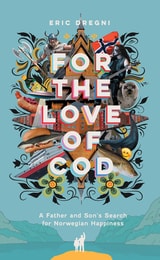
For the Love of Cod
A Father and Son's Search for Norwegian HappinessEric Dregni
University of Minnesota Press, 2021
A journey to find Norway’s supposed bliss makes for a comic travelogue that asks, seriously, what makes Norwegians so damn happy—and does it translate?
Norway is usually near or at the top of the World Happiness Report. But is it really one of the happiest countries on Earth? Eric Dregni had his doubts. Years ago he and his wife had lived in this country his great-great-grandfather once fled. When their son Eilif was born there, the Norwegian government paid for the birth, gave them $5,000, and deposited $150 into their bank account every month, but surely happiness was more than a generous health care system. What about all those grim months without sun? When Eilif turned fifteen, father and son decided to go back together and investigate. For the Love of Cod is their droll report on the state of purported Norwegian bliss.
Arriving in May, a month of festivals and eternal sun, the Dregnis are thrust into Norway at its merriest—and into the reality of the astronomical cost of living, which forces them to find lodging with friends and relatives. But this gives them an inside look at the secrets to a better life. It’s not the massive amounts of money flowing from the North Sea oil fields but how these funds are distributed that fuels the Norwegian version of democratic socialism—resulting in miniscule differences between rich and poor. Locals introduce them to the principles underlying their avowed contentment, from an active environmentalism that translates into flyskam (flight shame), which keeps Norwegians in the family cabin for the long vacations prescribed by law and charges a 150 percent tax on gas guzzlers (which, Eilif observes, means more Teslas seen in one hour than in a year in Minnesota!).
From a passion for dugnad or community volunteerism and sakte or “slow,” a rejection of the mad pace of modernity, to the commodification of Viking history and the dark side of Black Metal music that turns the idea of quaint, traditional Norway upside down, this idiosyncratic father and son tour lets readers, free of flyskam, see how, or whether, Norwegian happiness translates.

Forevering
Carol Mavor
Duke University Press, 2027
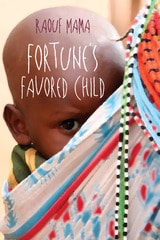
Fortune's Favored Child
Raouf Mama
Northwestern University Press, 2014
Raouf Mama is widely beloved by children and adults alike for his books and especially for his African and multicultural storytelling, which incorporates poetry, song, music, and dance.
In Fortune’s Favored Child, the master storyteller tells his own story, beginning in the West African country of Benin. Through a harrowing experience with sickness, an encounter with a clairvoyant traditional healer, and astonishing twists of fortune, the protagonist struggles to uncover his real identity, to get an education, and to make his own way in the world. His journey takes him to the shores of the United States to attend graduate school at the University of Michigan and begin a new chapter in his life.
.
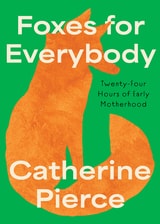
Foxes for Everybody
Twenty-Four Hours of Early MotherhoodCatherine Pierce
Northwestern University Press, 2026
Like a newborn’s patterns of sleeping and waking, the revelations of motherhood don’t follow a reasonable schedule, and there’s no clocking out. Organized around the hours of the day, Foxes for Everybody gives voice to the marvels, fears, absurdities, and astonishments of parenthood. These essays offer twenty-four glimpses into how we experience time, our families, our planet, and all of those small moments that aren’t small at all. In memories and reflections that weave through tornadoes and jellyfish, cemeteries and carousels, mortality, mental health, and the exquisite gift of a perfect sentence, acclaimed writer Catherine Pierce reminds us that fear and joy can and do live side by side, and urges us to stay awake—even when, especially when, we’re at the brink of exhaustion—to the possibility of wonder.

Fragments of a Mortal Mind
A Nonfiction NovelDonald Anderson
University of Nevada Press, 2021
At once a memoir, a reading journal, and a novel, Fragments of a Mortal Mind is a daring, contemporary commonplace book. Donald Anderson, critically acclaimed author of Gathering Noise from My Life and Below Freezing, shows us how the disparate elements of our lives collect to construct our deepest selves and help us to make sense of it all. Anderson layers his personal experiences and reflections with those of others who have wrestled with inner and outer social, cultural, and political memories that are not as accurate as history might suggest but that each of us believe nonetheless. He challenges the reader’s sense of memory and fact, downplaying the latter in explaining how each of us crafts our own personal histories.
As Anderson weaves his voice among numerous other voices and ideas that rest upon other ideas, we are faced with larger issues of human existence: war, memory, trauma, mortality, religion, fear, joy, ugliness, and occasional beauty. What we have here is a meditation on living in America. We are shown how the world we consume becomes us as we metabolize it. How we, as humans, through our own fragments of memories, influences, and experiences become our true selves. By charting fragments of thoughts over a lifetime, Anderson exposes a way of thinking and perceiving the world that is refreshingly intuitive and desperately needed. Fragments of a Mortal Mind is a powerful masterpiece that closely resembles our lived experiences and is a vivid reflection of our time.
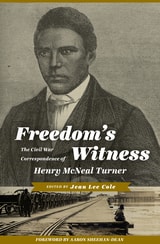
Freedom's Witness
The Civil War Correspondence of Henry McNeal TurnerJean Lee Cole
University of Delaware Press, 0
In a series of columns published in the African American newspaper the Christian Recorder, the young, charismatic preacher Henry McNeal Turner described his experience of the Civil War, first from the perspective of a civilian observer in Washington, DC, and later, as one of the Union army’s first Black chaplains.
In the halls of Congress, Turner witnessed the debates surrounding emancipation and Black enlistment. As army chaplain, Turner dodged “grape” and cannon, comforted the sick and wounded, and settled disputes between white southerners and their former slaves. He was dismayed by the destruction left by Sherman’s army in the Carolinas, but buoyed by the bravery displayed by Bck soldiers in battle. After the war ended, he helped establish churches and schools for the freedmen, who previously had been prohibited from attending either.
Throughout his columns, Turner evinces his firm belief in the absolute equality of Blacks with whites and insists on civil rights for all Black citizens. In vivid, detailed prose, laced with a combination of trenchant commentary and self-deprecating humor, Turner established himself as more than an observer: he became a distinctive and authoritative voice for the Black community and a leader in the African Methodist Episcopal church. After Reconstruction failed, Turner became disillusioned with the American dream and became a vocal advocate of black emigration to Africa, prefiguring black nationalists such as Marcus Garvey and Malcolm X. Here, however, we see Turner’s youthful exuberance and optimism and his open-eyed wonder at the momentous changes taking place in American society.
Well-known in his day, Turner has been relegated to the fringes of African American history, in large part because neither his views nor the forms in which he expressed them were recognized by either the black or white elite. With an introduction by Jean Lee Cole and a foreword by Aaron Sheehan-Dean, Freedom’s Witness: The Civil War Correspondence of Henry McNeal Turner restores this important figure to the historical and literary record.
Fremont
Explorer For A Restless NationFerol Egan
University of Nevada Press, 1985
From Beacon Hill to the Crystal Palace
The 1851 Travel Diary of a Working-Class WomanLorenza Stevens Berbineau
University of Iowa Press, 2002
Because prior studies of American women’s travel writing have focused exclusively on middle-class and wealthy travelers, it has been difficult to assess the genre and its participants in a holistic fashion. One of the very few surviving working-class travel diaries, Lorenza Stevens Berbineau’s account provides readers with a unique perspective of a domestic servant in the wealthy Lowell family in Boston. Staying in luxurious hotels and caring for her young charge Eddie during her six-month grand tour, Berbineau wrote detailed and insightful entries about the people and places she saw.
Contributing to the traditions of women’s, diary, and travel literature from the perspective of a domestic servant, Berbineau's narrative reveals an arresting and intimate outlook on both her own life and the activities, places, and people she encounters. For example, she carefully records Europeans’ religious practices, working people and their behavior, and each region’s aesthetic qualities. Clearly writing in haste and with a pleasing freedom from the constraints of orthographic and stylistic convention, Berbineau offers a distinctive voice and a discerning perspective. Alert to nuances of social class, her narrative is as appealing and informative to today's readers as it no doubt was to her fellow domestics in the Lowell household.
Unobtrusively edited to retain as much as possible the individuality and texture of the author’s original manuscript, From Beacon Hill to the Crystal Palace offers readers brief framing summaries, informative endnotes, and a valuable introduction that analyzes Berbineau’s narrative in relation to gender and class issues and compares it to the published travel writing of her famous contemporary, Harriet Beecher Stowe.
From Here to There and Back Again
Sue Hubbell
University of Michigan Press, 2004
"Sue Hubbell's From Here to There and Back Again is stylish and thought-provoking. As her brother I have long admired her mince pies and her ability to knit her own thermal underwear."
---Bil Gilbert
"The real masterwork that Sue Hubbell has created is her life."
---New York Times Book Review
"A latter-day Henry Thoreau with a sense of the absurd."
---Chicago Sun-Times
"Sue Hubbell writes splendidly."
---William Least Heat-Moon
"Prose as clear, languorous and beautiful as honey poured from a jar."
---People
From Here to There and Back Again is the much-anticipated collection of essays on an array of offbeat and engrossing subjects by magazine essayist and nature writer Sue Hubbell, author of A Country Year, Shrinking the Cat, and Waiting for Aphrodite.
Reading Sue Hubbell is like embarking on a journey of discovery with a close friend. Her writing is witty, learned yet unassuming, intensely personal, and pointedly honest as she ranges far and wide on such topics as after-hours truck stops, the country's best pie restaurants, bowling shoes, Costa Rica's blue morpho butterfly, earthquakes, and the honey trade. Several of her pieces take place in Michigan locales as well, including Elvis sightings in Vicksburg and the magicians' convention in Colon. In the end you'll return from these travels refreshed, enlightened-and wiser.

From Little Houses to Little Women
Revisiting a Literary ChildhoodNancy McCabe
University of Missouri Press, 2018
McCabe, who grew up in Kansas just a few hours from the Ingalls family’s home in Little House on the Prairie, always felt a deep connection with Laura Ingalls Wilder, author of the Little House series. McCabe read Little House on the Prairie during her childhood and visited Wilder sites around the Midwest with her aunt when she was thirteen. But then she didn’t read the series again until she decided to revisit in adulthood the books that had so influenced her childhood. It was this decision that ultimately sparked her desire to visit the places that inspired many of her childhood favorites, taking her on a journey that included stops in the Missouri of Laura Ingalls Wilder, the Minnesota of Maud Hart Lovelace, the Massachusetts of Louisa May Alcott, and even the Canada of Lucy Maud Montgomery.
From Little Houses to Little Women reveals McCabe’s powerful connection to the characters and authors who inspired many generations of readers. Traveling with McCabe as she rediscovers the books that shaped her and ultimately helped her to forge her own path, readers will enjoy revisiting their own childhood favorites as well.
From Missouri
An American Farmer Looks BackThad Snow, Edited by Bonnie Stepenoff
University of Missouri Press, 2012
After years of subjecting the editors of St. Louis newspapers to eloquent letters on subjects as diverse as floods, tariffs, and mules, Thad Snow published his memoir From Missouri in his mid-seventies in 1954. He was barely retired from farming for more than half a century, mostly in the Missouri Bootheel, or “Swampeast Missouri,” as he called it. Now back in print with a new introduction by historian Bonnie Stepenoff, these sketches of a life, a region, and an era will delight readers new to this distinctive American voice as well as readers already familiar with this masterpiece of the American Midwest.
Snow purchased a thousand acres of southeast Missouri swampland in 1910, cleared it, drained it, and eventually planted it in cotton. Although he employed sharecroppers, he grew to become a bitter critic of the labor system after a massive flood and the Great Depression worsened conditions for these already-burdened workers. Shocking his fellow landowners, Snow invited the Southern Tenant Farmers Union to organize the workers on his land. He was even once accused of fomenting a strike and publicly threatened with horsewhipping.
Snow’s admiration for Owen Whitfield, the African American leader of the Sharecroppers’ Roadside Demonstration, convinced him that nonviolent resistance could defeat injustice. Snow embraced pacifism wholeheartedly and denounced all war as evil even as America mobilized for World War II after the attack on Pearl Harbor. In the late 1940s and early 1950s, he became involved with creating Missouri’s conservation movement. Near the end of his life, he found a retreat in the Missouri Ozarks, where he wrote this recollection of his life.
This unique and honest series of personal essays expresses the thoughts of a farmer, a hunter, a husband, a father and grandfather, a man with a soft spot for mules and dogs and all kinds of people. Snow’s prose reveals much about a way of life in the region during the first half of the twentieth century, as well as the social and political events that affected the entire nation. Whether arguing that a good stock dog should be left alone to do its work, explaining the process of making swampland suitable for agriculture, or putting forth his case for world peace, Snow’s ideas have a special authenticity because they did not come from an ivory tower or a think tank—they came From Missouri.
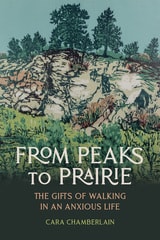
From Peaks to Prairie
The Gifts of Walking in an Anxious LifeCara Chamberlain
Oregon State University Press, 2026
Along twenty-nine trails near Yellowstone National Park, Cara Chamberlain leads readers on a journey of perseverance, drawing lessons from human and natural history. She reflects on being diagnosed with generalized anxiety disorder (GAD) and obsessive-compulsive disorder (OCD) and explores how walking helps manage anxiety, opening rich pathways of perception.
In From Peaks to Prairie, Chamberlain examines her personal life, family history, and struggles as she encounters animals and plants of Montana and Wyoming. Each essay is an episode mingling the past with the present, combining sightings of bears, birds, and wildflowers with memories of her Utah childhood and family. She observes, “I walk. It’s the way I’ve found not to eliminate GAD and OCD, as I used to long to do, but to live with them.” Mountains and prairies offer strength and nurture those who need them. It is on their paths that Chamberlain finds clarity.
From Scratch
Writings in Music TheoryJames TenneyEdited by Larry Polansky, Lauren Pratt, Robert Wannamaker, and Michael Winter
University of Illinois Press, 2019

From Texas to Tinian and Tokyo Bay
The Memoirs of Captain J. R. Ritter, Seabee Commander during the Pacific War, 1942-1945Jonathan Templin Ritter
University of North Texas Press, 2019
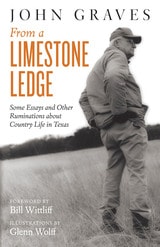
From a Limestone Ledge
Some Essays and Other Ruminations about Country Life in TexasBy John Graves<br>Foreword by Bill Wittliff<br>Illustrations by Glenn Wolff
University of Texas Press, 2016
“Another fine, reflective, anecdotal look at rural Texas.” —New Yorker
“Graves writes eloquently about a countryman’s concerns. There's not a false note in the book.” —Boston Globe
“Like the unmortared stone fences of Graves’s native hill country, From a Limestone Ledge is constructed of bits and pieces never designed to fit together, yet made to achieve a unity that is more enduring than the sum of its individual parts by the hands of a master craftsman.” —Southwestern Historical Quarterly
“The beauty of his work endures, and there is a greater pride in Texans’ hearts for their home, I think, than there would be if he hadn’t written the books he did.” —Rick Bass, Garden & Gun
“In describing the particulars of his surroundings, Graves often was describing the world in microcosm and the place and plight of humankind in it.” —Bryan Woolley, Dallas Morning News