Results by title
55 books match the query 'Memories' and 6 start with f
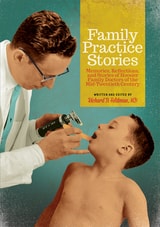
Family Practice Stories
Memories, Reflections, and Stories of Hoosier Family Doctors of the Mid-Twentieth CenturyRichard Feldman
Indiana Historical Society Press, 2013
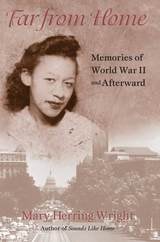
Far from Home
Memories of World War II and AfterwardMary Herring Wright
Gallaudet University Press, 2005
“She’s got no more business there than a pig has with a Bible.” That’s what her father said when Mary Herring announced that she would be moving to Washington, DC, in late 1942. Recently graduated from the North Carolina School for Black Deaf and Blind Students, Mary had been invited to the nation’s capital by a cousin to see a specialist about her hearing loss. Though nothing could be done about her deafness, Mary quickly proved her father wrong by passing the civil service examination with high marks. Far from Home: Memories of World War II and Afterward, the second installment of her autobiography, describes her life from her move to Washington to the present.
Mary soon became a valued employee for the Navy, maintaining rosters for the many servicemen in war theaters worldwide. Her remarkable gift for detail depicts Washington in meticulous layers, a sleepy Southern town force-grown into a dynamic geopolitical hub. Life as a young woman amid the capital’s Black middle class could be warm and fun, filled with visits from family and friends, and trips home to Iron Mine for tearful, joyous reunions. But the reality of the times was never far off. On many an idyllic afternoon, she and her friends found somber peace in Arlington Cemetery, next to the grave of the sole Unknown Soldier at that time. During an evening spent at the U.S.O., one hearing woman asked how people like her could dance, and Mary answered, “With our feet.” She became a pen pal to several young servicemen, but did not want to know why some of them suddenly stopped writing.
Despite the close friends and good job that she had in Washington, the emotional toll caused Mary to return to her family home in Iron Mine, NC. There, she rejoined her family and resumed her country life. She married and raised four daughters, and recounts the joys and sorrows she experienced through the years, particularly the loss of her parents. Her blend of the gradual transformation of Southern rural life with momentous events such as Hurricane Hazel creates an extraordinary narrative history. The constant in Far from Home remains the steady confidence that Mary Herring Wright has in herself, making her new memoir a perfect companion to her first.
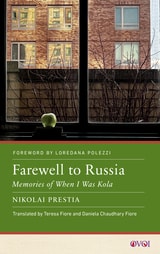
Farewell to Russia
Memories of When I Was KolaNikolai Prestia
Rutgers University Press, 2026
Growing up in 1990s Russia in a family marked by poverty, substance abuse, and neglect, Kola and his sister are eventually admitted into the orphanage system. Here, Kola comes face to face with a different but equally daunting challenge: navigating an unfamiliar and sometimes hostile world haunted by the absence of his mother. The ensuing journey, which eventually culminates in the adoption by an Italian family, alternates moments of both trauma and deliverance, while asking fundamental questions about our ability to reconcile ourselves with unfathomable loss.
Harrowing yet lyrical, Nikolai Prestia’s prize-winning 2021 novel is a testament to the duality of memory in its ability to both hurt and heal, and to the transformative power of those figures, adults and peers alike, who contribute to a child’s development. Translated into English as part of a collaboration between the author and a mother-daughter translator duo, the novel serves up a wrenching glimpse into the back stories that often precede the adoption of an older child.

Ferryman of Memories
The Films of Rithy PanhDeirdre Boyle
Rutgers University Press, 2023
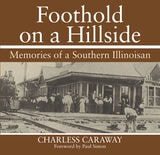
Foothold on a Hillside
Memories of a Southern IllinoisanCharless Caraway. Foreword by Paul Simon
Southern Illinois University Press, 1986
In a style reminiscent of the master storytellers of yore, Charless Caraway recounts the story of his life, as a man and a boy, on small farms in Saline and Jackson counties, particularly around Eldorado, Makanda, and Etherton Switch. He makes no bones about the hardships of those "old days," first helping his father eke out a living from the land, then scrambling for a living as a sharecropper and fruit picker, as he scrimped and saved for the day when he and his young wife, Bessie Mae Rowan Caraway, could buy a piece of land of their own.
The one-room school, the general store, the trips by wagon over roads that choked you in summer and swallowed you in winter, the home that burned: all are described in a matter-of-fact yet moving way. Many of the locations, buildings, and people are represented in equally unromanticized photographs from the family’s collection. Some of the stories and photos recall the common disasters of the frontier: drought, flood, and the tornado of 1925.
It is clear from these stories that each aspect of life exacted a price, but the Caraways paid that price without regret and rallied to go on their way. Charless and his family and friends fill this book with courage, strength, and an unshakable faith in the value of human endeavor.

From the Lookout
Memories of Peninsula State Park’s Summer Camp for GirlsKathleen Harris
Wisconsin Historical Society Press, 2020
With big ideas, little money, and no experience, Alice Orr Clark and Frances Louise “Kidy” Mabley founded Meenahga as a place for young women to refine their manners, enjoy outdoor leisure activities, and learn woodcraft. From the Lookout is an account of these experiences, a history of Camp Meenahga informed by what campers, counselors, and others left behind, including letters home, notes from Clark and Mabley, and many pages from the camp yearbook and newsletter Pack and Paddle.
Brimming with nostalgia, From the Lookout brings to life the sights, sounds, and smells of an idyllic summer retreat, one that long after it closed lived on as a place of respite in the memories of those who knew and loved it best.