Results by title
225 books match the query 'Modernism' and 7 start with f
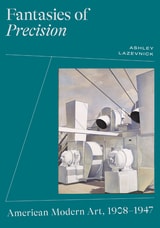
Fantasies of Precision
American Modern Art, 1908-1947Ashley Lazevnick
University of Minnesota Press, 2023
Redefining the artistic movement that helped shape American modernism
In the early decades of the twentieth century, a loose contingent of artists working in and around New York City gave rise to the aesthetic movement known as precisionism, primarily remembered for its exacting depictions of skyscrapers, factories, machine parts, and other symbols of a burgeoning modernity. Although often regarded as a singular group, these artists were remarkably varied in their subject matter and stylistic traits. Fantasies of Precision excavates the surprising ties that connected them, exploring notions of precision across philosophy, technology, medicine, and many other fields.
Bookended by discussions of the landmark First Biennial Exhibition of Painting at the Whitney Museum in 1932, this study weaves together a series of interconnected chapters illuminating the careers of Charles Sheeler, Georgia O’Keeffe, and Charles Demuth. Built on a theoretical framework of the writing of modernist poets Marianne Moore and William Carlos Williams, Fantasies of Precision outlines an “ethos of precision” that runs through the diverse practices of these artists, articulating how the broad range of enigmatic imagery they produced was underpinned by shared strategies of restraint, humility, and slowness.
Questioning straightforward modes of art historical classification, Ashley Lazevnick redefines the concept that designated the precisionist movement. Through its cross-disciplinary approach and unique blend of historiography and fantasy, Fantasies of Precision offers a comprehensive reevaluation of one of the defining movements of artistic modernism.
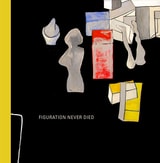
Figuration Never Died
New York Painterly Painting, 1950–1970Karen Wilkin
The Artist Book Foundation, 2020
By 1950, forward-looking New York painting was seen as synonymous with abstraction, especially charged, gestural Abstract Expressionism. But there was also a strong group of dissenters; artists, all born in the 1920s and many of them students of Hans Hofmann, who never lost their enthusiasm for recognizable imagery, without rejecting Abstract Expressionism's love of malleable oil paint. Although most of them began as abstract artists, they all evolved into painters working from observation, using a fluid, urgent touch to translate their perceptions into eloquent, highly individualized visual languages, almost always informed by the hand; that is, unlike the Color Field and Minimalist artists, these artists remained, for the most part, "painterly" painters. In light of their important contributions to twentieth-century American art, The Artist Book Foundation presents the cataloge for the Brattleboro Museum & Art Center's eponymous 2020 exhibition, Figuration Never Died: New York Painterly Painting, 1950–1970.
These rebellious artists include Lois Dodd, Jane Freilicher, Paul Georges, Grace Hartigan, Wolf Kahn, Alex Katz, Albert Kresch, Robert de Niro Sr., Paul Resika, and Anne Tabachnick. The compelling figurative work they made between about 1950 and 1970, in contrast to the prevailing Abstract Expressionism of the time, constitutes a significat chapter in the history of recent American Modernism. Their work not only greatly expands our conception of the story of New York painting, but it also presages and contextualizes today's multiplicity of artistic concepts and processes. Given both the aesthetic diversity of today's New York art world and the dependence of many younger artists on digital media or the appearance of digital media, it seems an appropriate moment to reconsider the work of these daring pioneers, as both precursor and opposition to current norms.
Five Faces of Modernity
Modernism, Avant-garde, Decadence, Kitsch, PostmodernismMatei Calinescu
Duke University Press, 1987
Five Faces of Modernity attempts to do for the foundations of the modernist critical lexicon what earlier terminological studies have done for such complex categories as classicism, baroque, romanticism, realism, or symbolism and thereby fill a gap in literary scholarship. On another, more ambitious level, Calinescu deals at length with the larger issues, dilemmas, ideological tensions, and perplexities brought about by the assertion of modernity.
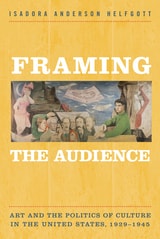
Framing the Audience
Art and the Politics of Culture in the United States, 1929-1945Isadora Helfgott
Temple University Press, 2015
Framing the Audience explores the cultural politics of the Great Depression and World War II through the prism of art appreciation. Isadora Helfgott interrogates the ideological and political motivations for breaking down barriers between fine art and popular culture. She charts the impact that changes in art appreciation had on the broader political, social, cultural, and artistic landscape.
Framing the Audience argues that efforts to expand the social basis of art became intertwined with—and helped shape—broader debates about national identity and the future of American political economy. Helfgott chronicles artists’ efforts toinfluence the conditions of artistic production and display. She highlights the influence of the Federal Art Project, the impact of the Museum of Modern Art as an institutional home for modernism in America and as an organizer of traveling exhibitions, and the efforts by LIFE and Fortune magazines to integrate art education into their visual record of modern life. In doing so, Helfgott makes critical observations about the changing relationship between art and the American public.
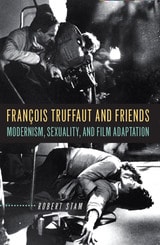
François Truffaut and Friends
Modernism, Sexuality, and Film AdaptationStam, Robert
Rutgers University Press, 2006
Drawing on this film and others by Truffaut, Robert Stam provides the first in-depth examination of the multifaceted relationship between Truffaut and Roch. In the process, he provides a unique lens through which to understand how adaptation works-from history to novel, and ultimately to film-and how each form of expression is inflected by the period in which it is created. Truffaut's adaptation of Roch's work, Stam suggests, demonstrates how reworkings can be much more than simply copies of their originals; rather, they can become an immensely creative enterprise-a form of writing in itself.
The book also moves beyond Truffaut's film and the mnage--trois involving Roch, Hessel, and Grund to explore the intertwined lives and work of other famous artists and intellectuals, including Marcel Duchamp, Walter Benjamin, and Charlotte Wolff. Tracing the tangled webs that linked these individuals' lives, Stam opens the door to an erotic/writerly territory where the complex interplay of various artistic sensibilities-all mulling over the same nucleus of feelings and events-vividly comes alive.
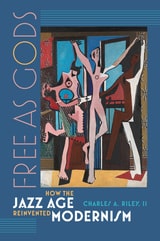
Free as Gods
How the Jazz Age Reinvented ModernismCharles A. Riley
University Press of New England, 2017
Future of Modernism
Hugh Witemeyer, Editor
University of Michigan Press, 1997