491 books match the query 'Moral and ethical aspects' and 15 start with f
cover of Feminist Morality: Transforming Culture, Society, and Politics

Feminist Morality

Transforming Culture, Society, and Politics

Virginia Held

University of Chicago Press, 1993

How is feminism changing the way women and men think, feel, and act? Virginia Held explores how feminist theory is changing contemporary views of moral choice. She proposes a comprehensive philosophy of feminist ethics, arguing persuasively for reconceptualizations of the self; of relations between the self and others; and of images of birth and death, nurturing and violence. Held shows how social, political, and cultural institutions have traditionally been founded upon masculine ideals of morality. She then identifies a distinct feminist morality that moves beyond culturally embedded notions about motherhood and female emotionality. Examining the effects of this alternative moral and ethical system on changing social values, Held discusses its far-reaching implications for altering standards of freedom, democracy, equality, and personal development. Ultimately, she concludes, the culture of feminism could provide a fresh perspective on—even solutions to—contemporary social problems.

Feminist Morality makes a vital contribution to the ongoing debate in feminist theory on the importance of motherhood. For philosophers and other readers outside feminist theory, it offers a feminist moral and social critique in clear and accessible terms.

[more]
cover of Film and the American Moral Vision of Nature: Theodore Roosevelt to Walt Disney

Film and the American Moral Vision of Nature

Theodore Roosevelt to Walt Disney

Ronald B. Tobias

Michigan State University Press, 2011
With his square, bulldoggish stature, signature rimless glasses, and inimitable smile—part grimace, part snarl—Theodore Roosevelt was an unforgettable figure, imprinted on the American memory through photographs, the chiseled face of Mount Rushmore, and, especially, film. At once a hunter, explorer, naturalist, woodsman, and rancher, Roosevelt was the quintessential frontiersman, a man who believed that only nature could truly test and prove the worth of man. A documentary he made about his 1909 African safari embodied aggressive ideas of masculinity, power, racial superiority, and the connection between nature and manifest destiny. These ideas have since been reinforced by others—Jesse “Buff alo” Jones, Paul Rainey, Martin and Osa Johnson, and Walt Disney. Using Roosevelt as a starting point, filmmaker and scholar Ronald Tobias traces the evolution of American attitudes toward nature, attitudes that remain, to this day, remarkably conflicted, complex, and instilled with dreams of empire.
[more]
cover of Flourishing Thought: Democracy in an Age of Data Hoards

Flourishing Thought

Democracy in an Age of Data Hoards

Ruth A. Miller

University of Michigan Press, 2016

Challenging the posthumanist canon that celebrates the preeminence of matter, Ruth Miller, in Flourishing Thought contends that what nonhuman systems contribute to democracy is thought. Drawing on recent feminist theories of nonhuman life and politics, Miller shows that reproduction and flourishing are not antithetical to contemplation and sensitivity. After demonstrating that processes of life and processes of thought are indistinguishable, Miller finds that four menacing accumulations of matter and information—global surveillance, stored embryos, human clones, and reproductive trash—are politically productive rather than threats to democratic politics. As a consequence, she questions the usefulness of individual rights such as privacy and dignity, contests the value of the rational metaphysics underlying human-centered political participation, and reevaluates the gender relations that derive from this type of participation. Ultimately, in place of these human-centered structures, Miller posits a more meditative mode of democratic engagement.

Miller’s argument has shattering implications for the debates over the proper use and disposal of embryonic tissue, alarms about data gathering by the state and corporations, and other major ethical, social, and security issues.
 
[more]
cover of For the Sake of the Children: The Social Organization of Responsibility in the Hospital and the Home

For the Sake of the Children

The Social Organization of Responsibility in the Hospital and the Home

Carol A. Heimer and Lisa R. Staffen

University of Chicago Press, 1998

For the Sake of the Children examines the social organization of responsibility by asking who takes responsibility for critically ill newborns. Drawing on medical records and interviews with parents and medical staff, the authors take us into two neonatal intensive care units, showing us the traumas of extreme medical measures and the sufferings of infants. The accounts are by turns heroic and disturbing as we see people trying to take charge of these infants' care, thinking about long-term plans, redefining their roles as adults and parents, and coping with sometimes awful contingencies.

Rather than treating responsibility as an ethical issue, the authors focus on how responsibility is socially produced and sustained. The authors ask: How do staff members encourage parents to take responsibility, but keep them from interfering in medical matters, and how do parents encourage staff vigilance when they are novices attempting to supervise the experts?

The authors conclude that it is not sufficient simply to be responsible individuals. Instead, we must learn how to be responsible in an organizational world, and organizations must learn how to support responsible individuals.

[more]
cover of Forever Suspect: Racialized Surveillance of Muslim Americans in the War on Terror

Forever Suspect

Racialized Surveillance of Muslim Americans in the War on Terror

Selod, Saher

Rutgers University Press, 2018
The declaration of a “War on Terror” in the aftermath of the September 11, 2001 terrorist attacks brought sweeping changes to the American criminal justice and national security systems, as well as a massive shift in the American public opinion of both individual Muslims and the Islamic religion generally. Since that time, sociologist Saher Selod argues, Muslim Americans have experienced higher levels of racism in their everyday lives. In Forever Suspect, Selod shows how a specific American religious identity has acquired racial meanings, resulting in the hyper surveillance of Muslim citizens. Drawing on forty-eight in-depth interviews with South Asian and Arab Muslim Americans, she investigates how Muslim Americans are subjected to racialized surveillance in both an institutional context by the state and a social context by their neighbors and co-workers. Forever Suspect underscores how this newly racialized religious identity changes the social location of Arabs and South Asians on the racial hierarchy further away from whiteness and compromises their status as American citizens.
[more]
cover of Foundations of Information Ethics

Foundations of Information Ethics

John T. F. Burgess

American Library Association, 2019

As discussions about the roles played by information in economic, political, and social arenas continue to evolve, the need for an intellectual primer on information ethics that also functions as a solid working casebook for LIS students and professionals has never been more urgent. This text, written by a stellar group of ethics scholars and contributors from around the globe, expertly fills that need. Organized into twelve chapters, making it ideal for use by instructors, this volume from editors Burgess and Knox

  • thoroughly covers principles and concepts in information ethics, as well as the history of ethics in the information professions;
  • examines human rights, information access, privacy, discourse, intellectual property, censorship, data and cybersecurity ethics, intercultural information ethics, and global digital citizenship and responsibility;
  • synthesizes the philosophical underpinnings of these key subjects with abundant primary source material to provide historical context along with timely and relevant case studies;
  • features contributions from John M. Budd, Paul T. Jaeger, Rachel Fischer, Margaret Zimmerman, Kathrine A. Henderson, Peter Darch, Michael Zimmer, and Masooda Bashir, among others; and
  • offers a special concluding chapter by Amelia Gibson that explores emerging issues in information ethics, including discussions ranging from the ethics of social media and social movements to AI decision making.

This important survey will be a key text for LIS students and an essential reference work for practitioners
[more]
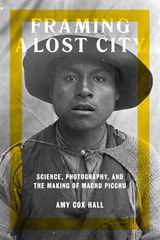
cover of Framing a Lost City: Science, Photography, and the Making of Machu Picchu

Framing a Lost City

Science, Photography, and the Making of Machu Picchu

By Amy Cox Hall

University of Texas Press, 2017

When Hiram Bingham, a historian from Yale University, first saw Machu Picchu in 1911, it was a ruin obscured by overgrowth whose terraces were farmed a by few families. A century later, Machu Picchu is a UNESCO world heritage site visited by more than a million tourists annually. This remarkable transformation began with the photographs that accompanied Bingham’s article published in National Geographic magazine, which depicted Machu Picchu as a lost city discovered. Focusing on the practices, technologies, and materializations of Bingham’s three expeditions to Peru (1911, 1912, 1914–1915), this book makes a convincing case that visualization, particularly through the camera, played a decisive role in positioning Machu Picchu as both a scientific discovery and a Peruvian heritage site.

Amy Cox Hall argues that while Bingham’s expeditions relied on the labor, knowledge, and support of Peruvian elites, intellectuals, and peasants, the practice of scientific witnessing, and photography specifically, converted Machu Picchu into a cultural artifact fashioned from a distinct way of seeing. Drawing on science and technology studies, she situates letter writing, artifact collecting, and photography as important expeditionary practices that helped shape the way we understand Machu Picchu today. Cox Hall also demonstrates that the photographic evidence was unstable, and, as images circulated worldwide, the “lost city” took on different meanings, especially in Peru, which came to view the site as one of national patrimony in need of protection from expeditions such as Bingham’s.
[more]
cover of Framing the Holocaust

Framing the Holocaust

Edited by Valerie Hébert

University of Wisconsin Press, 2023

In December 1941, German police and their local collaborators shot 2,749 Jews at the beach in Šķēde, near Liepāja, Latvia. Twelve photographs were taken at the scene. These now-infamous images show people in extreme distress, sometimes without clothing. Some capture the very moments when women and children confronted their imminent deaths, while others show their dead bodies. They are nearly unbearable to look at—so why should we? Framing the Holocaust offers a multidimensional response to this question.

While photographs are central to our memory of modern historical events, they often inhabit an ambivalent intellectual space. What separates the sincere desire to understand from voyeuristic curiosity? Comprehending atrocity photographs requires viewers to place themselves in the very positions of the perpetrators who took the images. When we engage with these photographs, do we risk replicating the original violence? In this tightly organized book, scholars of history, photography, language, gender, photojournalism, and pedagogy examine the images of the Šķēde atrocity along with other difficult images, giving historical, political, and ethical depth to the acts of looking and interpreting.

With a foreword by Edward Anders, who narrowly escaped the December 1941 shooting, Framing the Holocaust represents an original approach to an iconic series of Holocaust photographs. This book will contribute to compelling debates in the emerging field of visual history, including the challenges and responsibilities of using photographs to teach about atrocity. 
[more]
cover of Fraud and Misconduct in Research: Detection, Investigation, and Organizational Response

Fraud and Misconduct in Research

Detection, Investigation, and Organizational Response

Nachman Ben-Yehuda and Amalya Oliver-Lumerman

University of Michigan Press, 2017
In Fraud and Misconduct in Research, Nachman Ben-Yehuda and Amalya Oliver-Lumerman introduce the main characteristics of research misconduct, portray how the characteristics are distributed, and identify the elements of the organizational context and the practice of scientific research which enable or deter misconduct. Of the nearly 750 known cases between 1880 and 2010 which the authors examine, the overwhelming majority took place in funded research projects and involved falsification and fabrication, followed by misrepresentation and plagiarism. The incidents were often reported by the perpetrator’s colleagues or collaborators. If the accusations were confirmed, the organization usually punished the offender with temporary exclusion from academic activities and institutions launched organizational reforms, including new rules, the establishment of offices to deal with misconduct, and the creation of re-training and education programs for academic staff. Ben-Yehuda and Oliver-Lumerman suggest ways in which efforts to expose and prevent misconduct can further change the work of scientists, universities, and scientific research.

 
[more]
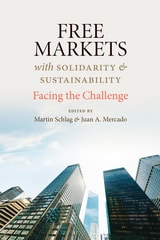
cover of Free Markets with Solidarity and Sustainability

Free Markets with Solidarity and Sustainability

Martin Schlag

Catholic University of America Press, 2016
The contributors to Free Markets with Sustainability and Solidarity, who represent a unique combination of European and American scholars, present their reflections on evolving forms of economics. All are unified by a holistic, Christian anthropology, from which they draw epistemological consequences for free markets and a free society.
[more]
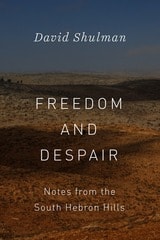
cover of Freedom and Despair: Notes from the South Hebron Hills

Freedom and Despair

Notes from the South Hebron Hills

David Shulman

University of Chicago Press, 2018

Lately, it seems as if we wake up to a new atrocity each day. Every morning is now a ritual of scrolling through our Twitter feeds or scanning our newspapers for the latest updates on fresh horrors around the globe. Despite the countless protests we attend, the phone calls we make, or the streets we march, it sometimes feels like no matter how hard we fight, the relentless crush of injustice will never abate.
 
David Shulman knows intimately what it takes to live your beliefs, to return, day after day, to the struggle, despite knowing you are often more likely to lose than win. Interweaving powerful stories and deep meditations, Freedom and Despair offers vivid firsthand reports from the occupied West Bank in Palestine as seen through the eyes of an experienced Israeli peace activist who has seen the Israeli occupation close up as it impacts on the lives of all Palestinian civilians.
 
Alongside a handful of beautifully written and often shocking tales from the field, Shulman meditates deeply on how to understand the evils around him, what it means to persevere as an activist decade after decade, and what it truly means to be free. The violent realities of the occupation are on full display. We get to know and understand the Palestinian shepherds and farmers and Israeli volunteers who face this situation head-on with nonviolent resistance. Shulman does not hold back on acknowledging the daily struggles that often leave him and his fellow activists full of despair. Inspired by these committed individuals who are not prepared to be silent or passive, Shulman suggests a model for ordinary people everywhere. Anyone prepared to take a risk and fight their oppressive political systems, he argues, can make a difference—if they strive to act with compassion and to keep hope alive.
 
This is the moving story of a man who continues to fight for good in the midst of despair. An indispensable book in our era of reactionary politics and refugee crises, political violence and ecological devastation, Freedom and Despair is a gripping memoir of struggle, activism, and hope for peace.

 
[more]
cover of From Dark Night to Gentle Surrender: On the Ethics and Spirituality of Hospice Care

From Dark Night to Gentle Surrender

On the Ethics and Spirituality of Hospice Care

Patricia Kobielus Thompson

University of Scranton Press, 2010

Drawing from her many years of experience as a hospice nurse and her training as a theologian, Patricia Kobielus Thompson offers in The Dark Night of the Soul instruction to those providing care for terminally ill patients. Thompson finds in the poetry and other writings of Spanish mystic Saint John of the Cross a wisdom that she argues will assist caregivers in comforting their patients through the trying times just before death. Though much has been written on Saint John of the Cross, Thompson’s application of these works is wholly new and rooted in deep empathy.
[more]
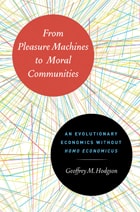
cover of From Pleasure Machines to Moral Communities: An Evolutionary Economics without Homo economicus

From Pleasure Machines to Moral Communities

An Evolutionary Economics without Homo economicus

Geoffrey M. Hodgson

University of Chicago Press, 2012

Are humans at their core seekers of their own pleasure or cooperative members of society? Paradoxically, they are both. Pleasure-seeking can take place only within the context of what works within a defined community, and central to any community are the evolved codes and principles guiding appropriate behavior, or morality. The complex interaction of morality and self-interest is at the heart of Geoffrey M. Hodgson’s approach to evolutionary economics, which is designed to bring about a better understanding of human behavior.

In From Pleasure Machines to Moral Communities, Hodgson casts a critical eye on neoclassical individualism, its foundations and flaws, and turns to recent insights from research on the evolutionary bases of human behavior. He focuses his attention on the evolution of morality, its meaning, why it came about, and how it influences human attitudes and behavior. This more nuanced understanding sets the stage for a fascinating investigation of its implications on a range of pressing issues drawn from diverse environments, including the business world and crucial policy realms like health care and ecology.
 
This book provides a valuable complement to Hodgson’s earlier work with Thorbjørn Knudsen on evolutionary economics in Darwin’s Conjecture, extending the evolutionary outlook to include moral and policy-related issues.
[more]
cover of Fungible Life: Experiment in the Asian City of Life

Fungible Life

Experiment in the Asian City of Life

Aihwa Ong

Duke University Press, 2016

In Fungible Life Aihwa Ong explores the dynamic world of cutting-edge bioscience research, offering critical insights into the complex ways Asian bioscientific worlds and cosmopolitan sciences are entangled in a tropical environment brimming with the threat of emergent diseases. At biomedical centers in Singapore and China scientists map genetic variants, disease risks, and biomarkers, mobilizing ethnicized "Asian" bodies and health data for genomic research. Their differentiation between Chinese, Indian, and Malay DNA makes fungible Singapore's ethnic-stratified databases that come to "represent" majority populations in Asia. By deploying genomic science as a public good, researchers reconfigure the relationships between objects, peoples, and spaces, thus rendering "Asia" itself as a shifting entity. In Ong's analysis, Asia emerges as a richly layered mode of entanglements, where the population's genetic pasts, anxieties and hopes, shared genetic weaknesses, and embattled genetic futures intersect. Furthermore, her illustration of the contrasting methods and goals of the Biopolis biomedical center in Singapore and BGI Genomics in China raises questions about the future direction of cosmopolitan science in Asia and beyond.
[more]
cover of Future Medicine: Ethical Dilemmas, Regulatory Challenges, and Therapeutic Pathways to Health Care and Healing in Human Transformation

Future Medicine

Ethical Dilemmas, Regulatory Challenges, and Therapeutic Pathways to Health Care and Healing in Human Transformation

Michael H. Cohen

University of Michigan Press, 2002

Future Medicine is an investigation into the clinical, legal, ethical, and regulatory changes occurring in our health care system as a result of the developing field of Complimentary and Alternative Medicine (CAM). Here Michael H. Cohen describes the likely evolution of the legal system and the health care system at the crossroads of developments in the way human beings care for body, mind, emotions, environment, and soul.
Through the use of fascinating and relevant case studies, Cohen presents stimulating questions that will challenge academics, intellectuals, and all those interested in the future of health care. In concise, evocative strokes, the book lays the foundation for a novel synthesis of ideas from such diverse disciplines as transpersonal psychology, political philosophy, and bioethics. Providing an exploration of regulatory conundrums faced by many healing professionals, Cohen articulates the value of expanding our concept of health care regulation to consider not only goals of fraud control and quality assurance, but also health care freedom, integration of global medicine, and human transformation.
Future Medicine provides a fair-minded, illuminating, and honest discussion that will interest hospice workers, pastoral counselors, and psychotherapists, as well as bioethicists, physicians and allied health care providers, complementary and alternative medical providers (such as chiropractors, acupuncturists, naturopaths, massage therapists, homeopaths, and herbalists), and attorneys, hospital administrators, health care executives, and government health care workers.
Michael H. Cohen is Director for Legal Programs, the Center for Research and Education in Complementary and Integrative Medical Therapies, Beth Israel Deaconess Medical Center, Harvard Medical School.
[more]