Results by title
99 books match the query 'Motion picture producers and directors' and 4 start with f
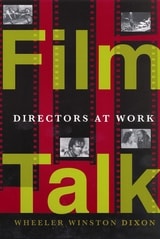
Film Talk
Directors at WorkDixon, Wheeler Winston
Rutgers University Press, 2007
The answers to these questions, along with many more little-known facts and insights, can be found in Film Talk, an in-depth, behind-the-scenes look at filmmaking from the 1940s to the present. In eleven intimate and revealing interviews, contemporary film directors speak frankly about their work-their successes and their disappointments, their personal aspirations, struggles, relationships, and the politics that affect the industry.
A medley of directors including those working in pop culture and documentary, as well as feminist filmmakers, social satirists, and Hollywood mavericks recount stories that have never before been published. Among them are Monte Hellman, the auteur of the minimalist masterpiece Two-Lane Blacktop; Albert Maysles, who with his late brother David, created some of the most important documentaries of the 1960s, including Salesman and The Beatles: What's Happening?; Robert Downey Sr., whose social satires Putney Swope and Greaser's Palace paved the way for a generation of filmmakers; Bennett Miller, whose film Capote won an Academy Award in 2005; and Jamie Babbit, a lesbian crossover director whose low-budget film But I'm a Cheerleader! became a mainstream hit.
The candid conversations, complimented by more than fifty photographs, including many that are rare, make this book essential reading for aspiring moviemakers, film scholars, and everyone interested in the how movies are made and who the fascinating individuals are who make them.
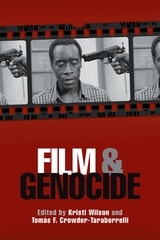
Film and Genocide
Kristi M. Wilson
University of Wisconsin Press, 2011
Film and Genocide brings together scholars of film and of genocide to discuss film representations, both fictional and documentary, of the Holocaust, the Armenian genocide, and genocides in Chile, Australia, Rwanda, and the United States. Since 1955, when Alain Resnais created his experimental documentary Night and Fog about the Nazis’ mass killings of Jews and other ostracized groups, filmmakers have struggled with using this medium to tell such difficult stories, to re-create the sociopolitical contexts of genocide, and to urge awareness and action among viewers. This volume looks at such issues as realism versus fiction, the challenge of depicting atrocities in a manner palatable to spectators and film distributors, the Holocaust film as a model for films about other genocides, and the role of new technologies in disseminating films about genocide.
Film and Genocide also includes interviews with three film directors, who discuss their experiences in working with deeply disturbing images and bringing hidden stories to life: Irek Dobrowolski, director of The Portraitist (2005) a documentary about Wilhelm Brasse, an Auschwitz-Birkenau prisoner ordered to take more than 40,000 photos at the camp; Nick Hughes, director of 100 Days (2005) a dramatic film about the Rwandan mass killings; and Greg Barker, director of Ghosts of Rwanda (2004), a television documentary for Frontline.
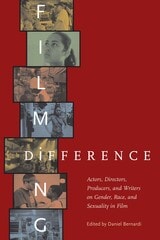
Filming Difference
Actors, Directors, Producers, and Writers on Gender, Race, and Sexuality in FilmEdited by Daniel Bernardi
University of Texas Press, 2009
Addressing representation and identity in a variety of production styles and genres, including experimental film and documentary, independent and mainstream film, and television drama, Filming Difference poses fundamental questions about the ways in which the art and craft of filmmaking force creative people to confront stereotypes and examine their own identities while representing the complexities of their subjects.
Selections range from C. A. Griffith's "Del Otro Lado: Border Crossings, Disappearing Souls, and Other Transgressions" and Celine Perreñas Shimizu's "Pain and Pleasure in the Flesh of Machiko Saito's Experimental Movies" to Christopher Bradley's "I Saw You Naked: 'Hard' Acting in 'Gay' Movies," along with Kevin Sandler's interview with Paris Barclay, Yuri Makino's interview with Chris Eyre, and many other perspectives on the implications of film production, writing, producing, and acting.
Technical aspects of the craft are considered as well, including how contributors to filmmaking plan and design films and episodic television that feature difference, and how the tools of cinema—such as cinematography and lighting—influence portrayals of gender, race, and sexuality. The struggle between economic pressures and the desire to produce thought-provoking, socially conscious stories forms another core issue raised in Filming Difference. Speaking with critical rigor and creative experience, the contributors to this collection communicate the power of their media.
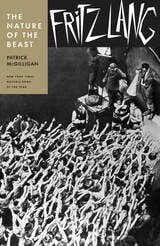
Fritz Lang
The Nature of the BeastPatrick McGilligan
University of Minnesota Press, 2013
The name of Fritz Lang—the visionary director of Metropolis, M, Fury, The Big Heat, and thirty other unforgettable films—is hallowed the world over. But what lurks behind his greatest legends and his genius as a filmmaker? Patrick McGilligan, placed among “the front rank of film biographers” by the Washington Post, spent four years in Europe and America interviewing Lang’s dying contemporaries, researching government and film archives, and investigating the intriguing life story of Fritz Lang. This critically acclaimed biography—lauded as one of the year’s best nonfiction books by Publishers Weekly—reconstructs the compelling, flawed human being behind the monster with the monocle.