Results by title
132 books match the query 'Myth' and 4 start with f

Farm Prices
Myth and RealityWillard W. Cochrane
University of Minnesota Press, 1958
Farm Prices was first published in 1958. Minnesota Archive Editions uses digital technology to make long-unavailable books once again accessible, and are published unaltered from the original University of Minnesota Press editions.
Few domestic questions are so controversial as the farm problem, yet the average city man finds it difficult to understand the basic issues involved. In this book Professor Cochrane describes for the layman the nature and causes of the commercial farm problem and the rural poverty problem and provides the basis for making informed judgments about these problems and their possible solutions. He analyzes the economic and political forces which are at work in the farm economy, explains the organization of modern agriculture, showing the unique structure of farming, and draws a vivid picture of the revolutionary developments which have taken place in agriculture. He discusses behavior patterns of farmers and consumers as they relate to the farm economy, and the role of government in the farm industry and in the lives of farmers.
Farm prices are constantly fluctuating, and out of this price variability emerge such serious and continuing farm problems as variable incomes, low incomes over extended periods, and uncertainty in production planning. In this study Professor Cochrane seeks to get at the root of the trouble by, first, exploring and exposing what he considers a basic fallacy in our present day thinking and approach to the farm problem. This is the widely held myth of an automatically adjusting agriculture, an agriculture that is always out of balance because of an "emergency." This myth, he points out, beclouds the issues involved in the whole farm problem.
The farm price myth splits two ways in the public mind, Mr. Cochrane explains, but these divergent attitudes represent differences only in mechanics, not in principle, and they are equally effective in obscuring the real picture. One segment of the public believes that agriculture, if left alone for a while, would gravitate toward and stabilize at some desirable level and pattern of prices, production, and incomes. The other segment believes that the same result would occur if agriculture were given a temporary, helping hand by the government. Mr. Cochrane shows the fallacies inherent in both of these convictions by presenting an integrated, overall picture of farm price behavior as it really exists. On a basis of this realistic view, he presents the two alternatives or hard policy choices that he believes the American farmer faces today.
Willard W. Cochrane is Professor Emeritus of Agricultural and Applied Economics at the University of Minnesota. He is the author of a number of books, including The City Man's Guide to the Farm Problem and Farm Prices: Myth and Reality. He previously served as an economist with the Food and Agriculture Organization of the United Nations and with the U.S. Department of Agriculture. He is the co-author of Economics of American Agriculture and Economics of Consumption.
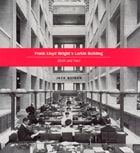
Frank Lloyd Wright's Larkin Building
Myth and FactJack Quinan
University of Chicago Press, 2006
Quinan’s history draws on engineering documents, personal accounts of the building, and other papers he acquired from the family of Darwin D. Martin, a Larkin executive who proposed commissioning Wright to design the company’s offices. With access to these rare sources, Quinan reveals how a young Wright landed the commission and traces the evolution of his cutting-edge plans. Quinan then takes Wright studies to a new level, examining the Larkin Building as a structure at the center of economic and personal relationships.
Illustrated with more than one hundred photographs, floor plans, maps, and diagrams, Frank Lloyd Wright’s Larkin Building provides a concise but complete record of how the building was conceived, built, evaluated, and finally demolished in what has been called a tragic loss for American architecture.
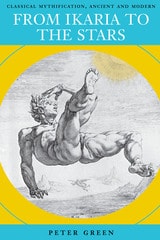
From Ikaria to the Stars
Classical Mythification, Ancient and ModernBy Peter Green
University of Texas Press, 2004
"I hadn't, till I really started digging, gauged the fierce intensity of the need for myth in the human psyche, of any age, or sensed the variety of motives dictating that need," writes Peter Green in the introduction to this wide-ranging collection of essays on classical mythology and the mythic experience. Using the need for myth as the starting point for exploring a number of topics in Greek mythology and history, Green advances new ideas about why the human urge to make myths persists across the millennia and why the borderland between mythology and history can sometimes be hard to map.
Green looks at both specific problems in classical mythology and larger theoretical issues. His explorations underscore how mythic expression opens a door into non-rational and quasi-rational modes of thought in which it becomes possible to rewrite painful truths and unacceptable history—which is, Green argues, a dangerous enterprise. His study of the intersections between classical mythology and Greek history ultimately drives home a larger point, "the degree of mythification and deception (of oneself no less than of others) of which the human mind is capable."

From Myth to Fiction
The Saga of HadingusGeorges Dumézil
University of Chicago Press, 1973
As Professor Dumézil and others have shown, some Indo-European peoples, after their conversion to Christianity, have reordered an earlier mythology to constitute the epic of their origins. For instance, Celtic mythology became history in one case and a source of fiction in another; and from the two texts, Welsh and Irish, by comparison one can reconstruct the original myth.
The Scandinavian nations provide a unique case, for here the pre-Christian texts are still read and have preserved much of the area's mythology in its original form. In addition, we have the work of Saxo and other known writers who composed and signed human transpositions of this mythology purporting to be history. This permits Professor Dumézil to make observations of a rare kind, for knowing something of the author's personality facilitates an understanding of the process of transposition itself.
Professor Dumézil shows how Saxo began by wanting only to tell the story of Denmark and its rulers as nobly as he could—and then later on to extend that narrative back in time. This led him to the only extant Scandinavian literature—that centered on Iceland—that he reordered and reinterpreted to the greater glory of Denmark.
In order to provide a content for the reign of the third king of the Danish Skoldunger dynasty, Hadingus, Saxo simply reworked a Scandinavian account of the career of the god Njördr. In this light Professor Dumézil reads The Saga of Hadingus as a fascinating substitution of a psychological and completely personal narrative for a story of purely social value.
This book contains six appendixes including two that consider the relationship between myth and folklore. They complement Professor Dumézil's careful exegeses and imaginative scholarship to make this the most important, specialized work on Scandinavian mythology available in English.