Results by title
91 books match the query 'Nordic Countries' and 6 start with f

Finland and Europe
The Period of Autonomy and the International Crises, 1808-1914Juhani PaasivirtaD.G. Kirby, EditorTranslated by Anthony F. Upton and Sirkka R. Upton
University of Minnesota Press, 1982
Finland and Europe was first published in 1982. Minnesota Archive Editions uses digital technology to make long-unavailable books once again accessible, and are published unaltered from the original University of Minnesota Press editions.
In 1808 the Grand Duchy of Finland, part of the Swedish kingdom since the thirteenth century, was invaded and in 1809 annexed by Russia -- events which took place within the context of the Napoleonic wars but whose significance was obscure to most Finns and to the outside world as well. During the nineteenth century Finnish national identity grew and Finland began to play a role in European politics. This book traces the course of Finnish involvement in European affairs from the time when it became an autonomous Grand Duchy within the Russian Empire down to the First World War. Juhani Paasivirta's analysis is centered upon eleven international crises, including the Russian annexation of Finland, the fall of Napoleon, two revolutions in Poland, the revolutions of 1848, the Franco-Prussian War and the Paris Commune, the Russo-Turkish and Russo-Japanese wars, and the outbreak of the First World War.
Paasivirta writes from two vantage points: he records the reactions to these events in Finland, across a broad social and economic spectrum, and the attitudes towards the 'Finnish situation' in Sweden, England, France, and Germany. Finland's relationship with Russia, and her necessarily realistic regard for the security of the Russian Empire were important matters faced by Finnish leaders; Paasivirta shows how this delicate relation collapsed, making way for a course that led to Finnish independence in 1917.
Finland in the Twentieth Century
A History and an InterpretationD.G. Kirby
University of Minnesota Press, 1980
Finland in the Twentieth Century was first published in 1980. Minnesota Archive Editions uses digital technology to make long-unavailable books once again accessible, and are published unaltered from the original University of Minnesota Press editions.
Finland's search for a national identity is the underlying theme of this book. A small nation, geographically isolated and linguistically distinct from its neighbors, Finland has long maintained close ties with Sweden and also has had to come to terms with a powerful eastern neighbor, the Soviet Union. D.G. Kirby opens his history with a description of Finland at the turn of the century, when it was a Grand Duchy in the Russian Empire, and traces its emergence as an independent state with the collapse of the Empire in 1917. He examines the new republic's struggle for survival—and identity—after the civil war of 1918, which left a legacy of political instability through the interwar years.
Finland's complex political history is closely tied to its external relations. Kirby describes the evolution of Finnish foreign policy from the period when Finland and the Soviet Union were distrustful and then warring neighbors down to the present policy of friendship and cooperation which grew out of the treaty of 1948. The book closes with an account of Finland's international and domestic status in the Kekkonen era.
Throughout, Kirby provides a substantial socio-economic background to round out his political and diplomatic themes. He also brings to the English-language readers the results of modern Finish historical research. Since historians have played a key role in Finland as interpreters of the nation's recent past, his analysis of their debates helps clarify the ways in which Finland has developed as an independent state in the twentieth century.
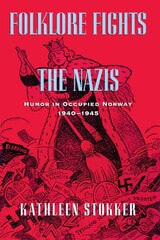
Folklore Fights the Nazis
Humor in Occupied Norway, 1940–1945Kathleen Stokker
University of Wisconsin Press, 1997
In relating this dramatic story, Kathleen Stokker draws upon her many interviews with survivors of the Occupation and upon the archives of the Norwegian Resistance Museum and the University of Oslo. Central to the book are four “joke notebooks” kept by women ranging in age from eleven to thirty, who found sufficient meaning in this humor to risk recording and preserving it. Stokker also cites details from wartime diaries of three other women from East, West, and North Norway. Placing the joking in historical, cultural, and psychological context, Stokker demonstrates how this seemingly frivolous humor in fact contributed to the development of a resistance mentality among an initially confused, paralyzed, and dispirited population, stunned by the German invasion of their neutral country.
For this paperback edition, Stokker has added a new preface offering a comparative view of resistance through humor in neighboring Denmark.
Folklore in the Nordic World
Thomas A. DuBois
University of Wisconsin Press, 2024
From methods of preparing suovabiergu (smoked reindeer meat) in Sápmi, to celebrating graduation by “running the falls” at Uppsala University in Sweden, to massive folk music festivals in Finland and tales of supernatural visitors bestowing baby names in Iceland, folklore offers unique insights into the everyday life of Nordic society. The study of Nordic folklore began in the nineteenth century, when early folklorists imagined that the true character of a nation could be found among the tales of the peasantry. Today, the theories, tools, and institutions developed by influential folklorists in the Nordic region continue to lead the way in documentation, preservation, and analysis of folklore.
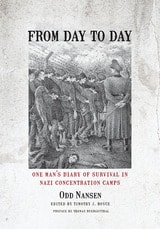
From Day to Day
One Man's Diary of Survival in Nazi Concentration CampsOdd Nansen
Vanderbilt University Press, 2016
Nansen, a Norwegian, was arrested in 1942 by the Nazis, and spent the remainder of World War II in concentration camps--Grini in Oslo, Veidal above the Arctic Circle, and Sachsenhausen in Germany. For three and a half years, Nansen kept a secret diary on tissue-paper-thin pages later smuggled out by various means, including inside the prisoners' hollowed-out breadboards.
Unlike writers of retrospective Holocaust memoirs, Nansen recorded the mundane and horrific details of camp life as they happened, "from day to day." With an unsparing eye, Nansen described the casual brutality and random terror that was the fate of a camp prisoner. His entries reveal his constantly frustrated hopes for an early end to the war, his longing for his wife and children, his horror at the especially barbaric treatment reserved for Jews, and his disgust at the anti-Semitism of some of his fellow Norwegians. Nansen often confronted his German jailors with unusual outspokenness and sometimes with a sense of humor and absurdity that was not appreciated by his captors.
After the Putnam's edition received rave reviews in 1949, the book fell into obscurity. In 1956, in response to a poll about the "most undeservedly neglected" book of the preceding quarter-century, Carl Sandburg singled out From Day to Day, calling it "an epic narrative," which took "its place among the great affirmations of the power of the human spirit to rise above terror, torture, and death." Indeed, Nansen witnessed all the horrors of the camps, yet still saw hope for the future. He sought reconciliation with the German people, even donating the proceeds of the German edition of his book to German refugee relief work. Nansen was following in the footsteps of his father, Fridtjof, an Arctic explorer and humanitarian who was awarded the Nobel Peace Prize in 1922 for his work on behalf of World War I refugees. (Fridtjof also created the "Nansen passport" for stateless persons.)
Forty sketches of camp life and death by Nansen, an architect and talented draftsman, provide a sense of immediacy and acute observation matched by the diary entries. The preface is written by Thomas Buergenthal, who was "Tommy," the ten-year-old survivor of the Auschwitz Death March, whom Nansen met at Sachsenhausen and saved using his extra food rations. Buergenthal, author of A Lucky Child, formerly served as a judge on the International Court of Justice at The Hague and is a recipient of the 2015 Elie Wiesel Award from the US Holocaust Memorial Museum.

From Myth to Fiction
The Saga of HadingusGeorges Dumézil
University of Chicago Press, 1973
As Professor Dumézil and others have shown, some Indo-European peoples, after their conversion to Christianity, have reordered an earlier mythology to constitute the epic of their origins. For instance, Celtic mythology became history in one case and a source of fiction in another; and from the two texts, Welsh and Irish, by comparison one can reconstruct the original myth.
The Scandinavian nations provide a unique case, for here the pre-Christian texts are still read and have preserved much of the area's mythology in its original form. In addition, we have the work of Saxo and other known writers who composed and signed human transpositions of this mythology purporting to be history. This permits Professor Dumézil to make observations of a rare kind, for knowing something of the author's personality facilitates an understanding of the process of transposition itself.
Professor Dumézil shows how Saxo began by wanting only to tell the story of Denmark and its rulers as nobly as he could—and then later on to extend that narrative back in time. This led him to the only extant Scandinavian literature—that centered on Iceland—that he reordered and reinterpreted to the greater glory of Denmark.
In order to provide a content for the reign of the third king of the Danish Skoldunger dynasty, Hadingus, Saxo simply reworked a Scandinavian account of the career of the god Njördr. In this light Professor Dumézil reads The Saga of Hadingus as a fascinating substitution of a psychological and completely personal narrative for a story of purely social value.
This book contains six appendixes including two that consider the relationship between myth and folklore. They complement Professor Dumézil's careful exegeses and imaginative scholarship to make this the most important, specialized work on Scandinavian mythology available in English.