Results by title
527 books match the query 'Novel' and 19 start with f
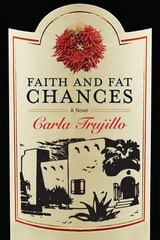
Faith and Fat Chances
A NovelCarla Trujillo
Northwestern University Press, 2015
Finalist, 2012 PEN/Bellwether Prize for Socially Engaged Fiction
Carla Trujillo brings to life another side of the fabled city of Santa Fe in this rollicking novel set in Dogtown, a dilapidated neighborhood on the outskirts of town. Home to a hardscrabble community of working people struggling to make a living on meager means, Dogtown is worlds apart from the tourists, artists, and upscale eateries just a stone’s throw away. The close-knit neighborhood thrives in its own way, until an entrepreneur arrives with a plan to cast out its occupants and construct a winery in its place.
Led by Dogtown’s unofficial mayor, Pepa Romero—an irreverent healer with old-world wisdom and new-age knowledge—the citizens of Dogtown revolt. Using everything at their disposal, including spying, supernatural powers, the law, and individual cunning, they set in motion a thrilling and at times hilarious chain of events that culminates in a storm of epic proportions. With an unforgettable cast of characters, Faith and Fat Chances illuminates the ingenuity and resilience of people fighting to preserve their way of life.
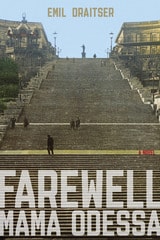
Farewell, Mama Odessa
A NovelEmil Draitser
Northwestern University Press, 2020
Set in the summer of 1979 at the height of the movement to free Soviet Jewry, Farewell, Mama Odessa is an autobiographical novel whose intertwined storylines follow a variety of people—dissidents, victims of ethnic discrimination, and black marketeers among them—as they bid farewell to their beloved hometown of Odessa, Ukraine, and make their way to the West. At the book’s center is Boris, a young writer thwarted by state censorship and antisemitism. With an Angora kitten for his companion and together with other émigrés, he puts the old country in his rear-view mirror and sets out on a journey that will take him to Bratislava, Vienna, Rome, and New York on his way to Los Angeles. Will Boris be able to rekindle his creative passion and inspiration in the West? Will other Jewish émigrés fit into the new society, so much different than the one they left behind? With humor and compassion, Farewell, Mama
Odessa describes the émigrés’ attempts at adjustment to the free world.
Fat Girl, Terrestrial
A NovelKellie Wells
University of Alabama Press, 2012
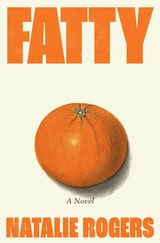
Fatty
A NovelNatalie Rogers
Northwestern University Press, 2027
A poignant coming-of-age novel inspired by martial arts films and family lore about powerful ghost brides
Fatty Wong is a streetwise eleven-year-old in 1960s colonial Hong Kong who dreams of ruling the world. She fights daily for a better life, but in an era of great political turmoil, Fatty faces struggles in the streets of her working-class village—and inside her own home. As the city’s youth begins protesting British rule and local communists mimic the Cultural Revolution that has ignited chaos across mainland China, Fatty grapples with her own desire for freedom and spars with the neighborhood kids to discover her strength through kung fu. She takes a job at a convenience store to carve a space of her own, only to be sexually abused by the owner. Increasingly attuned to the spirit world, Fatty is visited by a neighbor boy who was shot and killed during a riot; his ghost offers to help her escape her anguish if she cares for his grieving mother. Now Fatty must embark on an adventure that will demand she discover her true identity—and raise a fist to anyone attempting to stifle her spirit.
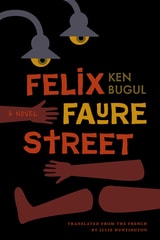
Felix Faure Street
A NovelKen Bugul; Translated from the French by Julie Huntington
Vanderbilt University Press, 2026
Felix Faure Street opens with a gruesome scene, with two incompetent police officers standing before a bloody and dismembered body found strewn across the sidewalk in a working-class neighborhood in Dakar, Senegal. At the onset of the investigation, the body of the murdered man begins to tell the story of the events leading up to his death, but no one is listening to him. Life on Felix Faure Street goes on, just as it does every day. As the mystery unfolds, community members get involved in the investigation. Guided by supernatural elements that manifest in the form of four elusive veiled figures, they will come face to face with a brutal truth about the horrifically mutilated man and those he has abused.
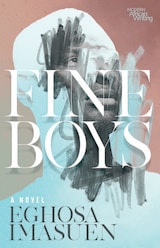
Fine Boys
A NovelEghosa Imasuen
Ohio University Press, 2021
A coming-of-age tale told from the perspective of Nigeria’s Generation X, caught amid the throes of a nascent pro-democracy movement, demoralizing corruption, and campus violence.
Ewaen is a Nigerian teenager, bored at home in Warri and eager to flee from his parents’ unhappy marriage and incessant quarreling. When Ewaen is admitted to the University of Benin, he makes new friends who, like him, are excited about their newfound independence. They hang out in parking lots, trading gibes in pidgin and English and discovering the pleasures that freedom affords them. But when university strikes begin and ruthlessly violent confraternities unleash mayhem on their campus, Ewaen and his new friends must learn to adapt—or risk becoming the confras' next unwilling recruits.
In his trademark witty, colloquial style, critically acclaimed author Eghosa Imasuen presents everyday Nigerian life against the backdrop of the pro-democracy riots of the 1980s and 1990s, the lost hopes of June 12 (Nigeria’s Democracy Day), and the terror of the Abacha years. Fine Boys is a chronicle of time, not just in Nigeria, but also for its budding post-Biafran generation.
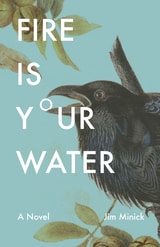
Fire Is Your Water
A NovelJim Minick
Ohio University Press, 2001
Sacred chants are Ada Franklin’s power and her medicine. By saying them, she can remove warts, stanch bleeding, and draw the fire from burns. At age twenty, her reputation as a faith healer defines her in her rural Pennsylvania community. But on the day in 1953 that her family’s barn is consumed by flame, her identity as a healer is upended. The heat, the roar of the blaze, and the bellows of the trapped cows change Ada. For the first time, she fears death and—for the first time—she doubts God. With her belief goes her power to heal. Then Ada meets an agnostic named Will Burk and his pet raven, Cicero.
Fire Is Your Water is acclaimed memoirist Jim Minick’s first novel. Built on magical realism and social observation in equal measure, it never gives way to sentimentality and provides an insider’s glimpse into the culture of Appalachia. A jealous raven, a Greek chorus of one, punctuates the story with its judgments on the characters and their actions, until a tragic accident brings Ada and Will together in a deeper connection.
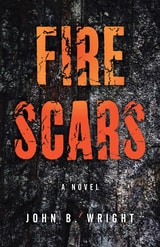
Fire Scars
A NovelJohn B. Wright
University of Nevada Press, 2023
In John B. Wright’s debut environmental mystery, Matt Solberg is charged with discovering who is lighting fires in the forests that surround Missoula, Montana. A geographer with a deep personal need to bring people out of danger, Matt leads a search and rescue team whose job is to head directly into the mouth of hell, hiking into blazing backcountry to find missing residents. Matt and his team not only rely on their hard-won knowledge of Montana’s wild landscape, but also on Matt’s mentor, Dr. Bill Knight, a fire ecologist who understands the burning beast better than anyone.
When a suspicious fire destroys the mansion of a movie star, Matt must hike in to find his missing daughter and save her from the chaos. Then fires begin to explode everywhere as climate change drives temperatures over 100 degrees and rain refuses to fall, threatening thousands of homes. Who is setting these fires? Is it the Montana Tree Monkeys, an eco-radical group determined to scare off the newcomers? Or is it a retired smokejumper with an axe to grind about the encroaching mansions? Could it be Paladin, a shadowy figure leaving strange clues around the state? It’s Matt’s mission to find answers to these questions during a summer of heat, smoke, and unimaginable loss. Weaving together gripping drama and intriguing fire science, Fire Scars reveals the physical and psychological wounds we all carry—and the power we have to overcome.
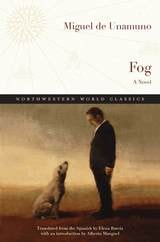
Fog
A NovelMiguel de Unamuno, Translated from the Spanish by Elena Barcia with an introduction by Alberto Manguel
Northwestern University Press, 2017
The novel’s central character, Augusto, is a pampered, aimless young man who falls in love with Eugenia, a woman he randomly spots on the street. Augusto’s absurd infatuation offers an irresistible target for the philosophical ruminations of Unamuno’s characters, including Eugenia’s guardian aunt and “theoretical anarchist” uncle, Augusto’s comical servants, and his best friend, Victor, an aspiring writer who introduces him to a new, groundbreaking type of fiction. In a desperate moment, Augusto consults his creator about his fate, arguing with Unamuno about what it means to be “real.” Even Augusto’s dog, Orfeo, offers his canine point of view, reflecting on the meaning of life and delivering his master’s funeral oration.
Fog is a comedy, a tragic love story, a work of metafiction, and a novel of ideas. After more than a century, Unamuno’s classic novel still moves us, makes us laugh, and invites us to question our assumptions about literature, relationships, and mortality.
Forgetfulness
A NovelMichael Mejia
University of Alabama Press, 2005
The second part of the book takes place in Vienna on May 1st, 1986, shortly before the election of Kurt Waldheim as President of the Austrian Republic and shortly after the Chernobyl disaster. The three simultaneous, intertwining monologues of an archivist, a retired opera singer, and the author of the monograph, revisit the themes and events of the first part, commenting on postwar conceptions, analyses, and revisions of the period during which Webern lived, while continuously haunted by the specters of Waldheim and Chernobyl, the persistence of crimes that are immanent, unpaid for, or only dimly, disingenuously recalled.
Forgetting the Alamo, Or, Blood Memory
A NovelBy Emma Pérez
University of Texas Press, 2009
Runner-up, Best Historical Fiction in English, Latino Book Awards Competition, 2010
This literary adventure takes place in nineteenth-century Texas and follows the story of a Tejana lesbian cowgirl after the fall of the Alamo. Micaela Campos, the central character, witnesses the violence against Mexicans, African Americans, and indigenous peoples after the infamous battles of the Alamo and of San Jacinto, both in 1836. Resisting an easy opposition between good versus evil and brown versus white characters, the novel also features Micaela's Mexican-Anglo cousin who assists and hinders her progress. Micaela's travels give us a new portrayal of the American West, populated by people of mixed races who are vexed by the collision of cultures and politics. Ultimately, Micaela's journey and her romance with a black/American Indian woman teach her that there are no easy solutions to the injustices that birthed the Texas Republic.
This novel is an intervention in queer history and fiction with its love story between two women of color in mid-nineteenth-century Texas. Pérez also shows how a colonial past still haunts our nation's imagination. The battles of the Alamo and San Jacinto offered freedom and liberty to Texans, but what is often erased from the story is that common people who were Mexican, Indian, and Black did not necessarily benefit from the influx of so many Anglo immigrants to Texas. The social themes and identity issues that Pérez explores—political climate, debates over immigration, and historical revision of the American West—are current today.
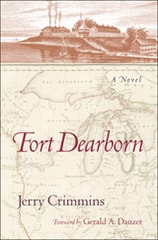
Fort Dearborn
A NovelJerry Crimmins
Northwestern University Press, 2008
In a story that brings to life the founding of one of the world's great cities, Fort Dearborn takes us back to Chicago's early struggle of fire and blood. Through the eyes of two young boys and their fathers—one father a sergeant with the United States First Infantry, the other a Potawatomi warrior—we see the events that lead up to the Fort Dearborn Massacre. Using scores of letters, historical documents and maps, and long-forgotten Native American speeches, Jerry Crimmins breathes life into the little known drama that took place in the vicinity of the fort that once occupied what is now downtown Chicago. A suspenseful narrative, Fort Dearborn is also a remarkable historical account, minutely observed and meticulously documented, preserving a key moment in American history.

Four Days in Michigan
A NovelPhilip Zazove
Gallaudet University Press, 2012
As a young, deaf Jewish woman living in a small town in Michigan in 1942, Sandra Horowitz felt deeply frustrated by her limited prospects. Even though she had just graduated from junior college, she knew that she had two strikes against her in fulfilling her dream to become a veterinarian. Better to marry Jacob Winter, her parents urged her, a deaf Jewish man who made a good living. Then, Sandra met Rudy Townsend, a hearing soldier on leave before shipping out to the war in Europe.
In just four days, both Sandra and Rudy’s worlds were turned upside down. Sandra’s parents feared him for being hearing and a Gentile, while Rudy’s parents expressed openly their bias against her ethnic background and her deafness. Even so, Sandra and Rudy soon realized that they had fallen in love, deeply and passionately. As they shared the brief time they had together, they learned about each other’s dreams for the future — Sandra’s desire to be a vet and Rudy’s determination to serve in Congress. Then, Rudy had to leave for the war.
Philip Zazove’s novel Four Days in Michigan captures perfectly the power of irrepressible love between two individuals from opposite backgrounds. The struggles they encounter in an era when such differences were never more sharply drawn also reveal great detail about deaf and hearing life. Despite all, their triumph comes ultimately because of their long-lasting individual respect and love.
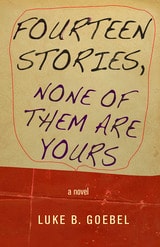
Fourteen Stories, None of Them Are Yours
A NovelLuke B. Goebel
University of Alabama Press, 2014
Freedom's Empire
Race and the Rise of the Novel in Atlantic Modernity, 1640-1940Laura Doyle
Duke University Press, 2007
Doyle brings together authors often separated by nation, race, and period, including Aphra Behn, Eliza Haywood, Olaudah Equiano, Nathaniel Hawthorne, Harriet Wilson, Pauline Hopkins, George Eliot, and Nella Larsen. In so doing, she reassesses the strategies of early women novelists, reinterprets the significance of rape and incest in the novel, and measures the power of race in the modern English-language imagination.
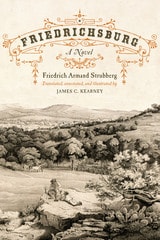
Friedrichsburg
A NovelBy Friedrich Armand Strubberg
University of Texas Press, 2012
Summerfield G. Roberts Award for a Work of Creative Writing, Sons of the Texas Republic, 2013
First published in Germany in 1867, this fascinating autobiographical novel of German immigrants on the antebellum Texas frontier provides a trove of revelations about the myriad communities that once called the Hill Country home.
Founded in 1846, Fredericksburg, Texas, was established by German noblemen who enticed thousands of their compatriots to flee their overcrowded homeland with the prospect of free land in a place that was portrayed as a new Garden of Eden. Few of the settlers, however, were prepared for the harsh realities of the Texas frontier or for confrontation with the Comanche. In his 1867 novel Friedrichsburg, Friedrich Armand Strubberg, a.k.a. Dr. Schubbert, interwove his personal story with a fictional romance to capture the flavor of Fredericksburg, Texas, during its founding years when he served as the first colonial director.
Now available in a contemporary translation, Friedrichsburg brings to life the little-known aspects of life among these determined but often ill-equipped settlers who sought to make the transition to a new home and community on the Texas frontier. Opening just as a peace treaty is being negotiated between the German newcomers and the Comanches, the novel describes the unlikely survival of these fledgling homesteads and provides evidence that support from the Delaware Indians, as well as the nearby Mormon community of Zodiac, was key to the Germans’ success. Along the way, Strubberg also depicts the laying of the cornerstone to the Vereinskirche, the blazing of an important new road to Austin, exciting hunting scenes, and an admirable spirit of cultural cohesion and determined resilience. In so doing, he resurrects a fascinating lost world.

Friend of Kissinger
A NovelDavid Milofsky
University of Wisconsin Press, 2003
In this lively coming-of-age novel, young Danny Meyer lays bare a landscape of illness and despair but emerges triumphant, with a new awareness of the limitations of security and the lessons of eternity. Danny’s bubble-like existence in paradisal Madison is broken when his father, a concert pianist and professor, is stricken with illness and must give up his professorship. The family is forced to move to Milwaukee to live at the brink of poverty while his father gets sicker, his artistic mother struggles as bread-winner, and his brother becomes delusional. Here, Danny finds himself in the uncertain position of having to accept the responsibilities of manhood while still struggling with adolescence.
In a world that keeps shifting, Danny befriends the son of a gangster and, through his brushes with that compelling world of crime, finds his way to a new confidence. Realistically portrayed, A Friend of Kissinger, captures an authentic sense of place that is one part arty, heartland Main Street and one part shady, small-time gangsterland.
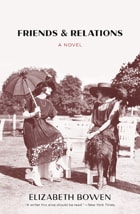
Friends and Relations
A NovelElizabeth Bowen
University of Chicago Press, 2012
In his introduction to a collection of criticism on the Anglo-Irish author Elizabeth Bowen, Harold Bloom wrote, “What then has Bowen given us except nuance, bittersweet and intelligent? Much, much more.” Born in 1899, Bowen became part of the famous Bloomsbury scene, and her novels have a much-deserved place in the modernist canon. In recent years, however, her work has not been as widely read or written about, and as Bloom points out, her evocative and sometimes enigmatic prose requires careful parsing. Yet in addition to providing a fertile ground for criticism, Bowen’s novels are both wonderfully entertaining, with rich humor, deep insight, and a tragic sense of human relationships.
Friends and Relations follows the exploits of four wealthy families whose lives are changed forever by a torrid affair. The Studdart sisters each take a husband; for beautiful Laurel there is Edward Tilney, and for the introverted Janet there is Rodney Meggatt. But the marriages are complicated by changeable passions, and each character must navigate the conflict between familial piety and individual desire. With Bowen’s signature blend of tragedy and comedy, Friends and Relations is truly an investigation into the human heart, and the book is as beautiful, mysterious, and moving as its subject.
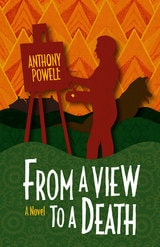
From a View to a Death
A NovelAnthony Powell
University of Chicago Press, 2014
From a View to a Death takes us to a dilapidated country estate where an ambitious artist of questionable talent, a family of landed aristocrats wondering where the money has gone, and a secretly cross-dressing squire all commingle among the ruins.
Written from a vantage point both high and necessarily narrow, Powell’s early novels nevertheless deal in the universal themes that would become a substantial part of his oeuvre: pride, greed, and what makes people behave as they do. Filled with eccentric characters and piercing insights, Powell’s work is achingly hilarious, human, and true.