Results by title
85 books match the query 'Pacific Northwest (OR, WA)' and 9 start with f

Facing the World
Defense Spending and International Trade in the Pacific Northwest Since World War IIChristopher P. Foss
Oregon State University Press, 2020
By the dawn of the twenty-first century, the Pacific Northwest boasted a more diversified economy. Beer, tourism, and high tech moved in alongside timber and wheat as the region’s mainstay industries. In Washington, especially, a Cold War–driven military and national security state set up shop as an economic behemoth even as debates over the costs and consequences of the new Atomic Age raged.
Facing the World highlights these changes, as well as the politicians, business leaders, and ordinary people who helped bring them about. At the center of the story, Senators Henry Jackson, Wayne Morse, Slade Gorton, and Mark Hatfield; Congressman Tom Foley; and Governor Vic Atiyeh worked diligently for a generation to transform the region from insular and backward to cosmopolitan and forward-looking. Aligning the region with national security and international trade policies, these politicians made the Pacific Northwest economy what it is today.
Through extensive research in congressional and federal archives, historian Christopher P. Foss vividly brings to life the discussions, conflicts, and controversies that shaped this political era. Though it wasn’t perfect, its fading legacy of leadership is a lesson for our own time. Facing the World will prove a valuable resource to historians, political scientists, and civic-minded residents of the Pacific Northwest.
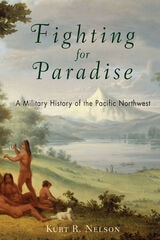
Fighting for Paradise
A Military History of the Pacific NorthwestKurt R. Nelson
Westholme Publishing, 2007
One of the Most Important Battlegrounds in the History of America
While it is in the eastern United States where most Americans identify our military history, the vast, resource-rich Pacific Northwest, stretching from Northern California through British Columbia, endured a series of battles and wars over the course of the nineteenth century that were of regional and national importance. It was here where Great Britain and the United States had their final confrontation in the Americas, where Chief Joseph attempted to secure independence for the Nez Perce, and where the Oregon Trail marked the first great migration to the West of settlers bent on carving out new lives in the wilderness. The Pacific Northwest also saw some of the only attacks on the mainland by Japan during World War II.
Beginning with the earliest known accounts of wars among the American Indians of the region, Fighting for Paradise: A Military History of the Pacific Northwest describes early European contact, including British trappers of the Hudson's Bay Company, the Lewis and Clark Expedition, Jedediah Smith, and John Jacob Astor's trading post. The competition over the lucrative fur trade led to the "Pig War," which almost resulted in another armed conflict between Great Britain and the United States, but it was the influx of settlers from the Oregon Trail that touched off the long bitter battles between whites and American Indians. Starting with the 1847 Whitman Massacre and the ensuing war it touched off, the book covers the next three decades of violence, ending with the Sheepeater's War in 1879. Kurt R. Nelson then relates the Pacific Northwest's contributions to the Spanish-American and Philippine-American Wars, the Mexican Punitive Expedition, World War I, and finally World War II, where the region fought Japanese submarine attacks and was harassed by balloon bombs. Throughout, the author provides current information about the state of preservation of various battle sites and other points of historical interest. Accompanied by maps and photographs, Fighting for Paradise provides insight into an area of American military history, rich in drama, that is not generally known.
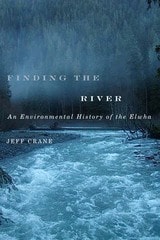
Finding the River
An Environmental History of the ElwhaJeff Crane
Oregon State University Press, 2011
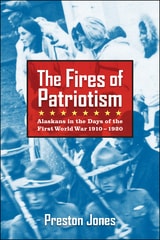
Fires of Patriotism
Alaskans in the Days of the First World War 1910-1920Preston Jones
University of Alaska Press, 2013
The Fires of Patriotism explores Alaska’s wartime experience, bringing to light new stories and new characters from a decade that shook the world. This multifaceted book explores the era through engaging stories and rare photos, offering a fresh perspective on World War I from a marginal land that forged its place in the greater unity of the country.

First Fruits
The Lewellings and the Birth of the Pacific Coast Fruit IndustryLinda Ziedrich
Oregon State University Press, 2025
2025 Choice Outstanding Academic Title
First Fruits offers a fascinating look at the lives of Pacific Coast horticulturists Henderson, Jonathan, and Seth Lewelling. Traveling across the Overland Trail—Henderson to Oregon in 1847, with a wagonload of fruit trees, and Seth and John to California three years later—the brothers would establish themselves as pioneers in the West’s growing fruit industry. By recounting how Henderson planted the first orchard of grafted fruit trees in Oregon, how Seth originated the Black Republican and Bing cherries, and how John led the development of the Napa Valley wine industry, First Fruits preserves the Lewellings’ place in history.
However, the Lewellings were not simply planters, grafters, and breeders. They were also adventurers, colonists, gold seekers, reformists, and explorers—experiencing firsthand the westward expansion of the nation. Their stories provide a unique glimpse into the social, economic, and political history of the day. From their Quaker upbringing in North Carolina and Indiana to Henderson’s attempt to start a utopian colony in Honduras, John’s efforts to grow the Grange in California, and Seth’s contribution to democratic reforms in Oregon, the Lewellings’ legacy extends far beyond their agricultural endeavors.
In the first biography to reclaim the brothers’ histories, Linda Ziedrich splendidly captures their dedicated support of one another and their communities, their contributions to the development of the modern fruit industry, and their lasting influence on the cultivation of fruits synonymous with the Pacific Coast region.
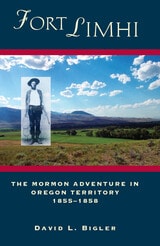
Fort Limhi
The Mormon Adventure in Oregon Territory, 1855-1858David L. Bigler
Utah State University Press, 2004
In May 1855 twenty-seven men set out from the young Mormon settlements in Utah to establish the northernmost colony of the Kingdom of God, "the Northern Mission to the Remnants of the House of Jacob"-American Indians. More colonists, including families, would join them later. Building a fort in the Limhi Valley, four hundred miles to the north and at the foot of the pass by which Lewis and Clark had crossed the Continental Divide, they began to proselyte among Sacagawea's Shoshone relatives as well as members of the Bannock, Nez Percé, and other tribes. Three years later, some of their expected and actual Indian converts violently drove the colonists out and destroyed Fort Limhi.
In Fort Limhi: The Mormon Adventure in Oregon Territory, 1855-1858, David Bigler shows that the colony, known as the Salmon River Mission, played a pivotal role in the Utah War of 1857-1858 and that the catastrophic end of the mission was critical in keeping that conflict from becoming an all out war between Mormon Utah and the United States. In the process, he uses a multitude of primary sources, many newly uncovered or previously overlooked, to reconstruct a dramatic and compelling story involving stalwart Mormon frontiersmen, Brigham Young, a variety of Native American individuals and groups, the U. S. Army, and "mountaineers," as the surviving fur trade veterans now commonly known as "mountain men" called themselves.

From Thorns to Blossoms
A Japanese American Family in War and PeaceMitzi Asai Loftus
Oregon State University Press, 2024
Mitsuko “Mitzi” Asai was not yet ten years old in the spring of 1942 when President Roosevelt’s Executive Order 9066 sent 120,000 people of Japanese ancestry—about two-thirds of them US citizens—from their homes on the West Coast to inland prison camps. They included Mitzi and most of her family, who owned a fruit orchard in Hood River, Oregon. The Asais spent much of World War II in the camps while two of the older sons served in the Pacific in the US Army. Three years later, when the camps began to close, the family returned to Hood River to find an altered community. Shop owners refused to serve neighbors they had known for decades; racism and hostility were open and largely unchecked. Humiliation and shame drove teenaged Mitzi to reject her Japanese heritage, including her birth name. More than a decade later, her life took another turn when a Fulbright grant sent her to teach in Japan, where she reconnected with her roots.
In From Thorns to Blossoms, Mitzi recounts her rich and varied life, from a childhood surrounded by barbed wire and hatred to a successful career as a high school English teacher and college instructor in English as a Second Language. Today, Asai descendants continue to tend the Hood River farm while the town confronts its shameful history. Originally published in 1990 as Made in Japan and Settled in Oregon, this revised and expanded edition describes the positive influence Mitzi’s immigrant parents had on their children, provides additional context for her story, and illuminates the personal side of a dark chapter in US history. It’s the remarkable story of a transformation from thorns into blossoms, pain into healing.

Frontier Doctor
Observations on Central Oregon and the Changing WestUrling C. Coe
Oregon State University Press, 1996
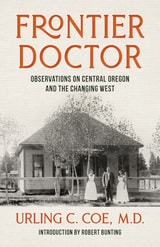
Frontier Doctor
Observations on Central Oregon and the Changing WestUrling C. Coe
Oregon State University Press, 1940