Results by title
50 books match the query 'Philosophy of nature' and 2 start with f
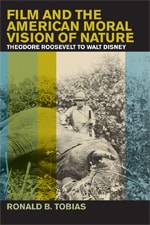
Film and the American Moral Vision of Nature
Theodore Roosevelt to Walt DisneyRonald B. Tobias
Michigan State University Press, 2011
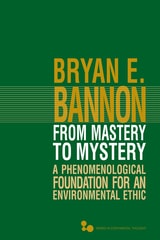
From Mastery to Mystery
A Phenomenological Foundation for an Environmental EthicBryan E. Bannon
Ohio University Press, 2014
From Mastery to Mystery is an original and provocative contribution to the burgeoningfield of ecophenomenology. Informed by current debates in environmental philosophy, Bannon critiques the conception of nature as u200a“substance” that he finds tacitly assumed by the major environmental theorists. Instead, this book reconsiders the basic goals of an environmental ethic by questioning the most basic presupposition that most environmentalists accept: that nature is in need of preservation.
Beginning with Bruno Latour’s idea that continuing to speak of nature in the way we popularly conceive of it is ethically and politically disastrous, this book describes a way in which the concept of nature can retain its importance in our discussion of the contemporary state of the environment. Based upon insights from the phenomenological tradition, specifically the work of Martin Heidegger and Maurice Merleau-Ponty, the concept of nature developed in the book preserves the best antihumanistic intuitions of environmentalists without relying on either a reductionistic understanding of nature and the sciences or dualistic metaphysical constructions.