Results by title
572 books match the query 'Photography' and 23 start with f
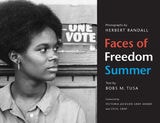
Faces of Freedom Summer
Herbert Randall and Bobs M. Tusa
University of Alabama Press, 2001
Witness the faces that defined a movement for freedom and equality
The old adage “One picture is worth ten thousand words” is definitely true for Faces of Freedom Summer. There are simply not enough words to describe the period in our history that is recorded by the pictures in this book.
As this book afirms, the resurgence of overt activities by hate groups—both the old traditional ones (e.g., the Ku Klux Klan) and the new ones (e.g., the Skin Heads)—however much the hard work and sacrifices of the modern civil rights movement humanized American society, much still remains to be done. The modern civil rights movement associated with the 1960s was not in vain, yet it did not eradicate from our society the evils of racism and sexism. While we activists made the United States more of an open society than it has ever been in its history, our vision and desire for the beloved community did not reach into all sectors of American society. “Freedom,” it has been said, “is a constant struggle, a work of eternal vigilance.”
Faces of Freedom Summer brings to life that there was such a time and there were such people and, if such a people were once, then they are still among us. Yet, they may only become aware of themselves when they are confronted with visible evidence, such as the evidence contained in the pictures of Herbert Randall.

Fantasy Travel
Vintage People on Photo PostcardsTom Phillips
Bodleian Library Publishing, 2012

Fashion Cities Africa
Edited by Hannah Azieb Pool
Intellect Books, 2016
Tied to the Fashion Cities Africa exhibition at the Brighton Museum, the book gives much needed attention to four key African fashion scenes: Nairobi, Lagos, Casablanca, and Johannesburg—one from each region of the continent. Filled with interviews of leading African fashion designers, stylists, and commentators, alongside hundreds of exclusive street-style images, Fashion Cities Africa is a landmark book that should be celebrated in fashion houses the world over.
Feeling Photography
Elspeth H. Brown and Thy Phu, eds.
Duke University Press, 2014
Contributors. Elizabeth Abel, Elspeth H. Brown, Kimberly Juanita Brown, Lisa Cartwright, Lily Cho, Ann Cvetkovich, David L. Eng, Marianne Hirsch, Thy Phu, Christopher Pinney, Marlis Schweitzer, Dana Seitler, Tanya Sheehan, Shawn Michelle Smith, Leo Spitzer, Diana Taylor
Film and the American Moral Vision of Nature
Theodore Roosevelt to Walt DisneyRonald B. Tobias
Michigan State University Press, 2011
Filtering Histories
The Photographic Bureaucracy in Mozambique, 1960 to Recent TimesDrew A. Thompson
University of Michigan Press, 2021
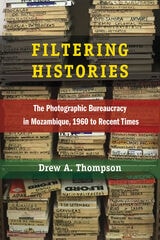
Photographers and their images were critical to the making of Mozambique, first as a colony of Portugal and then as independent nation at war with apartheid in South Africa. When the Mozambique Liberation Front came to power, it invested substantial human and financial resources in institutional structures involving photography, and used them to insert the nation into global debates over photography's use. The materiality of the photographs created had effects that neither the colonial nor postcolonial state could have imagined.
Filtering Histories: The Photographic Bureaucracy in Mozambique, 1960 to Recent Times tells a history of photography alongside state formation to understand the process of decolonization and state development after colonial rule. At the center of analysis are an array of photographic and illustrated materials from Mozambique, South Africa, Portugal, and Italy. Thompson recreates through oral histories and archival research the procedures and regulations that engulfed the practice and circulation of photography. If photographers and media bureaucracy were proactive in placing images of Mozambique in international news, Mozambicans were agents of self-representation, especially when it came to appearing or disappearing before the camera lens. Drawing attention to the multiple images that one published photograph may conceal, Filtering Histories introduces the popular and material formations of portraiture and photojournalism that informed photography's production, circulation, and archiving in a place like Mozambique. The book reveals how the use of photography by the colonial state and the liberation movement overlapped, and the role that photography played in the transition of power from colonialism to independence.
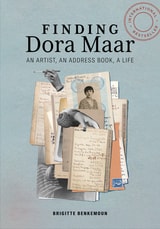
Finding Dora Maar
An Artist, an Address Book, a LifeBrigitte Benkemoun
J. Paul Getty Trust, The, 2020
“[A] spirited and deeply researched project…. [Benkemoun’s] affection for her subject is infectious. This book gives a satisfying treatment to a woman who has been confined for decades to a Cubist’s limited interpretation.” — Joumana Khatib, The New York Times
Merging biography, memoir, and cultural history, this compelling book, a bestseller in France, traces the life of Dora Maar through a serendipitous encounter with the artist’s address book.
In search of a replacement for his lost Hermès agenda, Brigitte Benkemoun’s husband buys a vintage diary on eBay. When it arrives, she opens it and finds inside private notes dating back to 1951—twenty pages of phone numbers and addresses for Balthus, Brassaï, André Breton, Jean Cocteau, Paul Éluard, Leonor Fini, Jacqueline Lamba, and other artistic luminaries of the European avant-garde.
After realizing that the address book belonged to Dora Maar—Picasso’s famous “Weeping Woman” and a brilliant artist in her own right—Benkemoun embarks on a two-year voyage of discovery to learn more about this provocative, passionate, and enigmatic woman, and the role that each of these figures played in her life.
Longlisted for the prestigious literary award Prix Renaudot, Finding Dora Maar is a fascinating and breathtaking portrait of the artist.
This work received support from the French Ministry of Foreign Affairs and the Cultural Services of the French Embassy in the United States through their publishing assistance program.

Food Instagram
Identity, Influence, and NegotiationEdited by Emily J. H. Contois and Zenia Kish
University of Illinois Press, 2022
Image by image and hashtag by hashtag, Instagram has redefined the ways we relate to food. Emily J. H. Contois and Zenia Kish edit contributions that explore the massively popular social media platform as a space for self-identification, influence, transformation, and resistance. Artists and journalists join a wide range of scholars to look at food’s connection to Instagram from vantage points as diverse as Hong Kong’s camera-centric foodie culture, the platform’s long history with feminist eateries, and the photography of Australia’s livestock producers. What emerges is a portrait of an arena where people do more than build identities and influence. Users negotiate cultural, social, and economic practices in a place that, for all its democratic potential, reinforces entrenched dynamics of power.
Interdisciplinary in approach and transnational in scope, Food Instagram offers general readers and experts alike new perspectives on an important social media space and its impact on a fundamental area of our lives.
Contributors: Laurence Allard, Joceline Andersen, Emily Buddle, Robin Caldwell, Emily J. H. Contois, Sarah E. Cramer, Gaby David, Deborah A. Harris, KC Hysmith, Alex Ketchum, Katherine Kirkwood, Zenia Kish, Stinne Gunder Strøm Krogager, Jonathan Leer, Yue-Chiu Bonni Leung, Yi-Chieh Jessica Lin, Michael Z. Newman, Tsugumi Okabe, Rachel Phillips, Sarah Garcia Santamaria, Tara J. Schuwerk, Sarah E. Tracy, Emily Truman, Dawn Woolley, and Zara Worth

For Dear Life
Women's Decriminalization and Human Rights in FocusCarol Jacobsen
University of Michigan Press, 2019
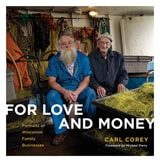
For Love and Money
Portraits of Wisconsin Family BusinessesCarl Corey
Wisconsin Historical Society Press, 2014
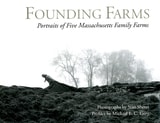
Founding Farms
Portraits of Five Massachusetts Family FarmsStanley E. Sherer
University of Massachusetts Press, 1993
With each passing year, the number of family farms in the United States diminishes. Fewer people have the persistence and ingenuity to wrest a livelihood from the land in an era of corporate ownership and mass production. Yet some family farms survive.
Through words and photographs, this book documents the long lives of five of the oldest farms in Massachusetts. Each has remained in the same family for more than two, sometimes three, centuries and each has a distinctive history. The devotion to the land and family heritage is palpable in the stories these five families tell.
Stan Sherer’s remarkable photographs depict the activities of the family members as they go about their daily labors, planting crops, feeding animals, applying new technologies to ancient tasks, and coping with the vagaries of weather and state regulations. Michael E. C. Gery’s narrative traces how the farms began, what has sustained them through the generations, and how the families who run them today feel about their past, present, and future. These stories are told largely through the words of the people themselves.
The result is a complex portrait that moves beyond traditional stereotypes to reveal the realities of family farm life in an increasingly urbanized society.
Framed Spaces
Photography and Memory in Contemporary Installation ArtMonica E. McTighe
Dartmouth College Press, 2012
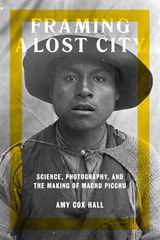
Framing a Lost City
Science, Photography, and the Making of Machu PicchuBy Amy Cox Hall
University of Texas Press, 2017
When Hiram Bingham, a historian from Yale University, first saw Machu Picchu in 1911, it was a ruin obscured by overgrowth whose terraces were farmed a by few families. A century later, Machu Picchu is a UNESCO world heritage site visited by more than a million tourists annually. This remarkable transformation began with the photographs that accompanied Bingham’s article published in National Geographic magazine, which depicted Machu Picchu as a lost city discovered. Focusing on the practices, technologies, and materializations of Bingham’s three expeditions to Peru (1911, 1912, 1914–1915), this book makes a convincing case that visualization, particularly through the camera, played a decisive role in positioning Machu Picchu as both a scientific discovery and a Peruvian heritage site.
Amy Cox Hall argues that while Bingham’s expeditions relied on the labor, knowledge, and support of Peruvian elites, intellectuals, and peasants, the practice of scientific witnessing, and photography specifically, converted Machu Picchu into a cultural artifact fashioned from a distinct way of seeing. Drawing on science and technology studies, she situates letter writing, artifact collecting, and photography as important expeditionary practices that helped shape the way we understand Machu Picchu today. Cox Hall also demonstrates that the photographic evidence was unstable, and, as images circulated worldwide, the “lost city” took on different meanings, especially in Peru, which came to view the site as one of national patrimony in need of protection from expeditions such as Bingham’s.
Framing the Holocaust
Edited by Valerie Hébert
University of Wisconsin Press, 2023
While photographs are central to our memory of modern historical events, they often inhabit an ambivalent intellectual space. What separates the sincere desire to understand from voyeuristic curiosity? Comprehending atrocity photographs requires viewers to place themselves in the very positions of the perpetrators who took the images. When we engage with these photographs, do we risk replicating the original violence? In this tightly organized book, scholars of history, photography, language, gender, photojournalism, and pedagogy examine the images of the Šķēde atrocity along with other difficult images, giving historical, political, and ethical depth to the acts of looking and interpreting.
With a foreword by Edward Anders, who narrowly escaped the December 1941 shooting, Framing the Holocaust represents an original approach to an iconic series of Holocaust photographs. This book will contribute to compelling debates in the emerging field of visual history, including the challenges and responsibilities of using photographs to teach about atrocity.

Frank Lloyd Wright’s Penwern
A Summer EstateMark Hertzberg
Wisconsin Historical Society Press, 2019

Frank Lloyd Wright’s Taliesin
Illustrated by Vintage PostcardsRandolph C. Henning
University of Wisconsin Press, 2011
The Wisconsin-born Frank Lloyd Wright (1867–1959) is recognized worldwide as an iconic architectural genius. In 1911 he designed Taliesin to use as his personal residence, architectural studio, and working farm. A century later Randolph C. Henning has assembled a splendid collection of rare vintage postcards, some never before published, that provides a revealing and visually unique journey through Wright’s work at Taliesin. Included are intimate images of Taliesin at various stages and views of the building just after the tragic 1914 fire. The postcards also depict nearby buildings designed by Wright, including the Romeo and Juliet windmill and two buildings for the Hillside Home School. Henning provides useful explanations that highlight relevant details and accompany each image. Frank Lloyd Wright’s Taliesin documents and celebrates Wright’s 100-year-old masterpiece.
Best Books for General Audiences, selected by the American Association of School Librarians
Best Books for General Audiences, selected by the Public Library Reviewers

Freedom as Form
Gavin Jantjes, Anti-Apartheid, and the Transnational Avant-GardeAllison K. Young
Duke University Press, 2027

French Daguerreotypes
Janet E. Buerger
University of Chicago Press, 1989
Lavishly illustrated, this volume is the first complete catalog of the French daguerreotype collection of the International Museum of Photography at George Eastman House. Janet E. Buerger uses this remarkable collection of images to produce a cultural history of the daguerreotype's most learned following—an elite group of mid-nineteenth-century intellectuals who sought to understand and develop the usefulness, potential, and beauty of this camera image. This varied group, including entrepreneurs, painters, scientists, and historians, enables Buerger to trace the influence of photography into virtually every area of nineteenth-century European intellectual life.
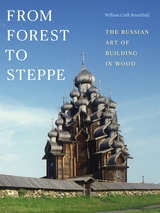
From Forest to Steppe
The Russian Art of Building in WoodWilliam Craft Brumfield
Duke University Press, 2025
In From Forest to Steppe, renowned scholar and photographer William Craft Brumfield offers a panoramic survey of Russia’s centuries-long heritage of wooden architecture. Lavishly illustrated with more than 400 color photographs, the volume links log-built barns, windmills, houses, and churches in the Far North; Buddhist shrines in the Transbaikal region; and eighteenth-century palaces on the outskirts of Moscow. Brumfield also takes readers to the estate houses of many Russian literary giants, from Chekhov and Tolstoy to Dostoevsky and Pushkin. Spanning thousands of photographed sites, five decades of field work, and seven time zones, Brumfield’s photographs offer compelling evidence of the adaptability of log construction and its ability to transcend class, cultural, and aesthetic boundaries.
In the decades since Brumfield began photographing Russian architecture, many of the buildings he has documented have been demolished or abandoned and left to rot at alarming rates. Brumfield observes a contradiction in contemporary Russia: It acknowledges the cultural importance of wooden buildings yet struggles to find and dedicate the resources and solutions needed to save them. A hymn and elegy to the long Russian practice of building with wood, From Forest to Steppe is an unparalleled look into one of the world’s most singular architectural traditions.

From Palestine to Israel
A Photographic Record of Destruction and State Formation, 1947-1950Ariella Azoulay
Pluto Press, 2011
In this carefully curated and beautifully presented photobook, Ariella Azoulay offers a new perspective on four crucial years in the history of Palestine/Israel.
The book reconstructs the processes by which the Palestinian majority in Mandatory Palestine became a minority in Israel, while the Jewish minority established a new political entity in which it became a majority ruling a minority Palestinian population. By reading over 200 photographs from that period, most of which were previously confined to Israeli state archives, Azoulay recounts the events and the stories that for years have been ignored or only partially acknowledged in Israel and the West.
Including substantial analytical text, this book will give activists, scholars and journalists a new perspective on the origins of the Palestine-Israel conflict.
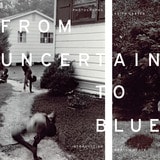
From Uncertain to Blue
By Keith Carter
University of Texas Press, 2011
"In the beginning, there was no real plan, just a road trip that became a journey." In the years 1986 and 1987, Keith Carter and his wife, Patricia, visited one hundred small Texas towns with intriguing names like Diddy Waw Diddy, Elysian Fields, and Poetry. He says, "I tried to make my working method simple and practical: one town, one photograph. I would take several rolls of film but select only one image to represent that dot on my now-tattered map. The titles of the photographs are the actual names of the small towns. . . ." Carter created a body of work that evoked the essence of small-town life for many people, including renowned playwright and fellow Texan, Horton Foote. In 1988, Carter published his one town/one picture collection in From Uncertain to Blue, a landmark book that won acclaim both nationally and internationally for the artistry, timelessness, and universal appeal of its images—and established Carter as one of America's most promising fine art photographers.
Now a quarter century after the book's publication, From Uncertain to Blue has been completely re-envisioned and includes a new essay in which Carter describes how the search for photographic subjects in small towns gradually evolved into his first significant work as an artist. He also offers additional insight into his creative process by including some of his original contact sheets. And Patricia Carter gives her own perspective on their journey in her amplified notes about many of the places they visited as they discovered the world of possibilities from Uncertain to Blue.
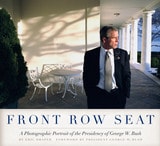
Front Row Seat
A Photographic Portrait of the Presidency of George W. BushBy Eric Draper
University of Texas Press, 2013
America’s forty-third president, George W. Bush, presided over eight of the most dramatic years in recent history, from the 9/11 attacks early in his administration to the worldwide economic crisis of 2008. By his side, recording every event from the momentous to the intimate, was his personal White House photographer, Eric Draper. From a collection of nearly one million photographs, Draper has selected more than one hundred images of President Bush that portray both the public figure and the private man.
Front Row Seat presents a compelling, behind-the-scenes view of the presidency of George W. Bush. Through Draper’s lens, we follow Bush through moments of crisis that called for strong leadership, such as 9/11; emotional meetings with troops in war zones, wounded soldiers at home, and Katrina survivors; and happy, relaxed times with his wife Laura, daughters Barbara and Jenna, and parents President George H. W. and Barbara Bush. We also see Bush at work within his inner circle of trusted advisors, including Vice President Richard Cheney, National Security Advisor and Secretary of State Condoleezza Rice, and Secretary of Defense Donald Rumsfeld.
Capturing moments that reveal the essence of the man, Front Row Seat is an irreplaceable portrait of George W. Bush.
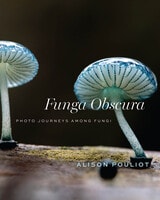
Funga Obscura
Photo Journeys Among FungiAlison Pouliot
University of Chicago Press, 2025
An unforgettable visual journey through the kingdom of fungi, both enigmatic and entrancing.
Recyclers, creators of soil, enablers of life, and food for many—fungi are as dynamic as they are diverse. And, throughout her career, Alison Pouliot has observed these organisms with a unique vision. As a scientist and photographer, she has led hundreds of forays through the forests of the Americas, Australia, and Europe. In this book, readers can travel along with her on these global explorations through stunning photographs and meditations on the landscape. She says her camera is where fungal lives come most clearly into focus. And like the camera obscura, this book, Funga Obscura, captures brief mycological moments and unforgettable fungus microcosms.
The word funga refers to the fungi of a region, and Pouliot’s photography spans continents. We see a parade of violet webcap mushrooms, spotted in the understory of a Pacific Northwest forest; brilliantly blue pixie’s parasols in Australia; an Italian alpine lichen, looking for all the world like a treasure map; and a showstopping whitelaced shank, ready to spread its spores in Switzerland. We learn that fungi live almost everywhere, from our lawns to forests and woodlands, from the ocean’s depths to deserts and alpine peaks. Yet, like a web of rootlike mycelium, Funga Obscura goes deeper to investigate how fungi shape landscapes and interact with other organisms, including humans. This journey spans eons, from long ago in evolutionary time, when fungi first emerged from the ocean onto land, to today, when we witness their work all around us. The scenes here challenge our ideas about what fungi are, what they do, and why they matter.
In Pouliot’s photographs, you might recognize a few old friends, but many mushrooms will be new acquaintances. Sometimes they make their presence immediately known; at other times, they just provide clues—and trails to follow.