Results by title
88 books match the query 'Physicians' and 8 start with f
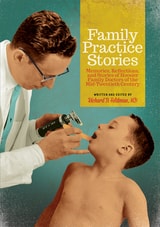
Family Practice Stories
Memories, Reflections, and Stories of Hoosier Family Doctors of the Mid-Twentieth CenturyRichard Feldman
Indiana Historical Society Press, 2013
An initiative of the Indiana Academy of Family Physicians and the Indiana Academy of Family Physicians Foundation, Family Practice Stories is a collection of tales told by, and about, Hoosier family doctors practicing in the middle of the twentieth century. The stories celebrate that time in America considered to be the golden age of generalism in medicine---a time that conjures up Norman Rockwell’s familiar archetypal images of the country family doctor and a time when the art of healing was at its zenith.
[more]
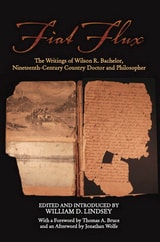
Fiat Flux
The Writings of Wilson R. Bachelor, Nineteenth-Century Country Doctor and PhilosopherWilliam D. Lindsey
University of Arkansas Press, 2013
Wilson R. Bachelor was a Tennessee native who moved with his family to Franklin County, Arkansas, in 1870. A country doctor and natural philosopher, Bachelor was impelled to chronicle his life from 1870 to 1902, documenting the family's move to Arkansas, their settling a farm in Franklin County, and Bachelor's medical practice. Bachelor was an avid reader with wide-ranging interests in literature, science, nature, politics, and religion, and he became a self-professed freethinker in the 1870s. He was driven by a concept he called "fiat flux," an awareness of the "rapid flight of time" that motivated him to treat the people around him and the world itself as precious and fleeting. He wrote occasional pieces for a local newspaper, bringing his unusually enlightened perspectives to the subjects of women's rights, capital punishment, the role of religion in politics, and the domination of the American political system by economic elite in the 1890s. These essays, along with family letters and the original diary entries, are included here for an uncommon glimpse into the life of a country doctor in nineteenth-century Arkansas.
[more]
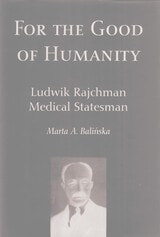
For the Good of Humanity
Ludwik Rajchman, Medical StatesmanMarta A. Balinska
Central European University Press, 1998
In this biography of Ludwik Rajchman, Marta A. Balinska paints a portrait of a true hero of our times. He was born in Poland in 1881 and was an exponent of humanitarian intervention and defender of colonized people, as adept in secret diplomacy as in organizing vast anti-epidemic campaigns. He inspired the creation of WHO and the foundation of UNICEF, of which he became the first chairman. Progressive but opposed to all dogmas, he was forced by McCarthyism to flee the U.S. and soon became an object of suspicion in the Soviet bloc, finding himself estranged from his beloved Poland. As the story of this remarkable life unfolds, the reader is given a behind-the-scenes glimpse of the major events that shaped the twentieth century. Using family archives and documentary sources from a dozen countries, the author brilliantly reconstructs the career of a man who was not only the first médecin sans frontiere but also an intellectual with an exceptional sense of the universal.
[more]
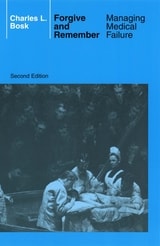
Forgive and Remember
Managing Medical Failure, 2nd EditionCharles L. Bosk
University of Chicago Press, 2003
On its initial publication, Forgive and Remember emerged as the definitive study of the training and lives of young surgeons. Now with an extensive new preface, epilogue, and appendix by the author, reflecting on the changes that have taken place since the book's original publication, this updated second edition of Charles L. Bosk's classic study is as timely as ever.
[more]
From Popular Medicine to Medical Populism
Doctors, Healers, and Public Power in Costa Rica, 1800–1940Steven Palmer
Duke University Press, 2003
From Popular Medicine to Medical Populism presents the history of medical practice in Costa Rica from the late colonial era—when none of the fifty thousand inhabitants had access to a titled physician, pharmacist, or midwife—to the 1940s, when the figure of the qualified medical doctor was part of everyday life for many of Costa Rica’s nearly one million citizens. It is the first book to chronicle the history of all healers, both professional and popular, in a Latin American country during the national period.
Steven Palmer breaks with the view of popular and professional medicine as polar opposites—where popular medicine is seen as representative of the authentic local community and as synonymous with oral tradition and religious and magical beliefs and professional medicine as advancing neocolonial interests through the work of secular, trained academicians. Arguing that there was significant and formative overlap between these two forms of medicine, Palmer shows that the relationship between practitioners of each was marked by coexistence, complementarity, and dialogue as often as it was by rivalry. Palmer explains that while the professionalization of medical practice was intricately connected to the nation-building process, the Costa Rican state never consistently displayed an interest in suppressing the practice of popular medicine. In fact, it persistently found both tacit and explicit ways to allow untitled healers to practice. Using empirical and archival research to bring people (such as the famous healer or curandero Professor Carlos Carbell), events, and institutions (including the Rockefeller Foundation) to life, From Popular Medicine to Medical Populism demonstrates that it was through everyday acts of negotiation among agents of the state, medical professionals, and popular practitioners that the contours of Costa Rica’s modern, heterogeneous health care system were established.
Steven Palmer breaks with the view of popular and professional medicine as polar opposites—where popular medicine is seen as representative of the authentic local community and as synonymous with oral tradition and religious and magical beliefs and professional medicine as advancing neocolonial interests through the work of secular, trained academicians. Arguing that there was significant and formative overlap between these two forms of medicine, Palmer shows that the relationship between practitioners of each was marked by coexistence, complementarity, and dialogue as often as it was by rivalry. Palmer explains that while the professionalization of medical practice was intricately connected to the nation-building process, the Costa Rican state never consistently displayed an interest in suppressing the practice of popular medicine. In fact, it persistently found both tacit and explicit ways to allow untitled healers to practice. Using empirical and archival research to bring people (such as the famous healer or curandero Professor Carlos Carbell), events, and institutions (including the Rockefeller Foundation) to life, From Popular Medicine to Medical Populism demonstrates that it was through everyday acts of negotiation among agents of the state, medical professionals, and popular practitioners that the contours of Costa Rica’s modern, heterogeneous health care system were established.
[more]
From Residency to Retirement
Physicians' Careers over a Professional LifetimeTerry Mizrahi
Rutgers University Press, 2021
From Residency to Retirement tells the stories of twenty American doctors over the last half century, which saw a period of continuous, turbulent, and transformative changes to the U.S. health care system. The cohort’s experiences are reflective of the generation of physicians who came of age as presidents Carter and Reagan began to focus on costs and benefits of health services.
Mizrahi observed and interviewed these physicians in six timeframes ending in 2016. Beginning with medical school in the mid-1970s, these physicians reveal the myriad fluctuations and uncertainties in their professional practice, working conditions, collegial relationships, and patient interactions. In their own words, they provide a “view from the front lines” both in academic and community settings. They disclose the satisfactions and strains in coping with macro policies enacted by government and insurance companies over their career trajectory.
They describe their residency in internal medicine in a large southern urban medical center as a “siege mentality” which lessened as they began their careers, in Getting Rid of Patients, the title of Mizrahi’s first book (1986). As these doctors moved on in their professional lives more of their experiences were discussed in terms of dissatisfaction with financial remuneration, emotional gratification, and intellectual fulfillment. Such moments of career frustration, however, were also interspersed with moments of satisfaction at different stages of their medical careers. Particularly revealing was whether they were optimistic about the future at each stage of their career and whether they would recommend a medical career to their children. Mizrahi's subjects also divulge their private feelings of disillusionment and fear of failure given the malpractice epidemic and lawsuits threatened or actually brought against so many doctors. Mizrahi’s work, covering almost fifty years, provides rarely viewed insights into the lives of physicians over a professional life span.
[more]

Frontier Doctor
Observations on Central Oregon and the Changing WestUrling C. Coe
Oregon State University Press, 1996
[more]
Frontier Doctor
Observations on Central Oregon and the Changing WestUrling C. Coe
Oregon State University Press, 1940
Frontier Doctor, Urling C. Coe's autobiographical account of his thirteen years in Central Oregon, details the extraordinary experiences of a young physician in a frontier town, from childbirthing to epidemics, broken bones to unwanted pregnancies. In 1905 Coe became the first licensed doctor in what he called "the heart of the last pioneer stock country of the West." His colorful, firsthand stories about treating patients—cowboys, rustlers, ranch wives, prostitutes, homesteaders, town boosters, and Native Americans—offer a vivid social history of town and ranch life on the Oregon high desert. They also document the development of a Western boomtown: with the arrival of the railroad in 1911, the wide-open settlement known as Farewell Bend was transformed into an important center of industry, commerce, and culture.
[more]