Results by title
336 books match the query 'Political Economy' and 10 start with f
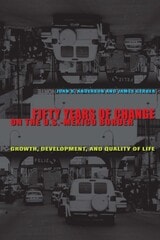
Fifty Years of Change on the U.S.-Mexico Border
Growth, Development, and Quality of LifeBy Joan B. Anderson and James Gerber
University of Texas Press, 2007
Winner, Book Award, Associaton for Borderland Studies, 2008
The U.S. and Mexican border regions have experienced rapid demographic and economic growth over the last fifty years. In this analysis, Joan Anderson and James Gerber offer a new perspective on the changes and tensions pulling at the border from both sides through a discussion of cross-border economic issues and thorough analytical research that examines not only the dramatic demographic and economic growth of the region, but also shifts in living standards, the changing political climate, and environmental pressures, as well as how these affect the lives of people in the border region.
Creating what they term a Border Human Development Index, the authors rank the quality of life for every U.S. county and Mexican municipio that touches the 2,000-mile border. Using data from six U.S. and Mexican censuses, the book adeptly illustrates disparities in various aspects of economic development between the two countries over the last six decades.
Anderson and Gerber make the material accessible and compelling by drawing an evocative picture of how similar the communities on either side of the border are culturally, yet how divided they are economically. The authors bring a heightened level of insight to border issues not just for academics but also for general readers. The book will be of particular value to individuals interested in how the border between the two countries shapes the debates on quality of life, industrial growth, immigration, cross-border integration, and economic and social development.
First the Seed
The Political Economy of Plant BiotechnologyJack Ralph Kloppenburg, Jr.
University of Wisconsin Press, 2005
1988 Cloth, 1990 Paperback, Cambridge University Press
Winner of the Theodore Saloutos Award of the Agricultural History Society
Winner of the Robert K. Merton Award of the American Sociological Association
Fragmenting Globalization
The Politics of Preferential Trade Liberalization in China and the United StatesKa Zeng and Xiaojun Li
University of Michigan Press, 2021
Fragmenting Globalization uses multiple methods, including time series, cross-sectional analysis of the pattern of Preferential Trade Alliance formation by existing World Trade Organization members, a firm-level survey, and case studies of the pattern of corporate support for regional trade liberalization in both China and the United States. Zeng and Li show that the growing fragmentation of global production, trade, and investment is altering trade policy away from the traditional divide between export-oriented and import-competing industries.

Freedom and the Economic System
F. A. Hayek
University of Chicago Press, 1939

From Quarry to Cornfield
The Political Economy of Mississippian Hoe ProductionCharles Richard Cobb
University of Alabama Press, 2001
An innovative model for examining the technology of hoe production and its contribution to the agriculture of Mississippian communities.
Lithic specialist Charles Cobb examines the political economy in Mississippian communities through a case study of raw material procurement and hoe production and usage at the Mill Creek site on Dillow Ridge in southwest Illinois. Cobb outlines the day-to-day activities in a Mississippian chiefdom village that flourished from about A.D. 1250 to 1500. In so doing, he provides a fascinating window into the specialized tasks of a variety of "day laborers" whose contribution to the community rested on their production of stone hoes necessary in the task of feeding the village. Overlooked in most previous studies, the skills and creativity of the makers of the hoes used in village farming provide a basis for broader analysis of the technology of hoe use in Mississippian times.
Although Cobb's work focuses on Mill Creek, his findings at this site are representative of the agricultural practices of Mississippian communities throughout the eastern United States. The theoretical underpinnings of Cobb's study make a clear case for a reexamination of the accepted definition of chiefdom, the mobilization of surplus labor, and issues of power, history, and agency in Mississippian times. In a well-crafted piece of writing, Cobb distinguishes himself as one of the leaders in the study of lithic technology. From Quarry to Cornfield will find a well-deserved place in the ongoing discussions of power and production in the Mississippian political economy.
From Socialism to Capitalism
Eight EssaysJanos Kornai
Central European University Press, 2008
Eight essays connected by various common strands. The most important one is the community of the main subject-matter: socialism, capitalism, democracy, change of system. These four expressions cover four phenomena of great and comprehensive importance. Each piece in the book deals with these and the connections between them.
One of the Leitmotifs is the “capitalism/socialism” pair of opposites. Capitalism has a history of several hundred years, while the socialist regime existed only for a few decades. But this pair of opposites was central to the history of the twentieth century. This antagonism put its stamp on political thinking, on the foreign policy and military preparedness of every country, and on some appallingly destructive armed conflicts. All these had great secondary influence on each country’s economic development and the standard of living and disposition of its inhabitants.
None of the studies is confined to one country—not to Hungary or to any other. Each tries to embrace the problems common to greater units. However, the greater unit comprehended is not the same in each study. One may deal with the capitalist or socialist system in general, another will all the post-socialist countries, and a third the Central East European region. But all extend the analysis beyond the borders of one country.
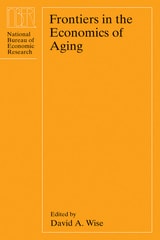
Frontiers in the Economics of Aging
Edited by David A. Wise
University of Chicago Press, 1998
Frontiers in the Economics in Aging directs attention to four topics: the role of retirement accounts, such as IRAs and 401(k)s in personal saving; the economics of health care; new advances in research methodology; and aging in relation to inequality. Some of the issues analyzed within these topics are the implications of rising personal retirement saving in recent years, how health and health insurance affect labor supply, and the effects of pensions on the distribution of wealth.
David Wise's lucid introduction provides an overview of each paper. In addition to this book's appeal for specialists and microeconomists, it offers immediately practical ideas and methods for shaping public policy. In fact, one of the papers in this volume, "The Taxation of Pensions: A Shelter Can Become a Trap," helped to spur new legislation that reformed laws on pension distribution.

Frontiers of Capital
Ethnographic Reflections on the New EconomyMelissa S. Fisher and Greg Downey, eds.
Duke University Press, 2006
Some contributors highlight how expedited flows of information allow business professionals to develop new knowledge practices. They analyze dynamics ranging from the decision-making processes of the Federal Reserve Board to the legal maneuvering necessary to buttress a nascent Japanese market in over-the-counter derivatives. Others focus on the social consequences of globalization and new modes of communication, evaluating the introduction of new information technologies into African communities and the collaborative practices of open-source computer programmers. Together the essays suggest that social relations, rather than becoming less relevant in the high-tech age, have become more important than ever. This finding dovetails with the thinking of many corporations, which increasingly employ anthropologists to study and explain the “local” cultural practices of their own workers and consumers. Frontiers of Capital signals the wide-ranging role of anthropology in explaining the social and cultural contours of the New Economy.
Contributors. Jean Comaroff, John L. Comaroff, Greg Downey, Melissa S. Fisher, Douglas R. Holmes, George E. Marcus, Siobhán O’Mahony, Aihwa Ong, Annelise Riles, Saskia Sassen, Paul A. Silverstein, AbdouMaliq Simone, Neil Smith, Caitlin Zaloom

Fujimori's Peru
The Political EconomyEdited by John Crabtree and Jim Thomas
University of London Press, 1998
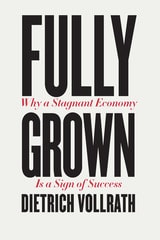
Fully Grown
Why a Stagnant Economy Is a Sign of SuccessDietrich Vollrath
University of Chicago Press, 2020
Most economists would agree that a thriving economy is synonymous with GDP growth. The more we produce and consume, the higher our living standard and the more resources available to the public. This means that our current era, in which growth has slowed substantially from its postwar highs, has raised alarm bells. But should it? Is growth actually the best way to measure economic success—and does our slowdown indicate economic problems?
The counterintuitive answer Dietrich Vollrath offers is: No. Looking at the same facts as other economists, he offers a radically different interpretation. Rather than a sign of economic failure, he argues, our current slowdown is, in fact, a sign of our widespread economic success. Our powerful economy has already supplied so much of the necessary stuff of modern life, brought us so much comfort, security, and luxury, that we have turned to new forms of production and consumption that increase our well-being but do not contribute to growth in GDP.
In Fully Grown, Vollrath offers a powerful case to support that argument. He explores a number of important trends in the US economy: including a decrease in the number of workers relative to the population, a shift from a goods-driven economy to a services-driven one, and a decline in geographic mobility. In each case, he shows how their economic effects could be read as a sign of success, even though they each act as a brake of GDP growth. He also reveals what growth measurement can and cannot tell us—which factors are rightly correlated with economic success, which tell us nothing about significant changes in the economy, and which fall into a conspicuously gray area.
Sure to be controversial, Fully Grown will reset the terms of economic debate and help us think anew about what a successful economy looks like.