Results by title
704 books match the query 'Political Process' and 25 start with f

F. D. R. and the Press
Graham J. White
University of Chicago Press, 1979
White challenges and disproves Roosevelt's contention that the press was unusually severe and slanted in its treatment of the Roosevelt years. His original work traces FDR's hostile assessment of the press to his own political philosophy: an ideology that ordained him a champion of the people, whose task it was to preserve American democracy against the recurring attempt by Hamiltonian minorities (newspaper publishers and captive reporters) to wrest control of their destiny from the masses.
White recounts Roosevelt's initial victory over the press corps, and the effect his wily manipulations had on press coverage of his administrations and on his own public image. He believes Roosevelt's denunciation of the press was less an accurate description of the press's behavior towards his administrations than a product of his own preconceptions about the nature of the Presidency. White concludes that Roosevelt's plan was to disarm those he saw as the foes of democracy by accusing them of unfairly maligning him.
Fair Share
Senior Activism, Tiny Publics, and the Culture of ResistanceGary Alan Fine
University of Chicago Press, 2023
If you've ever been to a protest or been involved in a movement for social change, you have likely experienced a local culture, one with slogans, jargon, and shared commitments. Though one might think of a cohort of youthful organizers when imagining protest culture, this powerful ethnography from esteemed sociologist Gary Alan Fine explores the world of senior citizens on the front lines of progressive protests. While seniors are a notoriously important—and historically conservative—political cohort, the group Fine calls “Chicago Seniors Together” is a decidedly leftist organization, inspired by the model of Saul Alinsky. The group advocates for social issues, such as affordable housing and healthcare, that affect all sectors of society but take on a particular urgency in the lives of seniors. Seniors connect and mobilize around their distinct experiences but do so in service of concerns that extend beyond themselves. Not only do these seniors experience social issues as seniors—but they use their age as a dramatic visual in advocating for political change.
In Fair Share, Fine brings readers into the vital world of an overlooked political group, describing how a “tiny public” mobilizes its demands for broad social change. In investigating this process, he shows that senior citizen activists are particularly savvy about using age to their advantage in social movements. After all, what could be more attention-grabbing than a group of passionate older people determinedly shuffling through snowy streets with canes, in wheelchairs, and holding walkers to demand healthcare equity, risking their own health in the process?

Fake News – What’s the harm?
Four ideas for fact-checkers, policymakers & platforms on countering the consequences of false information & defending free speechPeter Cunliffe-Jones
University of Westminster Press, 2025
Farmers in Rebellion
The Rise and Fall of the Southern Farmers Alliance and People's Party in TexasBy Donna A. Barnes
University of Texas Press, 1984
The years after the Civil War brought struggle to the Southern farmer as the economic mainstay of the South—cotton—steadily dropped in price. Prompted by hard times, farmers in Lampasas County, Texas, gathered in 1877 to discuss what could be done. From these modest origins emerged the National Farmers Alliance and Industrial Union, later known as the Southern Farmers Alliance, a powerful protest movement that played an important role in the formation in 1892 of a new political force, the People's party. In the "solid South," particularly in Texas, large numbers of voters abandoned the Democratic party for the new party. Yet despite this support, the decline of the People's party after 1894 was swift.
Farmers in Rebellion recounts the compelling story of these two crucial and closely related movements. Donna A. Barnes examines their developmental histories, asking such important questions as: Under what conditions do protest movements remain weak? Under what conditions do they prosper, amassing large numbers of supporters? And under what conditions do successful protest movements lose their momentum and die? The author explores these complex questions with deft use of archival data that allows her to reflect on the adequacy of the past sociological answers to these questions.
Farmers in Rebellion is a book rich in detail and scope in its look at a critical juncture in the growth of national populist movements. Of interest to sociologists, historians, and political scientists, it stands as an important contribution to our understanding of a pivotal time in Texas, and national, history.
Feeling Democracy
Emotional Politics in the New MillenniumSarah Tobias
Rutgers University Press, 2024
The essays in Feeling Democracy examine how both reactionary and progressive politics are driven largely by emotional appeals to the public. The contributors in this collection cover everything from immigrants’ rights movements to white nationalist rallies to show how solidarities forged around gender, race, and sexuality become catalysts for a passionate democratic politics. Some essays draw parallels between today’s activist strategies and the use of emotion in women-led radical movements from the 1960s and 1970s, while others expand the geographic scope of the collection by considering Asian decolonial politics and Egyptian pro-democracy protests.
Incorporating scholarship from fields as varied as law, political science, philosophy, psychoanalysis, and history, Feeling Democracy considers how emotional rhetoric in politics can be a double-edged sword—often wielded by authoritarian populists who seek to undermine democracy but sometimes helping to bring about a genuine renewal of participatory democracy.

Fighting Corporate Abuse
Beyond Predatory CapitalismCorporate Reform Collective
Pluto Press, 2014
Fighting Corporate Abuse demonstrates, through compelling and revelatory analysis, the legislation and regulation needed to deal with the abuses in the corporate sector that have been revealed in recent years. It highlights the more general contribution of company law and practice to the current crisis in capitalism.
The first section develops a controversial argument, using detailed illustrations and vivid examples which show how the various abuses of predatory capitalism have been carried out through the manipulation of the corporate form and the creation of highly complex corporate groups. The group of authors, all experts in their fields, tackle head-on the issues of tax evasion, extraction of value and asset stripping, environmental destruction and managerial self-interest. In doing so, they paint a picture of a system that is abusive, and degenerated, but also a system which can be reformed.
In the run up to the UK general election, the authors develop of a set of practical proposals for an incoming government, outlining how each of these abuses could be curtailed and how a more acceptable and accountable form of corporate capitalism can be developed through national and international action.
Drawing on the group’s activism, as well as their academic experience in law, politics, economics and human rights, this will be an authoritative as well as a highly practical book.
Fighting for Reliable Evidence
Judith M. Gueron
Russell Sage Foundation, 2013
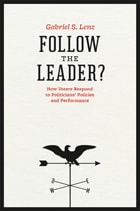
Follow the Leader?
How Voters Respond to Politicians' Policies and PerformanceGabriel S. Lenz
University of Chicago Press, 2012
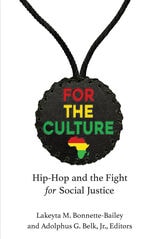
For the Culture
Hip-Hop and the Fight for Social JusticeLakeyta M. Bonnette-Bailey and Adolphus G. Belk, Jr., Editors
University of Michigan Press, 2022

Fractured Politics
Peruvian Democracy Past and PresentEdited by John Crabtree
University of London Press, 2011

Framing Immigrants
News Coverage, Public Opinion, and PolicyChris Haynes
Russell Sage Foundation, 2016
The authors analyze media coverage of several key immigration policy issues—including mass deportations, comprehensive immigration reform, and measures focused on immigrant children, such as the DREAM Act—to chart how news sources across the ideological spectrum produce specific “frames” for the immigration debate. In the past few years, liberal and mainstream outlets have tended to frame immigrants lacking legal status as “undocumented” (rather than “illegal”) and to approach the topic of legalization through human-interest stories, often mentioning children. Conservative outlets, on the other hand, tend to discuss legalization using impersonal statistics and invoking the rule of law. Yet, regardless of the media’s ideological positions, the authors’ surveys show that “negative” frames more strongly influence public support for different immigration policies than do positive frames. For instance, survey participants who were exposed to language portraying immigrants as law-breakers seeking “amnesty” tended to oppose legalization measures. At the same time, support for legalization was higher when participants were exposed to language referring to immigrants living in the United States for a decade or more.
Framing Immigrants shows that despite heated debates on immigration across the political aisle, the general public has yet to form a consistent position on undocumented immigrants. By analyzing how the media influences public opinion, this book provides a valuable resource for immigration advocates, policymakers, and researchers.

France at the Polls, 1981 and 1986
Howard R. Penniman, ed.
Duke University Press, 1988
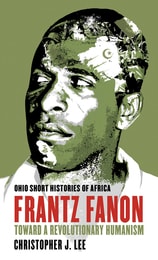
Frantz Fanon
Toward a Revolutionary HumanismChristopher J. Lee
Ohio University Press, 2015
Psychiatrist, philosopher, and revolutionary, Frantz Fanon is one of the most important intellectuals of the twentieth century. He presented powerful critiques of racism, colonialism, and nationalism in his classic books, Black Skin, White Masks (1952) and The Wretched of the Earth (1961). This biography reintroduces Fanon for a new generation of readers, revisiting these enduring themes while also arguing for those less appreciated—namely, his anti-Manichean sensibility and his personal ethic of radical empathy, both of which underpinned his utopian vision of a new humanism. Written with clarity and passion, Christopher J. Lee’s account ultimately argues for the pragmatic idealism of Frantz Fanon and his continued importance today.
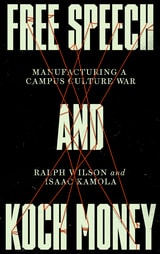
Free Speech and Koch Money
Manufacturing a Campus Culture WarRalph Wilson
Pluto Press, 2021
In recent years hundreds of high-profile ‘free speech’ incidents have rocked US college campuses. Milo Yiannopoulos, Ben Shapiro, Ann Coulter and other right-wing speakers have faced considerable protest, with many being disinvited from speaking. These incidents are widely circulated as examples of the academy’s intolerance towards conservative views.
But this response is not the spontaneous outrage of the liberal colleges. There is a darker element manufacturing the crisis, funded by political operatives, and designed to achieve specific political outcomes. If you follow the money, at the heart of the issue lies the infamous and ultra-libertarian Koch donor network.
Grooming extremist celebrities, funding media platforms that promote these controversies, developing legal organzations to sue universities and corrupting legislators, the influence of the Koch network runs deep. We need to abandon the ‘campus free speech’ narrative and instead follow the money if we ever want to root out this dangerous network from our universities.
Free to Hate
How Media Liberalization Enabled Right-Wing Populism in Post-1989 BulgariaMartin Marinos
University of Illinois Press, 2023
Bulgaria’s media-driven pivot to right-wing populism parallels political developments taking place around the world. Martin Marinos applies a critical political economy approach to place Bulgarian right-wing populism within the structural transformation of the country’s media institutions. As Marinos shows, media concentration under Western giants like Westdeutsche Allgemeine Zeitung and News Corporation have led to a neoliberal turn of commercialization, concentration, and tabloidization across media. The Right have used the anticommunism and racism bred by this environment to not only undermine traditional media but position their own outlets to boost new political entities like the nationalist party Ataka. Marinos’s ethnographic observations and interviews with local journalists, politicians, and media experts add on-the-ground detail to his account. He also examines several related issues, including the performative appeal of populist media and the money behind it.
A timely and innovative analysis, Free to Hate reveals where structural changes in media intersect with right-wing populism.
Freedom, Inc. and Black Political Empowerment
Micah W. Kubic
University of Missouri Press, 2016
Much has been written about black urban empowerment and about the candidates—particularly the winning candidates—who are the public face of such shifts in power. Authors invariably mention the important role played by black political organizations in electing black officials or organizing communities, but Micah W. Kubic goes further, making, for the first time, one such organization the focus of a book-length study. Kubic tells the story of black political empowerment in Kansas City through the prism of Freedom, Inc., the nation’s oldest existing black political organization.
Using interviews and observation of participants as well as archival research, Kubic offers historical and political analysis of Freedom, Inc. from its founding in 1962 through its role in municipal elections of 2007. Kubic asserts that strong local organizations are living, dynamic organisms and that they, rather than charismatic candidates or interracial alliances, are the crucial players in both determining political outcomes and advancing black interests in urban areas.
From Ballot to Bench
Judicial Elections and the Quest for AccountabilityBy Philip L. Dubois
University of Texas Press, 1980
Over several decades, many U.S. states abandoned the practice of selecting their judges by direct popular election and adopted the Missouri Plan of judicial selection. In From Ballot to Bench, Philip L. Dubois subjects the various criticisms raised against judicial elections to a more searching scrutiny than previously has been attempted.
Dubois carefully reviews the three central counts on which judicial elections have been faulted: for lowering the quality of the bench, for impairing judicial independence, and for failing to secure judicial accountability. After concluding that the potential for judicial elections to hold judges popularly accountable is what might commend them over alternative selection methods, Dubois concentrates on the analysis of empirical evidence to evaluate judicial elections as mechanisms of accountability.
The study examines all the statewide partisan and nonpartisan elections for state supreme court justices in non-southern states from 1948 to 1974. Included is a detailed examination of voter participation, electoral competition, the behavior of judicial electorates, and the patterns of gubernatorial vacancy appointments. An analysis of decision making on eight state supreme courts also tests the relationship between different selection systems and judicial behavior.
Dubois finds that partisan elections maximize voter participation, meaningfully structure voter choices, minimize accession to the bench by appointment, and allow popular control over gubernatorial appointments. Additional evidence on the extent of partisan voting by judges selected under different methods leads Dubois to conclude that partisan elections are superior to both nonpartisan elections and nonelective selection methods as instruments of accountability.
The importance of the questions addressed, the breadth of the data collected, and the unorthodox conclusions offered make this a significant book for political scientists, judges, lawyers, and public officials.
From Edward Brooke to Barack Obama
African American Political Success, 1966-2008Dennis S. Nordin
University of Missouri Press, 2012
In From Edward Brooke to Barack Obama, Dennis S. Nordin navigates the history of biracial elections by examining the experiences of a variety of African American politicians from across the country, revealing how voters, both black and white, respond to the issue of race in an election.
From Edward Brooke to Barack Obama investigates the implications of race in politics, a highly relevant topic in today’s American society. It offers readers a chronological overview of the progress made over the last several decades as well as shows where there is room for growth in the political arena. By taking a pertinent topic for the era and placing it in the context of history, Nordin successfully chronicles the roles of race and race relations in American politics.
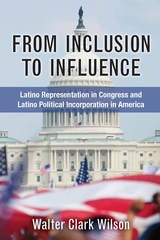
From Inclusion to Influence
Latino Representation in Congress and Latino Political Incorporation in AmericaWalter Clark Wilson
University of Michigan Press, 2017
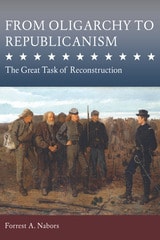
From Oligarchy to Republicanism
The Great Task of ReconstructionForrest A. Nabors
University of Missouri Press, 2026
In From Oligarchy to Republicanism: The Great Task of Reconstruction, Forrest A. Nabors shows that the ultimate goal of the Republican Party, the war, and Reconstruction was the same. This goal was to preserve and advance republicanism as the American founders understood it, against its natural, existential enemy: oligarchy. The principle of natural equality justified American republicanism and required abolition and equal citizenship. Likewise, slavery and discrimination on the basis of color stand on the competing moral foundation of oligarchy, the principle of natural inequality, which requires ranks.
The effect of slavery and the division of the nation into two “opposite systems of civilization” are causally linked. Charles Devens, a lawyer who served as a general in the Union Army, and his contemporaries understood that slavery’s existence transformed the character of political society.
One of those dramatic effects was the increased power of slaveowners over those who did not have slaves. When the slave state constitutions enumerated slaves in apportioning representation using the federal three-fifths ratio or by other formulae, intra-state sections where slaves were concentrated would receive a substantial grant of political power for slave ownership. In contrast, low slave-owning sections of the state would lose political representation and political influence over the state. This contributed to the non-slaveholders’ loss of political liberty in the slave states and provided a direct means by which the slaveholders acquired and maintained their rule over non-slaveholders.
This book presents a shared analysis of the slave South, synthesized from the writings and speeches of the Republicans who served in the Thirty-Eighth, Thirty-Ninth or Fortieth Congress from 1863-1869. The account draws from their writings and speeches dated before, during, and after their service in Congress. Nabors shows how the Republican majority, charged with the responsibility of reconstructing the South, understood the South.
Republicans in Congress were generally united around the fundamental problem and goal of Reconstruction. They regarded their work in the same way as they regarded the work of the American founders. Both they and the founders were engaged in regime change, from monarchy in the one case, and from oligarchy in the other, to republicanism. The insurrectionary states’ governments had to be reconstructed at their foundations, from oligarchic to republican. The sharp differences within Congress pertained to how to achieve that higher goal.
From Socialism to Capitalism
Eight EssaysJanos Kornai
Central European University Press, 2008
Eight essays connected by various common strands. The most important one is the community of the main subject-matter: socialism, capitalism, democracy, change of system. These four expressions cover four phenomena of great and comprehensive importance. Each piece in the book deals with these and the connections between them.
One of the Leitmotifs is the “capitalism/socialism” pair of opposites. Capitalism has a history of several hundred years, while the socialist regime existed only for a few decades. But this pair of opposites was central to the history of the twentieth century. This antagonism put its stamp on political thinking, on the foreign policy and military preparedness of every country, and on some appallingly destructive armed conflicts. All these had great secondary influence on each country’s economic development and the standard of living and disposition of its inhabitants.
None of the studies is confined to one country—not to Hungary or to any other. Each tries to embrace the problems common to greater units. However, the greater unit comprehended is not the same in each study. One may deal with the capitalist or socialist system in general, another will all the post-socialist countries, and a third the Central East European region. But all extend the analysis beyond the borders of one country.
From Voice to Influence
Understanding Citizenship in a Digital AgeEdited by Danielle Allen and Jennifer S. Light
University of Chicago Press, 2015
With From Voice to Influence, Danielle Allen and Jennifer S. Light have brought together a stellar group of political and social theorists, social scientists, and media analysts to explore this transformation. Threading through the contributions is the notion of egalitarian participatory democracy, and among the topics discussed are immigration rights activism, the participatory potential of hip hop culture, and the porous boundary between public and private space on social media. The opportunities presented for political efficacy through digital media to people who otherwise might not be easily heard also raise a host of questions about how to define “good participation:” Does the ease with which one can now participate in online petitions or conversations about current events seduce some away from serious civic activities into “slacktivism?”
Drawing on a diverse body of theory, from Hannah Arendt to Anthony Appiah, From Voice to Influence offers a range of distinctive visions for a political ethics to guide citizens in a digitally connected world.

From the Nation-Building Debate to the Bolsa Família Program
Whiteness, Gender, and Poverty in BrazilBeatriz Junqueira Lage Carbone
Campus Verlag, 2023
Bolsa Familia was a social welfare program launched in Brazil in 2003 that made cash payments to poor families, provided they kept their children in school and got them vaccinated. Over time, the program became controversial, intertwined with struggles over race and gender, and President Jair Bolsonaro canceled it in 2021. This book examines the discourse around the program and its effects, illuminating conflicts over national identity and the roles of sexism and racism in Brazil.
Fujimori's Peru
The Political EconomyEdited by John Crabtree and Jim Thomas
University of London Press, 1998
Future Forward
The Rise and Fall of a Thai Political PartyDuncan McCargo and Anyarat Chattharakul
National University of Singapore Press, 2020