Results by title
637 books match the query 'Political activity' and 29 start with f
Fair Share
Senior Activism, Tiny Publics, and the Culture of ResistanceGary Alan Fine
University of Chicago Press, 2023
If you've ever been to a protest or been involved in a movement for social change, you have likely experienced a local culture, one with slogans, jargon, and shared commitments. Though one might think of a cohort of youthful organizers when imagining protest culture, this powerful ethnography from esteemed sociologist Gary Alan Fine explores the world of senior citizens on the front lines of progressive protests. While seniors are a notoriously important—and historically conservative—political cohort, the group Fine calls “Chicago Seniors Together” is a decidedly leftist organization, inspired by the model of Saul Alinsky. The group advocates for social issues, such as affordable housing and healthcare, that affect all sectors of society but take on a particular urgency in the lives of seniors. Seniors connect and mobilize around their distinct experiences but do so in service of concerns that extend beyond themselves. Not only do these seniors experience social issues as seniors—but they use their age as a dramatic visual in advocating for political change.
In Fair Share, Fine brings readers into the vital world of an overlooked political group, describing how a “tiny public” mobilizes its demands for broad social change. In investigating this process, he shows that senior citizen activists are particularly savvy about using age to their advantage in social movements. After all, what could be more attention-grabbing than a group of passionate older people determinedly shuffling through snowy streets with canes, in wheelchairs, and holding walkers to demand healthcare equity, risking their own health in the process?
Faith in the City
Preaching Radical Social Change in DetroitAngela D. Dillard
University of Michigan Press, 2009
“The dynamics of Black Theology were at the center of the ‘Long New Negro Renaissance,’ triggered by mass migrations to industrial hubs like Detroit. Finally, this crucial subject has found its match in the brilliant scholarship of Angela Dillard. No one has done a better job of tracing those religious roots through the civil rights–black power era than Professor Dillard.”
—Komozi Woodard, Professor of History, Public Policy & Africana Studies at Sarah Lawrence College and author of A Nation within a Nation: Amiri Baraka (LeRoi Jones) and Black Power Politics
“Angela Dillard recovers the long-submerged links between the black religious and political lefts in postwar Detroit. . . . Faith in the City is an essential contribution to the growing literature on the struggle for racial equality in the North.”
—Thomas J. Sugrue, University of Pennsylvania, author of The Origins of the Urban Crisis: Race and Inequality in Postwar Detroit
Spanning more than three decades and organized around the biographies of Reverends Charles A. Hill and Albert B. Cleage Jr., Faith in the City is a major new exploration of how the worlds of politics and faith merged for many of Detroit’s African Americans—a convergence that provided the community with a powerful new voice and identity. While other religions have mixed politics and creed, Faith in the City shows how this fusion was and continues to be particularly vital to African American clergy and the Black freedom struggle.
Activists in cities such as Detroit sustained a record of progressive politics over the course of three decades. Angela Dillard reveals this generational link and describes what the activism of the 1960s owed to that of the 1930s. The labor movement, for example, provided Detroit’s Black activists, both inside and outside the unions, with organizational power and experience virtually unmatched by any other African American urban community.
Angela D. Dillard is Associate Professor of Afroamerican and African Studies at the University of Michigan. She specializes in American and African American intellectual history, religious studies, critical race theory, and the history of political ideologies and social movements in the United States.

Family and Disability Activism
Beyond Allies and ObstaclesEdited by Pamela Block, Allison C. Carey, and Richard K. Scotch
Temple University Press, 2025
Family and Disability Activism reveals how families and disabled people who identify as BIPOC and/or LGBTQIA2S+ understand issues of rights versus justice. Contributions by Deaf and disabled activists emphasize the frequent need for either care or independence. Other chapters show how members of the disabled community and their families must navigate systemic issues of segregation, institutionalization, and access to special education services differently depending on their ethnic and racial identities.
Expanding the conversation about disability, kinship, biological and chosen families, and activism, this volume amplifies important voices in the fight for disability rights.
Contributors: Erin Compton, Diane Compton, Jaclyn Ellis, Laura LeBrun Hatcher, Elena Hung, Bridget Liang, Jenelle Rouse, Cheryl Najarian Souza, Jeneva Stone, Roger A. Stone, Lisette E. Torres, Grace Tsao, and the editors

Fanatical Schemes
Proslavery Rhetoric and the Tragedy of ConsensusPatricia Roberts-Miller
University of Alabama Press, 2009

Fear Of A Queer Planet
Queer Politics and Social TheoryMichael Warner
University of Minnesota Press, 1993

Fear of a Black Republic
Haiti and the Birth of Black Internationalism in the United StatesLeslie M. Alexander
University of Illinois Press, 2023
A bold exploration of Black internationalism’s origins, Fear of a Black Republic links the Haitian revolution to the global Black pursuit of liberation, justice, and social equality.
Feeling Democracy
Emotional Politics in the New MillenniumSarah Tobias
Rutgers University Press, 2024
The essays in Feeling Democracy examine how both reactionary and progressive politics are driven largely by emotional appeals to the public. The contributors in this collection cover everything from immigrants’ rights movements to white nationalist rallies to show how solidarities forged around gender, race, and sexuality become catalysts for a passionate democratic politics. Some essays draw parallels between today’s activist strategies and the use of emotion in women-led radical movements from the 1960s and 1970s, while others expand the geographic scope of the collection by considering Asian decolonial politics and Egyptian pro-democracy protests.
Incorporating scholarship from fields as varied as law, political science, philosophy, psychoanalysis, and history, Feeling Democracy considers how emotional rhetoric in politics can be a double-edged sword—often wielded by authoritarian populists who seek to undermine democracy but sometimes helping to bring about a genuine renewal of participatory democracy.

Feminism and Political Theory
Edited by Cass R. Sunstein
University of Chicago Press, 1990
Feminist Agendas and Democracy in Latin America
Jane S. Jaquette, ed.
Duke University Press, 2009
The book is organized around three broad topics. The first, women’s access to political power at the national level, is addressed by essays on the election of Michelle Bachelet in Chile, gender quotas in Argentina and Brazil, and the responses of the women’s movement to the “Bolivarian revolution” in Venezuela. The second topic, the use of legal strategies, is taken up in essays on women’s rights across the board in Argentina, violence against women in Brazil, and gender in the work of the Truth and Reconciliation Commission in Peru. Finally, the international impact of Latin American feminists is explored through an account of their participation in the World Social Forum, an assessment of a Chilean-led project carried out by women’s organizations in several countries to hold governments to the promises they made at international conferences in Cairo and Beijing, and an account of cross-border organizing to address femicides and domestic abuse in the Juárez-El Paso border region. Jane S. Jaquette provides the historical and political context of women’s movement activism in her introduction, and concludes the volume by engaging contemporary debates about feminism, civil society, and democracy.
Contributors. Jutta Borner, Mariana Caminotti, Alina Donoso, Gioconda Espina, Jane S. Jaquette, Beatriz Kohen, Julissa Mantilla Falcón, Jutta Marx, Gabriela L. Montoya, Flávia Piovesan, Marcela Ríos Tobar, Kathleen Staudt, Teresa Valdés, Virginia Vargas
Feminist Post-Liberalism
Judith A. Baer
Temple University Press, 2020
Feminism and liberalism need each other, argues Judith Baer. Her provocative book, Feminist Post-Liberalism, refutes both conservative and radical critiques. To make her case, she rejects classical liberalism in favor of a welfare—and possibly socialist—post-liberalism that will prevent capitalism and a concentration of power that reinforces male supremacy. Together, feminism and liberalism can better elucidate controversies in American politics, law, and society.
Baer emphasizes that tolerance and self-examination are virtues, but within both feminist and liberal thought these virtues have been carried to extremes. Feminist theory needs liberalism's respect for reason, while liberal theory needs to incorporate emotion. Liberalism focuses too narrowly on the individual, while feminism needs a dose of individualism.
Feminist Post-Liberalism includes anthropological foundations of male dominance to explore topics ranging from crime to cultural appropriation. Baer develops a theory that is true to the principles of both feminist and liberal ideologies.

Fields Of Protest
Women’s Movement in IndiaRaka Ray
University of Minnesota Press, 1999
A comparative analysis of women’s struggle for change in India.
The women’s movement in India has a long and rich history in which millions of women live, work, and struggle to survive in order to remake their family, home, and social lives. Whether fighting for safe contraception, literacy, water, and electricity or resisting sexual harassment, they are participating in vibrant and active women’s movements that are thriving in many parts of India today.
Fields of Protest explores the political and cultural circumstances under which groups of women organize to fight for their rights and self-worth. Starting with Bombay and Calcutta, Raka Ray discusses the creation of “political fields”-structured, unequal, and socially constructed political environments within which organizations exist, flourish, or fail. Women’s organizations are not autonomous or free agents; rather, they inherit a “field” and its accompanying social relations, and when they act, they act in response to it and within it. Drawing on the literature of both social movements and feminism, Ray analyzes the striking differences between the movements in these two cities.Using an innovative and comparative perspective, Ray offers a unique look at Indian activist women and adds a new dimension to the study of women’s movements on a global level.
Fighting Words
Black Women and the Search for JusticePatricia Hill Collins
University of Minnesota Press, 1998

Fighting for NOW
Diversity and Discord in the National Organization for WomenKelsy Kretschmer
University of Minnesota Press, 2019
An unparalleled exploration of NOW’s trajectory, from its founding to the present—and its future
A new wave of feminist energy has swept the globe since 2016—from women’s marches and the #MeToo movement to transwomen’s inclusion and exclusion in feminism and participation in institutional politics. Amid all this, an organization declared dead or dying for thirty years—the National Organization for Women—has seen a membership boom. NOW presents an intriguing puzzle for scholars and activists alike. Considered one of the most stable organizations in the feminist movement, it has experienced much conflict and schism. Scholars have long argued that factionalism is the death knell of organizations, yet NOW continues to thrive despite internal conflicts.
Fighting for NOW seeks to better understand how bureaucratic structures like NOW’s simultaneously provide stability and longevity, while creating space for productive and healthy conflict among members. Kelsy Kretschmer explores these ideas through an examination of conflict in NOW’s local chapters, its task forces and committees, and its satellite groups. NOW’s history provides evidence for three basic arguments: bureaucratic groups are not insulated from factionalism; they are important sites of creativity and innovation for their movements; and schisms are not inherently bad for movement organizations. Hence, Fighting for NOW is in stark contrast to conventional scholarship, which has conceptualized factionalism as organizational failure. It also provides one of the few book-length explorations of NOW’s trajectory, from its founding to the modern context.
Scholars will welcome the book’s insights that draw on open systems and resource dependency theories, as well as its rethinking of how conflict shapes activist communities. Students will welcome its clear and compelling history of the feminist movement and of how feminist ideas have changed over the past five decades.

Fighting for a Free Missouri
German Immigrants, African Americans, and the Issue of SlaverySydney J. Norton
University of Missouri Press, 2023

Fighting from a Distance
How Filipino Exiles Helped Topple a DictatorJose V. Fuentecilla
University of Illinois Press, 2013
Finding the Movement
Sexuality, Contested Space, and Feminist ActivismFinn Enke
Duke University Press, 2007
By considering the development of feminism through an analysis of public space, Enke expands and revises the historiography of second-wave feminism. She suggests that the movement was so widespread because it was built by people who did not identify themselves as feminists as well as by those who did. Her focus on claims to public space helps to explain why sexuality, lesbianism, and gender expression were so central to feminist activism. Her spatial analysis also sheds light on hierarchies within the movement. As women turned commercial, civic, and institutional spaces into sites of activism, they produced, as well as resisted, exclusionary dynamics.

Fleshing the Archive
An Intimate Genealogy of Chicana Knowledge PraxisMaría Eugenia Cotera
University of Texas Press, 2025
The history of the Chicana por mi Raza Digital Memory Collective, an archive dedicated to preserving Chicana feminist knowledge of the 1970s and memory work.
The late 1960s and early 1970s witnessed an explosion of publishing by Chicana activists as they took part in the Movimiento against oppression of ethnic Mexicans in the United States. Today, thousands of these documents, including written works and oral histories, have been assembled by the Chicana por mi Raza Digital Memory Collective. Drawing on these unique resources, Fleshing the Archive traces the innovative Chicana knowledge projects of the Movimiento years.
Seeking to think with the past rather than about it, María Cotera explores transgressive sites and discourses of Chicana knowledge, from poems and essays to newspapers, bibliographies, and testimonies. Often published independently and distributed by readers themselves, these works embodied a praxis of feminist and queer consciousness-raising. Observing the startling convergences between Chicana praxis of the 1970s and digital knowledge production in the present, Cotera argues that the Chicana archive enables transformative moments of recognition across time that unsettle supposedly objective accounts of history. The materials preserved by Chicana por mi Raza offer Chicana scholars a model of teaching and learning liberated from a corporate academy that is increasingly hostile to intellectual inquiry.

Florentine Essays
Selected Writings of Marvin B. BeckerMarvin B. Becker
University of Michigan Press, 2002
In the capital of humanism, he initiated what was to be a lifelong examination of the Western civil tradition. In Florence he could study the interplay of ideas and action in what he was to call the "public world." The rise of this world out of the private, feudal and corporate structures of the medieval commune, its functioning and its eventual subversion by the authoritarian structures of the early modern state were, he thought, valuable information for modern political cultures. In the 1950s and 1960s, Becker produced approximately twenty papers dealing with a wide variety of themes and issues raised by the work of other scholars such as Davidson, Salvemini, Ottokar, Panella, Rodolico, Barbadoro, Baron, and others. He also introduced his own formulations on a range of subjects including the political role of Florence's minor guilds, usury, taxation, public debt, popular heresy, church-state relations, the city's chroniclers, the influence of "new men" upon Florentine government and changing mentalities.
These papers, in their originality, their richness of documentation and their suggestiveness, are still relevant for current scholarship. The editors of this volume have chosen the papers for the convenience of readers who may know Becker only through his books, or from the myriad of footnotes of other scholars who have drawn so much from his work. This volume will be of interest to scholars, students, and others interested in Renaissance history, whether it be social or political.
Marvin B. Becker is Professor Emeritus in the Department of History, University of Michigan. James Banker is Professor of History, North Carolina State University. Carol Lansing is Professor of History, University of California, Santa Barbara.

Food, Farms, and Solidarity
French Farmers Challenge Industrial Agriculture and Genetically Modified CropsChaia Heller
Duke University Press, 2012
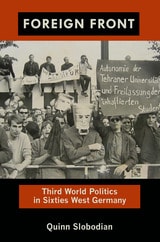
Foreign Front
Third World Politics in Sixties West GermanyQuinn Slobodian
Duke University Press, 2012
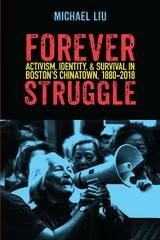
Forever Struggle
Activism, Identity, and Survival in Boston's Chinatown, 1880–2018Michael Liu
University of Massachusetts Press, 2020
In writing about Boston Chinatown's long history, Michael Liu, a lifelong activist and scholar of the community, charts its journey and efforts for survival—from its emergence during a time of immigration and deep xenophobia to the highway construction and urban renewal projects that threatened the neighborhood after World War II to its more recent efforts to keep commercial developers at bay. At the ground level, Liu depicts its people, organizations, internal battles, and varied and complex strategies against land-taking by outside institutions and public authorities. The documented courage, resilience, and ingenuity of this low-income immigrant neighborhood of color have earned it a place amongst our urban narratives. Chinatown has much to teach us about neighborhood agency, the power of organizing, and the prospects of such neighborhoods in rapidly growing and changing cities.
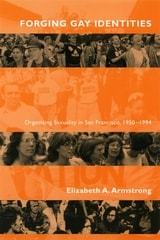
Forging Gay Identities
Organizing Sexuality in San Francisco, 1950-1994Elizabeth A. Armstrong
University of Chicago Press, 2002

Fraternal Critique
The Politics of Muslim Community in FranceKirsten Wesselhoeft
University of Chicago Press, 2025
The conversation about Islam in France is framed by the presumption that Muslim communities are a threat to secular solidarity or fraternité. In the face of state repression, French Muslims have not closed ranks around a narrow range of voices; instead, Kirsten Wesselhoeft finds that young Muslim activists have continued to purposefully spark debate about the values that anchor community life. Wesselhoeft argues that such disagreements, far from dividing communities, actually constitute a form of belonging. Some activists call this ethic “fraternal critique,” and Wesselhoeft finds in it profound insights about the place for critique in civic life. The French state has reacted to Muslim solidarity with repression, but Wesselhoeft argues that unity need not come at the expense of dissent. Instead, fraternal critique can teach us how to build communities that are worth fighting over and fighting for.

Free Speech and Koch Money
Manufacturing a Campus Culture WarRalph Wilson
Pluto Press, 2021
In recent years hundreds of high-profile ‘free speech’ incidents have rocked US college campuses. Milo Yiannopoulos, Ben Shapiro, Ann Coulter and other right-wing speakers have faced considerable protest, with many being disinvited from speaking. These incidents are widely circulated as examples of the academy’s intolerance towards conservative views.
But this response is not the spontaneous outrage of the liberal colleges. There is a darker element manufacturing the crisis, funded by political operatives, and designed to achieve specific political outcomes. If you follow the money, at the heart of the issue lies the infamous and ultra-libertarian Koch donor network.
Grooming extremist celebrities, funding media platforms that promote these controversies, developing legal organzations to sue universities and corrupting legislators, the influence of the Koch network runs deep. We need to abandon the ‘campus free speech’ narrative and instead follow the money if we ever want to root out this dangerous network from our universities.
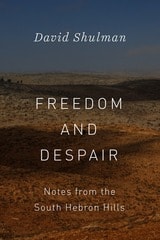
Freedom and Despair
Notes from the South Hebron HillsDavid Shulman
University of Chicago Press, 2018
David Shulman knows intimately what it takes to live your beliefs, to return, day after day, to the struggle, despite knowing you are often more likely to lose than win. Interweaving powerful stories and deep meditations, Freedom and Despair offers vivid firsthand reports from the occupied West Bank in Palestine as seen through the eyes of an experienced Israeli peace activist who has seen the Israeli occupation close up as it impacts on the lives of all Palestinian civilians.
Alongside a handful of beautifully written and often shocking tales from the field, Shulman meditates deeply on how to understand the evils around him, what it means to persevere as an activist decade after decade, and what it truly means to be free. The violent realities of the occupation are on full display. We get to know and understand the Palestinian shepherds and farmers and Israeli volunteers who face this situation head-on with nonviolent resistance. Shulman does not hold back on acknowledging the daily struggles that often leave him and his fellow activists full of despair. Inspired by these committed individuals who are not prepared to be silent or passive, Shulman suggests a model for ordinary people everywhere. Anyone prepared to take a risk and fight their oppressive political systems, he argues, can make a difference—if they strive to act with compassion and to keep hope alive.
This is the moving story of a man who continues to fight for good in the midst of despair. An indispensable book in our era of reactionary politics and refugee crises, political violence and ecological devastation, Freedom and Despair is a gripping memoir of struggle, activism, and hope for peace.

From Popular to Insurgent Intellectuals
Peasant Catechists in the Salvadoran RevolutionLeigh Binford
Rutgers University Press, 2023
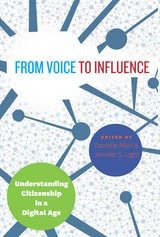
From Voice to Influence
Understanding Citizenship in a Digital AgeEdited by Danielle Allen and Jennifer S. Light
University of Chicago Press, 2015
With From Voice to Influence, Danielle Allen and Jennifer S. Light have brought together a stellar group of political and social theorists, social scientists, and media analysts to explore this transformation. Threading through the contributions is the notion of egalitarian participatory democracy, and among the topics discussed are immigration rights activism, the participatory potential of hip hop culture, and the porous boundary between public and private space on social media. The opportunities presented for political efficacy through digital media to people who otherwise might not be easily heard also raise a host of questions about how to define “good participation:” Does the ease with which one can now participate in online petitions or conversations about current events seduce some away from serious civic activities into “slacktivism?”
Drawing on a diverse body of theory, from Hannah Arendt to Anthony Appiah, From Voice to Influence offers a range of distinctive visions for a political ethics to guide citizens in a digitally connected world.
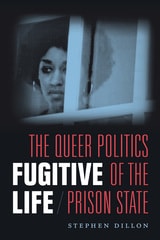
Fugitive Life
The Queer Politics of the Prison StateStephen Dillon
Duke University Press, 2018
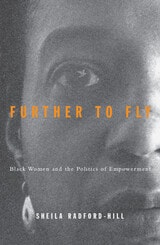
Further To Fly
Black Women and the Politics of EmpowermentSheila Radford-Hill
University of Minnesota Press, 2000
How feminism has failed African American women and why they must fight back.
Amid the longest-running economic boom in American history and despite the emergence of a significant black middle class, the lot of low-income black people in general-and black women in particular-seems more troubling than ever. Their plight, Sheila Radford-Hill argues in this book, is directly related to the diminution of black women’s traditional power as culture bearers and community builders. A cogent critique of feminist theory and practice, Further to Fly identifies the failure of feminism to connect with the social realities it should seek to explain, in particular the decline of black women’s empowerment.
Further to Fly searches out the causes and effects of this decline, describing the ways in which, since the 1960s, black women have been stripped of their traditional status as agents of change in the community-and how, as a result, the black community has faltered. Radford-Hill explores the shortcomings of second-wave black and white feminism, revealing how their theoretical underpinnings have had unintended (and often unacknowledged) negative consequences for black women’s lives and their communities.While acknowledging that African American women have made significant contributions to the black struggle for justice in America, Radford-Hill argues that more needs to be done. She combines social criticism and critical analysis to argue that black women must revive their legacy of activism and reclaim the tradition of nurturing in the black community, proposing specific tactics that can be used to revive the support networks that help determine the obligations of community members and guide how people interact on an everyday level. As a deft account of genesis and effects of black women’s diminishing power, and as a sobering analysis of the devastating blunders of feminist theory and practice, this work makes a compelling argument for an "authentic feminism," one that aggressively connects the realities of women’s experiences, needs, aspirations, and responsibilities.