Results by title
2916 books match the query 'Politics and government' and 109 start with f

F. D. R. and the Press
Graham J. White
University of Chicago Press, 1979
White challenges and disproves Roosevelt's contention that the press was unusually severe and slanted in its treatment of the Roosevelt years. His original work traces FDR's hostile assessment of the press to his own political philosophy: an ideology that ordained him a champion of the people, whose task it was to preserve American democracy against the recurring attempt by Hamiltonian minorities (newspaper publishers and captive reporters) to wrest control of their destiny from the masses.
White recounts Roosevelt's initial victory over the press corps, and the effect his wily manipulations had on press coverage of his administrations and on his own public image. He believes Roosevelt's denunciation of the press was less an accurate description of the press's behavior towards his administrations than a product of his own preconceptions about the nature of the Presidency. White concludes that Roosevelt's plan was to disarm those he saw as the foes of democracy by accusing them of unfairly maligning him.
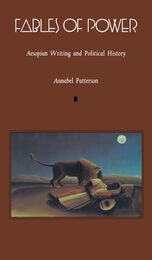
Fables of Power
Aesopian Writing and Political HistoryAnnabel Patterson
Duke University Press, 1991
Patterson begins with an analysis of the legendary Life of Aesop, its cultural history and philosophical implications, a topic that involves such widely separated figures as La Fontaine, Hegel, and Vygotsky. The myth’s origin is recovered here in the saving myth of Aesop the Ethiopian, black, ugly, who began as a slave but become both free and influential, a source of political wisdom. She then traces the early modern history of the fable from Caxton, Lydgate, and Henryson through the eighteenth century, focusing on such figures as Spenser, Sidney, Lyly, Shakespeare, and Milton, as well as the lesser-known John Ogilby, Sir Roger L’Estrange, and Samuel Croxall.
Patterson discusses the famous fable of The Belly and the Members, which, because it articulated in symbolic terms some of the most intransigent problems in political philosophy and practice, was still going strong as a symbolic text in the mid-nineteenth century, where it was focused on industrial relations by Karl Marx and by George Eliot against electoral reform.
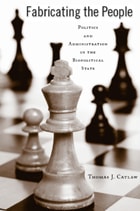
Fabricating the People
Politics and Administration in the Biopolitical StateThomas J. Catlaw
University of Alabama Press, 2012
Fabricating the People boldly proposes post-representational governance that reframes the practice of modern democracy and reinvents the role of public administration.
Since the 1960s, hostility and mistrust toward the U.S. government has risen precipitously. At the same time, the field of public administration has wrestled with its own crisis of legitimacy. What is at the root of current antigovernment sentiment? Conventionally, two explanations for this problem persist. Some see it primarily in moral terms, a deficit of Constitutional or democratic values in government. Others emphasize government’s performance failures and managerial inefficiency.
Thomas J. Catlaw departs from both explanations in this groundbreaking study and demonstrates that the current crisis of government originates in the uncritical manner in which we have accepted the idea of “the People.” He contends that this unifying, foundational concept—and the notion of political representation it entails—have failed. While illuminating some of our most pressing social and political problems, Catlaw shows how the idea of the People, far from serving to unify, relies in fact on a distinctive logic of exclusion. True political power is the power to determine what constitutes the normal, natural life of the electorate. Today, the exclusionary practices that once made up or fabricated the People are increasingly contested. In turn, government and political power now appear more invasive, less legitimate, and our shared reality appears more fragmented and disconnected.
In order to address this crisis and reinvigorate democracy, Catlaw argues, we must accept as bankrupt the premise of the People and the idea of representation itself. Fabricating the People boldly proposes post-representational governance that reframes the practice of modern democracy and reinvents the role of public administration.

Facing the Khmer Rouge
A Cambodian JourneyRonnie Yimsut
Rutgers University Press, 2011
As a child growing up in Cambodia, Ronnie Yimsut played among the ruins of the Angkor Wat temples, surrounded by a close-knit community. As the Khmer Rouge gained power and began its genocidal reign of terror, his life became a nightmare. In this stunning memoir, Yimsut describes how, in the wake of death and destruction, he decides to live.
Escaping the turmoil of Cambodia, he makes a perilous journey through the jungle into Thailand, only to be sent to a notorious Thai prison. Fortunately, he is able to reach a refugee camp and ultimately migrate to the United States, where he attended the University of Oregon and became an influential leader in the community of Cambodian immigrants. Facing the Khmer Rouge shows Ronnie Yimsut’s personal quest to rehabilitate himself, make a new life in America, and then return to Cambodia to help rebuild the land of his birth.
Facing the World
Defense Spending and International Trade in the Pacific Northwest Since World War IIChristopher P. Foss
Oregon State University Press, 2020
By the dawn of the twenty-first century, the Pacific Northwest boasted a more diversified economy. Beer, tourism, and high tech moved in alongside timber and wheat as the region’s mainstay industries. In Washington, especially, a Cold War–driven military and national security state set up shop as an economic behemoth even as debates over the costs and consequences of the new Atomic Age raged.
Facing the World highlights these changes, as well as the politicians, business leaders, and ordinary people who helped bring them about. At the center of the story, Senators Henry Jackson, Wayne Morse, Slade Gorton, and Mark Hatfield; Congressman Tom Foley; and Governor Vic Atiyeh worked diligently for a generation to transform the region from insular and backward to cosmopolitan and forward-looking. Aligning the region with national security and international trade policies, these politicians made the Pacific Northwest economy what it is today.
Through extensive research in congressional and federal archives, historian Christopher P. Foss vividly brings to life the discussions, conflicts, and controversies that shaped this political era. Though it wasn’t perfect, its fading legacy of leadership is a lesson for our own time. Facing the World will prove a valuable resource to historians, political scientists, and civic-minded residents of the Pacific Northwest.

Failing Peace
Gaza and the Palestinian-Israeli ConflictSara Roy
Pluto Press, 2006
The book focuses on the Gaza Strip, an area that remains consistently neglected and misunderstood despite its political centrality. Drawing on more than two thousand interviews and extensive firsthand experience, Sara Roy chronicles the impact of Israeli occupation in Palestine over nearly a generation.
Exploring the devastating consequences of socio-economic and political decline, this is a unique and powerful account of the reality of life in the West Bank and Gaza. Written by one of the world's foremost scholars of the region, it offers an unrivalled breadth of scholarship and insight.
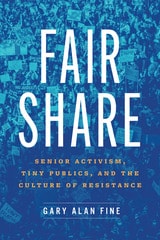
Fair Share
Senior Activism, Tiny Publics, and the Culture of ResistanceGary Alan Fine
University of Chicago Press, 2023
If you've ever been to a protest or been involved in a movement for social change, you have likely experienced a local culture, one with slogans, jargon, and shared commitments. Though one might think of a cohort of youthful organizers when imagining protest culture, this powerful ethnography from esteemed sociologist Gary Alan Fine explores the world of senior citizens on the front lines of progressive protests. While seniors are a notoriously important—and historically conservative—political cohort, the group Fine calls “Chicago Seniors Together” is a decidedly leftist organization, inspired by the model of Saul Alinsky. The group advocates for social issues, such as affordable housing and healthcare, that affect all sectors of society but take on a particular urgency in the lives of seniors. Seniors connect and mobilize around their distinct experiences but do so in service of concerns that extend beyond themselves. Not only do these seniors experience social issues as seniors—but they use their age as a dramatic visual in advocating for political change.
In Fair Share, Fine brings readers into the vital world of an overlooked political group, describing how a “tiny public” mobilizes its demands for broad social change. In investigating this process, he shows that senior citizen activists are particularly savvy about using age to their advantage in social movements. After all, what could be more attention-grabbing than a group of passionate older people determinedly shuffling through snowy streets with canes, in wheelchairs, and holding walkers to demand healthcare equity, risking their own health in the process?
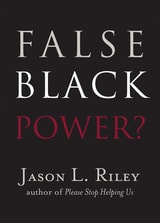
False Black Power?
Jason L. Riley
Templeton Press, 2017
Black civil rights leaders have long supported ethnic identity politics and prioritized the integration of political institutions, and seldom has that strategy been questioned. In False Black Power?, Jason L. Riley takes an honest, factual look at why increased black political power has not paid off in the ways that civil rights leadership has promised.
Recent decades have witnessed a proliferation of black elected officials, culminating in the historic presidency of Barack Obama. However, racial gaps in employment, income, homeownership, academic achievement, and other measures not only continue but in some cases have even widened. While other racial and ethnic groups in America have made economic advancement a priority, the focus on political capital for blacks has been a disadvantage, blocking them from the fiscal capital that helped power upward mobility among other groups.
Riley explains why the political strategy of civil rights leaders has left so many blacks behind. The key to black economic advancement today is overcoming cultural handicaps, not attaining more political power. The book closes with thoughtful responses from key thought leaders Glenn Loury and John McWhorter.
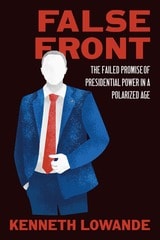
False Front
The Failed Promise of Presidential Power in a Polarized AgeKenneth Lowande
University of Chicago Press, 2024
A provocative new perspective on presidential power.
Border walls, school bathrooms, student loans, gun control, diversity, abortion, climate change—today, nothing seems out of reach for the president's pen. But after all the press releases, ceremonies, and speeches, shockingly little gets done. The American presidency promises to solve America's problems, but presidents' unilateral solutions are often weak, even empty.
Kenneth Lowande argues this is no accident. The US political system is not set up to allow presidents to solve major policy problems, yet it lays these problems at their doorstep, and there is no other elected official better positioned to attract attention by appearing to govern. Like any politician, presidents are strategic actors who seek symbolic wins. They pursue executive actions, even when they know that these will fail, because doing so allows them to put on a compelling show for key constituencies. But these empty presidential actions are not without their costs: they divert energy from effective government—and, over time, undermine public trust. Drawing on thousands of executive actions, news coverage, interviews, and presidential archives, False Front shows that the real root of presidential power is in what presidents can get away with not doing.
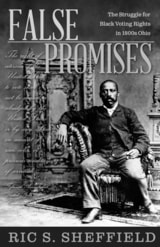
False Promises
The Struggle for Black Voting Rights in 1800s OhioRic S. Sheffield
Ohio University Press, 0
Brings to life the struggle for Black suffrage in nineteenth-century Ohio
In False Promises, the fight for Black voting rights in Ohio comes alive through narratives of men of color who defied the state’s nineteenth-century restrictions on suffrage. Though ratification of the Fifteenth Amendment ostensibly extended the franchise, state election laws still forced men of color into a perilous struggle for full citizenship. Ric S. Sheffield depicts their courage and determination, revealing their humanity through stories of sacrifice, resistance, and hope.
Drawing on Saidiya Hartman’s concept of critical fabulation, Sheffield weaves together historical records with imaginative reconstructions of dialogue, setting, and descriptive elements beyond the dusty courthouse pages. Grounded in archival evidence yet reimagined to fill in the silences, these stories recount the lived experiences of those who risked everything to exercise their right to vote.
False Promises also connects these historical battles to the present, illustrating how voter-suppression tactics in today’s Ohio have roots in the racial exclusions of the nineteenth century. By exposing the enduring legacy of white supremacist policies, the book challenges the widespread misconception that racial disenfranchisement was solely a southern problem. Ohio’s complex racial history—noted for its role in the Underground Railroad but also for its repressive Black Laws—also includes a fierce and ongoing struggle over the right to vote. Through compelling storytelling, historical analysis, and a reclamation of voices lost to history, False Promises urges readers to reconsider their understanding of democracy and the right to vote.
Fanatical Schemes
Proslavery Rhetoric and the Tragedy of ConsensusPatricia Roberts-Miller
University of Alabama Press, 2009
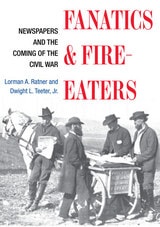
Fanatics and Fire-eaters
Newspapers and the Coming of the Civil WarLorman A. Ratner and Dwight L. Teeter Jr.
University of Illinois Press, 2003
In the troubled years leading up to the Civil War, newspapers in the North and South presented the arguments for and against slavery, debated the right to secede, and in general denounced opposing viewpoints with imagination and vigor. At the same time, new technologies like railroads and the telegraph lent the debates an immediacy that both enflamed emotions and brought the slavery issue into every home.
Lorman A. Ratner and Dwight L. Teeter Jr. look at the power of America's fast-growing media to influence perception and the course of events prior to the Civil War. Drawing on newspaper accounts from across the United States, the authors look at how the media covered—and the public reacted to—major events like the Dred Scott decision, John Brown's raid on Harper's Ferry, and the election of 1860. They find not only North-South disputes about the institution of slavery but differing visions of the republic itself—and which region was the true heir to the legacy of the American Revolution.
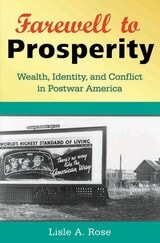
Farewell to Prosperity
Wealth, Identity, and Conflict in Postwar AmericaLisle A. Rose
University of Missouri Press, 2014
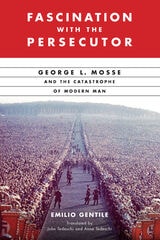
Fascination with the Persecutor
George L. Mosse and the Catastrophe of Modern ManEmilio Gentile and and Stanley G. Payne, translated by John and Anne Tedeschi
University of Wisconsin Press, 2021
This translation makes Emilio Gentile’s groundbreaking study of Mosse’s life and work available to English language readers. A leading authority on fascism, totalitarianism, and Mosse’s legacy, Gentile draws on a wealth of published and unpublished material, including letters, interviews, lecture plans, and marginalia from Mosse’s personal library. Gentile details how the senior scholar eschewed polemics and employed rigorous academic standards to better understand fascism and the “catastrophe of the modern man”—how masculinity transformed into a destructive ideology. As long as wars are waged over political beliefs in popular culture, Mosse’s theories of totalitarianism will remain as relevant as ever.
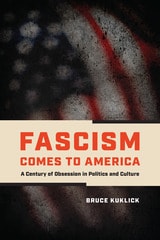
Fascism Comes to America
A Century of Obsession in Politics and CultureBruce Kuklick
University of Chicago Press, 2022
From the time Mussolini took power in Italy in 1922, Americans have been obsessed with and brooded over the meaning of fascism and how it might migrate to the United States. Fascism Comes to America examines how we have viewed fascism overseas and its implications for our own country. Bruce Kuklick explores the rhetoric of politicians, who have used the language of fascism to smear opponents, and he looks at the discussions of pundits, the analyses of academics, and the displays of fascism in popular culture, including fiction, radio, TV, theater, and film. Kuklick argues that fascism has little informational meaning in the United States, but instead, it is used to denigrate or insult. For example, every political position has been besmirched as fascist. As a result, the term does not describe a phenomenon so much as it denounces what one does not like. Finally, in displaying fascism for most Americans, entertainment—and most importantly film—has been crucial in conveying to citizens what fascism is about. Fascism Comes to America has been enhanced by many illustrations that exhibit how fascism was absorbed into the US public consciousness.
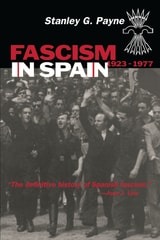
Fascism in Spain, 1923–1977
Stanley G. Payne
University of Wisconsin Press, 2000
Fascism in Spain, 1923–1977, by celebrated historian Stanley G. Payne, is the most comprehensive history of Spanish fascism to appear in any language. This authoritative study offers treatment of all the major doctrines, personalities, and defining features of the Spanish fascist movement, from its beginnings until the death of General Francisco Franco in 1977.
Payne describes and analyzes the development of the Falangist party both prior to and during the Spanish Civil War, presenting a detailed analysis of its transformation into the state party of the Franco regime—Falange Española Tradicionalista—as well as its ultimate conversion into the pseudofascist Movimiento Nacional. Payne devotes particular attention to the crucial years 1939–1942, when the Falangists endeavored to expand their influence and convert the Franco regime into a fully Fascist system. Fascism in Spain helps us to understand the personality of Franco, the way in which he handled conflict within the regime, and the reasons for the long survival of his rule. Payne concludes with the first full inquiry into the process of “defascistization,” which began with the fall of Mussolini in 1943 and extended through the Franco regime’s later efforts to transform the party into a more viable political entity.
Fascism
History and TheoryDavid Renton
Pluto Press, 2020
To explain this disturbing trend, David Renton surveys the history of fascism in Europe from its pre-war origins to the present day, examining Marxist responses to fascism in the age of Hitler and Mussolini, the writings of Trotsky and Gramsci and contemporary theorists. Renton theorizes that fascism was driven by the chaotic and unstable balance between reactionary ambitions and the mass character of its support. This approach will arm a new generation of anti-fascists to resist those who seek to re-enact fascism.
Rewritten and revised for the twentieth anniversary of its first publication, Renton's classic book synthesizes the Marxist theory of fascism and updates it for our own times.
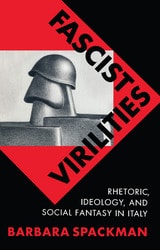
Fascist Virilities
Rhetoric, Ideology, and Social Fantasy in ItalyBarbara Spackman
University of Minnesota Press, 1996
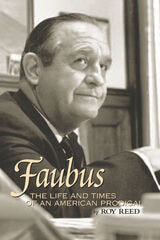
Faubus
The Life and Times of an American ProdigalRoy Reed
University of Arkansas Press, 1999
New York Times Book Review Notable Book for 1997
1998 Certificate of Commendation, American Association for State and Local History
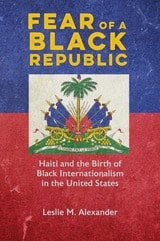
Fear of a Black Republic
Haiti and the Birth of Black Internationalism in the United StatesLeslie M. Alexander
University of Illinois Press, 2023
A bold exploration of Black internationalism’s origins, Fear of a Black Republic links the Haitian revolution to the global Black pursuit of liberation, justice, and social equality.
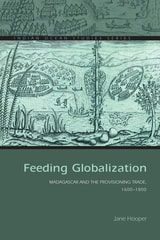
Feeding Globalization
Madagascar and the Provisioning Trade, 1600–1800Jane Hooper
Ohio University Press, 2017
Between 1600 and 1800, the promise of fresh food attracted more than seven hundred English, French, and Dutch vessels to Madagascar. Throughout this period, European ships spent months at sea in the Atlantic and Indian Oceans, but until now scholars have not fully examined how crews were fed during these long voyages. Without sustenance from Madagascar, European traders would have struggled to transport silver to Asia and spices back to Europe. Colonies in Mozambique, Mauritius, and at the Cape relied upon frequent imports from Madagascar to feed settlers and slaves.
In Feeding Globalization, Jane Hooper draws on challenging and previously untapped sources to analyze Madagascar’s role in provisioning European trading networks within and ultimately beyond the Indian Ocean. The sale of food from the island not only shaped trade routes and colonial efforts but also encouraged political centralization and the slave trade in Madagascar. Malagasy people played an essential role in supporting European global commerce, with far-reaching effects on their communities.
Feeding Globalization reshapes our understanding of Indian Ocean and global history by insisting historians should pay attention to the role that food played in supporting other exchanges.
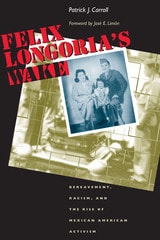
Felix Longoria's Wake
Bereavement, Racism, and the Rise of Mexican American ActivismBy Patrick Carroll
University of Texas Press, 2003
Winner, Tullis Prize, Texas State Historical Association, 2004
Private First Class Felix Longoria earned a Bronze Service Star, a Purple Heart, a Good Conduct Medal, and a Combat Infantryman's badge for service in the Philippines during World War II. Yet the only funeral parlor in his hometown of Three Rivers, Texas, refused to hold a wake for the slain soldier because "the whites would not like it." Almost overnight, this act of discrimination became a defining moment in the rise of Mexican American activism. It launched Dr. Héctor P. García and his newly formed American G.I. Forum into the vanguard of the Mexican civil rights movement, while simultaneously endangering and advancing the career of Senator Lyndon B. Johnson, who arranged for Longoria's burial with full military honors in Arlington National Cemetery.
In this book, Patrick Carroll provides the first fully researched account of the Longoria controversy and its far-reaching consequences. Drawing on extensive documentary evidence and interviews with many key figures, including Dr. García and Mrs. Longoria, Carroll convincingly explains why the Longoria incident, though less severe than other acts of discrimination against Mexican Americans, ignited the activism of a whole range of interest groups from Argentina to Minneapolis. By putting Longoria's wake in a national and international context, he also clarifies why it became such a flash point for conflicting understandings of bereavement, nationalism, reason, and emotion between two powerful cultures—Mexicanidad and Americanism.
Feminist Post-Liberalism
Judith A. Baer
Temple University Press, 2020
Feminism and liberalism need each other, argues Judith Baer. Her provocative book, Feminist Post-Liberalism, refutes both conservative and radical critiques. To make her case, she rejects classical liberalism in favor of a welfare—and possibly socialist—post-liberalism that will prevent capitalism and a concentration of power that reinforces male supremacy. Together, feminism and liberalism can better elucidate controversies in American politics, law, and society.
Baer emphasizes that tolerance and self-examination are virtues, but within both feminist and liberal thought these virtues have been carried to extremes. Feminist theory needs liberalism's respect for reason, while liberal theory needs to incorporate emotion. Liberalism focuses too narrowly on the individual, while feminism needs a dose of individualism.
Feminist Post-Liberalism includes anthropological foundations of male dominance to explore topics ranging from crime to cultural appropriation. Baer develops a theory that is true to the principles of both feminist and liberal ideologies.
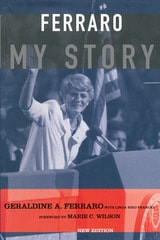
Ferraro
My StoryGeraldine Ferraro with Linda Bird Francke and with a foreword by Marie Wilson
Northwestern University Press, 2004
Ferraro's run for vice-president was an important moment in American history. The time is right for telling a new generation this story of women's collective political power and the difference women office holders can and do make to public policy.
Fidel's Ethics of Violence
The Moral Dimension of the Political Thought of Fidel CastroDayan Jayatilleka
Pluto Press, 2007
This book makes a timely intervention into the question of Castro's historical role and contribution. The author argues that Castro's doctrine of armed struggle is the logical development of his idea of the ethical liberation fighter. At its core is an unremitting emphasis on the ethical use of violence.
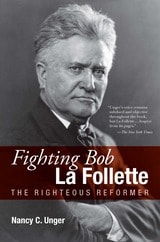
Fighting Bob La Follette
The Righteous ReformerNancy C Unger
Wisconsin Historical Society Press, 2008
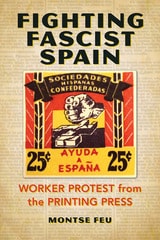
Fighting Fascist Spain
Worker Protest from the Printing PressMontse Feu
University of Illinois Press, 2020
Montse Feu merges España Libre's story with the drama of the Spanish immigrant community's fight against fascism. The periodical emerged as part of a transnational effort to link migrants and new exiles living in the United States to antifascist networks abroad. In addition to showing how workers' culture and politics shaped their antifascism, Feu brings to light creative works that ranged from literature to satire to cartoons to theater. As España Libre opened up radical practices, it encouraged allies to reject violence in favor of social revolution's potential for joy and inclusion.
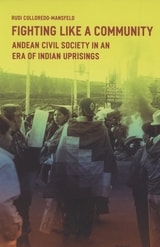
Fighting Like a Community
Andean Civil Society in an Era of Indian UprisingsRudi Colloredo-Mansfeld
University of Chicago Press, 2009
The indigenous population of the Ecuadorian Andes made substantial political gains during the 1990s in the wake of a dynamic wave of local activism. The movement renegotiated land development laws, elected indigenous candidates to national office, and successfully fought for the constitutional redefinition of Ecuador as a nation of many cultures. Fighting Like a Community argues that these remarkable achievements paradoxically grew out of the deep differences—in language, class, education, and location—that began to divide native society in the 1960s.
Drawing on fifteen years of fieldwork, Rudi Colloredo-Mansfeld explores these differences and the conflicts they engendered in a variety of communities. From protestors confronting the military during a national strike to a migrant family fighting to get a relative released from prison, Colloredo-Mansfeld recounts dramatic events and private struggles alike to demonstrate how indigenous power in Ecuador is energized by disagreements over values and priorities, eloquently contending that the plurality of Andean communities, not their unity, has been the key to their political success.
Fighting Monsters in the Abyss
The Second Administration of Colombian President Álvaro Uribe Vélez, 2006–2010Harvey F. Kline
University of Alabama Press, 2015
Studies the complex constraints and trade-offs the second administration of Colombian President Uribe (2006–2010) encountered as it attempted to resolve that nation’s violent Marxist insurrection and to have a more efficient judicial system
Fighting Monsters in the Abyss offers a deeply insightful analysis of the efforts by the second administration of Colombian President Álvaro Uribe Vélez (2006–2010) to resolve a decades-long Marxist insurgency in one of Latin America’s most important nations. Continuing work from his prior books about earlier Colombian presidents and yet written as a stand-alone study, Colombia expert Harvey F. Kline illuminates the surprising successes and setbacks in Uribe’s response to this existential threat.
In State Building and Conflict Resolution in Colombia, 1986–1994, Kline documented and explained the limited successes of Presidents Virgilio Barco and César Gaviria in putting down the revolutionaries while also confronting challenges from drug dealers and paramilitary groups. The following president Andrés Pastrana then boldly changed course and attempted resolution through negotiations, an effort whose failure Kline examines in Chronicle of a Failure Foretold. In his third book, Showing Teeth to the Dragons, Kline shows how in his first term President Álvaro Uribe Vélez more successfully quelled the insurrection through a combination of negotiated demobilization of paramilitary groups and using US backing to mount more effective military campaigns.
Kline opens Fighting Monsters in the Abyss with a recap of Colombia’s complex political history, the development of Marxist rebels and paramilitary groups and their respective relationships to the narcotics trade, and the attempts of successive Colombian presidents to resolve the crisis. Kline next examines the ability of the Colombian government to reimpose rule in rebel-controlled territories as well as the challenges of administering justice. He recounts the difficulties in the enforcement of the landmark Law of Justice and Peace as well as two significant government scandals, that of the “false positives” (“falsos positivos”) in which innocent civilians were killed by the military to inflate the body counts of dead insurgents and a second scandal related to illegal wiretapping.
In tracing Uribe’s choices, strategies, successes, and failures, Kline also uses the example of Colombia to explore a dimension quite unique in the literature about state building: what happens when some members of a government resort to breaking rules or betraying their societies’ values in well-intentioned efforts to build a stronger state?

Fighting Son
A Biography of Philip F. La FolletteJonathan Kasparek
Wisconsin Historical Society Press, 2006
Former Wisconsin governor Philip F. La Follette forged a political path characterized by his progressive, innovative vision. Growing up in the shadow of revered senator "Fighting Bob" La Follette made for a politically charged childhood and laid the groundwork for Phil's emergence as a powerful figure in Wisconsin politics. A gregarious and fiery politician, Phil's efforts led to the passage of the country's first unemployment compensation act, aid programs for workers and farmers, and the reorganization of state government.
This approachable, comprehensive book traces La Follette's journey through public office as well as his life after the waning of the Progressive era. Phil La Follette’s is a history of continuing progressivism, of innovative solutions to social problems, and of loyalty to a political ethos that goes far beyond love of country. Kasparek's treatment of this Fighting Son is a monument not only to La Follette but to progressive politics in Wisconsin.
Fighting Sprawl and City Hall
Resistance to Urban Growth in the SouthwestMichael F. Logan
University of Arizona Press, 1995
Fighting Sprawl and City Hall now sets the record straight, tracing the roots of antigrowth activism in two southwestern cities, Tucson and Albuquerque, where urbanization proceeded in the face of constant protest. Logan tells how each of these cities witnessed multifaceted opposition to post-war urbanization and a rise in political activism during the 1950s. For each city, he describes the efforts by civic boosters and local government to promote development, showing how these booster-government alliances differed in effectiveness; tells how middle-class Anglos first voiced opposition to annexations and zoning reforms through standard forms of political protest such as referendums and petitions; then documents the shift to ethnic resistance as Hispanics opposed urban renewal plans that targeted barrios. Environmentalism, he reveals, was a relative latecomer to the political arena and became a focal point for otherwise disparate forms of resistance.
Logan's study enables readers to understand not only these similarities in urban activism but also important differences; for example, Tucson provides the stronger example of resistance based on valuation of the physical environment, while Albuquerque better demonstrates anti-annexation politics. For each locale, it offers a testament to grass-roots activism that will be of interest to historians as well as to citizens of its subject cities.
Fighting for the Forty-Ninth Star
C. W. Snedden and the Crusade for Alaska StatehoodTerrence Cole
University of Alaska Press, 2010
C.W. "Bill" Snedden, the publisher of America's farthest north daily newspaper, the Fairbanks Daily News-Miner, helped lead the battle of the Far North against the Deep South. Working behind the scenes with his protege, a young attorney named Ted Stevens, and a fellow Republican newspaperman, Secretary of Interior Fred Seaton, Snedden's "magnificent obsession" would open the door to development of the oil fields at Prudhoe Bay, inspire establishment of the Arctic Wildlife Range (now the Arctic National Wildlife Refuge), and add the forty-ninth star to the flag.
Fighting for the Forty-Ninth Star is the story of how the publisher of a little newspaper four thousand miles from Washington, D.C., helped convince Congress that Alaskans should be second-class citizens no more.
Fighting from a Distance
How Filipino Exiles Helped Topple a DictatorJose V. Fuentecilla
University of Illinois Press, 2013
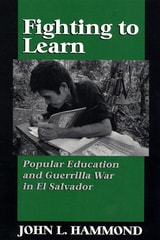
Fighting to Learn
Popular Education and Guerilla War in El SalvadorHammond, John L
Rutgers University Press, 1998
Popular education played a vital role in the twelve-year guerrilla war against the Salvadoran government. Fighting to Learn is a study of its pedagogy and politics. Inspired by Paulo Freire's literacy work in Brazil in the 1950s, popular education brought literacy to poor rural communities abandoned by the official education system and to peasant combatants in the guerrilla army. Those who had little education taught those who had none. Popular education taught people skills, raised the morale that sustained them in unequal combat, and stimulated the creation of an organizational network to hold them together.
Hammond interviewed more than 100 Salvadoran students and teachers for this book. He recounts their experiences in their own words, vividly conveying how they coped with the hardships of war and organized civilian communities politically to support a guerrilla insurgency. Fighting to Learn tells how poorly educated peasants overcame their sense of inferiority to discover that they could teach each other and work together in a common struggle.
First examining the Christian base communities through which popular education came to El Salvador, Hammond then discusses how guerrilla combatants, political prisoners, and refugees learned. He shows that education was both a pedagogical and a political practice: he discusses the training of completely inexperienced teachers, the linking of basic literacy skills with politics, and the organizing of communities. Fighting to Learn offers both a detailed account of an historical moment and a broad theoretical discussion of the relationship between education, community organizing, and the political process.

Fine Boys
A NovelEghosa Imasuen
Ohio University Press, 2021
A coming-of-age tale told from the perspective of Nigeria’s Generation X, caught amid the throes of a nascent pro-democracy movement, demoralizing corruption, and campus violence.
Ewaen is a Nigerian teenager, bored at home in Warri and eager to flee from his parents’ unhappy marriage and incessant quarreling. When Ewaen is admitted to the University of Benin, he makes new friends who, like him, are excited about their newfound independence. They hang out in parking lots, trading gibes in pidgin and English and discovering the pleasures that freedom affords them. But when university strikes begin and ruthlessly violent confraternities unleash mayhem on their campus, Ewaen and his new friends must learn to adapt—or risk becoming the confras' next unwilling recruits.
In his trademark witty, colloquial style, critically acclaimed author Eghosa Imasuen presents everyday Nigerian life against the backdrop of the pro-democracy riots of the 1980s and 1990s, the lost hopes of June 12 (Nigeria’s Democracy Day), and the terror of the Abacha years. Fine Boys is a chronicle of time, not just in Nigeria, but also for its budding post-Biafran generation.
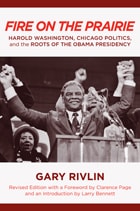
Fire on the Prairie
Harold Washington, Chicago Politics, and the Roots of the Obama PresidencyGary Rivlin
Temple University Press, 2012
Harold Washington’s historic and improbable victory over the vaunted Chicago political machine shook up American politics. The election of the enigmatic yet engaging Washington led to his serving five tumultuous years as the city’s first black mayor. He fashioned an uneasy but potent multiracial coalition that today still stands as a model for political change.
In this revised edition of Fire on the Prairie, acclaimed reporter Gary Rivlin chronicles Washington’s legacy—a tale rich in character and intrigue. He reveals the cronyism of Daley’s government and Washington’s rivalry with Jesse Jackson. Rivlin also shows how Washington’s success inspired a young community organizer named Barack Obama to turn to the electoral arena as a vehicle for change. While the story of a single city, , this political biography is anything but parochial.
First Ladies and the Press
The Unfinished Partnership of the Media AgeMaurine H. Beasley
Northwestern University Press, 2005

First Light
Kanaka 'Oiwi Resistance to Settler Science at Mauna a WakeaIokepa Casumbal-Salazar
University of Minnesota Press, 2025
Understanding the Hawai‘i Island summit of Mauna a Wākea as a place of ancestral connection, cultural resurgence, and political resistance for Native Hawaiians
First Light is a site-specific study of Native Hawaiian resistance to the construction of the Thirty Meter Telescope (TMT) on the summit of Mauna a Wākea, the sacred mountain on the island of Hawai‘i. Drawing on personal interviews, oral histories, archival research, participant observation, and popular, legal, scientific, and Indigenous discourses, Iokepa Casumbal-Salazar explores both the campaign to build the observatory and the movement against it. He asks how astronomers have become stewards of Mauna a Wākea while Kānaka ‘Ōiwi (Aboriginal Hawaiians), in protest, are recast as obstructing progress and clinging to ancient superstitions.
Contextualizing contemporary resistance to telescope expansion within the past 132 years of struggle against U.S. empire in Hawai‘i, Casumbal-Salazar argues the Kanaka-led efforts to protect their ancestral lands did not begin with the TMT and only become legible when understood in the broader history of resistance to U.S. settler hegemony as told through the voices and actions of kiaʻi ʻāina (land defenders). First Light explores how settler science, capital, and law have been mobilized in ways that rationalize industrial development projects like the TMT and promote a vision of “coexistence” that enables the dehumanization of Kānaka ‘Ōiwi and their alienation from ʻāina.
Challenging the assumptions and aggressions of neoliberal environmental policy, settler multiculturalism, and U.S. military occupation, First Light reinforces calls for a moratorium on new telescope development and a literacy in Kanaka ‘Ōiwi movements for life, land, and ea (independence, sovereignty).
Retail e-book files for this title are screen-reader friendly with images accompanied by short alt text and/or extended descriptions.
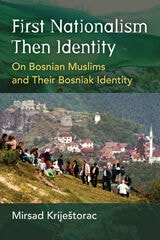
First Nationalism Then Identity
On Bosnian Muslims and Their Bosniak IdentityMirsad Kriještorac
University of Michigan Press, 2022
First Nationalism Then Identity focuses on the case of Bosnian Muslims, a rare historic instance of a new nation emerging. Although for Bosnian Muslims the process of national emergence and the assertion of a new salient identity have been going on for over two decades, Mirsad Kriještorac is the first to explain the significance of the whole process and how the adoption of their new Bosniak identity occurred. He provides a historical overview of Yugoslav and Bosnian Slavic Muslims’ transformation into a full-fledged distinct and independent national group as well as addresses the important question in the field of nationalism studies about the relationship between and workings of nationalism and identity. While this book is noteworthy for ordinary readers interested in the case of Bosnian Muslims, it is an important contribution to the scholarly debate on the role of nationalism in the political life of a group and adds an interdisciplinary perspective to comparative politics scholarship by drawing from anthropology, history, geography, and sociology.
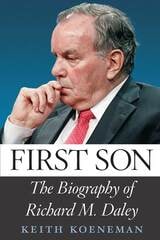
First Son
The Biography of Richard M. DaleyKeith Koeneman
University of Chicago Press, 2013
"Mayor Richard M. Daley dropped the bomb at a routine news conference at City Hall on Tuesday. With no prelude or fanfare, Mr. Daley announced that he would not seek re-election when his term expires next year. 'Simply put, it's time,' he said." New York Times, September 7, 2010
With those four words, an era ended. After twenty-two years, the longest-serving and most powerful mayor in the history of Chicago—and, arguably, America—stepped down, leaving behind a city that was utterly transformed, and a complicated legacy we are only beginning to evaluate.
With Koeneman as our guide, we follow young Daley from his beginnings as an average Bridgeport kid thought to lack his father's talent and charisma to his unlikely transformation into an iron-fisted leader. Daley not only escaped the giant shadow of his father but also transformed Chicago from a gritty, post-industrial Midwestern capital into a beautiful, sophisticated global city widely recognized as a model for innovative metropolises throughout the world.
But in spite of his many accomplishments, Richard M. Daley's record is far from flawless. First Son sets the dramatic improvement of certain parts of the city against the persistent realities of crime, financial stress , failing public housing, and dysfunctional schools. And it reveals that while in many ways Daley broke with the machine politics of his father, he continued to reward loyalty with favors, use the resources of city government to overwhelm opponents, and tolerate political corruption.
A nuanced portrait of a complex man, First Son shows Daley to be sensitive yet tough, impatient yet persistent, a street-smart fighter and detail-driven policy expert who not only ran Chicago, but was Chicago.
First the Transition, then the Crash
Eastern Europe in the 2000sEdited by Gareth Dale
Pluto Press, 2011
The 1989-91 upheavals in Eastern Europe sparked a turbulent process of social and economic transition. Two decades on, with the global economic crisis of 2008-10, a new phase has begun.
This book explores the scale and trajectory of the crisis through case studies of the Czech Republic, Hungary, Latvia, Poland, Russia, Ukraine and the former Yugoslavia. The contributors focus upon the relationships between geopolitics, the world economy and class restructuring.
The book covers the changing relationship between business and states; foreign capital flows; financialisation and asset price bubbles; austerity and privatisation; and societal responses, in the form of reactionary populism and progressive social movements.
Challenging neoliberal interpretations that envisage the transition as a process of unfolding liberty, the dialectic charted in these pages reveals uneven development, attenuated freedoms and social polarisation.
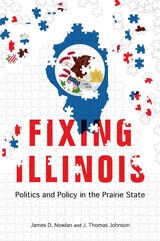
Fixing Illinois
Politics and Policy in the Prairie StateJim Nowlan and J. Thomas Johnson
University of Illinois Press, 2014
- An overhaul of state pension systems that includes more reasonable benefits and raising of the retirement age, among other changes;
- Broadening of the tax base to include services and reductions in rates;
- Raising funds with capital construction bonds to update and integrate the antiquated information systems used by state agencies;
- Uprooting the state's entrenched culture of corruption via public financing of elections, redistricting reform, and revolving door prohibitions for lawmakers
Pointed, honest, and pragmatic, Fixing Illinois is a plan for effective and honest government that seeks an even nobler end: restoring our faith in Illinois's institutions and reviving a sense of citizenship and state pride.
Flash Effect
Science and the Rhetorical Origins of Cold War AmericaDavid J. Tietge
Ohio University Press, 2002
The ways science and technology are portrayed in advertising, in the news, in our politics, and in the culture at large inform the way we respond to these particular facts of life. The better we are at recognizing the rhetorical intentions of the purveyors of information and promoters of mass culture, the more adept we become at responding intelligently to them.
Flash Effect, a startling book by David J. Tietge, documents the manner in which those at the highest levels of our political and cultural institutions conflated the rhetoric of science and technology with the rhetorics of religion and patriotism to express their policies for governance at the onset of the Cold War and to explain them to the American public.
Professor Tietge details our cultural attitudes about science in the early years of the Cold War, when on the heels of a great technological victory Americans were faced with the possibility of destruction by the very weapons that had saved them.
In Flash Effect we learn how, by symbolizing the scientist as both a father figure and a savior—and by celebrating the technological objects of his labor—the campaign to promote science took hold in the American consciousness. The products of that attitude are with us today more than ever.

Florentine Essays
Selected Writings of Marvin B. BeckerMarvin B. Becker
University of Michigan Press, 2002
In the capital of humanism, he initiated what was to be a lifelong examination of the Western civil tradition. In Florence he could study the interplay of ideas and action in what he was to call the "public world." The rise of this world out of the private, feudal and corporate structures of the medieval commune, its functioning and its eventual subversion by the authoritarian structures of the early modern state were, he thought, valuable information for modern political cultures. In the 1950s and 1960s, Becker produced approximately twenty papers dealing with a wide variety of themes and issues raised by the work of other scholars such as Davidson, Salvemini, Ottokar, Panella, Rodolico, Barbadoro, Baron, and others. He also introduced his own formulations on a range of subjects including the political role of Florence's minor guilds, usury, taxation, public debt, popular heresy, church-state relations, the city's chroniclers, the influence of "new men" upon Florentine government and changing mentalities.
These papers, in their originality, their richness of documentation and their suggestiveness, are still relevant for current scholarship. The editors of this volume have chosen the papers for the convenience of readers who may know Becker only through his books, or from the myriad of footnotes of other scholars who have drawn so much from his work. This volume will be of interest to scholars, students, and others interested in Renaissance history, whether it be social or political.
Marvin B. Becker is Professor Emeritus in the Department of History, University of Michigan. James Banker is Professor of History, North Carolina State University. Carol Lansing is Professor of History, University of California, Santa Barbara.

Fly in the Buttermilk
The Life Story of Cecil ReedCecil A. Reed
University of Iowa Press, 1993
Follow the Leader?
How Voters Respond to Politicians' Policies and PerformanceGabriel S. Lenz
University of Chicago Press, 2012
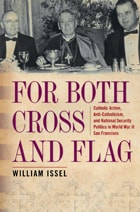
For Both Cross and Flag
Catholic Action, Anti-Catholicism, and National Security Politics in World War II San FranciscoAuthored by William Issel
Temple University Press, 2010
In this fascinating, detailed history, William Issel recounts the civil rights abuses suffered by Sylvester Andriano, an Italian American Catholic civil leader whose religious and political activism in San Francisco provoked an Anti-Catholic campaign against him. A leading figure in the Catholic Action movement, Andriano was falsely accused in state and federal Un-American Activities Committee hearings of having Fascist sympathies prior to and during World War II. As his ordeal began, Andriano was subjected to a hostile investigation by the FBI, whose confidential informants were his political rivals. Furthermore, the U.S. Army ordered him to be relocated on the grounds that he was a security risk.
For Both Cross and Flag provides a dramatic illustration of what can happen when parties to urban political rivalries, rooted in religious and ideological differences, seize the opportunity provided by a wartime national security emergency to demonize their enemy as “a potentially dangerous person.”
Issel presents a cast of characters that includes archbishops, radicals, the Kremlin, and J. Edgar Hoover, to examine the significant role faith-based political activism played in the political culture that violated Andriano’s constitutional rights. Exploring the ramifications of this story, For Both Cross and Flag presents interesting implications for contemporary events and issues relating to urban politics, ethnic groups, and religion in a time of war.

For Might and Right
Cold War Defense Spending and the Remaking of American DemocracyMichael Brenes
University of Massachusetts Press, 2020
How did the global Cold War influence American politics at home? For Might and Right traces the story of how Cold War defense spending remade participatory politics, producing a powerful and dynamic political coalition that reached across party lines. This “Cold War coalition” favored massive defense spending over social welfare programs, bringing together a diverse array of actors from across the nation, including defense workers, community boosters, military contractors, current and retired members of the armed services, activists, and politicians. Faced with neoliberal austerity and uncertainty surrounding America's foreign policy after the 1960s, increased military spending became a bipartisan solution to create jobs and stimulate economic growth, even in the absence of national security threats.
Using a rich array of archival sources, Michael Brenes draws important connections between economic inequality and American militarism that enhance our understanding of the Cold War's continued impact on American democracy and the resilience of the military-industrial complex, up to the age of Donald Trump.
For Money and Elders
Ritual, Sovereignty, and the Sacred in KenyaRobert W. Blunt
University of Chicago Press, 2019
In For Money and Elders, Robert W. Blunt addresses these questions by turning to the political, economic, and religious signs in circulation in Kenya today. He examines how Kenyans attempt to make sense of political instability caused by the uncertainty of authority behind everything from currency to title deeds. When the symbolic order of a society is up for grabs, he shows, violence may seem like an expedient way to enforce the authority of signs. Drawing on fertile concepts of sovereignty, elderhood, counterfeiting, acephaly, and more, Blunt explores phenomena as diverse as the destabilization of ritual “oaths,” public anxieties about Satanism with the advent of democratic reform, and mistrust of official signs. The result is a fascinating glimpse into Kenya’s past and present and a penetrating reflection on meanings of violence in African politics.
For the Many or the Few
The Initiative, Public Policy, and American DemocracyJohn G. Matsusaka
University of Chicago Press, 2004
Drawing upon a century of evidence, Matsusaka argues against the popular belief that initiative measures are influenced by wealthy special interest groups that neglect the majority view. Examining demographic, political, and opinion data, he demonstrates how the initiative process brings about systematic changes in tax and expenditure policies of state and local governments that are generally supported by the citizens. He concludes that, by and large, direct democracy in the form of the initiative process works for the benefit of the many rather than the few.
An unprecedented, comprehensive look at the historical, empirical, and theoretical components of how initiatives function within our representative democracy to increase political competition while avoiding the tyranny of the majority, For the Many or the Few is a most timely and definitive work.