262 books match the query 'Public health' and 12 start with f
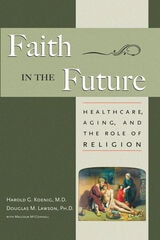
cover of Faith In The Future: Healthcare, Aging and the Role of Religion

Faith In The Future

Healthcare, Aging and the Role of Religion

Harold Koenig

Templeton Press, 2012

After an interview in Newsweek about his book Spirituality in Patient Care and his research in religion and health, Dr. Harold Koenig became the international voice on spirituality, health, and aging. In this book, Faith in the Future, he is joined by two other experts on aging and human development. They present a compelling look at one of the most severe issues in today’s society: health care in America. 

How will we provide quality healthcare to older adults needing it during the next thirty to fifty years? Who will provide this care? How will it be funded? How can we establish systems of care now to be in place as demographic and health-related economic pressures mount?

Alongside the sobering reality of our country’s challenges, there are reasons for optimism. Innovative programs created and maintained by volunteers and religious congregations are emerging as pivotal factors in meeting healthcare needs. Summarizing decades of scientific research and providing numerous inspirational examples and role models, the authors present practical steps that individuals and institutions may emulate for putting faith into action.

<
[more]
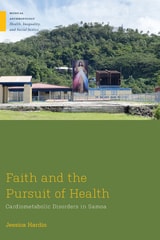
cover of Faith and the Pursuit of Health: Cardiometabolic Disorders in Samoa

Faith and the Pursuit of Health

Cardiometabolic Disorders in Samoa

Hardin, Jessica

Rutgers University Press, 2019
Faith and the Pursuit of Health explores how Pentecostal Christians manage chronic illness in ways that sheds light on health disparities and social suffering in Samoa, a place where rates of obesity and related cardiometabolic disorders have reached population-wide levels. Pentecostals grapple with how to maintain the health of their congregants in an environment that fosters cardiometabolic disorders. They find ways to manage these forms of sickness and inequality through their churches and the friendships developed within these institutions. Examining how Pentecostal Christianity provides many Samoans with tools to manage day-to-day issues around health and sickness, Jessica Hardin argues for understanding the synergies between how Christianity and biomedicine practice chronicity. 
[more]
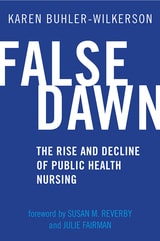
cover of False Dawn: The Rise and Decline of Public Health Nursing

False Dawn

The Rise and Decline of Public Health Nursing

Karen Buhler-Wilkerson

Rutgers University Press, 2021
Since its initial publication in 1989 by Garland Publishing, Karen Buhler Wilkerson’s False Dawn: The Rise and Decline of Public Health Nursing remains the definitive work on the creation, work, successes, and failures of public health nursing in the United States. False Dawn explores and answers the provocative question: why did a movement that became a significant vehicle for the delivery of comprehensive health care to individuals and families fail to reach its potential? Through carefully researched chapters, Wilkerson details what she herself called the “rise and fall” narrative of public health nursing: rising to great heights in its patients' homes in the struggle to control infectious diseases, assimilate immigrants, and tame urban areas -- only to flounder during the later growth of hospitals, significant immigration restrictions, and the emergence of chronic diseases as endemic in American society. 
[more]
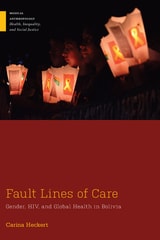
cover of Fault Lines of Care: Gender, HIV, and Global Health in Bolivia

Fault Lines of Care

Gender, HIV, and Global Health in Bolivia

Heckert, Carina

Rutgers University Press, 2018

The HIV epidemic in Bolivia has received little attention on a global scale in light of the country’s low HIV prevalence rate. However, by profiling the largest city in this land-locked Latin American country, Carina Heckert shows how global health-funded HIV care programs at times clash with local realities, which can have catastrophic effects for people living with HIV who must rely on global health resources to survive. These ethnographic insights, as a result, can be applied to AIDS programs across the globe.
 
In Fault Lines of Care, Heckert provides a detailed examination of the effects of global health and governmental policy decisions on the everyday lives of people living with HIV in Santa Cruz. She focuses on the gendered dynamics that play a role in the development and implementation of HIV care programs and shows how decisions made from above impact what happens on the ground.  
[more]
cover of Fevered Measures: Public Health and Race at the Texas-Mexico Border, 1848–1942

Fevered Measures

Public Health and Race at the Texas-Mexico Border, 1848–1942

John Mckiernan-González

Duke University Press, 2012
In Fevered Measures, John Mckiernan-González examines public health campaigns along the Texas-Mexico border between 1848 and 1942 and reveals the changing medical and political frameworks U.S. health authorities used when facing the threat of epidemic disease. The medical borders created by these officials changed with each contagion and sometimes varied from the existing national borders. Federal officers sought to distinguish Mexican citizens from U.S. citizens, a process troubled by the deeply interconnected nature of border communities. Mckiernan-González uncovers forgotten or ignored cases in which Mexicans, Mexican Americans, African Americans, and other groups were subject to—and sometimes agents of—quarantines, inspections, detentions, and forced-treatment regimens. These cases illustrate the ways that medical encounters shaped border identities before and after the Mexican Revolution. Mckiernan-González also maintains that the threat of disease provided a venue to destabilize identity at the border, enacted processes of racialization, and re-legitimized the power of U.S. policymakers. He demonstrates how this complex history continues to shape and frame contemporary perceptions of the Latino body today.
[more]
cover of Fighting for Health: Medicine in Cold War Southeast Asia

Fighting for Health

Medicine in Cold War Southeast Asia

Edited by C. Michele Thompson, Kathryn Sweet, and Michitake Aso

National University of Singapore Press, 2024

An overlooked history of Southeast Asia’s varied healthcare regimes during the Cold War.

For far too long, Southeast Asia has been treated as a static backdrop for the exploits and discoveries of Western biomedical doctors. Yet, Southeast Asians have been vital to the significant developments in the prevention and treatment of diseases that have taken place in the region and beyond. Many of the institutions and people that shaped subsequent responses to outbreaks, epidemics, and pandemics first began their work in Southeast Asia during the Cold War. The diversity of approaches to health and medicine during that era also reminds us of the possibilities, and limits, of human intervention in the face of political, social, economic, and microbial realities. The people and places of Southeast Asia have provided clinical trials for different health regimes. Fighting for Health highlights new perspectives and methods that have evolved from research presented at regional conferences, including the History of Medicine in Southeast Asia (HOMSEA) series. These insights serve to challenge dominant models of the medical humanities.
[more]
cover of Fistula Politics: Birthing Injuries and the Quest for Continence in Niger

Fistula Politics

Birthing Injuries and the Quest for Continence in Niger

Heller, Alison

Rutgers University Press, 2019
Obstetric fistula is a birthing injury caused by prolonged obstructed labor that results in urinary and fecal incontinence. It is nearly non-existent in the Global North. In contrast Niger, in West Africa, has one of the highest rates of fistula in the world. In Western humanitarian and media narratives, fistula is presented as deeply stigmatizing, resulting in divorce, abandonment by kin, exile from communities, depression and suicide. In Fistula Politics, Alison Heller illustrates the inaccuracy of these popular narratives and shows how they serve the interests not of the women so affected, but of humanitarian organizations, the media, and local clinics.  
[more]
cover of For All of Humanity: Mesoamerican and Colonial Medicine in Enlightenment Guatemala

For All of Humanity

Mesoamerican and Colonial Medicine in Enlightenment Guatemala

Martha Few

University of Arizona Press, 2015

Smallpox, measles, and typhus. The scourges of lethal disease—as threatening in colonial Mesoamerica as in other parts of the world—called for widespread efforts and enlightened attitudes to battle the centuries-old killers of children and adults. Even before edicts from Spain crossed the Atlantic, colonial elites oftentimes embraced medical experimentation and reform in the name of the public good, believing it was their moral responsibility to apply medical innovations to cure and prevent disease. Their efforts included the first inoculations and vaccinations against smallpox, new strategies to protect families and communities from typhus and measles, and medical interventions into pregnancy and childbirth.

For All of Humanity examines the first public health campaigns in Guatemala, southern Mexico, and Central America in the eighteenth and early nineteenth centuries. Martha Few pays close attention to Indigenous Mesoamerican medical cultures, which not only influenced the shape and scope of those regional campaigns but also affected the broader New World medical cultures. The author reconstructs a rich and complex picture of the ways colonial doctors, surgeons, Indigenous healers, midwives, priests, government officials, and ordinary people engaged in efforts to prevent and control epidemic disease.

Few’s analysis weaves medical history and ethnohistory with social, cultural, and intellectual history. She uses prescriptive texts, medical correspondence, and legal documents to provide rich ethnographic descriptions of Mesoamerican medical cultures, their practitioners, and regional pharmacopeia that came into contact with colonial medicine, at times violently, during public health campaigns.
[more]
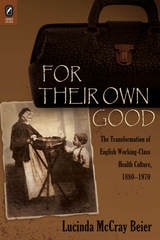
cover of For Their Own Good: The Transformation of English Working-Class Health Culture, 1880–1970

For Their Own Good

The Transformation of English Working-Class Health Culture, 1880–1970

Lucinda Mccray Beier

The Ohio State University Press, 2008
In For Their Own Good Lucinda McCray Beier examines the interactions between working-class health culture and official provision of health services and medical care in three English communities between 1880 and 1970. Based on 239 oral history interviews of laypeople and annual public health reports, this book considers gender, class, political, economic, and cultural aspects of the mid-twentieth-century shift in responsibility for illness, birth, and death from the informal domestic and neighborhood sphere to the purview of professional, institutionally based authorities.
 
For Their Own Good is a case study, located in a particular place and time, of a phenomenon that has occurred in all Western nations and is now happening worldwide. As in Barrow, Lancaster, and Preston, in most circumstances, the transition from traditional to modern medicine is stimulated and enforced from the top down. Current global struggles with AIDS, overpopulation, malaria, malnutrition, and other killers offer powerful reminders that elite knowledge and strategies rarely result in success unless laypeople are engaged and invested in solutions. Furthermore, as this book demonstrates, the desired transition to Western medicine carries the twin burdens of the loss of lay ability to prevent and manage ill-health, on one hand, and the demand that political elites and medical professionals meet proliferating health care needs and demands, on the other.
 
 
[more]
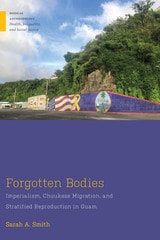
cover of Forgotten Bodies: Imperialism, Chuukese Migration, and Stratified Reproduction in Guam

Forgotten Bodies

Imperialism, Chuukese Migration, and Stratified Reproduction in Guam

Sarah A. Smith

Rutgers University Press, 2024

Women from Chuuk, Federated States of Micronesia, who migrate to Guam, a U.S. territory, suffer disproportionately poor reproductive health outcomes. Though their access to the United States is unusually easy, through a unique migration agreement, it keeps them in a perpetual liminal state as nonimmigrants, who never fully belong as part of the United States Chuukese women move to Guam, sometimes with their families but sometimes alone, in search of a better life: for jobs, for the education system, or to access safe health care. Yet, the imperial system they encounter creates underlying conditions that greatly and disproportionately impact their ability to succeed and thrive, negatively impacting their reproductive health. Through clinical and community ethnography, Sarah A. Smith illuminates the way this system stratifies women’s reproduction at structural, social, and individual levels. Readers can visualize how U.S. imperialist policies of benign neglect control the body politic, change the social body, and render individual bodies vulnerable in the twenty-first century but also how people resist.
[more]
cover of From Pink to Green: Disease Prevention and the Environmental Breast Cancer Movement

From Pink to Green

Disease Prevention and the Environmental Breast Cancer Movement

Ley, Barbara L

Rutgers University Press, 2009

From the early 1980s, the U.S. environmental breast cancer movement has championed the goal of eradicating the disease by emphasizing the importance of reducing—even eliminating exposure to chemicals and toxins. From Pink to Green chronicles the movement's disease prevention philosophy from the beginning.

Challenging the broader cultural milieu of pink ribbon symbolism and breast cancer "awareness" campaigns, this movement has grown from a handful of community-based organizations into a national entity, shaping the cultural, political, and public health landscape. Much of the activists' everyday work revolves around describing how the so called "cancer industry" downplays possible environmental links to protect their political and economic interests and they demand that the public play a role in scientific, policy, and public health decision-making to build a new framework of breast cancer prevention.

From Pink to Green successfully explores the intersection between breast cancer activism and the environmental health sciences, incorporating public and scientific debates as well as policy implications to public health and environmental agendas.

[more]
cover of From the Midwife's Bag to the Patient's File: Public Health in Eastern and Southeastern Europe

From the Midwife's Bag to the Patient's File

Public Health in Eastern and Southeastern Europe

Sara Bernasconi

Central European University Press, 2018

This volume offers an analysis of the intertwined relationship between public health and the biopolitical dimensions of state- and nation building in Central, Eastern and Southeastern Europe. It challenges the idea of diverging paths towards modernity of Europe’s western and eastern countries by not only identifying ideas, discourses and practices of “solving” public health issues that were shared among political regimes in the region; it also uncovers the ways in which, since the late nineteenth century, the biopolitical organization of the state both originated from and shaped an emerging common European framework. The broad range of local case studies stretches from Bosnia and Herzegovina, Czechoslovakia, the GDR, Greece and Hungary, to Poland, Serbia, the Soviet Union, and Yugoslavia. Taking a time span that begins in the late nineteenth century and ends in the post-socialist era, the book makes an original contribution to scholarship examining the relationship between public health, medicine, and state- and nation building in Europe’s long twentieth century. Close readings and dense descriptions of local discourses and practices of “public” health help to reflect on the transnational and global entanglements in the sphere of public health. In doing so, this volume facilitates comparisons on the regional, European, and global level.
[more]