Results by title
74 books match the query 'Puerto Rico' and 4 start with f
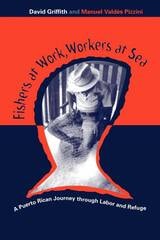
Fishers At Work, Workers At Sea
Puerto Rican Journey Thru Labor & RefugeDavid Griffith and Manuel Valdés Pizzini
Temple University Press, 2002
Small-scale fishing, a house-hold based enterprise in Puerto Rico, rarely provides sufficient income for a family, but it anchors their culture and sense of themselves within that culture. Even when family members must engage in wage work to supplement house-hold income, they think of themselves as fishers. Liche typifies these wage workers: "When he was quite young, he left the island to struggle in other lands, to work, to raise a family, to send home the money he earned. Ten, twenty, thirty years passed...during which he did not once fish or even see the ocean. But in a boat-building factory in New Jersey, in a bakery in the Bronx, on the production line of a chemical factory, on dozens of construction sites, every single day he made a mental review of the waters, the isles and cays ...and entertained no thought that was not related to his return."
Fishers at Work, Workers at Sea describes Puerto Rican fishing families as they negotiate homeland and diaspora. It considers how wage work affects their livelihoods and identities at home and how these independent producers move in and out of global commodity markets. Drawing on some 100 life histories and years of fieldwork, David Griffith and Manuel Valdés Pizzini have developed a complex, often moving portrait of the men and women who fiercely struggle to hang onto the coastal landscapes and cultural heritage tied to the Caribbean Sea.
Fishers at Work, Workers at Sea describes Puerto Rican fishing families as they negotiate homeland and diaspora. It considers how wage work affects their livelihoods and identities at home and how these independent producers move in and out of global commodity markets. Drawing on some 100 life histories and years of fieldwork, David Griffith and Manuel Valdés Pizzini have developed a complex, often moving portrait of the men and women who fiercely struggle to hang onto the coastal landscapes and cultural heritage tied to the Caribbean Sea.
[more]
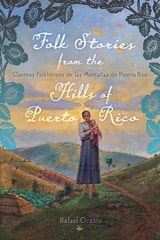
Folk Stories from the Hills of Puerto Rico / Cuentos folklóricos de las montañas de Puerto Rico
Rafael Ocasio
Rutgers University Press, 2021
This exciting new anthology gathers together Puerto Rican folktales that were passed down orally for generations before finally being transcribed beginning in 1914 by the team of famous anthropologist Franz Boas. These charming tales give readers a window into the imaginations and aspirations of Puerto Rico’s peasants, the Jíbaro.
Some stories provide a distinctive Caribbean twist on classic tales including “Snow White” and “Cinderella.” Others fictionalize the lives of local historical figures, such as infamous pirate Roberto Cofresí, rendered here as a Robin Hood figure who subverts the colonial social order. The collection also introduces such beloved local characters as Cucarachita Martina, the kind cockroach who falls in love with Ratoncito Pérez, her devoted mouse husband who brings her delicious food.
Including a fresh English translation of each folktale as well as the original Spanish version, the collection also contains an introduction from literary historian Rafael Ocasio that highlights the historical importance of these tales and the Jíbaro cultural values they impart. These vibrant, funny, and poignant stories will give readers unique insights into Puerto Rico’s rich cultural heritage.
Esta nueva y emocionante antología reúne cuentos populares puertorriqueños que fueron transmitidos oralmente durante generaciones antes de ser finalmente transcritos comenzando en 1914 por el equipo del famoso antropólogo Franz Boas. Estos encantadores cuentos ofrecen a los lectores un vistazo a la imaginación y las aspiraciones de los jíbaros, los campesinos de Puerto Rico.
Algunas historias brindan un distintivo toque caribeño a cuentos clásicos como "Blanca Nieves" y "Cenicienta". Otros ficcionalizan la vida de personajes históricos locales, como el famoso pirata Roberto Cofresí, representado como una figura al estilo de Robin Hood, quien subvierte el orden social colonial. La colección también presenta personajes locales tan queridos como Cucarachita Martina, la amable cucaracha que se enamora de Ratoncito Pérez, su devoto esposo ratón que le trae deliciosa comida.
Incluyendo una nueva traducción al inglés de estos cuentos populares, así como las versiones originales en español, la colección también contiene una introducción del historiador literario Rafael Ocasio, quien destaca la importancia histórica de estos cuentos y los valores culturales del jíbaro que éstos imparten en los relatos. Estas historias vibrantes, divertidas y conmovedoras brindarán a los lectores una visión única de la rica herencia cultural de Puerto Rico.
Introducción en español (https://d3tto5i5w9ogdd.cloudfront.net/wp-content/uploads/2021/02/03154419/Ocasio_Cuentos_Intro_Espan%CC%83ol.pdf)
Rafael Ocasio will discussing his book, 'Folk Stories from the Hills of Puerto Rico / Cuentos folklóricos de las montañas de Puerto Rico' at Biblioteca Juvenil de Mayagüez in Puerto Rico (https://youtu.be/o6Tub094EoI)
[more]
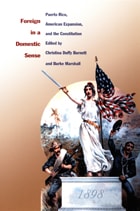
Foreign in a Domestic Sense
Puerto Rico, American Expansion, and the ConstitutionChristina Duffy Burnett and Burke Marshall, eds.
Duke University Press, 2001
In this groundbreaking study of American imperialism, leading legal scholars address the problem of the U.S. territories. Foreign in a Domestic Sense will redefine the boundaries of constitutional scholarship.
More than four million U.S. citizens currently live in five “unincorporated” U.S. territories. The inhabitants of these vestiges of an American empire are denied full representation in Congress and cannot vote in presidential elections. Focusing on Puerto Rico, the largest and most populous of the territories, Foreign in a Domestic Sense sheds much-needed light on the United States’ unfinished colonial experiment and its legacy of racially rooted imperialism, while insisting on the centrality of these “marginal” regions in any serious treatment of American constitutional history. For one hundred years, Puerto Ricans have struggled to define their place in a nation that neither wants them nor wants to let them go. They are caught in a debate too politicized to yield meaningful answers. Meanwhile, doubts concerning the constitutionality of keeping colonies have languished on the margins of mainstream scholarship, overlooked by scholars outside the island and ignored by the nation at large.
This book does more than simply fill a glaring omission in the study of race, cultural identity, and the Constitution; it also makes a crucial contribution to the study of American federalism, serves as a foundation for substantive debate on Puerto Rico’s status, and meets an urgent need for dialogue on territorial status between the mainland and the territories.
Contributors. José Julián Álvarez González, Roberto Aponte Toro, Christina Duffy Burnett, José A. Cabranes, Sanford Levinson, Burke Marshall, Gerald L. Neuman, Angel R. Oquendo, Juan Perea, Efrén Rivera Ramos, Rogers M. Smith, E. Robert Statham Jr., Brook Thomas, Richard Thornburgh, Juan R. Torruella, José Trías Monge, Mark Tushnet, Mark Weiner
[more]
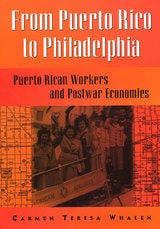
From Puerto Rico To Philadelphia
Puerto Rican Workers and Postwar EconomiesCarmen Whalen
Temple University Press, 2001
"We were poor but we had everything we needed," reminisces Dona Epifania. Nonetheless, when a man she knew told her about a job in Philadelphia, she grasped the opportunity to leave Coamas. "He went to Puerto Rico and told me there were beans to cook. I came here and cooked for fourteen workers." In San Lorenzo, Dona Carmen and her husband made the same decision: "We didn't want to, nobody wanted to leave....There wasn't any alternative." Don Florencio recalls that in Salinas work had gotten scarce, "especially for the youth, the young men....The farmworker that was used to cutting cane, already the sugar cane was disappearing," and government licensing regulations made fishing "more difficult for the poor."
Puerto Rican migration to the mainland following World War II took place for a range of reasons -- globalization of the economy, the colonial relationship between the United States and Puerto Rico, state policies, changes in regional and local economies, social networks, and, not least, the decisions made by individual immigrants. In this wide-ranging book, Carmen Whalen weaves them all into a tapestry of Puerto Rican immigration to Philadelphia.
Like African Americans and Mexicans, Puerto Ricans were recruited for low-wage jobs, only to confront racial discrimination as well as economic restructuring. As Whalen shows, they were part of that wave of newcomers who came from areas in the Caribbean, Latin America, and Asia characterized by a heavy U.S. military and economic presence, especially export processing zones looking for a new life in depressed urban environments already populated by earlier labor migrants. But Puerto Rican in-migration was also unique, especially in its regional and gender dimensions. Many migrants came as part of contract labor programs shaped by competing agendas.
By the 1990s, economic conditions, government policies, and racial ideologies had transformed Puerto Rican labor migrants into what has been called "the other underclass." The author analyzes this continuation of "culture and poverty" interpretations and contrasts it with the efforts of Philadelphia's Puerto Ricans to recreate their communities and deal with the impact of economic restructuring and residential segregation in the City of Brotherly Love.
[more]