Results by title
237 books match the query 'Race & Ethnic Relations' and 4 start with f
False Black Power?
Jason L. Riley
Templeton Press, 2017
Black civil rights leaders have long supported ethnic identity politics and prioritized the integration of political institutions, and seldom has that strategy been questioned. In False Black Power?, Jason L. Riley takes an honest, factual look at why increased black political power has not paid off in the ways that civil rights leadership has promised.
Recent decades have witnessed a proliferation of black elected officials, culminating in the historic presidency of Barack Obama. However, racial gaps in employment, income, homeownership, academic achievement, and other measures not only continue but in some cases have even widened. While other racial and ethnic groups in America have made economic advancement a priority, the focus on political capital for blacks has been a disadvantage, blocking them from the fiscal capital that helped power upward mobility among other groups.
Riley explains why the political strategy of civil rights leaders has left so many blacks behind. The key to black economic advancement today is overcoming cultural handicaps, not attaining more political power. The book closes with thoughtful responses from key thought leaders Glenn Loury and John McWhorter.

Forever 17
Coming of Age in the German Asylum SystemUlrike Bialas
University of Chicago Press, 2023
Heartbreaking images of children in distress have propelled some of the most urgent calls for action on immigration crises, and that compassion often affects how state asylum policies are structured. In Germany, for example, the immigration system is engineered to protect minors, which leads to unintended consequences for migrants.
In Forever 17, Ulrike Bialas follows young African and Central Asian migrants in Germany as they navigate that system. Without official paperwork or even, in many cases, knowledge of their exact age, migrants must decide how to present their complicated life stories to government officials. They quickly realize that their age can have an outsized effect on the outcome of their cases. A migrant under 18, for example, can’t be deported, but might instead be placed in a youth home, where they will be subject to strict curfew laws. An 18-year-old adult, on the other hand, can get permission to work, but not opportunities to go to school.
Regardless of their age—actual or assumed—migrants face great difficulties. Those classified as minors must live with the psychological burden of being treated like children, while those classified as adults must live without the practical support and legal protections reserved for minors. The significance of age stands in stark contrast to the ambiguities inherent in its determination. Though Germany’s infamous bureaucracy is designed to issue clear statements about refugees and migrants, the truth is often more complicated, and officials are forced to grapple with the difficult implications of their decisions. Ultimately, Bialas shows, policies surrounding asylum seekers fall dramatically short of their humanitarian ideals. Even those policies designed to help the most vulnerable can lead to outcomes that drastically limit the possibilities for migrants in real need of protection and keep them from leading fulfilling lives.
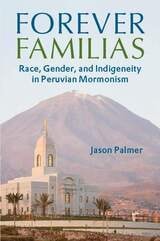
Forever Familias
Race, Gender, and Indigeneity in Peruvian MormonismJason Palmer
University of Illinois Press, 2024
Peruvian members of the Church of Jesus Christ of Latter-day Saints face the dilemma of embracing their faith while finding space to nourish their Peruvianness. Jason Palmer draws on eight years of fieldwork to provide an on-the-ground look at the relationship between Peruvian Saints and the racial and gender complexities of the contemporary Church.
Peruvian Saints discovered that the foundational ideas of kinship and religion ceased being distinct categories in their faith. At the same time, they came to see that LDS rituals and reenactments placed coloniality in opposition to the Peruvians’ indigenous roots and family against the more expansive Peruvian idea of familia. In part one, Palmer explores how Peruvian Saints resolved the first clash by creating the idea of a new pioneer indigeneity that rejected victimhood in favor of subtle engagements with power. Part two illuminates the work performed by Peruvian Saints as they stretched the Anglo Church’s model of the nuclear family to encompass familia.
Furthering Fair Housing
Prospects for Racial Justice in America's NeighborhoodsEdited by Justin P. Steil, Nicholas F. Kelly, Lawrence J. Vale and Maia S. Woluchem
Temple University Press, 2021
The 2015 Affirmatively Furthering Fair Housing Rule was the most significant federal effort to increase equality of access to place-based resources and opportunities, such as high-performing schools or access to jobs, since the 1968 Fair Housing Act. However, in an effort to appeal to suburban voters, the Trump administration repealed the rule in 2020, leaving its future in doubt.
Furthering Fair Housing analyzes multiple dimensions of this rule, identifying failures of past efforts to increase housing choice, exploring how the AFFH Rule was crafted, measuring the initial effects of the rule before its rescission, and examining its interaction with other contemporary housing issues, such as affordability, gentrification, anti-displacement, and zoning policies.
The editors and contributors to this volume—a mix of civil rights advocates, policymakers, and public officials—provide critical perspectives and identify promising new directions for future policies and practices. Placing the history of fair housing in the context of the centuries-long struggle for racial equity, Furthering Fair Housing shows how this policy can be revived and enhanced to advance racial equity in America’s neighborhoods.