Results by title
1017 books match the query 'Reference' and 30 start with f

Family History Record Book
James Bell
University of Minnesota Press, 1980

Fashion in the Middle Ages
Margaret Scott
J. Paul Getty Trust, The, 2018
From the costly velvets and furs worn by kings to the undyed wools and rough linens of the peasantry, the clothing worn by the various classes in the Middle Ages played an integral role in medieval society. In addition to providing clues to status, profession, and/or geographic origin, textiles were a crucial element in the economies of many countries and cities.
Much of what is known about medieval fashion is gleaned from the pages of manuscripts, which serve as a rich source of imagery. This volume provides a detailed look at both the actual fabrics and composition of medieval clothing as well as the period’s attitude toward fashion through an exploration of illuminated manuscripts in the collection of the J. Paul Getty Museum. The last portion of the book is dedicated to the depiction of clothing in biblical times and the ancient world as seen through a medieval lens. Throughout, excerpts from literary sources of the period help shed light on the perceived role and function of fashion in daily life.
Feedback
The Video Data Bank Catalog of Video Art and Artist InterviewsKate Horsfield
Temple University Press, 2006

Fellini's Films and Commercials
From Postwar to PostmodernFrank Burke
Intellect Books, 2020
Revisiting Burke’s 1996 monograph, this revised and updated edition includes a new preface and an additional chapter on the filmmaker’s work on commercials. Elegantly written and thoroughly researched, this book is essential reading for any Fellini fan or scholar.

Feminists Who Changed America, 1963-1975
Edited by Barbara J. Love: Foreword by Nancy F. Cott
University of Illinois Press, 2006
Documenting key feminists who ignited the second wave women's movement
Barbara J. Love’s Feminists Who Changed America, 1963-1975 will be the first comprehensive directory to document many of the founders and leaders (including both well-known and grassroots organizers) of the second wave women's movement. It tells the stories of more than two thousand individual women and a few notable men who together reignited the women's movement and made permanent changes to entrenched customs and laws.
The biographical entries on these pioneering feminists represent their many factions, all parts of the country, all races and ethnic groups, and all political ideologies. Nancy Cott's foreword discusses the movement in relation to the earlier first wave and presents a brief overview of the second wave in the context of other contemporaneous social movements.
Field Guide to Amphibians and Reptiles of Illinois
Christopher A. Phillips, John A. Crawford, and Andrew R. Kuhns. Foreword by Ronald A. Brandon
University of Illinois Press, 2022
A one-of-a-kind resource, the Field Guide to Amphibians and Reptiles of Illinois is a definitive guide aimed at biologists, teachers, students, wildlife specialists, natural resource managers, conservationists, law enforcement officials, landowners, hobbyists, and everyone else eager to explore herpetology and nature in the Prairie State.
Field Guide to Illinois Mammals
Joyce E. Hofmann
University of Illinois Press, 2026
Designed to use in the field or the backyard, Field Guide to Illinois Mammals updates a singular reference for wildlife biologists, ecologists, hikers, armchair adventurers, and anyone else fascinated by the state’s wildlife.

Field Guide to Tidal Wetland Plants of the Northeastern United States and Neighboring Canada
Vegetation of Beaches, Tidal Flats, Rocky Shores, Marshes, Swamps, and Coastal PondsRalph W. Tiner
University of Massachusetts Press, 2009
First published in 1987, Ralph W. Tiner's A Field Guide to Coastal Wetland Plants of the Northeastern United States soon established itself as the definitive work on its subject. Now Tiner has prepared a revised and expanded edition, broadening the coverage both botanically and geographically. It emphasizes plant identification and includes descriptions of over 700 species and illustrations of approximately 550 species. More tidal wetland types are covered (beaches, rocky shores, and tidal swamps) and the geographic scope extends as far north as Canada's Maritime Provinces.
Field Guide to Wisconsin Sedges
An Introduction to the Genus Carex (Cyperaceae)Andrew L. Hipp; Illustrations by Rachel D. Davis; Maps and Appendices by Merel R. Black and Theodore S. Cochrane
University of Wisconsin Press, 2008
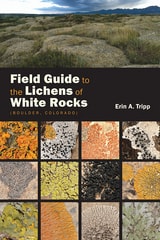
Field Guide to the Lichens of White Rocks
(Boulder, Colorado)Erin Tripp
University Press of Colorado, 2017
This extensively illustrated field guide presents detailed information on the macroscopic and microscopic features needed to identify species, as well as extensive notes on how to differentiate closely related lichens—both those present at White Rocks and those likely to be found elsewhere in western North America. This guide is one of the only complete lichen inventories of a sandstone formation in North America and covers all constituents including the crustose microlichen biota, traditionally excluded from other inventories. A short introduction and glossary equip the reader with basic information on lichen morphology, reproduction, and ecology.
Visitors to White Rocks Nature Preserve must schedule staff-led public tours or set up sponsored research projects through the City of Boulder Open Space and Mountain Parks, and there are many other outcroppings of Fox Hills sandstone across the West, making Field Guide to the Lichens of White Rocks a significant resource for anyone interested in this unique environment. This accessible, user-friendly guide will also be valuable to naturalists and lichenologists around the world as well as educators, conservationists, and land managers concerned with the growing significance of open spaces and other protected urban areas throughout North America.
The University Press of Colorado gratefully acknowledges the generous support of the University of Colorado Natural History Museum, City of Boulder Parks & Open Spaces, and the Colorado Native Plant Society board and members toward the publication of this book.
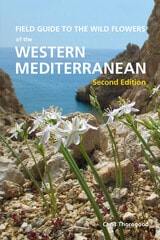
Field Guide to the Wild Flowers of the Western Mediterranean, Second Edition
Chris Thorogood
Royal Botanic Gardens, Kew, 2021
The western Mediterranean—running from Italy to Portugal and encompassing Corsica, Sardinia, the Balearic Islands, and coastal North Africa—is one of the most biodiverse regions in the world, home to more than 10,000 plant species. This updated edition of the Field Guide to the Wild Flowers of the Western Mediterranean is the most comprehensive plant identification guide to the area. Covering more than 2,500 plants, this accessible guide focuses on the most common and conspicuous species that occur in the area, with descriptions, color photographs, and illustrations throughout. The book also includes sections on where to find native plants in the wild, as well as a glossary of terms. An ideal companion for wildlife and plant enthusiasts, this guide will enable even the most botanically blind to reliably identify native flora in the sunny and coastal climes of the western Mediterranean.
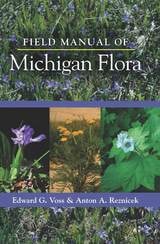
Field Manual of Michigan Flora
Edward G. Voss and Anton A. Reznicek
University of Michigan Press, 2012
Field Manual of Michigan Flora is the most up-to-date guide available for all seed plants growing wild in Michigan. Significantly expanding and updating the three-volume Michigan Flora, the book incorporates the discoveries of numerous additional species, recent systematic research, and a vast trove of new information on the shifting distributions of Michigan species. It presents concise identification keys, information about habitats, and completely updated distribution maps for all the seed plants, native or naturalized, that have been recorded from the state, fully treating over 2,700 species. All non-native species are included with notes on their first discovery in the state and comments on invasive tendencies. Rare native species that appear to be declining or to have shrinking ranges are also noted. This book is an essential reference for anyone interested in appreciating Michigan's natural heritage and understanding our ever-changing environment.

Fifty Years of Thomas Mann Studies
A Bibliography of CriticismKlaus Jonas
University of Minnesota Press, 1955

Find Your Story, Write Your Memoir
Lynn C. Miller and Lisa Lenard-Cook
University of Wisconsin Press, 2013
Bronze winner, Foreword Book of the Year, Writing Guides
First We Read, Then We Write
Emerson on the Creative ProcessRobert D. Richardson
University of Iowa Press, 2009
Writing was the central passion of Emerson’s life. While his thoughts on the craft are well developed in “The Poet,” “The American Scholar,” Nature, “Goethe,” and “Persian Poetry,” less well known are the many pages in his private journals devoted to the relationship between writing and reading. Here, for the first time, is the Concord Sage’s energetic, exuberant, and unconventional advice on the idea of writing, focused and distilled by the preeminent Emerson biographer at work today.
Emerson advised that “the way to write is to throw your body at the mark when your arrows are spent.” First We Read, Then We Write contains numerous such surprises—from “every word we speak is million-faced” to “talent alone cannot make a writer”—but it is no mere collection of aphorisms and exhortations. Instead, in Robert Richardson’s hands, the biographical and historical context in which Emerson worked becomes clear.
Emerson’s advice grew from his personal experience; in practically every moment of his adult life he was either preparing to write, trying to write, or writing. Richardson shows us an Emerson who is no granite bust but instead is a fully fleshed, creative person disarmingly willing to confront his own failures. Emerson urges his readers to try anything—strategies, tricks, makeshifts—speaking not only of the nuts and bolts of writing but also of the grain and sinew of his determination. Whether a writer by trade or a novice, every reader will find something to treasure in this volume. Fearlessly wrestling with “the birthing stage of art,” Emerson’s counsel on being a reader and writer will be read and reread for years to come.
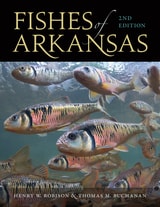
Fishes of Arkansas
Henry W. Robison
University of Arkansas Press, 2019
An invaluable reference for anyone interested in the state’s fish population—from professional ichthyologists, fisheries biologists, and managers of aquatic resources, to amateur naturalists and anglers—this new edition provides updated taxonomic keys as well as detailed descriptions, photographs, and line drawings to aid identification of the state’s 243 fish species. There is also much information on the distribution and biology of each species, including descriptions of habitat, foods eaten, reproductive biology, and conservation status.
This project and the preparation of this publication was funded in part by a grant from the Arkansas Game and Fish Commission.
Five Faces of Modernity
Modernism, Avant-garde, Decadence, Kitsch, PostmodernismMatei Calinescu
Duke University Press, 1987
Five Faces of Modernity attempts to do for the foundations of the modernist critical lexicon what earlier terminological studies have done for such complex categories as classicism, baroque, romanticism, realism, or symbolism and thereby fill a gap in literary scholarship. On another, more ambitious level, Calinescu deals at length with the larger issues, dilemmas, ideological tensions, and perplexities brought about by the assertion of modernity.
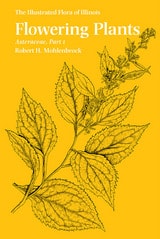
Flowering Plants
Asteraceae, Part 1Robert H. Mohlenbrock
Southern Illinois University Press, 2015
This, the first of three volumes on the aster family planned for the Illustrated Flora of Illinois series, recognizes 388 species in 119 genera, as well as 20 hybrids and 73 lesser taxa. In Asteraceae, Part 1, author Robert Mohlenbrock presents new and historic information in a clear and easy-to-read style. The volume provides an easy-to-use key to the genera and species and a complete description and nomenclatural and habitat notes for each plant, including its usefulness, if applicable. New nomenclatural combinations are shown for several species. The precise illustrations and detailed information allow for the identification of some of the most difficult to identify plants in the state—goldenrods, asters, artemisias, and fleabanes, among others. Includes 128 original illustrations by Paul Nelson.
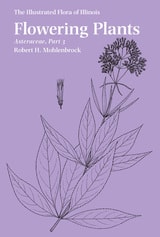
Flowering Plants
Asteraceae, Part 3Robert H. Mohlenbrock
Southern Illinois University Press, 2017
In addition, Mohlenbrock has identified the overall range for each species in Illinois, compiled from various sources, including examinations of herbarium material and Mohlenbrock’s own field studies. The overall range for each species is given from the northeastern to the northwestern extremities, south to the southwestern limit, then eastward to the southeastern limit.
As important to amateurs interested in wildflower identification as to professional botanists and land planners, this last volume of Mohlenbrock’s Asteraceae is an essential addition to the esteemed Illustrated Flora of Illinois series.
Flowering Plants
Basswoods to SpurgesRobert H. Mohlenbrock
Southern Illinois University Press, 1982
This is the fourth volume in The Illustrated Flora of Illinois devoted to dicotyledons, or dicot plants. Dicots are the greatest group of flowering plants, exceeding the monocotyledons, or monocots. Dicots produce a pair of seed leaves during germination while monocots produce only a single seed leaf.
This volume contains four orders and ten families of dicots. The orders included in this volume are Malvales, Urticales, Rhamnales, and Euphorbiales. Within the Malvales are the families Tiliaceae, Sterculiaceae, and Malvaceae. The families Ulmaceae, Moraceae, and Urticaceae comprise the Urticales. Rhamnaceae and Elaeagnaceae make up the Rhamnales. The Euphorbiales include only the Thymelaeceae and the Euphorbiaceae.
Flowering Plants
Lilies to OrchidsRobert H. Mohlenbrock
Southern Illinois University Press, 1970
A continuation of “The Illustrated Flora of Illinois” series, this volume features Illinois flowering plants. This series is designed to provide a working reference for the identification and classification of all the plant forms found in the state. This series is the first of its kind, as no other study of this sort has been undertaken in any other state, and as such, is an unparalleled contribution to its field.
In his introduction to this volume, Mr. Mohlenbrock discusses some of the terms and procedures used in the identification and classification of the plants. He outlines the life histories and morphologies of some of the representative monocots, and also illustrates some of their habits and frequencies in Illinois. Since these volumes are meant to be used by the amateur as well as the professional botanist, the methods and terms used in the text are explained. The directions for the use of the various identification keys are given so that even the novice plant lover will be able to identify the species encountered. For the uninitiated, a glossary is provided which gives definitions for all terms that might be unfamiliar.
All necessary aids to identification are included in the text itself. The identification keys make it initially possible to classify the plants according to order, family, genus and finally, species and the identifying characteristics of each descending class are given in detail. The morphology of each species is outlined, along with data on frequency of occurrence, related soil and climate conditions and history of past collections, and history of past collections. An illustration showing the more important features of the species in detail is included with the description, as well as a map indicating its geographical locations in Illinois.
This book will be invaluable to students, teachers and professionals; particularly those who are interested in observing the plants in their natural habitat. Those who use it will find it possible to obtain a broad view of changing plant forms as they relate to soil and climate variations throughout the state. And it will provide a delightful diversion for all who enjoy viewing beautiful forms in nature. A walk through the forest will become an opportunity for discovery and appreciation.
Flowering Plants
Magnolias to Pitcher PlantsRobert H. Mohlenbrock
Southern Illinois University Press, 1981
This volume, the eighth devoted to flowering plants in the Illustrated Flora of Illinois series, is the third of several devoted to dicotyledons, which include such well-known plants as roses, peas, mustards, mints, nightshades, milkweeds, and asters. Mohlenbrock here represents four orders (Annonales, Berberidales, Nymphaeales, and Sarraceniales) and fifteen families of plants. As in previous volumes in this series, the common names are those used locally in Illinois. An illustration of each species depicts the distinguishing features and the habitat in Illinois.
Forensic Mental Health Assessment With the MMPI-3
Dustin Wygant
University of Minnesota Press, 2026
A comprehensive, evidence-based handbook for using the MMPI-3 in forensic evaluations
Since its release in 2020, the MMPI-3 has become a cornerstone of clinical and forensic assessment. Forensic Mental Health Assessment With the MMPI-3 is an essential, evidence-based resource that explores use of the MMPI-3 in a variety of forensic contexts. In addition to elucidating the test’s development and the interpretation of its scales, this comprehensive guide delves into critical forensic issues including admissibility (e.g., Daubert criteria), telehealth assessment, cross-cultural considerations, and response bias.
Dustin B. Wygant and Martin Sellbom draw on contemporary research to discuss the unique challenges of forensic evaluations. Through case analyses, this book illustrates how to interpret and integrate MMPI-3 profiles into clinical and diagnostic impressions, and it addresses common psycholegal questions in criminal (e.g., competency to stand trial, insanity), civil (e.g., disability), and family (e.g., child custody) contexts.
Providing practical insights into real-world MMPI-3 applications, Forensic Mental Health Assessment With the MMPI-3 is an indispensable resource for forensic practitioners and legal professionals.
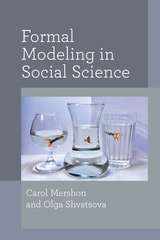
Formal Modeling in Social Science
Carol Mershon and Olga Shvetsova
University of Michigan Press, 2019
A formal model in the social sciences builds explanations when it structures the reasoning underlying a theoretical argument, opens venues for controlled experimentation, and can lead to hypotheses. Yet more importantly, models evaluate theory, build theory, and enhance conjectures. Formal Modeling in Social Science addresses the varied helpful roles of formal models and goes further to take up more fundamental considerations of epistemology and methodology.
The authors integrate the exposition of the epistemology and the methodology of modeling and argue that these two reinforce each other. They illustrate the process of designing an original model suited to the puzzle at hand, using multiple methods in diverse substantive areas of inquiry. The authors also emphasize the crucial, though underappreciated, role of a narrative in the progression from theory to model.
Transparency of assumptions and steps in a model means that any analyst will reach equivalent predictions whenever she replicates the argument. Hence, models enable theoretical replication, essential in the accumulation of knowledge. Formal Modeling in Social Science speaks to scholars in different career stages and disciplines and with varying expertise in modeling.
Freedom for Publishing, Publishing for Freedom
Timothy Garton Ash
Central European University Press, 1995
From Dissertation to Book
William Germano
University of Chicago Press, 2005
Acknowledging first that not all theses can become books, Germano shows how some dissertations might have a better life as one or more journal articles or as chapters in a newly conceived book. But even dissertations strong enough to be published as books first need to become book manuscripts, and at the heart of From Dissertation to Book is the idea that revising the dissertation is a fundamental process of adapting from one genre of writing to another.
Germano offers clear guidance on how to do just this. Writers will find advice on such topics as rethinking the table of contents, taming runaway footnotes, shaping chapter length, and confronting the limitations of jargon, alongside helpful timetables for light or heavy revision. With crisp directives, engaging examples, and a sympathetic eye for the foibles of academic writing, From Dissertation to Book reveals to recent PhD's the process of careful and thoughtful revision—a truly invaluable skill as they grow into their new roles as professional writers.

From Dissertation to Book, Second Edition
William Germano
University of Chicago Press, 2013
Since its publication in 2005, From Dissertation to Book has helped thousands of young academic authors get their books beyond the thesis committee and into the hands of interested publishers and general readers. Now revised and updated to reflect the evolution of scholarly publishing, this edition includes a new chapter arguing that the future of academic writing is in the hands of young scholars who must create work that meets the broader expectations of readers rather than the narrow requirements of academic committees.
At the heart of From Dissertation to Book is the idea that revising the dissertation is fundamentally a process of shifting its focus from the concerns of a narrow audience—a committee or advisors—to those of a broader scholarly audience that wants writing to be both informative and engaging. William Germano offers clear guidance on how to do this, with advice on such topics as rethinking the table of contents, taming runaway footnotes, shaping chapter length, and confronting the limitations of jargon, alongside helpful timetables for light or heavy revision.
Germano draws on his years of experience in both academia and publishing to show writers how to turn a dissertation into a book that an audience will actually enjoy, whether reading on a page or a screen. Germano also acknowledges that not all dissertations can or even should become books and explores other, often overlooked, options, such as turning them into journal articles or chapters in an edited work.
With clear directions, engaging examples, and an eye for the idiosyncrasies of academic writing, From Dissertation to Book reveals to recent PhDs the secrets of careful and thoughtful revision—a skill that will be truly invaluable as they add “author” to their curriculum vitae.
From Good King Wenceslas to the Good Soldier Švejk
A Dictionary of Czech Popular CultureAndrew Roberts
Central European University Press, 2005
From Notes to Narrative
Writing Ethnographies That Everyone Can ReadKristen Ghodsee
University of Chicago Press, 2016
From Notes to Narrative picks up where methodological training leaves off. Kristen Ghodsee, an award-winning ethnographer, addresses common issues that arise in ethnographic writing. Ghodsee works through sentence-level details, such as word choice and structure. She also tackles bigger-picture elements, such as how to incorporate theory and ethnographic details, how to effectively deploy dialogue, and how to avoid distracting elements such as long block quotations and in-text citations. She includes excerpts and examples from model ethnographies. The book concludes with a bibliography of other useful writing guides and nearly one hundred examples of eminently readable ethnographic books.

Fundamentals of Reference
Carolyn M. Mulac
American Library Association, 2012