Results by title
160 books match the query 'Reflections' and 4 start with f

Family Practice Stories
Memories, Reflections, and Stories of Hoosier Family Doctors of the Mid-Twentieth CenturyRichard Feldman
Indiana Historical Society Press, 2013
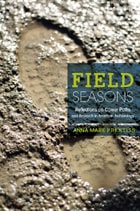
Field Seasons
Reflections on Career Paths and Research in American ArchaeologyAnna Marie Prentiss
University of Utah Press, 2012
In Field Seasons, Anna Marie Prentiss chronicles her experiences as an archaeologist, providing an insider’s look at the diverse cultures, personal agendas, and career pathways associated with American archaeology since the late twentieth century. As the narrative moves from her academic training to employment in government and private consulting to her eventual professorship at a state university, several themes emerge.
This book is about career paths. Its discussion of the diverse jobs within the archaeological profession makes it valuable to students seeking guidance about their career options. It also provides insight into the cultures of American archaeology, a discipline with many schools of thought and unique subcultures. The world of archaeological field technicians is quite different from that of government bureaucrats or academics. Prentiss also explores the elements of cultural change within archaeology while she reflects on her personal evolution throughout her thirty years within the discipline.
The book’s unique personal assessment of the state of American archaeology will appeal to a broad swath of students and professionals. Students will find it an entertaining road map to possible careers while professionals will find plenty of scholarly material concerning ethics, archaeological theory, and interpretations of the archaeological record.
Finite Perfection
Reflections on VirtueMichael A. Weinstein
University of Massachusetts Press, 1985
A contemporary account of how virtue can have significance in a world that has lost the certainty of common and collective meanings.
Finite Perfection: Reflections on Virtue is a work of political philosophy and ethical theory in which Michael A. Weinstein develops a rigorous and original account of virtue grounded in the existentialist tradition rather than in classical metaphysics or theology. The book's title captures its central philosophical tension: where classical and religious traditions have often located virtue in relation to an infinite, divine, or transcendent standard of perfection, Weinstein insists on taking seriously the finitude of the human condition—the irreducible limits of time, mortality, and embodied existence—and asking what excellence and virtue can mean for beings who are, by nature, incomplete and bounded.
Weinstein's approach is rooted in the concept of the self-possessed individual—a person who has achieved a kind of integrity and mastery over themselves not through escape from finitude, but through honest acknowledgment and creative embrace of it. Virtue, on this view, is not a transcendence of human limitation but a perfecting of what is possible within it: the best a finite being can be. This framework draws productively on the existentialist tradition (particularly its emphasis on authenticity, self-creation, and the confrontation with mortality), while also engaging with the Aristotelian tradition of virtue ethics and the Nietzschean understanding of self-overcoming.
Throughout its pages, Weinstein brings his characteristic intellectual breadth to bear, moving across political philosophy, ethics, and social theory to construct an account of virtue that is both philosophically rigorous and deeply humane.
First-Generation Faculty of Color
Reflections on Research, Teaching, and ServiceTracy Lachica Buenavista
Rutgers University Press, 2023