Results by title
598 books match the query 'Religious' and 16 start with f
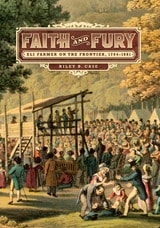
Faith and Fury
Eli Farmer on the Frontier, 1794–1881Riley B. Case
Indiana Historical Society Press, 2018
Faith and Intellect
The Lives and Contributions of Latter-day Saint ThinkersLeonard J Arrington
Signature Books, 2019
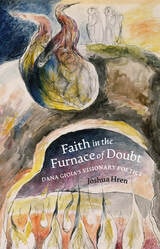
Faith in the Furnace of Doubt
Dana Gioia's Poetics of BeliefJoshua Hren
Catholic University of America Press, 2025
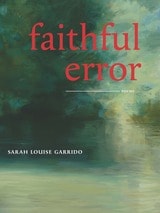
Faithful Error
Sarah Louise Garrido
University Press of Colorado, 2026
Exploring the tension between freedom and fidelity, Faithful Error meditates on life’s most sacred and often difficult loves—romantic, parental, familial, and spiritual—against a backdrop of environmental unease. These poems, rich in natural imagery, trace an emotional journey from intimate contemplation to transcendent questioning, grappling with the value of devotion in a world seemingly designed to extinguish hope. A palpable emotional intensity simmers beneath the restrained language, mirroring the manuscript's central dynamic: a yearning to err, yet ultimately finding freedom in a return—however complicated—to faith.
Filaments
Theological Profiles: Selected Essays, Volume 2David Tracy
University of Chicago Press, 2020
Two volumes of selected essays from the most important Catholic theologian in North America.
Filaments arranges its subjects in rough chronological order, from choices in ancient theology, such as Augustine, through the likes of William of St. Thierry in the medieval period and Martin Luther and Michelangelo in the early modern, and, finally, to modern and contemporary thinkers, including Bernard Lonergan, Paul Tillich, Simone Weil, Karl Rahner, Reinhold Niebuhr, and Iris Murdoch. Taken together, these essays can be understood as a partial initiation into a history of Christian theology defined by Tracy’s key virtues of plurality and ambiguity. Filaments bring the work of one of North America’s most important religious thinkers once again to the forefront to be celebrated by long-time readers and new ones alike.
Filling in the Gap
The Post Pentecost Series of Gospel AntiphonesDavid Eben, Štefánia Hanusa Demská, and Jan Bilwachs
Karolinum Press, 2025
Provides insight into the world of the Carolingian monks and clerics who created the Liturgy of the Hours.
Filling in the Gap recounts the creative process behind a specific part of the Gregorian Office repertoire that has not been addressed so far. By linking historical and liturgical evidence with musical analysis, the study opens new avenues for grouping manuscripts and interpreting their interrelationships. The catalogue of melodies included in this volume contains transcriptions of the post-Pentecost antiphon repertoire from twenty-four manuscripts across Western Europe.

Find Me When You're Ready
PoemsPerry Janes
Northwestern University Press, 2024
A powerful debut and a lyric coming-of-age narrative that interrogates the myths we carry
In Find Me When You’re Ready, Perry Janes traces a sweeping journey from Detroit to Los Angeles. As he leaves home and forges toward California, the speaker in these poems considers how we learn and mislearn ideas about manhood, confronts the aftershocks of childhood sexual abuse, and questions the human need for belonging. By embracing the touchstones of youth—movies, lore, graphic novels—these poems assert the speaker’s defiant right to childhood even amid damage.
As the collection arcs toward adulthood, the speaker embodies a vision of healing that refuses easy binaries and embraces the joys of intimacy. Across each of its five acts, Perry Janes’s debut collection is driven by an interest troubling our creation myths, asking who built them, why we carry them, and how we might set them aside.
Flannery O'Connor and Blaise Pascal
Recovering the Incarnation for the Modern MindAnn Hartle
Catholic University of America Press, 2025
For Decades I Was Silent
A Holocaust Survivor's Journey Back to FaithBaruch G. Goldstein
University of Alabama Press, 2008
A survivor's powerful testament to faith, memory, and the triumph of the human spirit.
A fascinating memoir about a Holocaust survivor's loss of and journey back to faith. In 1939, Baruch Goldstein was a religiously observant adolescent resident of the Jewish community in Mlawa, a town that was then in East Prussia. After war broke out, the Jewish community there was relatively sheltered, as that region was incorporated into the German Reich rather than into the General Government (the German run-fragment of pre-war Poland, where conditions were harsh for everyone). However in 1942, Goldstein was sent to Auschwitz, where he stayed two-and-a-half years. His family was scattered all to their deaths, but he survived the war--barely. For Decades I Was Silent is an account of life in a small Polish-German town and provides information on the religious life of the Jewish citizens. This book creates a direct sense of the random, mystifying personal violence individuals felt at the hands of Germans--not the anonymous industrial death machine, but immediate, face-to-face violence.
After the war, Goldstein drifted as a refugee to UNRR camps in Italy. Over time, young Goldstein had to face the fact that all of his extended family was lost and he had only the possibilities of Palestine or help from distant relatives in the United States as a future. His American relatives urged him to enter the United States as a yeshiva student, and eventually he became a rabbi and started a family. As a young rabbinical student, and then as a rabbi, Goldstein was forced to confront the events of the Holocaust and the damage done to his faith.
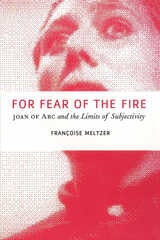
For Fear of the Fire
Joan of Arc and the Limits of SubjectivityFrançoise Meltzer
University of Chicago Press, 2001
Engaging a number of theorists, and alternating between Joan's historical and cultural context, Meltzer also explores the ways in which postmodern thinkers question subjectivity. She argues that the way masculine subjects imagine Joan betrays their fear of death and necessitates the role of women as cultural others: enigmatic, mysterious, dark, and impossible. As such, Joan serves as a useful model of the limits and risks of subjectivity. For Meltzer, she is both the first modern and the last medieval figure. From the ecclesial jury that burned her, to the theorists of today who deny their attraction to the supernatural, the philosophical assumptions that inform Joan's story, as Meltzer ultimately shows, have changed very little.
Forgiveness & Reconciliation
Public Policy & Conflict TransformationRaymond G. Helmick
Templeton Press, 2001
This book brings together a unique combination of experts in conflict resolution and focuses on the role forgiveness can play in the process. It deals with theology, public policy, psychological and social theory, and social policy implementation of forgiveness. This book is essential for libraries, scholars, conflict negotiators, and all people who hope to understand the role of forgiveness in the peace process.
The book's first section explores how ideas like "forgiveness" and "reconciliation" are moving out from the seminary and academy into the world of public policy and how these terms have been used and defined in the past. The second section looks at forgiveness and public policy. One of the chapters, by Donald W. Shriver Jr., addresses forgiveness in a secular political forum.
The third section of the book draws us to a more thorough analysis of the relationship between forgiveness and reconciliation from voices in the academic and theological community, and the final section highlights the work of practitioners currently working with religion, public policy, and conflict transformation, particularly in areas such as Ireland and Africa.
Contributors include Desmond M. Tutu, Rodney L. Petersen, Miroslav Volf, Stanley S. Harakas, Raymond G. Helmick, SJ, Joseph V. Montville, Douglas M. Johnston, Donna Hicks, Donald W. Shriver, Jr., Everett L. Worthington, Jr., John Paul Lederach, Ervin Staub, Laurie Anne Pearlman, John Dawson, Audrey R. Chapman, Olga Botcharova, Anthony da Silva, SJ, Geraldine Smythe, OP, Andrea Bartoli, Ofelia Ortega, and George F. R. Ellis.
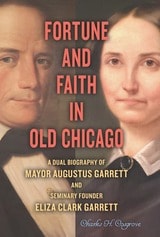
Fortune and Faith in Old Chicago
A Dual Biography of Mayor Augustus Garrett and Seminary Founder Eliza Clark GarrettCharles H. Cosgrove
Southern Illinois University Press, 2020
This engaging biography of Augustus Garrett and Eliza Clark Garrett tells two equally compelling stories: an ambitious man’s struggle to succeed and the remarkable spiritual journey of a woman attempting to overcome tragedy. By contextualizing the couple’s lives within the rich social, political, business, and religious milieu of Chicago’s early urbanization, author Charles H. Cosgrove fills a gap in the history of the city in the mid-nineteenth century.
The Garretts moved from the Hudson River Valley to a nascent Chicago, where Augustus made his fortune in the land boom as an auctioneer and speculator. A mayor during the city’s formative period, Augustus was at the center of the first mayoral election scandal in Chicago. To save his honor, he resigned dramatically and found vindication in his reelection the following year. His story reveals much about the inner workings of Chicago politics and business in the antebellum era.
The couple had lost three young children to disease, and Eliza arrived in Chicago with deep emotional scars. Her journey exemplifies the struggles of sincere, pious women to come to terms with tragedy in an age when most people attributed unhappy events to divine punishment. Following Augustus’s premature death, Eliza developed plans to devote her estate to founding a women’s college and a school for ministerial training, and in 1853 she endowed a Methodist theological school, the Garrett Biblical Institute (now the Garrett-Evangelical Theological Seminary), thereby becoming the first woman in North America to found an institution of higher learning.
In addition to illuminating our understanding of Chicago from the 1830s to the 1850s, Fortune and Faith in Old Chicago explores American religious history, particularly Presbyterianism and Methodism, and its attention to gender shows how men and women experienced the same era in vastly different ways. The result is a rare, fascinating glimpse into old Chicago through the eyes of two of its important early residents.
Fragile Finitude
A Jewish Hermeneutical TheologyMichael Fishbane
University of Chicago Press, 2021
In Fragile Finitude, Fishbane clears new ground for a theological life through a novel reinterpretation of the Book of Job. On this basis, he offers a contemporary engagement with the four classical types of Jewish Scriptural exegesis. The first focuses on worldly experience, the second on communal forms of practice and thought in the rabbinical tradition, the third on personal development, and the fourth on transcendent, cosmic orientations. Through these four modes, Fishbane manages to transform Jewish theology from within, at once reinvigorating a long tradition and moving beyond it. What he offers is nothing short of a way to reorient our lives in relation to the divine and our fellow humans. Written from within the Jewish tradition, Fragile Finitude is intended for readers across the religious spectrum.
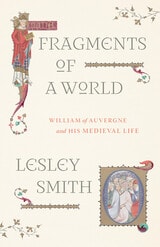
Fragments of a World
William of Auvergne and His Medieval LifeLesley Smith
University of Chicago Press, 2023
Today, William of Auvergne (1180?–1249) is remembered for his scholarship about the afterlife as well as the so-called Trial of the Talmud. But the medieval bishop of Paris also left behind nearly 600 sermons delivered to all manner of people—from the royal court to the poorest in his care. In Fragments of a World, Lesley Smith uses these sermons to paint a vivid picture of this extraordinary cleric, his parishioners, and their bustling world. The first modern biography of the influential teacher, bishop, and theologian, Fragments of a World casts a new image of William of Auvergne for our times—deeply attuned to both the spiritual and material needs of an ever-changing populace in the medieval city.
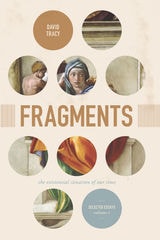
Fragments
The Existential Situation of Our Time: Selected Essays, Volume 1David Tracy
University of Chicago Press, 2020
In the first volume, Fragments, Tracy gathers his most important essays on broad theological questions, beginning with the problem of suffering across Greek tragedy, Christianity, and Buddhism. The volume goes on to address the Infinite, and the many attempts to categorize and name it by Plato, Aristotle, Rilke, Heidegger, and others. In the remaining essays, he reflects on questions of the invisible, contemplation, hermeneutics, and public theology. Throughout, Tracy evokes the potential of fragments (understood both as concepts and events) to shatter closed systems and open us to difference and Infinity. Covering science, literature, philosophy, psychoanalysis, and non-Western religious traditions, Tracy provides in Fragments a guide for any open reader to rethink our fragmenting contemporary culture.
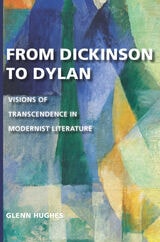
From Dickinson to Dylan
Visions of Transcendence in Modernist LiteratureGlenn Hughes
University of Missouri Press, 2020
This work is unique in its extended focus, in a comparative study spanning a century, on the persistence and centrality in modernist literature of the struggle to understand and articulate the dependence of human meaning on the mystery of transcendent meaning. Hughes shows us that each of these authors is a mystic in his or her way, and that none are tempted by the modern inclination to suppose that meaning originates with human beings. Together, they address one of the most difficult and important challenges of modern literature: how to be a mystic in modernity.