Results by title
131 books match the query 'Republic of South Africa' and 5 start with f
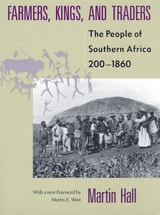
Farmers, Kings, and Traders
The People of Southern Africa, 200-1860Martin Hall
University of Chicago Press, 1990
Through a close reading of the accounts of early travelers, colonialists, archaeologists, and historians, Hall places in context the often contradictory histories that have been written of this region. The result is an illuminating look at how ideas about the past have themselves changed over time.
Finding Voice
A Visual Arts Approach to Engaging Social ChangeKim S. Berman
University of Michigan Press, 2017

Freedom In Our Lifetime
The Collected Writings Of Anton Muziwakhe LembedeAnton Muziwakhe Lembede
Ohio University Press, 1996
When a group of young political activists met in 1944 to launch the African National Congress Youth League, it included the nucleus of a remarkable generation of leaders who forged the struggle for freedom and equality in South Africa for the next half century: Nelson Mandela, Oliver Tambo, Walter Sisulu, Jordan Ngubane, Ellen Kuzwayo, Albertina Smith, A. P. Mda, Dan Tloome, and David Bopape. It was Anton Lembede, however whom they chose as their first president.
Lembede, who had just begun practicing law in Johannesburg, was known for his sharp intellect, fiery personality, and unwavering commitment to the struggle at hand. The son of farm laborers from the district of Georgedale, Natal, Lembede had worked tirelessly to put himself through school and college, and then to qualify for the bachelor of laws degree. When he began law practice in 1943, he had also earned the respect of his fellows, not only for his intellectual achievements (which were many), but also for his dedication to the cause of freedom in South Africa. “I am,” he explained, “Africa’s own child.”
His untimely death in 1947 at the age of 33 sent a wave of grief through the Congress Youth, who had looked to him for moral as well as political leadership. With the publication of Freedom In Our Lifetime, the editors acknowledge Lembede’s early contribution to the freedom movement, in particular his passionate and eloquent articulation of the African-centered philosophy he called “Africanism.”
From Civilization To Segregation
Social Ideals and Social Control in Southern Rhodesia, 1890–1934Carol Summers
Ohio University Press, 1994
This study examines the social changes that took place in Southern Rhodesia after the arrival of the British South Africa Company in the 1890s. Summer’s work focuses on interactions among settlers, the officials of the British South America Company and the administration, missionaries, humanitarian groups in Britain, and the most vocal or noticeable groups of Africans. Through this period of military conquest and physical coercion, to the later attempts at segregationist social engineering, the ideals and justifications of Southern Rhodesians changed drastically. Native Policy, Native Education policies, and, eventually, segregationist Native Development policies changed and evolved as the white and black inhabitants of Southern Rhodesia (colonial Zimbabwe) struggled over the region’s social form and future.
Summers’s work complements a handful of other recent works reexamining the social history of colonial Zimbabwe and demonstrating how knowledge, perception, and ideologies interacted with the economic and political dimensions of the region’s past.

From Hedge to Living Bridge
Re-Imagining the Kirstenbosch National Botanical GardenMelanie Boehi
University of Michigan Press, 2027
Offering a micro-history of the Kirstenbosch National Botanical Garden in Cape Town, From Hedge to Living Bridge situates the botanical garden in the context of colonial botany and local and global struggles to decolonize space and place. At the time of its establishment in 1913, the botanical garden was imagined as a vehicle to promote white South African nationalism. During the apartheid era, the state deployed the botanical garden in international image campaigns to counter international isolation. In the post-apartheid period, the botanical garden attempted to transform its colonial and apartheid displays to accommodate the new democratic nation.
Melanie Boehi reveals that while the botanical garden was designed as a white space, Black people always claimed belonging to it, as it was built on land shaped by Indigenous presence, slavery, and apartheid forced removals.
Drawing from multispecies ethnography, Boehi expands the conventional concept of the archive to include the landscape and the garden’s plants. While the botanical garden was imagined as a colonial tool of separation, it also has the potential to function as a living bridge between people who were segregated by colonialism and apartheid, as well as between humans and nonhuman nature.