Results by title
231 books match the query 'Revolutionary Period (1775-1800)' and 6 start with f
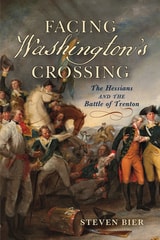
Facing Washington's Crossing
The Hessians and the Battle of TrentonSteven Bier
Westholme Publishing, 2025
They crossed the ocean to fight in someone else's war. They came for glory, honor, and plunder. Instead, they became America's most famous captives.
In Steven Bier's groundbreaking book, Facing Washington's Crossing: The Hessians at the Battle of Trenton, old stereotypes are shattered and new information emerges. Using newly translated documents, rare hard-to-find material, and obscure nearly-forgotten sources, Facing Washington's Crossing rewrites our understanding of the Battle of Trenton.
Bier maintains a gripping narrative, following the military exploits of a Hessian Brigade through six brutal battles. From their crushing victories in New York to the shocking reversal in the snow-covered village of Trenton, witness how professional European soldiers faced an enemy unlike any they had encountered.Bier offers a fresh perspective by narrating the story through Hessian eyes, presenting fascinating details: shipboard cockfights, St. Elmo's fires, how the militaristic Hessians were influenced by the peaceful philosopher Voltaire, when the Royal Navy accidentally landed the Hessians on a deserted island, and how Emanuel Leutze's iconic painting of Washington crossing the Delaware was created in a tavern.The author traces the Hessian Prince's decision to hire out his army, the army’s harrowing voyage across the Atlantic, and the numerous clashes leading up to Trenton. Washington’s Crossing and the subsequent battle itself are fully recounted, providing a much-needed understanding of the Hessian experience.For 250 years, the story has been told mostly from one side. Now the essential counterpoint is finally revealed.

Fort Ticonderoga, The Last Campaigns
The War in the North, 1777–1783Mark Edward Lender
Westholme Publishing, 2027
During the War for Independence, Fort Ticonderoga’s guns, sited critically between Lakes Champlain and George, dominated north-south communications in upstate New York that were vital to both the British and American war efforts. In the public mind Ticonderoga was the “American Gibraltar” or the “Key to the Continent,” and patriots considered holding the fort essential to the success of the Revolutionary cause. Ticonderoga was a primary target in British Lieutenant General John Burgoyne’s 1777 campaign to crush American resistance in the north and end the rebellion in a decisive stroke. American efforts to defend the fort in June against overwhelming odds entailed political and military intrigue, bungling, heroism, and ultimately a narrow escape for the Continental and provincial forces under Major General Arthur St. Clair. The loss of Ticonderoga stunned patriot morale and ignited one of the greatest political firestorms of the war. But the fortunes of war turned. Two months later, the rebels mounted a sensational—if little known—counter-attack on Ticonderoga that had major implications for Burgoyne’s eventual defeat at Saratoga in October. Yet Saratoga brought no peace, and Ticonderoga would be central to additional military and political maneuverings—many of them known only to specialist historians—that would keep the region on edge until the end of the war in 1783.
Based on new archival research and taking advantage of the latest scholarship, Fort Ticonderoga, The Last Campaigns: The War in the North, 1777-1783 by distinguished historian Mark Edward Lender highlights the strategic importance of the fort as British, American, and regional forces (including those of an independent Vermont Republic) fought for control of the northern front at a critical point in the war. The book tells the Ticonderoga story in all of its complexity and drama, correcting misconceptions embedded in many previous accounts, and sheds vital new light on this key chapter in America’s struggle for independence.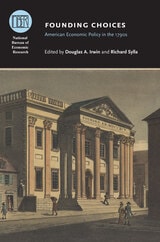
Founding Choices
American Economic Policy in the 1790sEdited by Douglas A. Irwin and Richard Sylla
University of Chicago Press, 2010
The political decisions made by the founding fathers were crucial to the success of the early republic. But the economic decisions they made were just as pivotal, ensuring the general welfare and common defense of the United States for decades to come. Founding Choices explores these economic choices and their profound influence on American life, westward expansion, and influence abroad. Among the topics covered are finance, trade, and monetary and banking policy, with a focus on the factors guiding those policies and their end result.
This book redresses the relative neglect of the economic achievements of the founders. It will be essential reading for historians and economists alike.
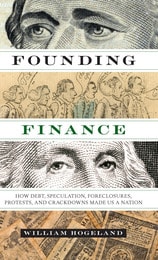
Founding Finance
How Debt, Speculation, Foreclosures, Protests, and Crackdowns Made Us a NationBy William Hogeland
University of Texas Press, 2014
Recent movements such as the Tea Party and anti-tax “constitutional conservatism” lay claim to the finance and taxation ideas of America’s founders, but how much do we really know about the dramatic clashes over finance and economics that marked the founding of America? Dissenting from both right-wing claims and certain liberal preconceptions, Founding Finance brings to life the violent conflicts over economics, class, and finance that played directly, and in many ways ironically, into the hardball politics of forming the nation and ratifying the Constitution—conflicts that still continue to affect our politics, legislation, and debate today.
Mixing lively narrative with fresh views of America’s founders, William Hogeland offers a new perspective on America’s economic infancy: foreclosure crises that make our current one look mild; investment bubbles in land and securities that drove rich men to high-risk borrowing and mad displays of ostentation before dropping them into debtors’ prisons; depressions longer and deeper than the great one of the twentieth century; crony mercantilism, war profiteering, and government corruption that undermine any nostalgia for a virtuous early republic; and predatory lending of scarce cash at exorbitant, unregulated rates, which forced people into bankruptcy, landlessness, and working in the factories and on the commercial farms of their creditors. This story exposes and corrects a perpetual historical denial—by movements across the political spectrum—of America’s all-important founding economic clashes, a denial that weakens and cheapens public discourse on American finance just when we need it most.
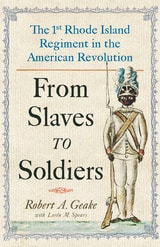
From Slaves to Soldiers
The 1st Rhode Island Regiment in the American RevolutionRobert Geake
Westholme Publishing, 2024
In December 1777, the Continental army was encamped at Valley Forge and faced weeks of cold and hunger, as well as the prospect of many troops leaving as their terms expired in the coming months. If the winter were especially cruel, large numbers of soldiers would face death or contemplate desertion. Plans were made to enlist more men, but as the states struggled to fill quotas for enlistment, Rhode Island general James Mitchell Varnum proposed the historic plan that a regiment of slaves might be recruited from his own state, the smallest in the union, but holding the largest population of slaves in New England. The commander-in-chief’s approval of the plan would set in motion the forming of the 1st Rhode Island Regiment. The “black regiment,” as it came to be known, was composed of indentured servants, Narragansett Indians, and former slaves. This was not without controversy. While some in the Rhode Island Assembly and in other states railed that enlisting slaves would give the enemy the impression that not enough white men could be raised to fight the British, owners of large estates gladly offered their slaves and servants, both black and white, in lieu of a son or family member enlisting. The regiment fought with distinction at the battle of Rhode Island, and once joined with the 2nd Rhode Island before the siege of Yorktown in 1781, it became the first integrated battalion in the nation’s history. In From Slaves to Soldiers: The 1st Rhode Island Regiment in the American Revolution, historian Robert A. Geake tells the important story of the “black regiment” from the causes that led to its formation, its acts of heroism and misfortune, as well as the legacy left by those men who enlisted to earn their freedom.

Frontier Seaport
Detroit's Transformation into an Atlantic EntrepôtCatherine Cangany
University of Chicago Press, 2014
In Frontier Seaport, Catherine Cangany details this seldom-discussed chapter of Detroit’s history. She argues that by the time of the American Revolution, Detroit functioned much like a coastal town as a result of the prosperous fur trade, serving as a critical link in a commercial chain that stretched all the way to Russia and China—thus opening Detroit’s shores for eastern merchants and other transplants. This influx of newcomers brought its own transatlantic networks and fed residents’ desires for popular culture and manufactured merchandise. Detroit began to be both a frontier town and seaport city—a mixed identity, Cangany argues, that hindered it from becoming a thoroughly “American” metropolis.