Results by title
50 books match the query 'Roots' and 2 start with f
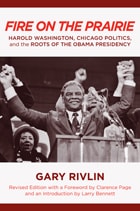
Fire on the Prairie
Harold Washington, Chicago Politics, and the Roots of the Obama PresidencyGary Rivlin
Temple University Press, 2012
Harold Washington’s historic and improbable victory over the vaunted Chicago political machine shook up American politics. The election of the enigmatic yet engaging Washington led to his serving five tumultuous years as the city’s first black mayor. He fashioned an uneasy but potent multiracial coalition that today still stands as a model for political change.
In this revised edition of Fire on the Prairie, acclaimed reporter Gary Rivlin chronicles Washington’s legacy—a tale rich in character and intrigue. He reveals the cronyism of Daley’s government and Washington’s rivalry with Jesse Jackson. Rivlin also shows how Washington’s success inspired a young community organizer named Barack Obama to turn to the electoral arena as a vehicle for change. While the story of a single city, , this political biography is anything but parochial.
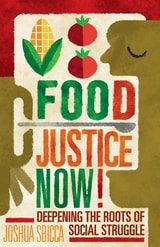
Food Justice Now!
Deepening the Roots of Social StruggleJoshua Sbicca
University of Minnesota Press, 2018
A rallying cry to link the food justice movement to broader social justice debates
The United States is a nation of foodies and food activists, many of them progressives, and yet their overwhelming concern for what they consume often hinders their engagement with social justice more broadly. Food Justice Now! charts a path from food activism to social justice activism that integrates the two. It calls on the food-focused to broaden and deepen their commitment to the struggle against structural inequalities both within and beyond the food system.
In an engrossing, historically grounded, and ethnographically rich narrative, Joshua Sbicca argues that food justice is more than just a myopic focus on food, allowing scholars and activists alike to investigate the causes behind inequities and evaluate and implement political strategies to overcome them. Focusing on carceral, labor, and immigration crises, Sbicca tells the stories of three California-based food movement organizations, showing that when activists use food to confront neoliberal capitalism and institutional racism, they can creatively expand how to practice and achieve food justice.
Sbicca sets his central argument in opposition to apolitical and individual solutions, discussing national food movement campaigns and the need for economically and racially just food policies—a matter of vital public concern with deep implications for building collective power across a diversity of interests.