Results by title
117 books match the query 'Rural conditions' and 4 start with f

Fate and Honor, Family and Village
Demographic and Cultural Change in Rural Italy Since 1800Rudolph M. Bell
University of Chicago Press, 1979
Fortuna is the cultural wellspring of Italian peasant society, the world view from which all social life flows. The concept of fortuna does not refer to philosophical questions, predestination, or value judgments. Rather, fortuna is the sum total of all explanations of outcomes perceived to be beyond human control. Thus, in Bell's view, high mortality does not lead peasants to a resigned acceptance of their fate; instead, they rely on honor, reciprocal exchanges of favors, and marriage to forge new links in their familial and social networks. With thorough documentation in graphs and tables, the author evaluates peasant reactions to time, work, family, space, migration, and protest to portray rural Italians as active, flexible, and shrewd, participating fully in shaping their destinies.
Bell asserts that the real problem of the Mezzogiorno is not one of resistance to technology, of high birth rates, or even of illiteracy. It is one of solving technical questions in ways that foster dependency. The historical and sociological practice of treating peasant culture as backward, secondary, and circumscribed only encourages disruption and ultimately blocks the road to economic and political justice in a postmodern world.
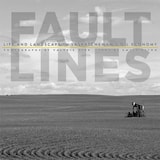
Fault Lines
Life and Landscape in Saskatchewan's Oil EconomyValerie Zink
University of Manitoba Press, 2016

Fighting Back in Appalachia
Traditions of Resistance and Changeedited by Stephen L. Fisher
Temple University Press, 1993
Contributors: Bill Allen, Mary K. Anglin, Fran Ansley, Alan Banks, Dwight Billings, Mary Beth Bingman, Sherry Cable, Guy and Candie Carawan, Richard A. Couto, Stephen William Foster, John M. Glen, Hal Hamilton, Bennett M. Judkins, Don Manning-Miller, Ellen Ryan, Jim Sessions, Joe Szakos, Karen Tice, Chris Weiss, and the editor.

Four Years in Izumi
Village Japan in the Early Sixteenth CenturyLee Butler
University of Michigan Press, 2026
Four Years in Izumi takes an in-depth and critical approach to understanding Japanese village life through analysis of the diary of Kujō Masamoto, the former chancellor of the imperial court who resided briefly in one of his provincial estates from 1501 to 1504. For a high ranking courtier to travel to the countryside and manage a family estate was unheard of during the era of Sengoku, the “country at war.” The diary Masamoto kept offers a remarkably rich and vivid portrait of village Japan, which has seen no significant study in English-language scholarship.
Through extensive examination of the diary and close and critical reading of it and complementary sources, Lee Butler provides a window into the inner workings of late-medieval village life that challenges typical portrayals of the period. In Four Years in Izumi, we see the complexity of relations between commoners and elites in action. We also see the ways in which an estate functioned in practice at the heart of the medieval economy and local social structure.