Results by title
546 books match the query 'Semiotics & Theory' and 17 start with f
Fi-Sci
Avatars of Science in FictionRhona Trauvitch
The Ohio State University Press, 2026
In Fi-Sci, Rhona Trauvitch melds literary and scientific thought to advance a theory of how narrative, and specifically fictionality, is one of the most powerful tools we have for understanding science, particularly those concepts that defy imagination. Centering her argument on a rhetorical approach to fictionality, she proposes that fiction uniquely offers a means of conceptualizing and understanding perplexing and counterintuitive scientific phenomena, such as recombinant DNA or quantum superposition: Through finding analogous patterns in fiction, we can open up new pathways to understanding. Put another way, our abilities to perceive strange and confounding science phenomena are bolstered and even enabled by our experiences with fiction.
Drawing on a range of theorists such as James Phelan, Gérard Genette, Erwin Schrödinger, and others in her analysis of texts by Jorge Luis Borges, Julio Cortázar, Ursula K. Le Guin, Richard Powers, and many more, Trauvitch shows how literary forms—such as metafiction, metalepsis, and recursion—mirror and clarify complex scientific concepts including genetics, spacetime curvature, and quantum mechanics. In this way, she shows us how fiction is key to unlocking conceptual access to the indiscernible and inconceivable.
Fiction Beyond Secularism
Justin Neuman
Northwestern University Press, 2014
Modernist thinkers once presumed a progressive secularity, with the novel replacing religious texts as society’s moral epics. Yet religion—beginning with the Iranian revolution of 1979, through the collapse of communism, and culminating in the singular rupture of September 11, 2001—has not retreated quietly out of sight.
In Fiction Beyond Secularism, Justin Neuman argues that contemporary novelists who are most commonly identified as antireligious—among them Orhan Pamuk, Salman Rushdie, Ian McEwan, Margaret Atwood, Nadine Gordimer, Haruki Murakami, and J. M. Coetzee—have defied assumptions and have instead written some of the most trenchant critiques of secular ideologies, as well as the most exciting and rigorous inquiries into the legacies of the religious imagination. As a result, many readers (or nonreaders) on either side of the religious divide neglect the insights of works like The Satanic Verses, Disgrace, and Snow. Fiction Beyond Secularism serves as a timely corrective.
Fictionality and Literature
Core Concepts RevisitedEdited by Lasse R. Gammelgaard, Stefan Iversen, Louise Brix Jacobsen, James Phelan, Richard Walsh, Henrik Zetterberg-Nielsen, and Simona Zetterberg-Nielsen
The Ohio State University Press, 2022
Contributors:
H. Porter Abbott, Catherine Gallagher, Lasse R. Gammelgaard, Stefan Iversen, Louise Brix Jacobsen, Rikke Andersen Kraglund, Susan S. Lanser, Jakob Lothe, Maria Ma¨kela¨, Greta Olson, Sylvie Patron, James Phelan, Richard Walsh, Wendy Veronica Xin, Henrik Zetterberg-Nielsen, Simona Zetterberg-Nielsen
Fictions of Land and Flesh
Blackness, Indigeneity, SpeculationMark Rifkin
Duke University Press, 2019
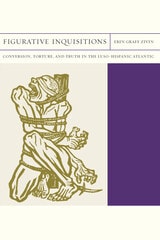
Figurative Inquisitions
Conversion, Torture, and Truth in the Luso-Hispanic AtlanticErin Graff Zivin
Northwestern University Press, 2014
Winner, 2015 LAJSA Best Book in Latin American Jewish Studies
The practices of interrogation, torture, and confession have resurfaced in public debates since the early 2000s following human rights abuses around the globe. Yet discussion of torture has remained restricted to three principal fields: the legal, the pragmatic, and the moral, eclipsing the less immediate but vital question of what torture does.Figurative Inquisitions seeks to correct this lacuna by approaching the question of torture from a literary vantage point.
This book investigates the uncanny presence of the Inquisition and marranismo (crypto-Judaism) in modern literature, theater, and film from Mexico, Brazil, and Portugal. Through a critique of fictional scenes of interrogation, it underscores the vital role of the literary in deconstructing the relation between torture and truth. Figurative Inquisitions traces the contours of a relationship among aesthetics, ethics, and politics in an account of the "Inquisitional logic" that continues to haunt contemporary political forms. In so doing, the book offers a unique humanistic perspective on current torture debates.
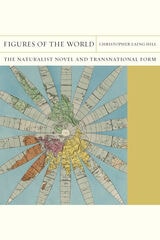
Figures of the World
The Naturalist Novel and Transnational FormChristopher Laing Hill
Northwestern University Press, 2020
The book begins by tracing the history of naturalist fiction from the 1860s into the twentieth century and the reasons it spread around the world. Hill explores the development of three naturalist figures—the degenerate body, the self-liberated woman, and the social milieu—through close readings of fiction from France, Japan, and the United States. Rather than genealogies of European influence or the domination of cultural “peripheries” by the center, novels by Émile Zola, Tayama Katai, Frank Norris, and other writers reveal conspicuous departures from metropolitan models as writers revised naturalist methods to address new social conditions. Hill offers a new approach to studying culture on a large scale for readers interested in literature, the arts, and the history of ideas.

Finding the Weight of Things
Larry Eigner's EcrippoeticsGeorge Hart
University of Alabama Press, 2022
Where language, body, and form converge in the poetry of Larry Eigner.
Larry Eigner (1927–1996) wrote thousands of poems in his lifetime, despite profound physical limitations caused by cerebral palsy. Using only the thumb and index finger of his right hand, Eigner generated a torrent of urgent and rich language, participating in vital correspondences as well as publishing widely in literary magazines and poetry journals.
While Eigner wrote before the emergence of ecopoetics, his poetry reflected a serious engagement with scientific writing and media, including Rachel Carson’s seminal Silent Spring. Eigner was writing about environmental disasters and climate change long before such concerns took on a moral incumbency. Similarly, Eigner was ahead of his time in his exploration of disability. The field of disability studies has expanded rapidly in the new millennium. Eigner was not an overtly biographical poet, at least as far as his physical limitations were concerned, but his poetry spoke volumes on the idea of embodiment in all its forms.
Finding the Weight of Things: Larry Eigner’s Ecrippoetics is the first full-length study of Eigner’s poetry, covering his entire career from the beginning of his mature work in the 1950s to his last poems of the 1990s. George Hart charts where Eigner’s two central interests intersect, and how their interaction fueled his work as a poet-critic—one whose work has much to tell us about the ecology and embodiment of our futures. Hart sees Eigner’s overlapping concerns for disability, ecology, and poetic form as inextricable, and coins the phrase ecrippoetics here to describe Eigner’s prescient vision.
For a New Novel
Essays on FictionAlain Robbe-Grillet
Northwestern University Press, 1989
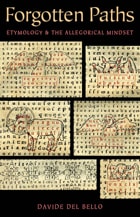
Forgotten Paths
Etymology and the Allegorical MindsetDavide Del Bello
Catholic University of America Press, 2007
Form and Instability
Eastern Europe, Literature, Postimperial DifferenceAnita Starosta
Northwestern University Press, 2015
Located at the intersection of comparative literature, area studies, and literary theory, this interdisciplinary study has a twofold commitment: to Eastern Europe on the one hand and to literature on the other. It aims to intervene in the way we conceive of Eastern Europe by seeking to develop a more equitable way of thinking, one that avoids subordinating it to Eurocentric narratives of progress. At the same time, it marshals literature as both object and method of this rethinking, in order to extend existing conceptions of the usefulness and of the proper organization of literary studies. The three terms in the title of this book mark a passage—via literature—from “Eastern Europe” as an inadequate and obsolescent category to “post-imperial difference” as a more accurate, if provisional, account of the region. By way of original readings of particular texts, and by attending to literature as a critical
Forms of Mobility
Genre, Language, and Media in African Literary CulturesStephanie Bosch Santana
Northwestern University Press, 2025
Presents alternative categories of fiction through which to examine how contemporary writers have envisaged Africa’s changing literary terrains
Stephanie Bosch Santana analyzes southern African writers’ experimentations with literary form in periodical print and digital media since the mid-twentieth century in order to offer an alternative account of contemporary African imaginations of mobility. Based on an understudied archive of texts in English and Chichewa/Nyanja from Malawi, South Africa, Zimbabwe, and Zambia, Forms of Mobility: Genre, Language, and Media in African Literary Cultures examines new, noncanonical categories of fiction, including migrant forms, township tales, weekend stories, and digital diaries. These generically, linguistically, and geographically mobile forms map changing ideas of interconnection and belonging. By reading them “in motion,” as they travel across space, time, genre, and language and between publications and platforms, Bosch Santana limns multiple centers of literary influence and relation across southern African and Black diasporas, revealing forms of literary mobility and space making that are occluded by current models of world literature.
Fredric Jameson and Film Theory
Marxism, Allegory, and Geopolitics in World CinemaKeith B. Wagner
Rutgers University Press, 2022
Freedom Not Yet
Liberation and the Next World OrderKenneth Surin
Duke University Press, 2009
Surin begins by examining the current regime of accumulation—the global domination of financial markets over traditional industrial economies—which is used as an instrument for the subordination and dependency of poorer nations. He then moves to the constitution of subjectivity, or the way humans are produced as social beings, which he casts as the key arena in which struggles against dispossession occur. Surin critically engages with the major philosophical positions that have been posed as models of liberation, including Derrida’s notion of reciprocity between a subject and its other, a reinvigorated militancy in political reorientation based on the thinking of Badiou and Zizek, the nomad politics of Deleuze and Guattari, and the politics of the multitude suggested by Hardt and Negri. Finally, Surin specifies the material conditions needed for liberation from the economic, political, and social failures of our current system. Seeking to illuminate a route to a better life for the world’s poorer populations, Surin investigates the philosophical possibilities for a Marxist or neo-Marxist concept of liberation from capitalist exploitation and the regimes of power that support it.
French Theory
How Foucault, Derrida, Deleuze, & Co. Transformed the Intellectual Life of the United StatesFrancois Cusset
University of Minnesota Press, 2008
“A great story, full of twists and turns. . . . Careers made and ruined, departments torn apart, writing programs turned into sensitivity seminars, political witch hunts, public opprobrium, ignorant media attacks, the whole ball of wax. Read it and laugh or read it and weep. I can hardly wait for the movie.” —Stanley Fish, Think Again, New York Times
“In such a difficult genre, full of traps and obstacles, French Theory is a success and a remarkable book in every respect: it is fair, balanced, and informed. I am sure this book will become the reference on both sides of the Atlantic.” —Jacques Derrida
“The Atlantic Ocean has two sides, and so does French Theory. Reinvented in America and betrayed in its own country, it has become the most radical intellectual movement in the West with global reach, rewriting Marx in light of late capitalism. Breathtakingly moving back and forth between the two cultures, Francois Cusset takes us through a dazzling intellectual adventure that illuminates the past thirty years, and many more decades to come.” —Sylvere Lotringer
During the last three decades of the twentieth century, a disparate group of radical French thinkers achieved an improbable level of influence and fame in the United States. Compared by at least one journalist to the British rock ‘n’ roll invasion, the arrival of works by Michel Foucault, Jacques Derrida, Jean-François Lyotard, Jean Baudrillard, Gilles Deleuze, and Félix Guattari on American shores in the late 1970s and 1980s caused a sensation.
Outside the academy, “French theory” had a profound impact on the era’s emerging identity politics while also becoming, in the 1980s, the target of right-wing propagandists. At the same time in academic departments across the country, their poststructuralist form of radical suspicion transformed disciplines from literature to anthropology to architecture. By the 1990s, French theory was woven deeply into America’s cultural and intellectual fabric.
French Theory is the first comprehensive account of the American fortunes of these unlikely philosophical celebrities. François Cusset looks at why America proved to be such fertile ground for French theory, how such demanding writings could become so widely influential, and the peculiarly American readings of these works. Reveling in the gossipy history, Cusset also provides a lively exploration of the many provocative critical practices inspired by French theory. Ultimately, he dares to shine a bright light on the exultation of these thinkers to assess the relevance of critical theory to social and political activism today-showing, finally, how French theory has become inextricably bound with American life.
François Cusset, a writer and intellectual historian, teaches contemporary French thought in Paris at the Institut d’Etudes Politiques and at Columbia University’s Reid Hall. His books include Queer Critics and La Décennie.
Jeff Fort is assistant professor of French at the University of California, Davis. He has translated works by Maurice Blanchot, Jean Genet, and Jean-Luc Nancy.
From Laughter to Forgetting
A Sourcebook of Czech Avant-Garde DiscoursesEdited by Zuzana Ríhová
Karolinum Press, 2023
In recent years a prominent trend in the study of European modernism and the avant-garde has been increased attention to texts and traditions that have long stood in the shadow of the French, German, and British traditions that dominate the canon. Yet this more expansive view of European modernism and the avant-garde has been hindered by the limited range of texts available outside the original languages. This book addresses that problem by offering a wide-ranging selection of literary, theoretical, and documentary sources from one of the most dynamic and original European avant-garde traditions: that of the first Czechoslovak Republic and of the Bohemian lands. The Czech avant-garde is in many respects the ideal “alternative” avant-garde to present in detail to a wider readership: it tracks Central European developments and was often influential internationally while being deeply embedded in particular cultural dynamics that produced original forms. This volume returns interwar Czech avant-garde writings to their place as a firmly embedded component of the European avant-garde.

From Utopia to Apocalypse
Science Fiction and the Politics of CatastrophePeter Y. Paik
University of Minnesota Press, 2010
Fugitive Time
Global Aesthetics and the Black BeyondMatthew Omelsky
Duke University Press, 2023