Results by title
254 books match the query 'Sex' and 5 start with f
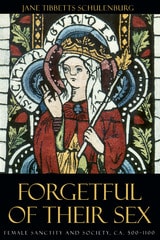
Forgetful of Their Sex
Female Sanctity and Society, ca. 500-1100Jane Tibbetts Schulenburg
University of Chicago Press, 1998
"A tremendous piece of scholarship. . . . This journey through more than 2,000 saints is anything but dull. Along the way, Schulenburg informs our ideas regarding the role of saints in the medieval psyche, gender-specific identification, and the heroics of virginity." —Library Journal
"[This book] will be a kind of 'roots' experience for some readers. They will hear the voices, haunted and haunting, of their distant ancestors and understand more about themselves." —Christian Science Monitor
"This fascinating book reaches far beyond the history of Christianity to recreate the 'herstory' of a whole gender." —Kate Saunders, The Independent
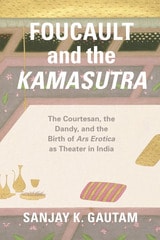
Foucault and the Kamasutra
The Courtesan, the Dandy, and the Birth of Ars Erotica as Theater in IndiaSanjay K. Gautam
University of Chicago Press, 2016
Gautam shows how closely intertwined the history of erotics in Indian culture is with the history of theater-aesthetics grounded in the discourse of love, and Foucault provides the framework for opening up an intellectual horizon of Indian thought. To do this, Gautam looks to the history of three inglorious characters in classical India: the courtesan and her two closest male companions—her patron, the dandy consort; and her teacher and advisor, the dandy guru. Foucault’s distinction between erotic arts and the science of sexuality drives Gautam’s exploration of the courtesan as a symbol of both sexual-erotic and aesthetic pleasure. In the end, by entwining together Foucault’s works on the history of sexuality in the West and the classical Indian texts on eros, Gautam transforms our understanding of both, even as he opens up new ways of investigating erotics, aesthetics, gender relations, and subjectivity.

Friendship and Love, Ethics and Politics
Studies in Mediaeval and Early Modern HistoryEva Österberg
Central European University Press, 2010

From Single to Serious
Relationships, Gender, and Sexuality on American Evangelical CampusesMalone, Dana M.
Rutgers University Press, 2018
In From Single to Serious, Dana M. Malone shines a light on friendship, dating, and, sexuality, in both the ideals and the practical experiences of heterosexual students at U. S. evangelical colleges. She examines the struggles they have in balancing their gendered and religious presentations of self, the expectations of their campus community, and their desire to find meaningful romantic relationships.
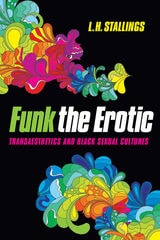
Funk the Erotic
Transaesthetics and Black Sexual CulturesL.H. Stallings
University of Illinois Press, 2015
Stallings uses funk to highlight the importance of the erotic and eroticism in Black cultural and political movements, debunking "the truth of sex" and its histories. Brandishing funk as a theoretical tool, Stallings argues that Western theories of the erotic fail as universally applicable terms or philosophies, and thus lack utility in discussions of black bodies, subjects, and culture. In considering the Victorian concept of freak in black funk, Stallings proposes that black artists across all media have fashioned a tradition that embraces the superfreak, sexual guerrilla, sexual magic, mama's porn, black trans narratives, and sex work in a post-human subject position. Their goal: to ensure survival and evolution in a world that exploits black bodies in capitalist endeavors, imperialism, and colonization.
Revitalizing and wide-ranging, Funk the Erotic offers a needed examination of black sexual cultures, a discursive evolution of black ideas about eroticism, a critique of work society, a reexamination of love, and an articulation of the body in black movements.