Results by title
322 books match the query 'Social Policy' and 19 start with f

FAILURE OF PLANNING
PERMITTING SPRAWL IN SAN DIEGO SUBURBS 1RICHARD HOGAN
The Ohio State University Press, 2003
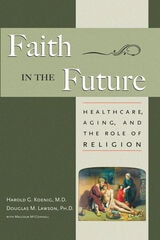
Faith In The Future
Healthcare, Aging and the Role of ReligionHarold Koenig
Templeton Press, 2012
After an interview in Newsweek about his book Spirituality in Patient Care and his research in religion and health, Dr. Harold Koenig became the international voice on spirituality, health, and aging. In this book, Faith in the Future, he is joined by two other experts on aging and human development. They present a compelling look at one of the most severe issues in today’s society: health care in America.
How will we provide quality healthcare to older adults needing it during the next thirty to fifty years? Who will provide this care? How will it be funded? How can we establish systems of care now to be in place as demographic and health-related economic pressures mount?
Alongside the sobering reality of our country’s challenges, there are reasons for optimism. Innovative programs created and maintained by volunteers and religious congregations are emerging as pivotal factors in meeting healthcare needs. Summarizing decades of scientific research and providing numerous inspirational examples and role models, the authors present practical steps that individuals and institutions may emulate for putting faith into action.
<
Familiar Perversions
The Racial, Sexual, and Economic Politics of LGBT FamiliesMontegary, Liz
Rutgers University Press, 2018
Over the past two decades, same-sex couples raising children have become more visible within US political and popular culture. Thanks to widely circulated images of well-mannered, well-dressed, and well-off two-parent families, a select number of LGBT-identified parents have gained recognition as model American citizens. In Familiar Perversions, Liz Montegary shows how this seemingly progressive view of same-sex parenting has taken shape during a period of growing racial inequality and economic insecurity in the United States. This book evaluates the recent successes of the “family equality” movement, while asking important questions about its relationship to neoliberalism, the policing of sexual cultures, and the broader context of social justice organizing at the turn of the twenty-first century.
Montegary’s investigation of the politics of LGBT family life takes us on a journey that includes not only activist events and the courtrooms where landmark decisions about same-sex families were made, but also parenting workshops, cruise ships, and gay resort towns. Through its sustained historical analysis, Familiar Perversions lays critical groundwork for imagining a queer family movement that can support and strengthen the diverse networks of care, kinship, and intimacy on which our collective survival depends.

Families That Work
Policies for Reconciling Parenthood and EmploymentJanet C. Gornick
Russell Sage Foundation, 2003
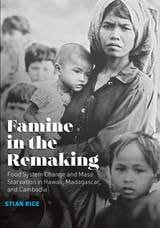
Famine in the Remaking
Food System Change and Mass Starvation in Hawaii, Madagascar, and CambodiaStian Rice
West Virginia University Press, 2020
Famine in the Remaking examines the relationship between the reorganization of food systems and large-scale food crises through a comparative historical analysis of three famines: Hawaii in the 1820s, Madagascar in the 1920s, and Cambodia in the 1970s. This examination identifies the structural transformations—that is, changes to the relationships between producers and consumers—that make food systems more vulnerable to failure. Moving beyond the economic and political explanations for food crisis that have dominated the literature, Stian Rice emphasizes important socioecological interactions, developing a framework for crisis evolution that identifies two distinct temporal phases and five different types of causal mechanisms involved in food system failure. His framework contributes to current work in famine prevention and, animated by a commitment to social justice, offers the potential for early intervention in emerging food crises.
Federalism and Social Policy
Patterns of Redistribution in 11 DemocraciesEdited by Scott L. Greer and Heather Elliott
University of Michigan Press, 2019

Feeding the Future
School Lunch Programs as Global Social PolicyRutledge, Jennifer Geist
Rutgers University Press, 2016

Female Body Image and Beauty Politics in Contemporary Indian Literature and Culture
Edited by Srirupa Chatterjee and Shweta Rao Garg
Temple University Press, 2024
Influences from the colonial period through the age of the internet and globalization have reinforced Eurocentric ideals about femininity and womanhood. This long overdue volume addresses the pressures of beautification that Indian women face as they struggle with body acceptance and are often denied pride in their natural bodies.
Contributors: Annika Taneja, Anurima Chanda, Aratrika Bose, Kavita Daiya, Ketaki Chowkhani, Nishat Haider, Samrita Sinha, Shailendra Kumar Singh, Shubhra Ray, Sucharita Sarkar, Sukshma Vedere, Swatie, Tanupriya, Turni Chakrabarti, and the editors.

Fertile Matters
The Politics of Mexican-Origin Women's ReproductionBy Elena R. Gutiérrez
University of Texas Press, 2008
While the stereotype of the persistently pregnant Mexican-origin woman is longstanding, in the past fifteen years her reproduction has been targeted as a major social problem for the United States. Due to fear-fueled news reports and public perceptions about the changing composition of the nation's racial and ethnic makeup—the so-called Latinization of America—the reproduction of Mexican immigrant women has become a central theme in contemporary U. S. politics since the early 1990s.
In this exploration, Elena R. Gutiérrez considers these public stereotypes of Mexican American and Mexican immigrant women as "hyper-fertile baby machines" who "breed like rabbits." She draws on social constructionist perspectives to examine the historical and sociopolitical evolution of these racial ideologies, and the related beliefs that Mexican-origin families are unduly large and that Mexican American and Mexican immigrant women do not use birth control.
Using the coercive sterilization of Mexican-origin women in Los Angeles as a case study, Gutiérrez opens a dialogue on the racial politics of reproduction, and how they have developed for women of Mexican origin in the United States. She illustrates how the ways we talk and think about reproduction are part of a system of racial domination that shapes social policy and affects individual women's lives.

Financing Medicaid
Federalism and the Growth of America's Health Care Safety NetShanna Rose
University of Michigan Press, 2013
Conventional wisdom holds that programs for the poor are vulnerable to instability and retrenchment. Medicaid, however, has grown into the nation’s largest intergovernmental grant program, accounting for nearly half of all federal funding to state and local governments. Medicaid’s generous open-ended federal matching grants have given governors a powerful incentive to mobilize on behalf of its maintenance and expansion, using methods ranging from lobbying and negotiation to creative financing mechanisms and waivers to maximize federal financial assistance. Perceiving federal retrenchment efforts as a threat to states’ finances, governors, through the powerful National Governors’ Association, have repeatedly worked together in bipartisan fashion to defend the program against cutbacks.
Financing Medicaidengagingly intertwines theory, historical narrative, and case studies, drawing on sources including archival materials from the National Governors’ Association and gubernatorial and presidential libraries, Centers for Medicare and Medicaid Services data, the Congressional Record, and interviews.

For Better and For Worse
Welfare Reform and the Well-Being of Children and FamiliesGreg J. Duncan
Russell Sage Foundation, 2001
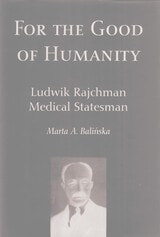
For the Good of Humanity
Ludwik Rajchman, Medical StatesmanMarta A. Balinska
Central European University Press, 1998

Framing Immigrants
News Coverage, Public Opinion, and PolicyChris Haynes
Russell Sage Foundation, 2016
The authors analyze media coverage of several key immigration policy issues—including mass deportations, comprehensive immigration reform, and measures focused on immigrant children, such as the DREAM Act—to chart how news sources across the ideological spectrum produce specific “frames” for the immigration debate. In the past few years, liberal and mainstream outlets have tended to frame immigrants lacking legal status as “undocumented” (rather than “illegal”) and to approach the topic of legalization through human-interest stories, often mentioning children. Conservative outlets, on the other hand, tend to discuss legalization using impersonal statistics and invoking the rule of law. Yet, regardless of the media’s ideological positions, the authors’ surveys show that “negative” frames more strongly influence public support for different immigration policies than do positive frames. For instance, survey participants who were exposed to language portraying immigrants as law-breakers seeking “amnesty” tended to oppose legalization measures. At the same time, support for legalization was higher when participants were exposed to language referring to immigrants living in the United States for a decade or more.
Framing Immigrants shows that despite heated debates on immigration across the political aisle, the general public has yet to form a consistent position on undocumented immigrants. By analyzing how the media influences public opinion, this book provides a valuable resource for immigration advocates, policymakers, and researchers.

Franklin's Thrift
The Lost History of an American VirtueDavid Blankenhorn
Templeton Press, 2009
Americans today often think of thrift as a negative value—a miserly hoarding of resources and a denial of pleasure. Even more telling, many Americans don’t even think of thrift at all anymore. Franklin’s Thrift challenges this state of mind by recovering the rich history of thrift as a quintessentially American virtue.
The contributors to this volume trace how the idea and practice of thrift have been a vital part of the American vision of economic freedom and social abundance. For Benjamin Franklin, who personified and promoted the idea, thrift meant working productively, consuming wisely, saving proportionally, and giving generously. Franklin’s thrift became the cornerstone of a new kind of secular faith in the ordinary person’s capacity to shape his lot and fortune in life. Later chapters document how thrift moved into new domains in the nineteenth and twentieth centuries. It became the animating idea behind social movements to promote children’s school savings, create mutual savings banks and credit unions for working men and women, establish a federal savings bond program, and galvanize the nation to conserve resources during two world wars.
Historians, enthusiasts of Americana or traditional American virtues, and anyone interested in resolving our society’s current financial woes will find much to treasure in this diverse collection, with topics ranging from the inspirational lessons we can learn from the film It’s a Wonderful Life to a history of the roles played by mutual savings banks, credit unions, and thrift stores in America’s national thrift movement. It also includes actual policy recommendations for our present situation.

Free Labor
Workfare and the Contested Language of NeoliberalismJohn Krinsky
University of Chicago Press, 2008
At times the fight over workfare unfolded as an argument over who had the authority to define these terms, and in Free Labor, John Krinsky focuses on changes in the language and organization of the political coalitions on either side of the debate. Krinsky’s broadly interdisciplinary analysis draws from interviews, official documents, and media reports to pursue new directions in the study of the cultural and cognitive aspects of political activism. Free Labor will instigate a lively dialogue among students of culture, labor and social movements, welfare policy, and urban political economy.
From Conflict to Inclusion in Housing
Interaction of Communities, Residents and ActivistsEdited by Graham Cairns, Giorgos Artopoulos, and Kirsten Day
University College London, 2017
From Identity To Politics
Lesbian & Gay Movements In The U.S.Craig Rimmerman
Temple University Press, 2001
Enriched by eight years of interviews in Washington, D.C. and New York City, and by the author's experience as a Capitol Hill staffer, From Identity to Politics will provoke discussion in classrooms and caucus rooms across the United States.

From Welfare to Work
Judith M. Gueron
Russell Sage Foundation, 1991

From the Midwife's Bag to the Patient's File
Public Health in Eastern and Southeastern EuropeSara Bernasconi
Central European University Press, 2018