Results by title
116 books match the query 'Social Services & Welfare' and 4 start with f

Faith in Action
Religion, Race, and Democratic Organizing in AmericaRichard L. Wood
University of Chicago Press, 2002
Over the past fifteen years, associations throughout the U.S. have organized citizens around issues of equality and social justice, often through local churches. But in contrast to President Bush's vision of faith-based activism, in which groups deliver social services to the needy, these associations do something greater. Drawing on institutions of faith, they reshape public policies that neglect the disadvantaged.
To find out how this faith-based form of community organizing succeeds, Richard L. Wood spent several years working with two local groups in Oakland, California—the faith-based Pacific Institute for Community Organization and the race-based Center for Third World Organizing. Comparing their activist techniques and achievements, Wood argues that the alternative cultures and strategies of these two groups give them radically different access to community ties and social capital.
Creative and insightful, Faith in Action shows how community activism and religious organizations can help build a more just and democratic future for all Americans.
[more]

Families and Food in Hard Times
European Comparative ResearchRebecca O'Connell and Julia Brannen
University College London, 2021
An examination of food poverty in austerity-era Europe.
Food is fundamental, yet food poverty has increased in the Global North. Adopting a comparative case approach, Food and Families in Hard Times addresses the global problem of economic retrenchment and the burden it places on the most vulnerable. This timely book examines food poverty in the United Kingdom, Portugal, and Norway following the 2008 financial crisis, examining the resources available to families in relation to the intersection of public policies, local institutions, and kinship networks. The book explores the ways that low income impacts household food provisioning, formal and informal support for struggling families, the provision and role of school meals, and constraints upon families’ social participation. Drawing upon extensive and intensive knowledge on the conditions and experiences of low-income families, the book also draws upon current research in European social science literature to shed light on the causes and consequences of food poverty in austerity-era Europe.
Food is fundamental, yet food poverty has increased in the Global North. Adopting a comparative case approach, Food and Families in Hard Times addresses the global problem of economic retrenchment and the burden it places on the most vulnerable. This timely book examines food poverty in the United Kingdom, Portugal, and Norway following the 2008 financial crisis, examining the resources available to families in relation to the intersection of public policies, local institutions, and kinship networks. The book explores the ways that low income impacts household food provisioning, formal and informal support for struggling families, the provision and role of school meals, and constraints upon families’ social participation. Drawing upon extensive and intensive knowledge on the conditions and experiences of low-income families, the book also draws upon current research in European social science literature to shed light on the causes and consequences of food poverty in austerity-era Europe.
[more]
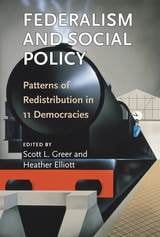
Federalism and Social Policy
Patterns of Redistribution in 11 DemocraciesEdited by Scott L. Greer and Heather Elliott
University of Michigan Press, 2019
Federalism and Social Policy focuses on the crucial question: Is a strong and egalitarian welfare state compatible with federalism? In this carefully curated collection, Scott L. Greer, Heather Elliott, and the contributors explore the relationship between decentralization and the welfare state to determine whether or not decentralization has negative consequences for welfare. The contributors examine a variety of federal countries, including Spain, Canada, and the United Kingdom, asking four key questions related to decentralization: (1) Are there regional welfare states (such as Scotland, Minnesota, etc.)? (2) How much variation is there in the structures of federal welfare states? (3) Is federalism bad for welfare? (4) Does austerity recentralize or decentralize welfare states? By focusing on money and policy instead of law and constitutional politics, the volume shows that federalism shapes regional governments and policies even when decentralization exists.
[more]
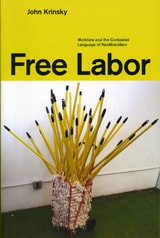
Free Labor
Workfare and the Contested Language of NeoliberalismJohn Krinsky
University of Chicago Press, 2008
One of former New York City Mayor Rudolph Giuliani’s proudest accomplishments is his expansion of the Work Experience Program, which uses welfare recipients to do routine work once done by unionized city workers. The fact that WEP workers are denied the legal status of employees and make far less money and enjoy fewer rights than do city workers has sparked fierce opposition. For antipoverty activists, legal advocates, unions, and other critics of the program this double standard begs a troubling question: are workfare participants workers or welfare recipients?
At times the fight over workfare unfolded as an argument over who had the authority to define these terms, and in Free Labor, John Krinsky focuses on changes in the language and organization of the political coalitions on either side of the debate. Krinsky’s broadly interdisciplinary analysis draws from interviews, official documents, and media reports to pursue new directions in the study of the cultural and cognitive aspects of political activism. Free Labor will instigate a lively dialogue among students of culture, labor and social movements, welfare policy, and urban political economy.
At times the fight over workfare unfolded as an argument over who had the authority to define these terms, and in Free Labor, John Krinsky focuses on changes in the language and organization of the political coalitions on either side of the debate. Krinsky’s broadly interdisciplinary analysis draws from interviews, official documents, and media reports to pursue new directions in the study of the cultural and cognitive aspects of political activism. Free Labor will instigate a lively dialogue among students of culture, labor and social movements, welfare policy, and urban political economy.
[more]