Results by title
4038 books match the query 'Social aspects' and 176 start with f
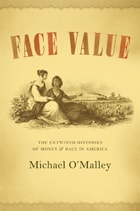
Face Value
The Entwined Histories of Money and Race in AmericaMichael O'Malley
University of Chicago Press, 2012
From colonial history to the present, Americans have passionately, even violently, debated the nature and the character of money. They have painted it and sung songs about it, organized political parties around it, and imprinted it with the name of God—all the while wondering: is money a symbol of the value of human work and creativity, or a symbol of some natural, intrinsic value?
In Face Value, Michael O’Malley provides a deep history and a penetrating analysis of American thinking about money and the ways that this ambivalence unexpectedly intertwines with race. Like race, money is bound up in questions of identity and worth, each a kind of shorthand for the different values of two similar things. O’Malley illuminates how these two socially constructed hierarchies are deeply rooted in American anxieties about authenticity and difference.
In this compelling work of cultural history, O’Malley interprets a stunning array of historical sources to evaluate the comingling of ideas about monetary value and social distinctions. More than just a history, Face Value offers us a new way of thinking about the present culture of coded racism, gold fetishism, and economic uncertainty.

Face/On
Face Transplants and the Ethics of the OtherSharrona Pearl
University of Chicago Press, 2017
The first comprehensive cultural study of face transplant surgery, Face/On reveals our true relationships to faces and facelessness, explains the significance we place on facial manipulation, and decodes how we understand loss, reconstruction, and transplantation of the face. To achieve this, Pearl draws on a vast array of sources: bioethical and medical reports, newspaper and television coverage, performances by pop culture icons, hospital records, personal interviews, films, and military files. She argues that we are on the cusp of a new ethics, in an opportune moment for reframing essentialist ideas about appearance in favor of a more expansive form of interpersonal interaction. Accessibly written and respectfully illustrated, Face/On offers a new perspective on face transplant surgery as a way to consider the self and its representation as constantly present and evolving. Highly interdisciplinary, this study will appeal to anyone wishing to know more about critical interventions into recent medicine, makeover culture, and the beauty industry.
Faculties
A Dialogue on Inciting Constructive Change in Destructive TimesCathy N. Davidson and Jody Greene
Duke University Press, 2026
Failing Sideways
Queer Possibilities for Writing AssessmentStephanie West-Puckett
Utah State University Press, 2023
A failure-oriented assessment model unsettles some of the most common practices, like rubrics and portfolios, and challenges many deeply held assumptions about validity and reliability in order to ask what could happen if assessment was oriented toward possibility and potential. Working to engage a more capacious writing construct, the authors propose queer validity inquiry (QVI) as a model for assessment that values failure, affect, identity, and materiality. These overlapping lenses help teachers honor parts of writing and learning that writing studies faculty have struggled to hold onto in a world overly focused on quickness and efficiency in schools.
Through programmatic and classroom examples, Failing Sideways privileges what is valued in the classroom but traditionally ignored in assessments. Reimagining what matters in the teaching and learning of writing and using assessment data differently, this book demonstrates what writing can be and could do in a more diverse and just world.

Failing the Future
A Dean Looks at Higher Education in the Twenty-first CenturyAnnette Kolodny
Duke University Press, 1998
In this volume Kolodny explains the reasons for the financial crisis in higher education today and boldly addresses the challenges that remain ignored, including rising birthrates, changing demographics both on campus and across the country, the accelerating globalization of higher education and advanced research, and the necessity for greater interdisciplinarity in undergraduate education. Moreover, while sensitive to the complex burdens placed on faculty today, Kolodny nonetheless reveals how the professoriate has allowed itself to become vulnerable to public misperceptions and to lampooning by the media.
Not simply a book about current problems and future challenges, Failing the Future is rich with practical solutions and workable programs for change. Among her many insights, Kolodny offers a thorough defense of the role of tenure and outlines a new set of procedures to ensure its effective implementation; she proposes a structure for an “Antifeminist Intellectual Harassment Policy”; and she provides a checklist of family-sensitive policies universities can offer their staff, faculty, and administrators. Kolodny calls on union leaders, campus communities, policymakers, and the general public to work together in unprecedented partnerships. Her goal, as she states in a closing coda, is to initiate a revitalized conversation about public education.
This book should be required reading for all those concerned with the future of higher education in this country—from college trustees to graduate students entering the professoriate, from faculty to university administrators, from officers of campus-based unions to education policymakers.
Failure by Design
The California Energy Crisis and the Limits of Market PlanningGeorg Rilinger
University of Chicago Press, 2024
The Western energy crisis was one of the great financial disasters of the past century. The crisis began in April 2000, when price spikes started to rattle California’s electricity markets. Decades later, some blame economic fundamentals and ignorant politicians, while others accuse the energy sellers who raided the markets. In Failure by Design, sociologist Georg Rilinger offers a different explanation, one that focuses on the practical challenges of market design. The unique physical attributes of electricity made it exceedingly difficult to introduce markets into the coordination of the electricity system, so market designers were brought in to construct the infrastructures that coordinate how market participants interact. An exercise in social engineering, these infrastructures were intended to guide market actors toward behavior that would produce optimal market results and facilitate grid management. Yet, though these experts spent their days worrying about incentive misalignment and market manipulation, they unintentionally created a system riddled with opportunities for destructive behavior. Rilinger’s analysis not only illuminates the California energy crisis but also develops a broader theoretical framework for thinking about markets as the products of organizational planning and the limits of social engineering, contributing broadly to sociological and economic thinking about the nature of markets.
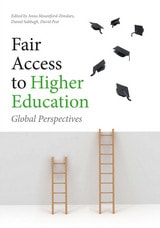
Fair Access to Higher Education
Global PerspectivesEdited by Anna Mountford-Zimdars, Daniel Sabbagh, and David Post
University of Chicago Press, 2014
Fair Access to Higher Education addresses this challenge from a broad, transnational perspective. The chapters in this volume contribute to our thinking and reflection on policy developments and also offer new empirical findings about patterns of advantage and disadvantage in higher education access. Bringing together insights drawn from a variety of fields, including philosophy, linguistics, social psychology, sociology, and public policy, the book sheds light on how “fairness” in university admissions has been articulated worldwide.

Fallout Shelter
Designing for Civil Defense in the Cold WarDavid Monteyne
University of Minnesota Press, 2011
In 1961, reacting to U.S. government plans to survey, design, and build fallout shelters, the president of the American Institute of Architects, Philip Will, told the organization’s members that “all practicing architects should prepare themselves to render this vital service to the nation and to their clients.” In an era of nuclear weapons, he argued, architectural expertise could “preserve us from decimation.”
In Fallout Shelter, David Monteyne traces the partnership that developed between architects and civil defense authorities during the 1950s and 1960s. Officials in the federal government tasked with protecting American citizens and communities in the event of a nuclear attack relied on architects and urban planners to demonstrate the importance and efficacy of both purpose-built and ad hoc fallout shelters. For architects who participated in this federal effort, their involvement in the national security apparatus granted them expert status in the Cold War. Neither the civil defense bureaucracy nor the architectural profession was monolithic, however, and Monteyne shows that architecture for civil defense was a contested and often inconsistent project, reflecting specific assumptions about race, gender, class, and power.
Despite official rhetoric, civil defense planning in the United States was, ultimately, a failure due to a lack of federal funding, contradictions and ambiguities in fallout shelter design, and growing resistance to its political and cultural implications. Yet the partnership between architecture and civil defense, Monteyne argues, helped guide professional design practice and influenced the perception and use of urban and suburban spaces. One result was a much-maligned bunker architecture, which was not so much a particular style as a philosophy of building and urbanism that shifted focus from nuclear annihilation to urban unrest.

Fame and Fandom
Functioning On and OfflineCelia Lam
University of Iowa Press, 2022
In case studies including Supernatural, Harry Styles, YouTube influencers, film location sites, Keanu Reeves, and celebrities as fans, readers find new approaches to fan/celebrity encounters and parasocial relationships. This is the go-to volume on the symbiotic relationship between fame and fandom.

Families Apart
Migrant Mothers and the Conflicts of Labor and LoveGeraldine Pratt
University of Minnesota Press, 2012
In a developing nation like the Philippines, many mothers provide for their families by traveling to a foreign country to care for someone else’s. Families Apart focuses on Filipino overseas workers in Canada to reveal what such arrangements mean for families on both sides of the global divide.
The outcome of Geraldine Pratt’s collaboration with the Philippine Women Centre of British Columbia, this study documents the difficulties of family separation and the problems that children have when they reunite with their mothers in Vancouver. Aimed at those who have lived this experience, those who directly benefit from it, and those who simply stand by and watch, Families Apart shows how Filipino migrant domestic workers—often mothers themselves—are caught between competing neoliberal policies of sending and receiving countries and how, rather than paying rich returns, their ambitions as migrants often result in social and economic exclusion for themselves and for their children. This argument takes shape as an open-ended series of encounters, moving between a singular academic voice and the “we” of various research collaborations, between Vancouver and the Philippines, and between genres of “evidence-based” social scientific research, personal testimony, theatrical performance, and nonfictional narrative writing.
Through these experiments with different modes of storytelling, Pratt seeks to transform frameworks of perception, to create and collect sympathetic witnesses—in short, to promote a wide-ranging public discussion and debate about a massive worldwide shift in family (and nonfamily) relations of intimacy and care.
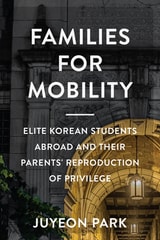
Families for Mobility
Elite Korean Students Abroad and Their Parents' Reproduction of PrivilegeJuyeon Park
Rutgers University Press, 2025

Famine Foods
Plants We Eat to SurvivePaul E. Minnis
University of Arizona Press, 2021
How people eat today is a record of food use through the ages—and not just the decadent, delicious foods but the less glamorous and often life-saving foods from periods of famine as well. In Famine Foods, Paul E. Minnis focuses on the myriad plants that have sustained human populations throughout the course of history, unveiling the those that people have consumed, and often still consume, to avoid starvation. For the first time, this book offers a fascinating overview of famine foods—how they are used, who uses them, and, perhaps most importantly, why they may be critical to sustain human life in the future.
In addition to a broader discussion of famine foods, Minnis includes fourteen short case studies that examine the use of alternative foods in human societies throughout the world, from hunter-gatherers to major nations. When environmental catastrophes, war, corrupt governments, annual hunger seasons, and radical agricultural policies have threatened to starve populations, cultural knowledge and memories of food shortages have been crucial to the survival of millions of people.Famine Foods dives deeply into the cultural contexts of famine food use, showing the curious, strange, and often unpleasant foods people have turned to in order to get by. There is not a single society or area of the world that is immune to severe food shortages, and gaining a deeper knowledge of famine foods will be relevant for the foreseeable future of humanity.

Fan Phenomena
The Rocky Horror Picture ShowEdited by Marisa C. Hayes
Intellect Books, 2015
An homage to campy B-movies, sci-fi, and horror films, the movie was—and still is—more than the sum of its parts. Participatory and party-like, midnight showings attract moviegoers who dress as film characters, sing along with the catchy show tunes, and interact with the action on screen. In the four decades since its release, it has become a cultural phenomenon, not to mention one of the most commercially successful films of all time.
In Fan Phenomena: The Rocky Horror Picture Show, Marisa C. Hayes brings together a diverse group of writers who explore the film’s influence on the development of the pastiche tribute film, emerging queer activism of the 1970s, glam rock style, and the creative use of audience dialogue in recreating and interacting with the spoken and sung language of the film.
Spotlighting a cult phenomenon and its fans, many of who count the number of times they’ve seen the movie in the hundreds, this contribution to the Fan Phenomena series covers never-before-explored topics related to The Rocky Horror Picture Show. For anyone who has ever done the “Time Warp,” this will be essential reading.

Fandom as Classroom Practice
A Teaching GuideKatherine Anderson Howell
University of Iowa Press, 2018
Providing ways to engage students through their popular culture interests, this collection brings together several essays, across disciplines, to show how fan practices such as writing fan fiction, creating vids, communicating via Tumblr, and participating in film tourism can invite students to invest more of themselves into their education.
Both scholarship and fandom encourage passionate engagement with texts—rather than passive consumption in isolation— and editor Katherine Anderson Howell and her contributors find that when students are encouraged to partake in a remix classroom that encourages their fan interests, they participate more in their education, are more critical of experts and authorities, and actively shape the discourse themselves. Creating this remix classroom requires thoughtfulness on the instructor’s part, and so the chapters in this volume come from teachers who have carefully constructed such courses, including several invaluable appendices that provide examples of methodologies, course assignments, teaching practices, and classroom setup. Each chapter also includes student responses that offer a sense of what students gained from each course.
The result is an exciting and entertaining new way to motivate students and teachers alike, and it is sure to be a popular reference guide for instructors teaching classes from high school to graduate levels.

Fandom, Now in Color
A Collection of VoicesRukmini Pande
University of Iowa Press, 2020
Fandom, Now in Color gathers together seemingly contradictory narratives that intersect at the (in)visibility of race/ism in fandom and fan studies. This collection engages the problem by undertaking the different tactics of decolonization—diversifying methodologies, destabilizing canons of “must-read” scholarship by engaging with multiple disciplines, making whiteness visible but not the default against which all other kinds of racialization must compete, and decentering white fans even in those fandoms where they are the assumed majority. These new narratives concern themselves with a broad swath of media, from cosplay and comics to tabletop roleplay and video games, and fandoms from Jane the Virgin to Japan’s K-pop scene. Fandom, Now in Color asserts that no one answer or approach can sufficiently come to grips with the shifting categories of race, racism, and racial identity.
Contributors: McKenna Boeckner, Angie Fazekas, Monica Flegel, Elizabeth Hornsby, Katherine Anderson Howell, Carina Lapointe, Miranda Ruth Larsen, Judith Leggatt, Jenni Lehtinen, joan miller, Swati Moitra, Samira Nadkarni, Indira Neill Hoch, Sam Pack, Rukmini Pande, Deepa Sivarajan, Al Valentín

Fandom, the Next Generation
Bridget Kies
University of Iowa Press, 2022
Contributors:
Maria Alberto, University of Utah
Mélanie Bourdaa, University of Bordeaux Montaigne
Meredith Dabek, Maynooth University
Simone Driessen, Erasmus University Rotterdam
Yektanurşin Duyan, Mardin Artuklu University
Dan Golding, Swinburne University of Technology
Bethan Jones, Aberdale, Wales (UK)
Siobhan Lyons, Sydney, New South Wales (Australia)
L. N. Rosales, University of Nebraska, Lincoln
Andrew Scahill, University of Colorado, Denver
Janelle Vermaak, Nelson Mandela University
Cynthia W. Walker, St. Peter’s University
Dawn Walls-Thumma, independent scholar
Neta Yodovich, University of Haifa

Fantasies of Hong Kong Disneyland
Attempted Indigenizations of Space, Labor, and ConsumptionJenny Banh
Rutgers University Press, 2025

Fantasies of Ito Michio
Tara Rodman
University of Michigan Press, 2024
Winner of the 2025 Dance Studies Association Oscar Brockett Book Prize
Born in Japan and trained in Germany, dancer and choreographer Ito Michio (1893–1961) achieved prominence in London before moving to the U.S. in 1916 and building a career as an internationally acclaimed artist. During World War II, Ito was interned for two years, and then repatriated to Japan, where he contributed to imperial war efforts by creating propaganda performances and performing revues for the occupying Allied Forces in Tokyo. Throughout, Ito continually invented stories of voyages made, artists befriended, performances seen, and political activities carried out—stories later dismissed as false.
Fantasies of Ito Michio argues that these invented stories, unrealized projects, and questionable political affiliations are as fundamental to Ito’s career as his ‘real’ activities, helping us understand how he sustained himself across experiences of racialization, imperialism, war, and internment. Tara Rodman reveals a narrative of Ito’s life that foregrounds the fabricated and overlooked to highlight his involvement with Japanese artists, such as Yamada Kosaku and Ishii Baku, and global modernist movements. Rodman offers “fantasy” as a rubric for understanding how individuals such as Ito sustain themselves in periods of violent disruption and as a scholarly methodology for engaging the past.
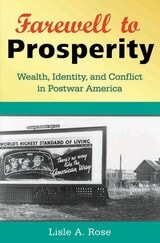
Farewell to Prosperity
Wealth, Identity, and Conflict in Postwar AmericaLisle A. Rose
University of Missouri Press, 2014
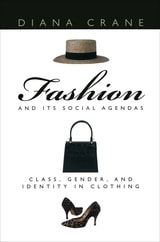
Fashion and Its Social Agendas
Class, Gender, and Identity in ClothingDiana Crane
University of Chicago Press, 2000
Crane compares nineteenth-century societies—France and the United States—where social class was the most salient aspect of social identity signified in clothing with late twentieth-century America, where lifestyle, gender, sexual orientation, age, and ethnicity are more meaningful to individuals in constructing their wardrobes. Today, clothes worn at work signify social class, but leisure clothes convey meanings ranging from trite to political. In today's multicode societies, clothes inhibit as well as facilitate communication between highly fragmented social groups.
Crane extends her comparison by showing how nineteenth-century French designers created fashions that suited lifestyles of Paris elites but that were also widely adopted outside France. By contrast, today's designers operate in a global marketplace, shaped by television, film, and popular music. No longer confined to elites, trendsetters are drawn from many social groups, and most trends have short trajectories. To assess the impact of fashion on women, Crane uses voices of college-aged and middle-aged women who took part in focus groups. These discussions yield fascinating information about women's perceptions of female identity and sexuality in the fashion industry.
An absorbing work, Fashion and Its Social Agendas stands out as a critical study of gender, fashion, and consumer culture.
"Why do people dress the way they do? How does clothing contribute to a person's identity as a man or woman, as a white-collar professional or blue-collar worker, as a preppie, yuppie, or nerd? How is it that dress no longer denotes social class so much as lifestyle? . . . Intelligent and informative, [this] book proposes thoughtful answers to some of these questions."-Library Journal

Fashion, Culture, and Identity
Fred Davis
University of Chicago Press, 1992
Much of what we assume to be individual preference, Davis shows, really reflects deeper social and cultural forces. Ours is an ambivalent social world, characterized by tensions over gender roles, social status, and the expression of sexuality. Predicting what people will wear becomes a risky gamble when the link between private self and public persona can be so unstable.

Fashion, Desire and Anxiety
Image and Morality in the Twentieth CenturyArnold, Rebecca
Rutgers University Press, 2001
These dreams and freedoms, Rebecca Arnold proposes, are contradictory. Fashion and its surrounding imagery elicit fear and anxiety in their consumers as well as pleasure. Fashion has come to incorporate the underside of modern life, with violence and decay becoming a dominant theme in clothing design and photography.
Arnold draws on diverse written sources to explore the complex nature of modern fashion. She discusses a range of key themes: how fashion uses and abuses the power of wealth; the alienating promotion of "good" taste; the power plays of sex and display; and how identities can be blurred to disguise and confuse. In order to unravel the contradictory emotions of desire and anxiety they provoke, she never loses sight of the historical and cultural contexts in which fashion designers and photographers perform.
Generously illustrated, Fashion, Desire and Anxiety focuses on the last thirty years, from photographic works of the 1970s to the beginning of the twenty-first century.

Fashion, Desire and Anxiety
Image and Morality in the Twentieth CenturyArnold, Rebecca
Rutgers University Press, 2001
These dreams and freedoms, Rebecca Arnold proposes, are contradictory. Fashion and its surrounding imagery elicit fear and anxiety in their consumers as well as pleasure. Fashion has come to incorporate the underside of modern life, with violence and decay becoming a dominant theme in clothing design and photography.
Arnold draws on diverse written sources to explore the complex nature of modern fashion. She discusses a range of key themes: how fashion uses and abuses the power of wealth; the alienating promotion of "good" taste; the power plays of sex and display; and how identities can be blurred to disguise and confuse. In order to unravel the contradictory emotions of desire and anxiety they provoke, she never loses sight of the historical and cultural contexts in which fashion designers and photographers perform.
Generously illustrated, Fashion, Desire and Anxiety focuses on the last thirty years, from photographic works of the 1970s to the beginning of the twenty-first century.

Fashionable Food
Seven Decades of Food FadsSylvia Lovegren
University of Chicago Press, 2005
Well researched and delightfully illustrated, this collection of faddish recipes from the 1920s to the 1990s is a decade-by-decade tour of a hungry American century. From the Three P's Salad—that's peas, pickles, and peanuts—of the post-World War I era to the Fruit Cocktail and Spam Buffet Party loaf—all the rage in the ultra-modern 1950s, when cooking from a can epitomized culinary sophistication—Fashionable Food details the origins of these curious delicacies. In two chapters devoted to "exotic foods of the East," for example, Lovegren explores the long American love affair with Chinese food and the social status conferred upon anyone chic enough to eat pu-pu platters from Polynesia. Throughout, Lovegren supplements recipes—some mouth-watering, some appalling—from classic cookbooks and family magazines, with humorous anecdotes that chronicle how society and kitchen technology influenced the way we lived and how we ate.
Equal parts American and culinary history, Fashionable Food examines our collective past from the kitchen counter. Even if it's been a while since you last had Tang Pie and your fondue set is collecting dust in the back of the cupboard, Fashionable Food will inspire, entertain, and inform.

Fashionable Masculinities
Queers, Pimp Daddies, and LumbersexualsVicki Karaminas
Rutgers University Press, 2022

Fashioning America
Grit to GlamourMichelle Tolini Finamore
University of Arkansas Press, 2022
With nearly one hundred illustrations of garments and accessories that span two centuries of design, Fashioning America celebrates the achievements of a wide array of makers—especially immigrants, Native Americans, and Black Americans. Incorporating essays by fashion historians, curators, and journalists, this volume takes a fresh look at the country’s fashion history while exploring its close relationship with Hollywood and media in general, illuminating the role that American designers have played in shaping global visual culture and demonstrating why American fashion has long resonated around the world.

Fashioning Diaspora
Beauty, Femininity, and South Asian American CultureVanita Reddy
Temple University Press, 2015
One of the first books to consider beauty and fashion as a point of entry into an examination of South Asian diasporic public cultures, Fashioning Diaspora examines a range of literature, visual art, and live performance. Through careful analyses of novels by Bharati Mukherjee and Jhumpa Lahiri, young adult literature, performance art by Shailja Patel, as well as objects of popular culture including an Indian American fashion doll, and beauty and adornment practices, Reddy challenges fashion and beauty as a set of dematerialized, overly commodified cultural practices. She argues instead that beauty and fashion structure South Asian Americans’ uneven access to social mobility, capital, and citizenship, and demonstrates their varying capacities to produce social attachments across national, class, racial, gender, and generational divides.
Fashioning Lives
Black Queers and the Politics of LiteracyEric Darnell Pritchard
Southern Illinois University Press, 2017
Winner, Lavender Rhetorics Award for Excellence in Queer Scholarship from CCCC, 2018
Winner, Advancement of Knowledge Award from CCCC, 2018
Winner, Outstanding Book Award from the Conference on Community Writing, 2017
Fashioning Lives: Black Queers and the Politics of Literacy analyzes the life stories of sixty Black lesbian, gay, bisexual, transgender, and queer (LGBTQ) people along with archival documents, literature, and film. Author Eric Darnell Pritchard provides a theoretical framework for studying the literacy work of Black LGBTQ people, who do not fit into the traditional categories imposed on their language practices and identities. Examining the myriad ways literacy is used to inflict harm, Pritchard discusses how these harmful events prompt Black LGBTQ people to ensure their own survival by repurposing literacy through literacy performances fueled by accountability to self and communal love towards social and political change, a process the author calls “restorative literacies.” Pritchard highlights restorative literacies in literacy institutions (e.g., libraries, schools), historical records repositories, religious and spiritual spaces, parties, community events, activist organizations, and digital spheres. This trailblazing study draws connections between race and queerness in literacy, composition, and rhetoric and provides the basis for a sustainable dialogue on their intersections in the discipline.

Faster, Higher, Stronger, Comrades!
Sports, Art, and Ideology in Late Russian and Early Soviet CultureTim Harte
University of Wisconsin Press, 2020
With interdisciplinary analysis of literature, painting, and film, Faster, Higher, Stronger, Comrades! traces how physical fitness had an even broader impact on culture and ideology in the Soviet Union than previously realized. From prerevolutionary writers and painters glorifying popular circus wrestlers to Soviet photographers capturing unprecedented athleticism as a means of satisfying their aesthetic ideals, the nation's artists embraced sports in profound, inventive ways. Though athletics were used for doctrinaire purposes, Tim Harte demonstrates that at their core, they remained playful, joyous physical activities capable of stirring imaginations and transforming everyday realities.

Fate in My Hands
The Death Penalty in the Soviet UnionYana Skorobogatov
University of Chicago Press, 2026
A striking examination of the death penalty in the Soviet Union that documents in heart-rending detail how its citizens, hopeful for a new life post-Stalin, lost faith that their transgressions could be forgiven.
From 1954 to 1991 in the Soviet Union, nearly forty thousand citizens were executed after the death penalty was reinstated as a punishment for homicide. Fate in My Hands introduces readers to the many citizens in this period—women and men of all ages and backgrounds—who found themselves on death row and tried to escape it in the only way available to them: asking for forgiveness.
Examining the letters and objects the dead left behind, Skorobogatov recovers their voices and allows them to speak anew. She offers a striking portrait of life in the Soviet Union and the citizens who dreamed of new possibilities even as they faced their tragic end. Using a corpus of never-before-accessed criminal court records, Fate in My Hands brings readers not just into the police interrogation rooms, courthouses, and cells where the condemned awaited their fates, but into the homes, workplaces, and psychiatric hospitals where families and friends alike came together to pursue an elusive, bitter justice in the wake of violent tragedy.

Fatherhood Politics in the United States
Masculinity, Sexuality, Race, and MarriageAnna Gavanas
University of Illinois Press, 2004
Unlike previous investigations that rely on literary or other secondary sources, Fatherhood Politics works from primary ethnographic material to represent a wider range of voices and actors. Interacting with and interviewing members of the most powerful and well-known national fatherhood organizations, Gavanas observed Promise Keeper rallies, men's workshops, and conferences on masculinity, fatherhood, and marriage.
Providing a detailed overview of the different organizations involved and their various rhetorical strategies, Gavanas breaks down the FRM into two major wings. The "pro-marriage" wing sees marriage as the key to solving all social problems, while the "fragile family" organizations worry about unemployment, racism, and discrimination. Gavanas uses her extensive anthropological fieldwork as the basis for discussions of gender, sexuality, and race in her analysis of these competing voices.
Taking us inside the internal struggles, tensions, and political machinations of the FRM, Gavanas offers a behind-the-scenes look at a movement having real impact on current social policy. Fatherhood Politics is an essential work for anyone interested in the politics of masculinity, parenthood, marriage, race, and sexuality.

Favored Flowers
Culture and Economy in a Global SystemCatherine Ziegler
Duke University Press, 2007
Ziegler interviewed more than 250 people as she followed flowers along the full length of the commodity chain, from cuttings in Europe and Latin America to vases in and around New York. She examines the daily experiences of flower growers in the Netherlands and Ecuador, two leading exporters of flowers to the United States. Primary focus, though, is on others in the commodity chain: exporters, importers, wholesalers, and retailers. She follows their activities as they respond to changing competition, supply, and consumer behavior in a market characterized by risk, volatility, and imperfect knowledge. By tracing changes in the wholesale and retail systems, she shows the recent development of two complementary commodity chains in New York and the United States generally. One leads to a high-end luxury market served by specialty florists and designers, and the other to a lower-priced mass market served by chain groceries, corner delis, and retail superstores.

Fear and the First Amendment
Controversial Cases of the Roberts CourtKevin A. Johnson and Craig R. Smith
University of Alabama Press, 2024
DISTINGUISHED PUBLICATION AWARD FOR THE NATIONAL COMMUNICATION ASSOCIATION'S COMMUNICATION AND LAW DIVISION
The First Amendment: protected by law, threatened by fear in the Roberts Supreme Court.
In Fear and the First Amendment: Controversial Cases of the Roberts Court, Kevin A. Johnson and Craig R. Smith offer a deeply considered examination of the ways fear figures in First Amendment questions. Bringing together literature on theories of fear in rhetorical and philosophical traditions, Johnson and Smith focus on the rulings from the Roberts Court, which form a pivotal era of dramatic precedents. Each chapter analyzes one or more First Amendment cases and a variety of related fears—whether evidentiary or not—that pertain to a given case.
These cases include Morse v. Frederick, which takes up the competing fears of school administrators’ loss of authority and students’ loss of free speech rights. The authors touch on corporate funding of elections in Citizens United v. Federal Elections Commission, from the fear of corporate influence on electoral politics to corporate fears of alienating their consumers by backing political candidates. They explore religious freedom and fears of homosexuality in Christian Legal Society v. Martinez. Similarly, in Snyder v. Phelps, the authors delve further into fears of God, death, emotional distress, failing as a parent, and losing one’s reputation. Next, they investigate parents’ anxieties about violence in video games in Brown v. Entertainment Merchants Association. Finally, Johnson and Smith examine the role of fear in indecent, obscene, and graphic communication in three cases: FCC v. Fox Television Stations, Ashcroft v. American Civil Liberties Union, and United States v. Stevens.
Together these cases reveal fear to be an endemic factor in the rhetoric of First Amendment cases. This fascinating and original work will appeal to current legal practitioners and students of law, rhetoric, philosophy, and the First Amendment.

Fear of Small Numbers
An Essay on the Geography of AngerArjun Appadurai
Duke University Press, 2006
Fear of Small Numbers is Arjun Appadurai’s answer to that question. A leading theorist of globalization, Appadurai turns his attention to the complex dynamics fueling large-scale, culturally motivated violence, from the genocides that racked Eastern Europe, Rwanda, and India in the early 1990s to the contemporary “war on terror.” Providing a conceptually innovative framework for understanding sources of global violence, he describes how the nation-state has grown ambivalent about minorities at the same time that minorities, because of global communication technologies and migration flows, increasingly see themselves as parts of powerful global majorities. By exacerbating the inequalities produced by globalization, the volatile, slippery relationship between majorities and minorities foments the desire to eradicate cultural difference.
Appadurai analyzes the darker side of globalization: suicide bombings; anti-Americanism; the surplus of rage manifest in televised beheadings; the clash of global ideologies; and the difficulties that flexible, cellular organizations such as Al-Qaeda present to centralized, “vertebrate” structures such as national governments. Powerful, provocative, and timely, Fear of Small Numbers is a thoughtful invitation to rethink what violence is in an age of globalization.
Fearing the Immigrant
Racialization and Urban Policy in TorontoParastou Saberi
University of Minnesota Press, 2022
A fascinating deep dive into one city’s urban policy—and the anxiety over immigrants that informs it
The city of Toronto is often held up as a leader in diversity and inclusion. In Fearing the Immigrant, however, Parastou Saberi argues that Toronto’s urban policies are influenced by a territorialized and racialized security agenda—one that parallels the “War on Terror.” Focusing on the figure of the immigrant and so-called immigrant neighborhoods as the targets of urban policy, Saberi offers an innovative, multidisciplinary approach to the politics of racialization and the governing of alterity through space in contemporary cities.
A comprehensive study of urban policymaking in Canada’s largest city from the 1990s to the late 2010s, Fearing the Immigrant uses Toronto as a jumping-off point to understand how the nexus of development, racialization, and security works at the urban and international levels. Saberi situates urban policymaking in Toronto in relation to the dominant policies of international development and public health, counterinsurgency, and humanitarian intervention. Engaging with the genealogies and contemporary developments of major policy techniques involving mapping and policy concepts such as poverty, security, policing, development, empowerment, as well as social determinants of health, equity, and prevention, she scrutinizes the parallel ways these techniques and concepts operate in urban policy and international relations.
Fearing the Immigrant ultimately asserts that the geopolitical fear of the immigrant is central to the formation of urban policy in Toronto. Rather than addressing the root causes of poverty, urban policy as it has been practiced aims to pacify the specter of urban unrest and to secure the production of a neocolonial urban order. As such, this book is an urgent call to reimagine urban policy in the name of equality and social justice.
Feeding Anorexia
Gender and Power at a Treatment CenterHelen Gremillion
Duke University Press, 2003
Feeding Anorexia is based on fourteen months of ethnographic research in a small inpatient unit located in a major teaching and research hospital in the western United States. Gremillion attended group, family, and individual therapy sessions and medical staff meetings; ate meals with patients; and took part in outings and recreational activities. She also conducted over one hundred interviews-with patients, parents, staff, and clinicians. Among the issues she explores are the relationship between calorie-counting and the management of consumer desire; why the "typical" anorexic patient is middle-class and white; the extent to which power differentials among clinicians, staff, and patients model "anorexic families"; and the potential of narrative therapy to constructively reframe some of the problematic assumptions underlying more mainstream treatments.

Feeding the World as if People Mattered
How Small Farms Produce Value Beyond YieldsAndrew Flachs
University of Arizona Press, 2026
The dominant view of agriculture has focused only on what we produce. It sees value in terms of capital gains or yield efficiency, masking how our global food system produces tremendous amounts of food commodities while failing to feed people, support rural communities, or enhance ecological well-being. Feeding the World as if People Mattered asks us to look more deeply and more humanely at what we perceive to be most valuable in our agricultural systems.
This book draws on fifteen years of anthropological research, taking readers to fields in South India, Eastern Europe, and North America, where people are already feeding the future amid global change. From these fields, Flachs shows us how a radical rethinking of the value of small farms and farmers is already happening. Bringing together conversations in agriculture, economics, anthropology, and the environmental humanities, Flachs deftly shows how small farms reproduce social and ecological relationships that are the only sustainable path forward.
For anyone who is curious about the food on their plate and the people who helped to get it there, Feeding the World as if People Mattered will offer a new way to find value in the food we grow and the people who grow it.
Feeling Like a State
Desire, Denial, and the Recasting of AuthorityDavina Cooper
Duke University Press, 2019
Feeling Media
Potentiality and the Afterlife of ArtMiryam Sas
Duke University Press, 2022

Feeling Photography
Elspeth H. Brown and Thy Phu, eds.
Duke University Press, 2014
Contributors. Elizabeth Abel, Elspeth H. Brown, Kimberly Juanita Brown, Lisa Cartwright, Lily Cho, Ann Cvetkovich, David L. Eng, Marianne Hirsch, Thy Phu, Christopher Pinney, Marlis Schweitzer, Dana Seitler, Tanya Sheehan, Shawn Michelle Smith, Leo Spitzer, Diana Taylor
Feeling Yellow
Asian Americans and Yellowface in Twenty-First-Century Musical TheatreDonatella Galella
University of Michigan Press, 2026
Feeling Yellow examines how yellowface has persisted on the contemporary musical stage and how Asian Americans have contested yellowface, as they stake their own claim to the theatrical stage and nation state. Donatella Galella boldly argues that the pleasures of musical theatre and the disavowal of systemic anti-Asian racism enable the ongoing portrayal of Asian and Asian American characters by non-Asian actors. Galella offers two concepts to understand these phenomena: feeling yellow and yellowface without yellowed faces. Feeling yellow encapsulates the racialized anger, despair, and alienation of Asian American artists and audiences. Yellowface without yellowed faces denotes subtle ways of conveying Asianness, such as performing Asianness with exaggerated irony, using racialized costumes rather than yellow skin and slanted eye makeup, and setting musicals in fantasy Asian lands populated by multiracial casts.
Galella utilizes musicals such as Thoroughly Modern Millie, Anything Goes, The Mikado, and Soft Power, to understand how Asian and Asian American representation is connected to larger questions: How does racial identity shape emotional reactions to musical theatre? Why does yellowface and anti-Asian racism persist? What are the terms for Asian Americans belonging in the United States? Using a range of approaches from dramaturgy to auto-ethnography and materials from interviews to Reddit posts, Feeling Yellow spotlights Asian American affect, artistry, and activism.

Feltness
Research-Creation, Socially Engaged Art, and Affective PedagogiesStephanie Springgay
Duke University Press, 2022

Female Gladiators
Gender, Law, and Contact Sport in AmericaSarah K. Fields
University of Illinois Press, 2004
Female Gladiators is the first book to examine legal and social battles over the right of women to participate with men in contact sports. The impetus to begin legal proceedings was the 1972 enactment of Title IX, which prohibited discrimination in educational settings, but it was the Equal Protection Clause of the U.S. Constitution and the equal rights amendments of state constitutions that ultimately opened doors. Despite court rulings, however, many in American society resisted—and continue to resist—allowing girls in dugouts and other spaces traditionally defined as male territories.
Inspired, women and girls began to demand access to the contact sports which society had previously deemed too strenuous or violent for them to play. When the leagues continued to bar girls simply because they were not boys, the girls went to court. Sarah K. Fields's Female Gladiators is the only book to examine the legal and social battles over gender and contact sport that continue to rage today.

Feminism and the Biological Body
Birke, Lynda
Rutgers University Press, 2000
What is a body? What are our perceptions of our inner bodies? How are these perceptions influenced?
In recent years, thinking about the body has become highly fashionable. However, the renewed focus, while certainly welcome, seems to always end at the corporeal surface. While recent sociological and feminist theory has made important claims about the process of cultural inscription on the body, and about the cultural representation of the body, what actually appears in this new theory seems to be, ironically, disembodied. If this newly theorized form has interiority, it is one that is explained predominantly through psychoanalysis. The physiological processes remain a mystery to be explained, if at all, only in the esoteric language of biomedicine.
As a trained biologist, Lynda Birke was frustrated by the gap between feminist cultural analysis and her own scientific background. In this book, she seeks to bridge this gap using ideas in anatomy and physiology to develop the feminist view that the biological body is socially and culturally constructed. Birke rejects the assumption that bodily function is somehow fixed and unchanging, claiming that biology offers more than just a deterministic narrative of how nature works. Feminism and the Biological Body brings natural science and feminist theory together and suggests that we need a new politics that includes, rather than denies, our flesh.

Feminism and the Final Foucault
Edited by Dianna Taylor and Karen Vintges
University of Illinois Press, 2004
Rather than simply debating the merits or limitations of Foucault's later work, the essays in this collection examine women's historical self-practices, conceive of feminism as a shared ethos, and consider the political significance of this conceptualization in order to elucidate, experiment with, and put into practice the conceptual "tools" that Foucault offers for feminist ethics and politics. The volume illustrates the ways in which Foucault's later thinking on ethics as "care of the self" can reintroduce a number of issues and themes that feminists jettisoned in the wake of postmodernism, including consciousness raising, feminist therapy, the subject woman, identity politics, and feminist agency.
Taken as a whole, the diversity of feminist viewpoints presented provide important new insights into "the final Foucault," and thus serve as a productive intervention in current Foucault scholarship.
Feminist Connections
Rhetoric and Activism across Time, Space, and PlaceEdited by Katherine Fredlund, Kerri Hauman, and Jessica Ouellette
University of Alabama Press, 2020
Tracing the rhetoric of feminist activism across generations, cultures, and movements.
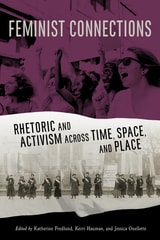
In 1917, Alice Paul and other suffragists famously picketed in front of the White House while holding banners with short, pithy sayings such as “Mr. President: How long must women wait for Liberty?” Their juxtaposition of this short phrase with the image of the White House (a symbol of liberty and justice) relies on the same rhetorical tactics as memes, a genre contemporary feminists use frequently to make arguments about reproductive rights, Black Lives Matter, sex-positivity, and more. Many such connections between feminists of different spaces, places, and eras have yet to be considered, let alone understood. Feminist Connections: Rhetoric and Activism across Time, Space, and Place reconsiders feminist rhetorical strategies as linked, intergenerational, and surprisingly consistent despite the emergence of new forms of media and intersectional considerations.
Contributors to this volume highlight continuities in feminist rhetorical practices that are often invisible to scholars, obscured by time, new media, and wildly different cultural, political, and social contexts. Thus, this collection takes a nonchronological approach to the study of feminist rhetoric, grouping chapters by rhetorical practice rather than time, content, or choice of media.
By connecting historical, contemporary, and future trajectories, this collection develops three feminist rhetorical frameworks: revisionary rhetorics, circulatory rhetorics, and response rhetorics. A theorization of these frameworks explains how feminist rhetorical practices (past and present) rely on similar but diverse methods to create change and fight oppression. Identifying these strategies not only helps us rethink feminist rhetoric from an academic perspective but also allows us to enact feminist activist rhetorics beyond the academy during a time in which feminist scholarship cannot afford to remain behind its hallowed yet insular walls.
Feminist Rhetorical Practices
New Horizons for Rhetoric, Composition, and Literacy StudiesJacqueline Jones Royster and Gesa E. Kirsch
Southern Illinois University Press, 2012
To contextualize a new and changed landscape for narratives in the history of rhetoric, Royster and Kirsch present four critical terms of engagement—critical imagination, strategic contemplation, social circulation, and globalization—as the foundation for a new analytical model for understanding, interpreting, and evaluating feminist rhetorical inquiry and the study and teaching of rhetoric in general. This model draws directly on the wealth of knowledge and understanding gained from feminist rhetorical practices, especially sensitivity toward meaningfully and respectfully rendering the work, lives, cultures, and traditions of historical and contemporary women in rhetorical scholarship.
Proposing ambitious new standards for viewing and valuing excellence in feminist rhetorical practice, Royster and Kirsch advocate an ethos of respect and humility in the analysis of communities and specific rhetorical performances neglected in rhetorical history, recasting rhetorical studies as a global phenomenon rather than a western one. They also reflect on their own personal and professional development as researchers as they highlight innovative feminist research over the past thirty years to articulate how feminist work is changing the field and pointing to the active participation of women in various discourse arenas and to the practices and genres they use.
Valuable to new and established scholars of rhetoric, Feminist Rhetorical Practice: New Horizons for Rhetoric, Composition, and Literacy Studies is essential for understanding the theoretical, methodological, and ethical impacts of feminist rhetorical studies on the wider field.
Winner, 2014 Winifred Bryan Horner Outstanding Book Award
Feminist Rhetorical Resilience
Elizabeth A. Flynn, Patricia Sotirin, and Ann Brady
Utah State University Press, 2012
Although it is well known in other fields, the concept of “resilience” has not been addressed explicitly by feminist rhetoricians. This collection develops it in readings of rhetorical situations across a range of social contexts and national cultures. Contributors demonstrate that resilience offers an important new conceptual frame for feminist rhetoric, with emphasis on agency, change, and hope in the daily lives of individuals or groups of individuals disempowered by social or material forces. Collectively, these chapters create a robust conception of resilience as a complex rhetorical process, redeeming it from its popular association with individual heroism through an important focus on relationality, community, and an ethics of connection. Resilience, in this volume, is a specifically rhetorical response to complicated forces in individual lives. Through it, Feminist Rhetorical Resilience widens the interpretive space within which rhetoricians can work.

Feminist Surveillance Studies
Rachel E. Dubrofsky and Soshana Amielle Magnet, eds.
Duke University Press, 2015
Contributors. Seantel Anaïs, Mark Andrejevic, Paisley Currah, Sayantani DasGupta, Shamita Das Dasgupta, Rachel E. Dubrofsky, Rachel Hall, Lisa Jean Moore, Yasmin Jiwani, Ummni Khan, Shoshana Amielle Magnet, Kelli Moore, Lisa Nakamura, Dorothy Roberts, Andrea Smith, Kevin Walby, Megan M. Wood, Laura Hyun Yi Kang

Feminist Technical Communication
Apparent Feminisms, Slow Crisis, and the Deepwater Horizon DisasterErin A. Clark
Utah State University Press, 2023
The first book to situate feminisms and technical communication in relationship as the focal point, Feminist Technical Communication traces the thread of feminisms through technical communication’s connection to social justice studies. Clark theorizes “slow crisis,” a concept made readable to technical communicators by apparent feminisms that can help technical communicators readily recognize and address social justice problems. Clark then applies this framework to the Deepwater Horizon Disaster, an extended crisis that has been publicly framed by a traditional view of efficiency that privileges economic impact. Through rich description of apparent feminist information-gathering techniques and a layered analysis this study offers application far beyond this single disaster, making available new crisis-response possibilities that consider the economy without eliding ecological and human health concerns.
Feminist Technical Communication offers a methodological approach to the systematic interrogation of power structures that operate on hidden misogynies. This book is useful to technical communicators, scholars of technical communication and rhetoric, and readers interested in gender studies and public health and is an ideal text for graduate-level seminars focused on feminisms, social justice, and cultural studies.