Results by title
322 books match the query 'Social change' and 7 start with f

Fantasies of Hong Kong Disneyland
Attempted Indigenizations of Space, Labor, and ConsumptionJenny Banh
Rutgers University Press, 2025

Fighting Words
Polemics and Social Change in Literary NaturalismIra Wells
University of Alabama Press, 2013
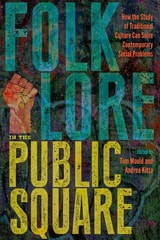
Folklore in the Public Square
How the Study of Traditional Culture Can Solve Contemporary Social ProblemsAndrea Kitta
Utah State University Press, 2026
Folklore is often positioned at the center of critical social issues. While folklorists have acknowledged this power and explored how folklore has been used for political ends, far less attention has been paid to the role folklorists and folklore scholarship can play in addressing contemporary social issues in public discourse. Folklore in the Public Square explores how folklorists apply their research to engage general audiences and address the challenging issues we face daily.
Folklore in the Public Square brings together folklorists working in the humanities and the social sciences committed to applying their research to help solve contemporary social challenges, formalizing an undercurrent of thought that has gained growing attention. Case studies apply ethical research to address pervasive questions about the environment, poverty, health and healthcare, political partisanship, war, tourism, stigma, racism, and conspiracy theories, among others. Building on conversations raised by folklorists who have contributed to public programming or conducted collaborative research in local communities, this book appeals to anyone interested in contemporary social issues, applied research, or collaborative and ethical fieldwork.

Following Father Chiniquy
Immigration, Religious Schism, and Social Change in Nineteenth-Century IllinoisCaroline B. Brettell
Southern Illinois University Press, 2015
Winner, ISHS Certificate of Excellence, 2016
In the late 1850s and early 1860s, the attention of the Catholic and Protestant religious communities around the world focused on a few small settlements of French Canadian immigrants in northeastern Illinois. Soon after arriving in their new home, a large number of these immigrants, led by Father Charles Chiniquy, the charismatic Catholic priest who had brought them there, converted to Protestantism. In this anthropological history, Caroline B. Brettell explores how Father Chiniquy took on both the sacred and the secular authority of the Catholic Church to engineer the religious schism and how the legacy of this rift affected the lives of the immigrants and their descendants for generations. This intriguing study of a nineteenth-century migration of French Canadians to the American Midwest offers an innovative perspective on the immigrant experience in America.
Brettell chronicles how Chiniquy came to lead approximately one thousand French Canadian families to St. Anne, Illinois, in the early 1850s and how his conflict with the Catholic hierarchy over the ownership and administration of church property, delivery of the mass in French instead of Latin, and access to the Bible by laymen led to his excommunication. Drawing on the concept of social drama—a situation of intensely lived conflict that emerges within social groups—Brettell explains the religious schism in terms of larger ethnic and religious disagreements that were happening elsewhere in the United States and in Canada. Brettell also explores legal disputes, analyzes the reemergence of Catholicism in St. Anne in the first decade of the twentieth century, addresses the legacy of Chiniquy in both the United States and Quebec, and closely examines the French Canadian immigrant communities, focusing on the differences between the people who converted to Protestantism and those who remained Catholic.
Occurring when nativism was pervasive and the anti-immigrant Know-Nothing Party was at its height, Chiniquy’s religious schism offers an opportunity to examine a range of important historical and anthropological issues, including immigration, ethnicity, and religion; changes in household and family structure; the ways social identities are constructed and reconstructed through time; and the significance of charismatic leadership in processes of social and religious change. Through its multidisciplinary approach, Brettell’s enlightening study provides a pioneering assessment of larger national tensions and social processes, some of which are still evident in modern immigration to the United States.
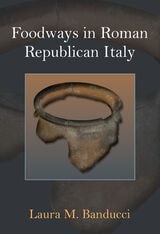
Foodways in Roman Republican Italy
Laura M. Banducci
University of Michigan Press, 2021
Foodways in Roman Republican Italy explores the production, preparation, and consumption of food and drink in Republican Italy to illuminate the nature of cultural change during this period. Traditionally, studies of the cultural effects of Roman contact and conquest have focused on observing changes in the public realm: that is, changing urban organization and landscape, and monumental construction. Foodways studies reach into the domestic realm: How do the daily behaviors of individuals express their personal identity, and How does this relate to changes and expressions of identity in broader society? Laura M. Banducci tracks through time the foodways of three sites in Etruria from about the third century BCE to the first century CE: Populonia, Musarna, and Cetamura del Chianti. All were established Etruscan sites that came under Roman political control over the course of the third and second centuries BCE. The book examines the morphology and use wear of ceramics used for cooking, preparing, and serving food in order to deduce cooking methods and the types of foods being prepared and consumed. Change in domestic behaviors was gradual and regionally varied, depending on local social and environmental conditions, shaping rather than responding to an explicitly “Roman” presence.
For the City Yet to Come
Changing African Life in Four CitiesAbdouMaliq Simone
Duke University Press, 2004
Drawing on his nearly fifteen years of work in African cities—as an activist, teacher, development worker, researcher, and advisor to ngos and local governments—Simone provides a series of case studies illuminating the provisional networks through which most of Africa’s urban dwellers procure basic goods and services. He examines informal economies and social networks in Pikine, a large suburb of Dakar, Senegal; in Winterveld, a neighborhood on the edge of Pretoria, South Africa; in Douala, Cameroon; and among Africans seeking work in Jeddah, Saudi Arabia. He contextualizes these particular cases through an analysis of the broad social, economic, and historical conditions that created present-day urban Africa. For the City Yet to Come is a powerful argument that any serious attempt to reinvent African urban centers must acknowledge the particular history of these cities and incorporate the local knowledge reflected in already existing informal urban economic and social systems.

Frontiers of Capital
Ethnographic Reflections on the New EconomyMelissa S. Fisher and Greg Downey, eds.
Duke University Press, 2006
Some contributors highlight how expedited flows of information allow business professionals to develop new knowledge practices. They analyze dynamics ranging from the decision-making processes of the Federal Reserve Board to the legal maneuvering necessary to buttress a nascent Japanese market in over-the-counter derivatives. Others focus on the social consequences of globalization and new modes of communication, evaluating the introduction of new information technologies into African communities and the collaborative practices of open-source computer programmers. Together the essays suggest that social relations, rather than becoming less relevant in the high-tech age, have become more important than ever. This finding dovetails with the thinking of many corporations, which increasingly employ anthropologists to study and explain the “local” cultural practices of their own workers and consumers. Frontiers of Capital signals the wide-ranging role of anthropology in explaining the social and cultural contours of the New Economy.
Contributors. Jean Comaroff, John L. Comaroff, Greg Downey, Melissa S. Fisher, Douglas R. Holmes, George E. Marcus, Siobhán O’Mahony, Aihwa Ong, Annelise Riles, Saskia Sassen, Paul A. Silverstein, AbdouMaliq Simone, Neil Smith, Caitlin Zaloom