501 books match the query 'South' and 18 start with f
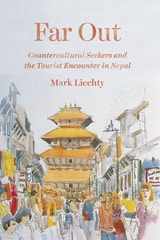
cover of Far Out: Countercultural Seekers and the Tourist Encounter in Nepal

Far Out

Countercultural Seekers and the Tourist Encounter in Nepal

Mark Liechty

University of Chicago Press, 2017

Westerners have long imagined the Himalayas as the world’s last untouched place and a repository of redemptive power and wisdom. Beatniks, hippie seekers, spiritual tourists, mountain climbers—diverse groups of people have traveled there over the years, searching for their own personal Shangri-La. In Far Out, Mark Liechty traces the Western fantasies that captured the imagination of tourists in the decades after World War II, asking how the idea of Nepal shaped the everyday cross-cultural interactions that it made possible.
 
Emerging from centuries of political isolation but eager to engage the world, Nepalis struggled to make sense of the hordes of exotic, enthusiastic foreigners. They quickly embraced the phenomenon, however, and harnessed it to their own ends by building tourists’ fantasies into their national image and crafting Nepal as a premier tourist destination. Liechty describes three distinct phases: the postwar era, when the country provided a Raj-like throwback experience for rich Americans; Nepal’s emergence as an exotic outpost of hippie counterculture in the 1960s; and its rebranding into a hip adventure destination, which began in the 1970s and continues today. He shows how Western projections of Nepal as an isolated place inspired creative enterprises and, paradoxically, allowed locals to participate in the global economy. Based on twenty-five years of research, Far Out blends ethnographic analysis, a lifelong passion for Nepal, and a touch of humor to produce the first comprehensive history of what tourists looked for—and found—on the road to Kathmandu.
[more]
cover of Farmers, Kings, and Traders: The People of Southern Africa, 200-1860

Farmers, Kings, and Traders

The People of Southern Africa, 200-1860

Martin Hall

University of Chicago Press, 1990

In this overview of the origins and development of black societies in southern Africa, Martin Hall reconstructs the region's past by throughly examining both the archaeological and the historical records. Beginning with the gradual southward movement of the earliest farmers nearly two thousand years ago, Hall tracks the emergence of precolonial states such as Mapungubwe and Great Zimbabwe. Farmers, Kings, and Traders concludes with the devastating effects of colonialism.

Through a close reading of the accounts of early travelers, colonialists, archaeologists, and historians, Hall places in context the often contradictory histories that have been written of this region. The result is an illuminating look at how ideas about the past have themselves changed over time.

[more]
cover of Fighting and Writing: The Rhodesian Army at War and Postwar

Fighting and Writing

The Rhodesian Army at War and Postwar

Luise White

Duke University Press, 2021
In Fighting and Writing Luise White brings the force of her historical insight to bear on the many war memoirs published by white soldiers who fought for Rhodesia during the 1964–1979 Zimbabwean liberation struggle. In the memoirs of white soldiers fighting to defend white minority rule in Africa long after other countries were independent, White finds a robust and contentious conversation about race, difference, and the war itself. These are writings by men who were ambivalent conscripts, generally aware of the futility of their fight—not brutal pawns flawlessly executing the orders and parroting the rhetoric of a racist regime. Moreover, most of these men insisted that the most important aspects of fighting a guerrilla war—tracking and hunting, knowledge of the land and of the ways of African society—were learned from black playmates in idealized rural childhoods. In these memoirs, African guerrillas never lost their association with the wild, even as white soldiers boasted of bringing Africans into the intimate spaces of regiment and regime.
[more]
cover of Filtering Histories: The Photographic Bureaucracy in Mozambique, 1960 to Recent Times

Filtering Histories

The Photographic Bureaucracy in Mozambique, 1960 to Recent Times

Drew A. Thompson

University of Michigan Press, 2021

Photographers and their images were critical to the making of Mozambique, first as a colony of Portugal and then as independent nation at war with apartheid in South Africa. When the Mozambique Liberation Front came to power, it invested substantial human and financial resources in institutional structures involving photography, and used them to insert the nation into global debates over photography's use. The materiality of the photographs created had effects that neither the colonial nor postcolonial state could have imagined.
​
Filtering Histories: The Photographic Bureaucracy in Mozambique, 1960 to Recent Times tells a history of photography alongside state formation to understand the process of decolonization and state development after colonial rule. At the center of analysis are an array of photographic and illustrated materials from Mozambique, South Africa, Portugal, and Italy. Thompson recreates through oral histories and archival research the procedures and regulations that engulfed the practice and circulation of photography. If photographers and media bureaucracy were proactive in placing images of Mozambique in international news, Mozambicans were agents of self-representation, especially when it came to appearing or disappearing before the camera lens. Drawing attention to the multiple images that one published photograph may conceal, Filtering Histories introduces the popular and material formations of portraiture and photojournalism that informed photography's production, circulation, and archiving in a place like Mozambique. The book reveals how the use of photography by the colonial state and the liberation movement overlapped, and the role that photography played in the transition of power from colonialism to independence.
[more]
cover of Finding Voice: A Visual Arts Approach to Engaging Social Change

Finding Voice

A Visual Arts Approach to Engaging Social Change

Kim S. Berman

University of Michigan Press, 2017
In Finding Voice, Kim Berman demonstrates how she was able to use visual arts training in disenfranchised communities as a tool for political and social transformation in South Africa. Using her own fieldwork as a case study, Berman shows how hands-on work in the arts with learners of all ages and backgrounds can contribute to economic stability by developing new skills, as well as enhancing public health and gender justice within communities. Berman’s work, and the community artwork her book documents, present the visual arts as a crucial channel for citizens to find their individual voices and to become agents for change in the arenas of human rights and democracy.

 
[more]
cover of Fire Dreams: Making Black Feminist Liberation in the South

Fire Dreams

Making Black Feminist Liberation in the South

Laura McTighe, with Women With A Vision

Duke University Press, 2024
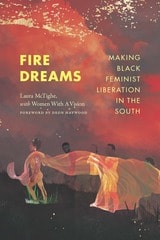
For thirty-five years, the New Orleans-based Black feminist collective Women With A Vision (WWAV) has fought for the liberation of their communities through reproductive justice, harm reduction, abolition feminism, racial justice, and sex workers' rights. In 2012, shortly after one of WWAV's biggest organizing victories, arsonists firebombed and destroyed their headquarters. Fire Dreams is an innovative collaboration between WWAV and Laura McTighe, who work in community to build a social movement ethnography of the organization’s post-arson rebirth. Rooting WWAV in the geography of the South and the living history of generations of Black feminist thinkers, McTighe and WWAV weave together stories from their founders’ pioneering work during the Black HIV/AIDS crisis in the 1980s and their groundbreaking organizing to end criminalization in the aftermath of Hurricane Katrina---with other movements for liberation as accomplices. Together, the authors refuse the logics of racial capitalism and share WWAV’s own world-building knowledges, as well as their methods for living these Black feminist futures now. Fire Dreams is a vital toolkit for grassroots organizers, activist-scholars, and all those who dream to make the world otherwise.
[more]
cover of Fluent Bodies: Ayurvedic Remedies for Postcolonial Imbalance

Fluent Bodies

Ayurvedic Remedies for Postcolonial Imbalance

Jean M. Langford

Duke University Press, 2002

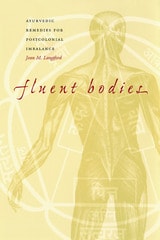
Fluent Bodies examines the modernization of the indigenous healing practice, Ayurveda, in India. Combining contemporary ethnography with a study of key historical moments as glimpsed through early-twentieth-century texts, Jean M. Langford argues that as Ayurveda evolved from an eclectic set of healing practices into a sign of Indian national culture, it was reimagined as a healing force not simply for bodily disorders but for colonial and postcolonial ills.
Interweaving theory with narrative, Langford explores the strategies of contemporary practitioners who reconfigure Ayurvedic knowledge through institutions and technologies such as hospitals, anatomy labs, clinical trials, and sonograms. She shows how practitioners appropriate, transform, or circumvent the knowledge practices implicit in these institutions and technologies, destabilizing such categories as medicine, culture, science, symptom, and self, even as they deploy them in clinical practice. Ultimately, this study points to the future of Ayurveda in a transnational era as a remedy not only for the wounds of colonialism but also for an imagined cultural emptiness at the heart of global modernity.

[more]
cover of Flying Yoginis

Flying Yoginis

Irwin Allan Sealy

Seagull Books, 2026

A profound reckoning with feminine power, sacred art, and the restless spirit of resistance.

Irwin Allan Sealy—master chronicler of the Indian imagination—sets off on a singular quest: to follow in the wake of the yoginis, those fierce, flying, shape-shifting female adepts of yoga whose images were carved in stone a thousand years ago across India and who now sit, displaced, in American museums.

Part travelogue, part philosophical musing, part cultural excavation, Flying Yoginis is a meditation on art, power, devotion, and the subversive energy of women who step out of line. With wit and wonder, Sealy traces their transcontinental journey from lost temples near Kanchipuram to glass-walled galleries in Kansas City and Minneapolis—finding along the way unexpected kinship with rebels and visionaries, from Rosa Parks to Carson McCullers. Blending the spiritual with the personal, the mythic with the mundane, Sealy offers a dazzling, genre-defying reflection on how the sacred persists, how memory travels, and how history is always being rewritten by those bold enough to reclaim it.

[more]
cover of Folk-Songs of the South: Collected Under the Auspices of the West Virginia Folk-Lore Society

Folk-Songs of the South

Collected Under the Auspices of the West Virginia Folk-Lore Society

John Harrington Cox

West Virginia University Press, 2016

Folk-Songs of the South: Collected Under the Auspices of the West Virginia Folk-Lore Society is a collection of ballads and folk-songs from West Virginia. First published in 1925, this resource includes narrative and lyric songs that were transmitted orally, as well as popular songs from print sources. Through 186 ballads and songs and 26 folk tunes, this collection archives a range of styles and genres, from English and Scottish ballads to songs about the Revolutionary and Civil Wars, the opening of the American West, boat and railroad transportation, children’s play-party and dance music, and songs from African American singers, including post-Civil war popular music. The original introduction by Cox contains vibrant portraits of the singers he researched, with descriptions of performance style and details about personalities and attitudes. With a new introduction by Alan Jabbour, this reprint renews the importance of this text as a piece of scholarship, revealing Cox’s understanding of the workings of tradition across time and place and his influence upon folk-song research. 
[more]
cover of Food in the Civil War Era: The South

Food in the Civil War Era

The South

Helen Zoe Veit

Michigan State University Press, 2015
Almost immediately, the Civil War transformed the way Southerners ate, devastating fields and food transportation networks. The war also spurred Southerners to canonize prewar cooking styles, resulting in cuisine that retained nineteenth-century techniques in a way other American cuisines did not. This fascinating book presents a variety of Civil War-era recipes from the South, accompanied by eye-opening essays describing this tumultuous period in the way people lived and ate. The cookbooks excerpted here teem with the kinds of recipes we expect to find when we go looking for Southern food: grits and gumbo, succotash and Hopping John, catfish, coleslaw, watermelon pickles, and sweet potato pie. The cookbooks also offer plenty of surprises. This volume, the second in the American Food in History series, sheds new light on cooking and eating in the Civil War South, pointing out how seemingly neutral recipes can reveal unexpected things about life beyond the dinner plate, from responses to the anti-slavery movement to shifting economic imperatives to changing ideas about women’s roles. Together, these recipes and essays provide a unique portrait of Southern life via the flavors, textures, and techniques that grew out of a time of crisis.
[more]
cover of For the Record: On Sexuality and the Colonial Archive in India

For the Record

On Sexuality and the Colonial Archive in India

Anjali Arondekar

Duke University Press, 2009

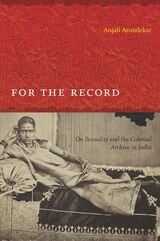
Anjali Arondekar considers the relationship between sexuality and the colonial archive by posing the following questions: Why does sexuality (still) seek its truth in the historical archive? What are the spatial and temporal logics that compel such a return? And conversely, what kind of “archive” does such a recuperative hermeneutics produce? Rather than render sexuality’s relationship to the colonial archive through the preferred lens of historical invisibility (which would presume that there is something about sexuality that is lost or silent and needs to “come out”), Arondekar engages sexuality’s recursive traces within the colonial archive against and through our very desire for access.

The logic and the interpretive resources of For the Record arise out of two entangled and minoritized historiographies: one in South Asian studies and the other in queer/sexuality studies. Focusing on late colonial India, Arondekar examines the spectacularization of sexuality in anthropology, law, literature, and pornography from 1843 until 1920. By turning to materials and/or locations that are familiar to most scholars of queer and subaltern studies, Arondekar considers sexuality at the center of the colonial archive rather than at its margins. Each chapter addresses a form of archival loss, troped either in a language of disappearance or paucity, simulacrum or detritus: from Richard Burton’s missing report on male brothels in Karáchi (1845) to a failed sodomy prosecution in Northern India, Queen Empress v. Khairati (1884), and from the ubiquitous India-rubber dildos found in colonial pornography of the mid-to-late nineteenth century to the archival detritus of Kipling’s stories about the Indian Mutiny of 1857.
[more]
cover of Forms of Knowledge in Early Modern Asia: Explorations in the Intellectual History of India and Tibet, 1500-1800

Forms of Knowledge in Early Modern Asia

Explorations in the Intellectual History of India and Tibet, 1500-1800

Sheldon Pollock, ed.

Duke University Press, 2011

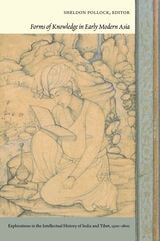
In the past two decades, scholars have transformed our understanding of the interactions between India and the West since the consolidation of British power on the subcontinent around 1800. While acknowledging the merits of this scholarship, Sheldon Pollock argues that knowing how colonialism changed South Asian cultures, particularly how Western modes of thought became dominant, requires knowing what was there to be changed. Yet little is known about the history of knowledge and imagination in late precolonial South Asia, about what systematic forms of thought existed, how they worked, or who produced them. This pioneering collection of essays helps to rectify this situation by addressing the ways thinkers in India and Tibet responded to a rapidly changing world in the three centuries prior to 1800. Contributors examine new forms of communication and conceptions of power that developed across the subcontinent; changing modes of literary consciousness, practices, and institutions in north India; unprecedented engagements in comparative religion, autobiography, and ethnography in the Indo-Persian sphere; and new directions in disciplinarity, medicine, and geography in Tibet. Taken together, the essays in Forms of Knowledge in Early Modern Asia inaugurate the exploration of a particularly complex intellectual terrain, while gesturing toward distinctive forms of non-Western modernity.

Contributors. Muzaffar Alam, Imre Bangha, Aditya Behl, Allison Busch, Sumit Guha, Janet Gyatso, Matthew T. Kapstein, Françoise Mallison, Sheldon Pollock, Velcheru Narayana Rao, Kurtis R. Schaeffer, Sunil Sharma, David Shulman, Sanjay Subrahmanyam, Mohamad Tavakoli-Targhi
[more]
cover of Fragmented Memories: Struggling to be Tai-Ahom in India

Fragmented Memories

Struggling to be Tai-Ahom in India

Yasmin Saikia

Duke University Press, 2004

Fragmented Memories is a beautifully rendered exploration of how, during the 1990s, socially and economically marginalized people in the northeastern Indian state of Assam sought to produce a past on which to base a distinctive contemporary identity recognized within late-twentieth-century India. Yasmin Saikia describes how groups of Assamese identified themselves as Tai-Ahom—a people with a glorious past stretching back to the invasion of what is now Assam by Ahom warriors in the thirteenth century. In her account of the 1990s Tai-Ahom identity movement, Saikia considers the problem of competing identities in India, the significance of place and culture, and the outcome of the memory-building project of the Tai-Ahom.

Assamese herself, Saikia lived in several different Tai-Ahom villages between 1994 and 1996. She spoke with political activists, intellectuals, militant leaders, shamans, and students and observed and participated in Tai-Ahom religious, social, and political events. She read Tai-Ahom sacred texts and did archival research—looking at colonial documents and government reports—in Calcutta, New Delhi, and London. In Fragmented Memories, Saikia reveals the different narratives relating to the Tai-Ahom as told by the postcolonial Indian government, British colonists, and various texts reaching back to the thirteenth century. She shows how Tai-Ahom identity is practiced in Assam and also in Thailand. Revealing how the “dead” history of Tai-Ahom has been transformed into living memory to demand rights of citizenship, Fragmented Memories is a landmark history told from the periphery of the Indian nation.

[more]
cover of Freedom In Our Lifetime: The Collected Writings Of Anton Muziwakhe Lembede

Freedom In Our Lifetime

The Collected Writings Of Anton Muziwakhe Lembede

Anton Muziwakhe Lembede

Ohio University Press, 1996

When a group of young political activists met in 1944 to launch the African National Congress Youth League, it included the nucleus of a remarkable generation of leaders who forged the struggle for freedom and equality in South Africa for the next half century: Nelson Mandela, Oliver Tambo, Walter Sisulu, Jordan Ngubane, Ellen Kuzwayo, Albertina Smith, A. P. Mda, Dan Tloome, and David Bopape. It was Anton Lembede, however whom they chose as their first president.

Lembede, who had just begun practicing law in Johannesburg, was known for his sharp intellect, fiery personality, and unwavering commitment to the struggle at hand. The son of farm laborers from the district of Georgedale, Natal, Lembede had worked tirelessly to put himself through school and college, and then to qualify for the bachelor of laws degree. When he began law practice in 1943, he had also earned the respect of his fellows, not only for his intellectual achievements (which were many), but also for his dedication to the cause of freedom in South Africa. “I am,” he explained, “Africa’s own child.”

His untimely death in 1947 at the age of 33 sent a wave of grief through the Congress Youth, who had looked to him for moral as well as political leadership. With the publication of Freedom In Our Lifetime, the editors acknowledge Lembede’s early contribution to the freedom movement, in particular his passionate and eloquent articulation of the African-centered philosophy he called “Africanism.”

[more]
cover of From Azaleas to Zydeco: My 4,600-Mile Journey through the South

From Azaleas to Zydeco

My 4,600-Mile Journey through the South

Mark W. Nichols

Butler Center for Arkansas Studies, 2013

Inspired by a 1937 map and travelogue of a newspaperman’s tour, author Mark W. Nichols embarked on his own long journey into the unique cities of the South. En route he met beekeepers, cheese makers, crawfish “bawlers,” duck callers, and a licensed alligator hunter, as well as entrepreneurs and governors. His keen observations encompass the southern states from Virginia to Arkansas and points south, and he unpacks the unique qualities of every city he visits. “It’s easy to say that getting to meet so many interesting and wonderful people was the best part of the journey--because it’s true,” Nichols writes. “I know there are friendly people everywhere, but southern friendliness is different.” His story embraces a wealth of southern charm from local characters, folklore, and customs to food, music, and dancing. Besides being just plain fun to read, Nichols’s account of his journey gives readers a true taste of the flavor of the evolving modern South.
[more]
cover of From Civilization To Segregation: Social Ideals and Social Control in Southern Rhodesia, 1890–1934

From Civilization To Segregation

Social Ideals and Social Control in Southern Rhodesia, 1890–1934

Carol Summers

Ohio University Press, 1994

This study examines the social changes that took place in Southern Rhodesia after the arrival of the British South Africa Company in the 1890s. Summer’s work focuses on interactions among settlers, the officials of the British South America Company and the administration, missionaries, humanitarian groups in Britain, and the most vocal or noticeable groups of Africans. Through this period of military conquest and physical coercion, to the later attempts at segregationist social engineering, the ideals and justifications of Southern Rhodesians changed drastically. Native Policy, Native Education policies, and, eventually, segregationist Native Development policies changed and evolved as the white and black inhabitants of Southern Rhodesia (colonial Zimbabwe) struggled over the region’s social form and future.

Summers’s work complements a handful of other recent works reexamining the social history of colonial Zimbabwe and demonstrating how knowledge, perception, and ideologies interacted with the economic and political dimensions of the region’s past.

[more]
cover of From Hedge to Living Bridge: Re-Imagining the Kirstenbosch National Botanical Garden

From Hedge to Living Bridge

Re-Imagining the Kirstenbosch National Botanical Garden

Melanie Boehi

University of Michigan Press, 2027

Offering a micro-history of the Kirstenbosch National Botanical Garden in Cape Town, From Hedge to Living Bridge situates the botanical garden in the context of colonial botany and local and global struggles to decolonize space and place. At the time of its establishment in 1913, the botanical garden was imagined as a vehicle to promote white South African nationalism. During the apartheid era, the state deployed the botanical garden in international image campaigns to counter international isolation. In the post-apartheid period, the botanical garden attempted to transform its colonial and apartheid displays to accommodate the new democratic nation. 

Melanie Boehi reveals that while the botanical garden was designed as a white space, Black people always claimed belonging to it, as it was built on land shaped by Indigenous presence, slavery, and apartheid forced removals. 

Drawing from multispecies ethnography, Boehi expands the conventional concept of the archive to include the landscape and the garden’s plants. While the botanical garden was imagined as a colonial tool of separation, it also has the potential to function as a living bridge between people who were segregated by colonialism and apartheid, as well as between humans and nonhuman nature.
[more]
cover of From Stone to Flesh: A Short History of the Buddha

From Stone to Flesh

A Short History of the Buddha

Donald S. Lopez Jr.

University of Chicago Press, 2013

We have come to admire Buddhism for being profound but accessible, as much a lifestyle as a religion. The credit for creating Buddhism goes to the Buddha, a figure widely respected across the Western world for his philosophical insight, his teachings of nonviolence, and his practice of meditation. But who was this Buddha, and how did he become the Buddha we know and love today?
 
Leading historian of Buddhism Donald S. Lopez Jr. tells the story of how various idols carved in stone—variously named Beddou, Codam, Xaca, and Fo—became the man of flesh and blood that we know simply as the Buddha. He reveals that the positive view of the Buddha in Europe and America is rather recent, originating a little more than a hundred and fifty years ago. For centuries, the Buddha was condemned by Western writers as the most dangerous idol of the Orient. He was a demon, the murderer of his mother, a purveyor of idolatry.
 
Lopez provides an engaging history of depictions of the Buddha from classical accounts and medieval stories to the testimonies of European travelers, diplomats, soldiers, and missionaries. He shows that centuries of hostility toward the Buddha changed dramatically in the nineteenth century, when the teachings of the Buddha, having disappeared from India by the fourteenth century, were read by European scholars newly proficient in Asian languages. At the same time, the traditional view of the Buddha persisted in Asia, where he was revered as much for his supernatural powers as for his philosophical insights. From Stone to Flesh follows the twists and turns of these Eastern and Western notions of the Buddha, leading finally to his triumph as the founder of a world religion.

[more]