191 books match the query 'Studies' and 6 start with f

cover of Form and Being: Studies in Thomistic Metaphysics (Studies in Philosophy and the History of Philosophy, Volume 45)

Form and Being

Studies in Thomistic Metaphysics (Studies in Philosophy and the History of Philosophy, Volume 45)

Lawrence Dewan, O.P.

Catholic University of America Press, 2006
Contains thirteen essays by Lawrence Dewan on metaphysics, the vision of reality from the viewpoint of being.
[more]
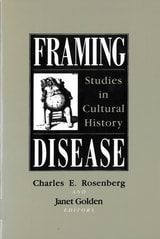
cover of Framing Disease: Studies in Cultural History

Framing Disease

Studies in Cultural History

Rosenberg, Charles E

Rutgers University Press, 1992

"In some ways disease does not exist until we have agreed that it does, by perceiving, naming, and responding to it, " writes Charles E. Rosenberg in his introduction to this stimulating set of essays. Disease is both a biological event and a social phenomenon. Patient, doctor, family, and social institutions—including employers, government, and insurance companies—all find ways to frame the biological event in terms that make sense to them and serve their own ends.

Many diseases discussed here—endstage renal disease, rheumatic fever, parasitic infectious diseases, coronary thrombosis—came to be defined, redefined, and renamed over the course of several centuries. As these essays show, the concept of disease has also been used to frame culturally resonant behaviors: suicide, homosexuality, anorexia nervosa, chronic fatigue syndrome. Disease is also framed by public policy, as the cases of industrial disability and of forensic psychiatry demonstrate. Medical institutions, as managers of people with disease, come to have vested interests in diagnoses, as the histories of facilities to treat tuberculosis or epilepsy reveal. Ultimately, the existence and conquest of disease serves to frame a society's sense of its own "healthiness" and to give direction to social reforms.   

The contributors include Steven J. Peitzman, Peter C. English, John Farley, Christopher Lawrence, Michael MacDonald, Bert Hansen, Joan Jacobs Brumberg, Robert A. Aronowitz, Gerald Markowitz, David Rosner, Janet A. Tighe, Barbara Bates, Ellen Dwyer, John M. Eyler, and Elizabeth Fee. For any student of disease and society, this book is essential, compelling reading.

[more]
cover of Franz Kafka and His Prague Contexts: Studies on Language and Literature

Franz Kafka and His Prague Contexts

Studies on Language and Literature

Marek Nekula

Karolinum Press, 2015

Franz Kafka is by far the Prague author most widely read and admired internationally. However, his reception in Czechoslovakia, launched by the Liblice conference in 1963, has been conflicted. While rescuing Kafka from years of censorship and neglect, Czech critics of the 1960s “overwrote” his German and Jewish literary and cultural contexts in order to focus on his Czech cultural connections. Seeking to rediscover Kafka’s multiple backgrounds, in Franz Kafka and His Prague Contexts Marek Nekula focuses on Kafka’s Jewish social and literary networks in Prague, his German and Czech bilingualism, and his knowledge of Yiddish and Hebrew. Kafka’s bilingualism is discussed in the context of contemporary essentialist views of a writer’s “organic” language and identity. Nekula also pays particular attention to Kafka’s education, examining his studies of Czech language and literature as well as its role in his intellectual life. The book concludes by asking how Kafka “read” his urban environment, looking at the readings of Prague encoded in his fictional and non-fictional texts.
[more]
cover of Friars, Nobles and Burghers – Sermons, Images and Prints: Studies of Culture and Society in Early-Modern Europe - In Memoriam István György Tóth

Friars, Nobles and Burghers – Sermons, Images and Prints

Studies of Culture and Society in Early-Modern Europe - In Memoriam István György Tóth

László Kontler

Central European University Press, 2010

The essays in this volume reflect the broader interpretation of culture as a system of shared meanings, values, attitudes and symbolic forms in any sphere of human life. Although thematically diverse, all these studies adhere to the concept of what is sometimes termed the new cultural history or socio-cultural history. The work opens with a cluster of methodological and historiographical reflections. Topics covered by the thematic sections include confessional and religious life in early modern Europe, symbolism and representation, strife and accommodation among different denominations compelled to live in a common space, order and hierarchy, cracks in the machinery of authority and the threat of disintegration as well as the history of alphabetization, literacy and reading and writing practices. This book pays tribute to István György Tóth (1956–2005), Head of the Department of Early-Modern History at the Institute of History of the Hungarian Academy of Sciences, and Professor of History at Central European University (both in Budapest), until his premature death in 2005.
[more]
cover of Friendship and Love, Ethics and Politics: Studies in Mediaeval and Early Modern History

Friendship and Love, Ethics and Politics

Studies in Mediaeval and Early Modern History

Eva Österberg

Central European University Press, 2010
Today, friendship, love and sexuality are mostly viewed as private, personal and informal relations. In the mediaeval and early modern period, just like in ancient times, this was different. The classical philosophy of friendship (Aristotle) included both friendship and love in the concept of philia. It was also linked to an argument about the virtues needed to become an excellent member of the city state. Thus, close relations were not only thought to be a matter of pleasant gatherings in privacy, but just as much a matter of ethics and politics.What, then, happened to the classical ideas of close relations when they were transmitted to philosophers, clerical and monastic thinkers, state officials or other people in the medieval and early modern period? To what extent did friendship transcend the distinctions between private and public that then existed? How were close relations shaped in practice? Did dialogues with close friends help to contribute to the process of subject-formation in the Renaissance and Enlightenment? To what degree did institutions of power or individual thinkers find it necessary to caution against friendship or love and sexuality?
[more]
cover of From Science to Computational Sciences: Studies in the History of Computing and its Influence on Today‘s Sciences

From Science to Computational Sciences

Studies in the History of Computing and its Influence on Today‘s Sciences

Edited by Gabriele Gramelsberger

Diaphanes, 2011

In 1946 John von Neumann stated that science is stagnant along the entire front of complex problems, proposing the use of largescale computing machines to overcome this stagnation. In other words, Neumann advocated replacing analytical methods with numerical ones. The invention of the computer in the 1940s allowed scientists to realise numerical simulations of increasingly complex problems like weather forecasting, and climate and molecular modelling. Today, computers are widely used as computational laboratories, shifting science toward the computational sciences. By replacing analytical methods with numerical ones, they have expanded theory and experimentation by simulation.

During the last decades hundreds of computational departments have been established all over the world and countless computer-based simulations have been conducted. This volume explores the epoch-making influence of automatic computing machines on science, in particular as simulation tools.
[more]