Results by title
828 books match the query 'Study and teaching' and 29 start with f
Facing the Center
Toward an Identity Politics of One-to-One MentoringHarry C. Denny
Utah State University Press, 2010
The face of the writing center, be it mainstream or marginal, majority or miority, orthodox or subversive, always has implications for teaching and learning. Facing the Center will extend current research in writing center theory to bring it in touch with theories now common in cultural studies curricula. Denny takes up issues of power, agency, language, and meaning, and pushes his readers to ask how they themselves, or the centers in which they work, might be perpetuating cultures that undermine inclusive, progressive education.
Failing Law Schools
Brian Z. Tamanaha
University of Chicago Press, 2012
On the surface, law schools today are thriving. Enrollments are on the rise, and their resources are often the envy of every other university department. Law professors are among the highest paid and play key roles as public intellectuals, advisers, and government officials. Yet behind the flourishing facade, law schools are failing abjectly. Recent front-page stories have detailed widespread dubious practices, including false reporting of LSAT and GPA scores, misleading placement reports, and the fundamental failure to prepare graduates to enter the profession.
Addressing all these problems and more in a ringing critique is renowned legal scholar Brian Z. Tamanaha. Piece by piece, Tamanaha lays out the how and why of the crisis and the likely consequences if the current trend continues. The out-of-pocket cost of obtaining a law degree at many schools now approaches $200,000. The average law school graduate’s debt is around $100,000—the highest it has ever been—while the legal job market is the worst in decades, with the scarce jobs offering starting salaries well below what is needed to handle such a debt load. At the heart of the problem, Tamanaha argues, are the economic demands and competitive pressures on law schools—driven by competition over U.S. News and World Report ranking. When paired with a lack of regulatory oversight, the work environment of professors, the limited information available to prospective students, and loan-based tuition financing, the result is a system that is fundamentally unsustainable.
Growing concern with the crisis in legal education has led to high-profile coverage in the Wall Street Journal and the New York Times, and many observers expect it soon will be the focus of congressional scrutiny. Bringing to the table his years of experience from within the legal academy, Tamanaha has provided the perfect resource for assessing what’s wrong with law schools and figuring out how to fix them.

Family-Centered Library Handbook
American Library Association, 2007
Fandom as Classroom Practice
A Teaching GuideKatherine Anderson Howell
University of Iowa Press, 2018
Providing ways to engage students through their popular culture interests, this collection brings together several essays, across disciplines, to show how fan practices such as writing fan fiction, creating vids, communicating via Tumblr, and participating in film tourism can invite students to invest more of themselves into their education.
Both scholarship and fandom encourage passionate engagement with texts—rather than passive consumption in isolation— and editor Katherine Anderson Howell and her contributors find that when students are encouraged to partake in a remix classroom that encourages their fan interests, they participate more in their education, are more critical of experts and authorities, and actively shape the discourse themselves. Creating this remix classroom requires thoughtfulness on the instructor’s part, and so the chapters in this volume come from teachers who have carefully constructed such courses, including several invaluable appendices that provide examples of methodologies, course assignments, teaching practices, and classroom setup. Each chapter also includes student responses that offer a sense of what students gained from each course.
The result is an exciting and entertaining new way to motivate students and teachers alike, and it is sure to be a popular reference guide for instructors teaching classes from high school to graduate levels.
Fatal Advice
How Safe-Sex Education Went WrongCindy Patton
Duke University Press, 1996
There is the official story, and then there is another, involving local groups and AIDS activists. Going back to early government and activist attempts to spread information, Patton traces a slow separation between official advice and that provided by those on the front lines in the battle against AIDS. She shows how American anxieties about teen sex played into the nation’s inadequate education and protection of its young people, and chronicles the media’s attempts to encourage compassion without broaching the touchy subject of sex or disrupting the notion that AIDS was a disease of social and sexual outcasts. Her overview of the relationship between shifting medical perceptions and safe-sex advice reveals why radical safe-sex educators eventually turned to sexually explicit, including pornographic, representations to spread their message—and why even these extreme tactics could not overcome the misguided national teaching on AIDS.
Patton closes with a stirring manifesto, an urgent call to action for all those who do not want to see the hard lessons of AIDS education and activism wasted, or, with these lessons, the loss of so many more lives.
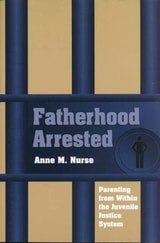
Fatherhood Arrested
Parenting from Within the Juvenile Justice SystemAnne M. Nurse
Vanderbilt University Press, 2002
By taking us inside the prison system, Nurse shows how its structure actively shapes an inmate's relationship with his children. For example, visitation is sometimes restricted to blood relatives and wives. Because relationships between unmarried men and the mothers of their children are often strained, some mothers are unwilling to allow their children to go to the prison with the inmate's family. Or the father may be allowed to receive visits from only one "girlfriend," which forces a man with multiple relationships, or with children by different women, to make impossible choices. Special attention is paid to the gendered nature of prison, its patriarchal and punitive structure, and its high-stress environment. The book then follows newly paroled men as they are released and return to their children.
The author spent four years doing research at the California Youth Authority, during which time she surveyed 258 paroled fathers. The group included young white, black, and Latino men, ages sixteen to twenty-five. She conducted in-depth interviews with men selected from this group, participated in forty parenting class sessions, and observed visiting hours at three different institutions. The data provide fascinating information about the characteristics of the men, their attitudes toward fatherhood, and the ways they are involved with their children. The diversity of the fathers allows for an analysis of racial and ethnic variation in their attitudes and involvement. The study concludes with a series of policy suggestions, especially important in light of the large number of fathers now living under the care and control of the juvenile justice system.
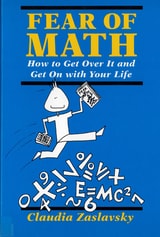
Fear Of Math
How to Get Over It and Get on With Your Life!Zaslavsky, Claudia
Rutgers University Press, 1994
Claudia Zaslavsky has helped thousands of men and women understand why math made them miserable. Let her introduce you to real people who, like you, fled from anything to do with math. All of them--White, African American, Asian American, Latino, artist, homemaker, manager, teacher, teenager, or grandparent--came to see that their math troubles were not their fault. Social stereotypes, poor schools, and well-meaning parents had convinced them that they couldnÕt, or shouldnÕt, do math.
Claudia Zaslavsky shows you how the school math you dreaded is a far cry from the math you really need in life (and probably know better than you ever suspected)! She gives a host of reassuring methods, drawn from many cultures, for tackling real-world math problems. She explodes the myth that women and minorities are not good at math. With Claudia Zaslavsky’s help, you can see why math matters and how to get over the math barrier that has been holding you back from your goals in life.

Fear of a Dead White Planet
More Worlds Collective. Joseph Masco, Tim Choy, Jake Kosek, M. Murphy
Duke University Press, 2025
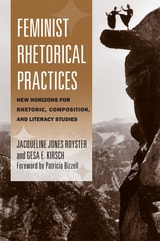
Feminist Rhetorical Practices
New Horizons for Rhetoric, Composition, and Literacy StudiesJacqueline Jones Royster and Gesa E. Kirsch
Southern Illinois University Press, 2012
To contextualize a new and changed landscape for narratives in the history of rhetoric, Royster and Kirsch present four critical terms of engagement—critical imagination, strategic contemplation, social circulation, and globalization—as the foundation for a new analytical model for understanding, interpreting, and evaluating feminist rhetorical inquiry and the study and teaching of rhetoric in general. This model draws directly on the wealth of knowledge and understanding gained from feminist rhetorical practices, especially sensitivity toward meaningfully and respectfully rendering the work, lives, cultures, and traditions of historical and contemporary women in rhetorical scholarship.
Proposing ambitious new standards for viewing and valuing excellence in feminist rhetorical practice, Royster and Kirsch advocate an ethos of respect and humility in the analysis of communities and specific rhetorical performances neglected in rhetorical history, recasting rhetorical studies as a global phenomenon rather than a western one. They also reflect on their own personal and professional development as researchers as they highlight innovative feminist research over the past thirty years to articulate how feminist work is changing the field and pointing to the active participation of women in various discourse arenas and to the practices and genres they use.
Valuable to new and established scholars of rhetoric, Feminist Rhetorical Practice: New Horizons for Rhetoric, Composition, and Literacy Studies is essential for understanding the theoretical, methodological, and ethical impacts of feminist rhetorical studies on the wider field.
Winner, 2014 Winifred Bryan Horner Outstanding Book Award
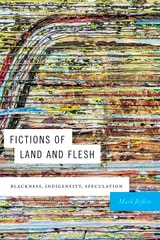
Fictions of Land and Flesh
Blackness, Indigeneity, SpeculationMark Rifkin
Duke University Press, 2019
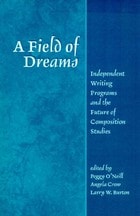
Field Of Dreams
edited by Peggy O'Neill, Angela Crow, and Larry Burton
Utah State University Press, 2002
One of the first collections to focus on independent writing programs, A Field of Dreams offers a complex picture of the experience of the stand-alone. Included here are narratives of individual programs from a wide range of institutions, exploring such issues as what institutional issues led to their independence, how independence solved or created administrative problems, how it changed the culture of the writing program and faculty sense of purpose, success, or failure.
Further chapters build larger ideas about the advantages and disadvantages of stand-alone status, covering labor issues, promotion/tenure issues, institutional politics, and others. A retrospective on the famous controversy at Minnesota is included, along with a look at the long-established independent programs at Harvard and Syracuse.
Finally, the book considers disciplinary questions raised by the growth of stand-alone programs. Authors here respond with critique and reflection to ideas raised by other chapters—do current independent models inadvertently diminish the influence of rhetoric and composition scholarship? Do they tend to ignore the outward movement of literacy toward technology? Can they be structured to enhance interdisciplinary or writing-across-the-curriculum efforts? Can independent programs play a more influential role in the university than they do from the English department?
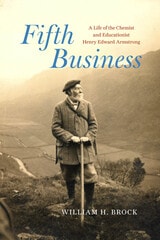
Fifth Business
A Life of the Chemist and Educationist Henry Edward ArmstrongWilliam H. Brock
University of Chicago Press, 2025
Fifth Business is a biography of the English chemist, educator, and scientific critic Henry Edward Armstrong. Today, Armstrong, who was a central figure in the development of the science of chemistry between 1885 and 1914, is more remembered for his campaigns to improve the teaching of chemistry, and science generally, and less for his theory of residual affinity and reverse electrolysis—or his hostility toward physical chemistry. However, right up until his retirement, Armstrong was a significant and prolific organic chemist, as well as a major figure in the academic and social life of the Chemical Society.
Fifth Business is structured as chronologically as possible, with Armstrong’s life and achievements as an active chemist in Part I (1848–1911) and as a critic in his long retirement in Part II (1911–1937). Brock’s authoritative biography provides a unique inside look at its subject, allowing us to better understand the history of British science, scientific institutions, scientific education, pedagogical theory, and social relations of science during the last third of the nineteenth century and the first third of the twentieth.
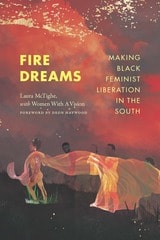
Fire Dreams
Making Black Feminist Liberation in the SouthLaura McTighe, with Women With A Vision
Duke University Press, 2024
First Semester
Graduate Students, Teaching Writing, and the Challenge of Middle GroundJessica Restaino
Southern Illinois University Press, 2012
Jessica Restaino offers a snapshot of the first semester experiences of graduate student writing teachers as they navigate predetermined course syllabi and materials, the pressures of grading, the influences of foundational scholarship, and their own classroom authority. With rich qualitative data gathered from course observations, interviews, and correspondence, Restaino traces four graduate students’ first experiences as teachers at a large, public university. Yet the circumstances and situations she relates will ring familiar at widely varying institutions.
First Semester: Graduate Students, Teaching Writing, and the Challenge of Middle Ground presents a fresh and challenging theoretical approach to understanding and improving the preparation of graduate students for the writing classroom. Restaino uses a three-part theoretical construct—labor, action, and work, as defined in Hannah Arendt’s work of political philosophy, The Human Condition—as a lens for reading graduate students’ struggles to balance their new responsibilities as teachers with their concurrent roles as students. Arendt’s concepts serve as access points for analysis, raising important questions about graduate student writing teachers’ first classrooms and uncovering opportunities for improved support and preparation by university writing programs.
First Time Up
An Insider'S Guide For New Composition TeachersBrock Dethier
Utah State University Press, 2005
"First time up?"—an insider’s friendly question from 1960s counter-culture—perfectly captures the spirit of this book. A short, supportive, practical guide for the first-time college composition instructor, the book is upbeat, wise but friendly, casual but knowledgeable (like the voice that may have introduced you to certain other firsts). With an experiential focus rather than a theoretical one, First Time Up will be a strong addition to the newcomer’s professional library, and a great candidate for the TA practicum reading list.
Dethier, author of The Composition Instructor’s Survival Guide and From Dylan to Donne, directly addresses the common headaches, nightmares, and epiphanies of composition teaching—especially the ones that face the new teacher. And since legions of new college composition teachers are either graduate instructors (TAs) or adjuncts without a formal background in composition studies, he assumes these folks as his primary audience.
Dethier’s voice is casual, but it conveys concern, humor, experience, and reassurance to the first-timer. He addresses all major areas that graduate instructors or new adjuncts in a writing program are sure to face, from career anxiety to thoughts on grading and keeping good classroom records. Dethier’s own eclecticism is well-represented here, but he reviews with considerable deftness the value of contemporary scholarship to first-time writing instructors—many of whom will be impatient with high theory. Throughout the work, he affirms a humane, confident approach to teaching, along with a true affection for college students and for teachers just learning to deal with them.
Flunking Democracy
Schools, Courts, and Civic ParticipationMichael A. Rebell
University of Chicago Press, 2018
In Flunking Democracy, Michael A. Rebell makes the case that this is not a recent problem, but rather that for generations now, America’s schools have systematically failed to prepare students to be capable citizens. Rebell analyzes the causes of this failure, provides a detailed analysis of what we know about how to prepare students for productive citizenship, and considers examples of best practices. Rebell further argues that this civic decline is also a legal failure—a gross violation of both federal and state constitutions that can only be addressed by the courts. Flunking Democracy concludes with specific recommendations for how the courts can and should address this deficiency, and is essential reading for anyone interested in education, the law, and democratic society.
Folklore Methodology
Formulated by Julius Krohn and Expanded by Nordic ResearchersBy Kaarle Krohn
University of Texas Press, 1971
Kaarle Krohn's Folklore Methodology was the first systematic attempt to state a method of studying folkloristic materials. For centuries scholars had collected folkloristic texts and had commented on them, but they had not tried to formulate a method of investigating folklore.
Folklore Methodology became the handbook for the great Finnish School of folklore research. It provided for its students a guide to the geographical research of traditional materials, a radical departure from the literary scholarship that had dominated folklore studies.
Krohn's book explores the causes and modes of folklore diffusion, development, and destruction; it outlines the influences that cause change in folklore; it provides valuable insights into the nature of folklore; and, finally, it develops geographic methods for analyzing, classifying, and reconstructing individual items from the folk repertoire.
While many developments have taken place since Krohn first published his guide, important new concepts of folklore research sprang from his efforts. For this reason, Folklore Methodology is mandatory reading for every serious student of folklore.
Folklore Rules
A Fun, Quick, and Useful Introduction to the Field of Academic Folklore StudiesS.
Utah State University Press, 2013
- What Is Folklore?
- What Do Folklorists Do
- Types of Folklore
- Types of Folk Groups;
- What Do I Do Now?
These chapters guide students toward a working understanding of the field, learn basic terms and techniques, and learn to perceive the knowledge base and discourse frame for materials used in folklore courses. Folklore Rules has become a classic text, serving instructors and students for a variety of courses, including introductory folklore and comparative studies as well as literature, anthropology, and composition classes that include a folklore component.
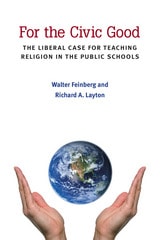
For the Civic Good
The Liberal Case for Teaching Religion in the Public SchoolsWalter Feinberg and Richard A. Layton
University of Michigan Press, 2014
Why teach about religion in public schools? What educational value can such courses potentially have for students?
In For the Civic Good, Walter Feinberg and Richard A. Layton offer an argument for the contribution of Bible and world religion electives. The authors argue that such courses can, if taught properly, promote an essential aim of public education: the construction of a civic public, where strangers engage with one another in building a common future. The humanities serve to awaken students to the significance of interpretive and analytic skills, and religion and Bible courses have the potential to add a reflective element to these skills. In so doing, students awaken to the fact of their own interpretive framework and how it influences their understanding of texts and practices. The argument of the book is developed by reports on the authors’ field research, a two-year period in which they observed religion courses taught in various public high schools throughout the country, from the “Bible Belt” to the suburban parkway. They document the problems in teaching religion courses in an educationally appropriate way, but also illustrate the argument for a humanities-based approach to religion by providing real classroom models of religion courses that advance the skills critical to the development of a civic public.
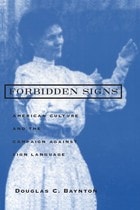
Forbidden Signs
American Culture and the Campaign against Sign LanguageDouglas C. Baynton
University of Chicago Press, 1996
The ensuing debate over sign language invoked such fundamental questions as what distinguished Americans from non-Americans, civilized people from "savages," humans from animals, men from women, the natural from the unnatural, and the normal from the abnormal. An advocate of the return to sign language, Baynton found that although the grounds of the debate have shifted, educators still base decisions on many of the same metaphors and images that led to the misguided efforts to eradicate sign language.
"Baynton's brilliant and detailed history, Forbidden Signs, reminds us that debates over the use of dialects or languages are really the linguistic tip of a mostly submerged argument about power, social control, nationalism, who has the right to speak and who has the right to control modes of speech."—Lennard J. Davis, The Nation
"Forbidden Signs is replete with good things."—Hugh Kenner, New York Times Book Review
Four Classic Mormon Village Studies
Howard M. Bahr
University of Utah Press, 2014
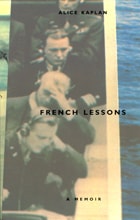
French Lessons
A MemoirAlice Kaplan
University of Chicago Press, 1993
The daughter of a Jewish lawyer who prosecuted Nazi war criminals at Nuremburg, Kaplan grew up in the 1960s in the Midwest. After her father's death when she was seven, French became her way of "leaving home" and finding herself in another language and culture. In spare, midwestern prose, by turns intimate and wry, Kaplan describes how, as a student in a Swiss boarding school and later in a junior year abroad in Bordeaux, she passionately sought the French "r," attentively honed her accent, and learned the idioms of her French lover.
When, as a graduate student, her passion for French culture turned to the elegance and sophistication of its intellectual life, she found herself drawn to the language and style of the novelist Louis-Ferdinand Celine. At the same time she was repulsed by his anti-Semitism. At Yale in the late 70s, during the heyday of deconstruction she chose to transgress its apolitical purity and work on a subject "that made history impossible to ignore:" French fascist intellectuals. Kaplan's discussion of the "de Man affair" — the discovery that her brilliant and charismatic Yale professor had written compromising articles for the pro-Nazi Belgian press—and her personal account of the paradoxes of deconstruction are among the most compelling available on this subject.
French Lessons belongs in the company of Sartre's Words and the memoirs of Nathalie Sarraute, Annie Ernaux, and Eva Hoffman. No book so engrossingly conveys both the excitement of learning and the moral dilemmas of the intellectual life.
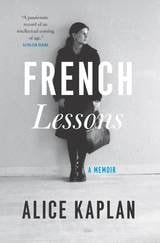
French Lessons
A MemoirAlice Kaplan
University of Chicago Press, 2018
The daughter of a Jewish lawyer who prosecuted Nazi war criminals at Nuremburg, Kaplan grew up in the 1960s in the Midwest. After her father's death when she was seven, French became her way of "leaving home" and finding herself in another language and culture. In spare, midwestern prose, by turns intimate and wry, Kaplan describes how, as a student in a Swiss boarding school and later in a junior year abroad in Bordeaux, she passionately sought the French "r," attentively honed her accent, and learned the idioms of her French lover.
When, as a graduate student, her passion for French culture turned to the elegance and sophistication of its intellectual life, she found herself drawn to the language and style of the novelist Louis-Ferdinand Celine. At the same time she was repulsed by his anti-Semitism. At Yale in the late 70s, during the heyday of deconstruction she chose to transgress its apolitical purity and work on a subject "that made history impossible to ignore:" French fascist intellectuals. Kaplan's discussion of the "de Man affair" — the discovery that her brilliant and charismatic Yale professor had written compromising articles for the pro-Nazi Belgian press—and her personal account of the paradoxes of deconstruction are among the most compelling available on this subject.
French Lessons belongs in the company of Sartre's Words and the memoirs of Nathalie Sarraute, Annie Ernaux, and Eva Hoffman. No book so engrossingly conveys both the excitement of learning and the moral dilemmas of the intellectual life.
From Expectation to Experience
Essays on Law and Legal EducationJames Boyd White
University of Michigan Press, 2000
The essays here are united by two basic themes. First, the essays suggest that law can usefully be regarded not only as a set of rules designed to produce results in the material world, as it usually is regarded, but also as an imaginative and intellectual activity that has as its end the claim of meaning for human experience, both individual and collective. Second, they argue that education, including in the law, works by the constant modification of expectation by experience.
White claims that as we grow, whether as individuals or as a community, we constantly shape our expectations to our experiences. This happens with particular force and clarity in the law, which seeks to create both a certain set of expectations--this is how it works as a system of regulation--and a series of occasions and methods for their revision. White's interest is in the way these understandings can affect legal teaching, practice, and criticism.
The essays in this book examine such topics as the nature of legal education; the possibilities for writing in the law for both judges and lawyers; the relation between the practice of making and claiming meaning as it works in the law and in literatures more usually though of as imaginative, such as poetry or drama; the ways in which the law talks, and ought to talk, about business corporations, religion, and individual judgments; and the ethical possibilities of the practice of law when it is conceived of as a field for the making of meaning.
From Expectation to Experience will be of interest to lawyers, legal scholars, as well as students of law, law and literature, and ethics and literature.
James Boyd White is Hart Wright Professor of Law, Professor of English, and Adjunct Professor of Classical Studies, University of Michigan.
From Skepticism to Competence
How American Psychiatrists Learn PsychotherapyMariana Craciun
University of Chicago Press, 2024
While many medical professionals can physically examine the body to identify and understand its troubles—a cardiologist can take a scan of the heart, an endocrinologist can measure hormone levels, an oncologist can locate a tumor—psychiatrists have a much harder time unlocking the inner workings of the brain or its metaphysical counterpart, the mind.
In From Skepticism to Competence, sociologist Mariana Craciun delves into the radical uncertainty of psychiatric work by following medical residents in the field as they learn about psychotherapeutic methods. Most are skeptical at the start. While they are well equipped to treat brain diseases through prescription drugs, they must set their expectations aside and learn how to navigate their patients’ minds. Their instructors, experienced psychotherapists, help the budding psychiatrists navigate this new professional terrain by revealing the inner workings of talk and behavioral interventions and stressing their utility in a world dominated by pharmaceutical treatments. In the process, the residents examine their own doctoring assumptions and develop new competencies in psychotherapy. Exploring the world of contemporary psychiatric training, Craciun illuminates novice physicians’ struggles to understand the nature and meaning of mental illness and, with it, their own growing medical expertise.
From Stone to Flesh
A Short History of the BuddhaDonald S. Lopez Jr.
University of Chicago Press, 2013

From Walden Pond to Jurassic Park
Activism, Culture, and American StudiesPaul Lauter
Duke University Press, 2001
With anecdote peppered discussions ranging from specific literary texts and movies to the future of higher education and the efficacy of unions, From Walden Pond to Jurassic Park entertains even as it offers a twenty-first century account of how and why Americanists at home and abroad now do what they do. Drawing on his forty-five years of teaching and research as well as his experience as a political activist and a cultural radical, Lauter shows how a multifaceted increase in the United States’ global dominion has infused a particular political urgency into American Studies. With its military and economic influence, its cultural and linguistic reach, the United States is—for better or for worse—too formidable and potent not to be understood clearly and critically.
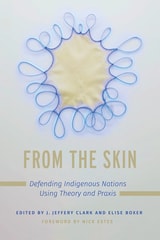
From the Skin
Defending Indigenous Nations Using Theory and PraxisEdited by J. Jeffery Clark and Elise Boxer; Foreword by Nick Estes
University of Arizona Press, 2023
In this volume, contributors demonstrate the real-world application of Indigenous theory to the work they do in their own communities and how this work is driven by urgency, responsibility, and justice—work that is from the skin.
In From the Skin, contributors reflect on and describe how they apply the theories and concepts of Indigenous studies to their communities, programs, and organizations, and the ways the discipline has informed and influenced the same. They show the ways these efforts advance disciplinary theories, methodologies, and praxes. Chapters cover topics including librarianship, health programs, community organizing, knowledge recovery, youth programming, and gendered violence. Through their examples, the contributors show how they negotiate their peoples’ knowledge systems with knowledge produced in Indigenous studies programs, demonstrating how they understand the relationship between their people, their nations, and academia.
Editors J. Jeffery Clark and Elise Boxer propose and develop the term practitioner-theorist to describe how the contributors theorize and practice knowledge within and between their nations and academia. Because they live and exist in their community, these practitioner-theorists always consider how their thinking and actions benefit their people and nations. The practitioner-theorists of this volume envision and labor toward decolonial futures where Indigenous peoples and nations exist on their own terms.
Contributors
Randi Lynn Boucher-Giago
Elise Boxer
Shawn Brigman
J. Jeffery Clark
Nick Estes
Eric Hardy
Shalene Joseph
Jennifer Marley
Brittani R. Orona
Alexander Soto
Futures of Dance Studies
Susan Manning
University of Wisconsin Press, 2020