Results by title
461 books match the query 'Teaching' and 12 start with f
Fandom as Classroom Practice
A Teaching GuideKatherine Anderson Howell
University of Iowa Press, 2018
Providing ways to engage students through their popular culture interests, this collection brings together several essays, across disciplines, to show how fan practices such as writing fan fiction, creating vids, communicating via Tumblr, and participating in film tourism can invite students to invest more of themselves into their education.
Both scholarship and fandom encourage passionate engagement with texts—rather than passive consumption in isolation— and editor Katherine Anderson Howell and her contributors find that when students are encouraged to partake in a remix classroom that encourages their fan interests, they participate more in their education, are more critical of experts and authorities, and actively shape the discourse themselves. Creating this remix classroom requires thoughtfulness on the instructor’s part, and so the chapters in this volume come from teachers who have carefully constructed such courses, including several invaluable appendices that provide examples of methodologies, course assignments, teaching practices, and classroom setup. Each chapter also includes student responses that offer a sense of what students gained from each course.
The result is an exciting and entertaining new way to motivate students and teachers alike, and it is sure to be a popular reference guide for instructors teaching classes from high school to graduate levels.
Feltness
Research-Creation, Socially Engaged Art, and Affective PedagogiesStephanie Springgay
Duke University Press, 2022
First Day to Final Grade, Third Edition
A Graduate Student's Guide to TeachingAnne Curzan and Lisa Damour
University of Michigan Press, 2011
This new edition incorporates newer teaching and learning pedagogy. The book has been updated to reflect the role of technology both inside and outside the classroom. In addition, a new chapter has been added that discusses successfully transitioning from being a teaching assistant to being hired as a full-time instructor.

First Day to Final Grade
A Graduate Student's Guide to Teaching, Fourth EditionAnne Curzan, Lisa Damour, and Whitney Peoples
University of Michigan Press, 2027
Every year, tens of thousands of graduate students walk into a college classroom for the first time with deep subject-matter expertise but little or no formal preparation for teaching. First Day to Final Grade has guided those instructors through three successful editions, offering clear, honest, and immediately usable advice for every stage of a course—from writing a syllabus and preparing a first lecture to running discussions, grading fairly, and handling difficult moments in the classroom. This fourth edition brings that trusted guidance fully up to date with new material on creating classrooms where all students can succeed and teaching with today’s technology. Whether read cover to cover before a first assignment or consulted in the middle of a challenging semester, this book is the practical companion new college teachers need.
In this new edition of First Day to Final Grade, readers will find:
- Equity-focused and inclusive pedagogy woven throughout the text;
- New material on transparency as a core inclusive and equity-focused practice, including explicit attention to surfacing the “hidden curriculum” for first-generation students;
- Advice on AI and generative tools, including designing writing assignments that account for AI, and a section on academic integrity, plagiarism, and inappropriate use of generative AI;
- New syllabus guidance on contemporary classroom management issues, including students requesting to record class sessions;
- Updated and consolidated recommended readings that address AI in teaching, equity-based pedagogy, student belonging, student mental health, teaching writing, and teaching when English is not one’s first language;
- Prescriptive guidance that explains the reasoning behind specific recommendations to help readers understand how particular practices benefit the learning environment and the instructor-student relationship.
First Time Up
An Insider'S Guide For New Composition TeachersBrock Dethier
Utah State University Press, 2005
"First time up?"—an insider’s friendly question from 1960s counter-culture—perfectly captures the spirit of this book. A short, supportive, practical guide for the first-time college composition instructor, the book is upbeat, wise but friendly, casual but knowledgeable (like the voice that may have introduced you to certain other firsts). With an experiential focus rather than a theoretical one, First Time Up will be a strong addition to the newcomer’s professional library, and a great candidate for the TA practicum reading list.
Dethier, author of The Composition Instructor’s Survival Guide and From Dylan to Donne, directly addresses the common headaches, nightmares, and epiphanies of composition teaching—especially the ones that face the new teacher. And since legions of new college composition teachers are either graduate instructors (TAs) or adjuncts without a formal background in composition studies, he assumes these folks as his primary audience.
Dethier’s voice is casual, but it conveys concern, humor, experience, and reassurance to the first-timer. He addresses all major areas that graduate instructors or new adjuncts in a writing program are sure to face, from career anxiety to thoughts on grading and keeping good classroom records. Dethier’s own eclecticism is well-represented here, but he reviews with considerable deftness the value of contemporary scholarship to first-time writing instructors—many of whom will be impatient with high theory. Throughout the work, he affirms a humane, confident approach to teaching, along with a true affection for college students and for teachers just learning to deal with them.
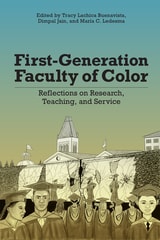
First-Generation Faculty of Color
Reflections on Research, Teaching, and ServiceTracy Lachica Buenavista
Rutgers University Press, 2023
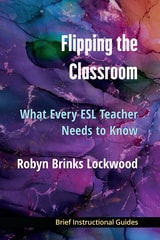
Flipping the Classroom
What Every ESL Teacher Should KnowRobyn Brinks Lockwood
University of Michigan Press, 2018

Focus on Teaching
Edited by Walter Doyle and Thomas L. Good
University of Chicago Press, 1982
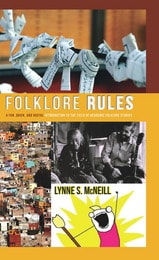
Folklore Rules
A Fun, Quick, and Useful Introduction to the Field of Academic Folklore StudiesS.
Utah State University Press, 2013
- What Is Folklore?
- What Do Folklorists Do
- Types of Folklore
- Types of Folk Groups;
- What Do I Do Now?
These chapters guide students toward a working understanding of the field, learn basic terms and techniques, and learn to perceive the knowledge base and discourse frame for materials used in folklore courses. Folklore Rules has become a classic text, serving instructors and students for a variety of courses, including introductory folklore and comparative studies as well as literature, anthropology, and composition classes that include a folklore component.
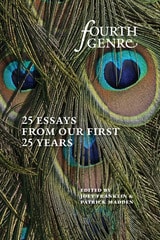
Fourth Genre
Twenty-Five Essays from Our First Twenty-Five YearsJoey Franklin
Michigan State University Press, 2025
From Socrates to Software
The Teacher as Text and the Text as TeacherEdited by Philip W. Jackson and Sophie Haroutunian-Gordon
University of Chicago Press, 1989
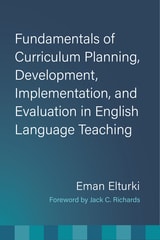
Fundamentals of Curriculum Planning, Development, Implementation, and Evaluation in English Language Teaching
Eman Elturki
University of Michigan Press, 2026
This book offers a systematic guide to navigating the different phases of the curriculum, from its inception to its evaluation. Part I explores the conceptual and theoretical foundations that shape curriculum and instruction. Part II provides practical knowledge and guidelines that programs and individual teachers can adopt or adapt to their specific educational contexts with the goal is to optimize the teaching and learning experience. Elturki draws largely on knowledge from the field of education, particularly curriculum studies, to complement what we know about L2 teaching and learning from Applied Linguistics, Second Language Acquisition, and English Language Teaching. Each chapter begins with pre-reading questions to stimulate thinking and concludes with post-reading questions for reflection, encouraging readers to connect the material to their own context.