Results by title
333 books match the query 'Television' and 12 start with f

Fan Phenomena
Buffy the Vampire SlayerEdited by Jennifer K. Stuller
Intellect Books, 2013
Fan Phenomena
Doctor WhoEdited by Paul Booth
Intellect Books, 2013
Fan Phenomena
Twin PeaksEdited by Marisa C. Hayes and Franck Boulègue
Intellect Books, 2013
Fan Phenomena: Twin Peaks is the first book of its kind to revisit Lynch and Frost's groundbreaking series and explore how the show's cult status continues to thrive in the digital era. In ten essays, the contributors take a deeper look at Twin Peaks' rich cast of characters, iconic locations, and its profound impact on television programming, as well as the impact of new media and fan culture on the show’s continued relevance. Written by fans for fans, Fan Phenomena: Twin Peaks is an intelligent yet accessible guide to the various aspects of the show and its subsequent film. Featuring commentary from both first generation and more recent followers, these essays capture the endlessly fascinating universe of Twin Peaks, from Audrey Horne's keen sense of style to Agent Cooper's dream psychology.
The first non-academic collection that speaks to the show's fan base rather than a scholarly audience, this book is more approachable than previous Twin Peaks critical studies volumes and features color images of the series, film, and fan media. It will be welcomed by anyone seduced by the strangeness and camp of Lynch’s seminal series.
Figures of Time
Affect and the Television of PreemptionToni Pape
Duke University Press, 2019
Film and Television After 9/11
Edited by Wheeler Winston Dixon
Southern Illinois University Press, 2004
In Film and Television After 9/11, editor Wheeler Winston Dixon and eleven other distinguished film scholars discuss the production, reception, and distribution of Hollywood and foreign films after the terrorist attacks of September 11, 2001, and examine how moviemaking has changed to reflect the new world climate.
While some contemporary films offer escapism, much of mainstream American cinema since 9/11 is centered on the desire for a “just war” in which military reprisals and escalation of warfare appear to be both inevitable and justified. Films of 2002 such as Black Hawk Down, Collateral Damage, and We Were Soldiers demonstrate a renewed audience appetite for narratives of conflict, reminiscent of the wave of filmmaking that surrounded American involvement in World War II.
The attacks on the World Trade Center and the Pentagon galvanized the American public initially, yet film critics wonder how this will play out over time. Film and Television After 9/11 is the first book to provide original insights into topics ranging from the international reception of post-9/11 American cinema, re-viewing films of our shared cinematic past in light of the attacks, and exploring parallels between post-9/11 cinema and World War II-era productions.
Flood of Images
Media, Memory, and Hurricane KatrinaBy Bernie Cook
University of Texas Press, 2015
Anyone who was not in New Orleans during Hurricane Katrina and the subsequent flooding of the city experienced the disaster as a media event, a flood of images pouring across television and computer screens. The twenty-four-hour news cycle created a surplus of representation that overwhelmed viewers and complicated understandings of the storm, the flood, and the aftermath. As time passed, documentary and fictional filmmakers took up the challenge of explaining what had happened in New Orleans, reaching beyond news reports to portray the lived experiences of survivors of Katrina. But while these narratives presented alternative understandings and more opportunities for empathy than TV news, Katrina remained a mediated experience.
In Flood of Images, Bernie Cook offers the most in-depth, wide-ranging, and carefully argued analysis of the mediation and meanings of Katrina. He engages in innovative, close, and comparative visual readings of news coverage on CNN, Fox News, and NBC; documentaries including Spike Lee’s When the Levees Broke and If God Is Willing and Da Creek Don’t Rise, Tia Lessin and Carl Deal’s Trouble the Water, and Dawn Logsdon and Lolis Elie’s Faubourg Treme; and the HBO drama Treme. Cook examines the production practices that shaped Katrina-as-media-event, exploring how those choices structured the possible memories and meanings of Katrina and how the media’s memory-making has been contested. In Flood of Images, Cook intervenes in the ongoing process of remembering and understanding Katrina.
Frames of Mind
A Post-Jungian Look at Cinema, Television and TechnologyLuke Hockley
Intellect Books, 2007
In this illuminating psychoanalysis of our media environment, Luke Hockley probes questions such as why we have genuine emotional responses to film events we know to be fictional, why we are compulsively driven to watch television, and how advertisers use unconscious motifs to persuade viewers.

Framing the Past
The Historiograpy of German Cinema and TelevisionEdited by Bruce A. Murray and Christopher J. Wickham
Southern Illinois University Press, 1992
This collection of essays was selected from those presented in October 1988 at a conference sponsored by the National Endowment for the Humanities, "Concepts of History in German Cinema." The contributors include notable historians, film scholars, and German studies specialists who explore the complex network of social, political, and religious institutions that have influenced the historiography of German cinema and television.
Before the turn of the century, Germans began to employ the medium of film to represent the past when they attempted to document their Prussian heritage. Since then, German cinema and television have promoted history as a component of personal, cultural, and national identity by consistently providing prominent treatment of historical subjects.
Although it is relatively easy to document changes in the selection and handling of these subjects, it is more difficult to determine precisely which factors have motivated those changes.
In attempting to define these factors, the link between German cinema, television, and history has developed around three interrelated issues: (1) the reception of Weimar cinema, which for most film scholars continues to be mediated to one extent or another by Siegfried Kracauer’s work; (2) the inscribing of fascism in cinema and television; and (3) the nature of, and potential for, alternatives to mainstream cinema and television.
Freaks Talk Back
Tabloid Talk Shows and Sexual NonconformityJoshua Gamson
University of Chicago Press, 1998
"This entertaining, accessible, sobering discussion should make every viewer sit up and ponder the effects and possibilities of America's daily talk-fest with newly sharpened eyes."—Publishers Weekly
"Bold, witty. . . . There's a lot of empirical work behind this deceptively easy read, then, and it allows for the most sophisticated and complex analysis of talk shows yet."—Elayne Rapping, Women's Review of Books
"Funny, well-researched, fully theorized. . . . Engaged and humane scholarship. . . . A pretty inspiring example of what talking back to the mass media can be."—Jesse Berrett, Village Voice
"An extraordinarily well-researched volume, one of the most comprehensive studies of popular media to appear in this decade."—James Ledbetter, Newsday
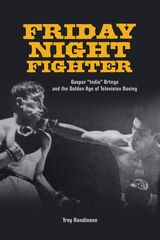
Friday Night Fighter
Gaspar "Indio" Ortega and the Golden Age of Television BoxingTroy Rondinone
University of Illinois Press, 2013
Friday Night Fighter relives a lost moment in American postwar history, when boxing ruled as one of the nation's most widely televised sports. During the 1950s and 1960s, viewers tuned in weekly, sometimes even daily, to watch widely recognized fighters engage in primordial battle; the Gillette Cavalcade of Sports Friday Night Fights was the most popular fight show. Troy Rondinone follows the dual narratives of the Friday Night Fights show and the individual story of Gaspar "Indio" Ortega, a boxer who appeared on prime-time network television more than almost any other boxer in history. From humble beginnings growing up poor in Tijuana, Mexico, Ortega personified the phenomenon of postwar boxing at its greatest, appearing before audiences of millions to battle the biggest names of the time, such as Carmen Basilio, Tony DeMarco, Chico Vejar, Benny "Kid" Paret, Emile Griffith, Kid Gavilan, Florentino Fernández, and Luis Manuel Rodriguez.
Rondinone explores the factors contributing to the success of televised boxing, including the rise of television entertainment, the role of a "reality" blood sport, Cold War masculinity, changing attitudes toward race in America, and the influence of organized crime. At times evoking the drama and spectacle of the Friday Night Fights themselves, this volume is a lively examination of a time in history when Americans crowded around their sets to watch the main event.
From Memory to History
Television Versions of the Twentieth CenturyJim Cullen
Rutgers University Press, 2021
From Memory to History takes readers on a journey through over fifty years of historical dramas and sitcoms that were set in earlier decades of the twentieth century. Along the way, it explores how comedies like M*A*S*H and Hogan’s Heroes offered veiled commentary on the Vietnam War, how dramas ranging like Mad Men echoed current economic concerns, and how The Americans and Halt and Catch Fire used the Cold War and the rise of the internet to reflect upon the present day. Cultural critic Jim Cullen is lively, informative, and incisive, and this book will help readers look at past times, present times, and prime time in a new light.
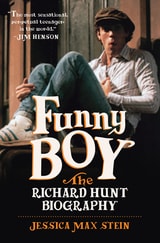
Funny Boy
The Richard Hunt BiographyJessica Max Stein
Rutgers University Press, 2024
"The most sensational, perpetual teenager in the world.” —Jim Henson
"To know him was to love him, and we do." —Mark Hamill
Funny Boy: The Richard Hunt Biography tells the life story of a gifted performer whose gleeful irreverence, sharp wit and generous spirit inspired millions. Richard Hunt was one of the original main five performers in the Muppet troupe. He brought to life an impressive range of characters on The Muppet Show, Sesame Street, Fraggle Rock and various Muppet movies, everyone from eager gofer Scooter to elderly heckler Statler, groovy girl Janice to freaked-out lab helper Beaker, even early versions of Miss Piggy and Elmo. Hunt also acted, directed and mentored the next generation of performers. His accomplishments are all the more remarkable in that he crammed them all into only 40 years.
Richard Hunt was just 18 years old when he joined Jim Henson’s company, where his edgy humor quickly helped launch the Muppets into international stardom. Hunt lived large, savoring life’s delights, amassing a vivid, disparate community of friends. Even when the AIDS epidemic wrought its devastation, claiming the love of Hunt’s life and threatening his own life, he showed an extraordinary sense of resilience, openness and joy. Hunt’s story exemplifies how to follow your passion, foster your talents, adapt to life’s surprises, genuinely connect with everyone from glitzy celebrities to gruff cab drivers – and have a hell of a lot of fun along the way.