248 books match the query 'Theology' and 10 start with f
cover of Faithful Interpretations: Truth and Islam in Catholic Theology of Religions

Faithful Interpretations

Truth and Islam in Catholic Theology of Religions

Philip Geister

Catholic University of America Press, 2021
”Theology of Religions” is among the most burning issues within Christian theology today. The challenge to study and discuss different ways of handling conflicting truth claims and religious narratives between religions is taken up by a growing number of theologians across denominational boundaries. This is a common and ecumenical effort undertaken by Christian theologians all over the world. And yet, the impact of specific ecclesiastical or theological traditions on different concepts of theology of religions should not be underestimated. As well known, the Second Vatican council with its pivotal decree Nostra Aetate (On the relation to other religions) not only set the agenda for Catholic theology, but even influenced the wider discussion on the topic. The papers of this volume were all given at a conference in Uppsala, Sweden in October 2017. The structure of Faithful Interpretations follows closely the way the conference was conducted. A general introduction to the development and present status of ”Theology of Religions” by Marianne Moyaert opens the book. Archbishop J Augustine Di Noia of the Vatican Congregation for the Doctrine of Faith then treats the recent developments in the teaching of the Magisterium regarding theology of religions. Anna Bonta Moreland adresses the issue of Muhammad and Christian Prophecy. Diego R Sarrió Cucarella focuses on early Christian theological views of Islam and concludes that Islam has been from the begining a ”disturbing” factor in the Christian view of salvation history. Wilhelmus G B M Valkenberg discusses the impact of Nostra Aetate on the Church’s relation to Muslims, using especially the precedent of Nicolaus of Cues as regards a constructive approach to Islam. Klaus von Stosch adresses a sensitive issue in Muslim-Christian relations and illustrates the advantages of the comparative theology approach for the theology of religions. Complementing this perspective, Peter Jonkers offers a hermeneutical perspective on truth claims, and reflects on ”the religious Other” with references to Jacques Derrida among others. Reinhold Bernhardt argues in favour of a biblically grounded “relational-existential” theory of truth, which would be most helpful with regard to other religions. To conclude, the prominent Catholic specialist on Theology of Religions, Gavin D’Costa, widened the perspective by addressing the relation to Judaism from the point of view of the covenant and the promises of the land. Altogether, the papers of this volume give a clear impression of the status of Roman Catholic Theology of Religions.
[more]
cover of Faithfully Seeking Understanding: Selected Writings of Johannes Kuhn

Faithfully Seeking Understanding

Selected Writings of Johannes Kuhn

Johannes Kuhn

Catholic University of America Press, 2009
Faithfully Seeking Understanding provides a first-hand opportunity for English-speaking readers to encounter the thought of Johannes Kuhn (1806-1887), widely considered the greatest speculative theologian of the renowned Catholic Tübingen School.
[more]
cover of Far Too Easily Pleased: A Theology of Play, Contemplation, and Festivity

Far Too Easily Pleased

A Theology of Play, Contemplation, and Festivity

James V., SJ Schall

Catholic University of America Press, 2020
Far Too Easily Pleased was originally published in 1976, although it is just as relevant today. Catholic Education Press is thrilled to be able to bring this book back into print. To summarize the volume we can do better than to excerpt part of Fr. Schall’s introduction to the 1976 edition: This book is intended to be a helpful stimulus to incite the reader to survey the truly exciting literature in this field and to assist in organizing personal reflection about the basic themes of game, play, wonder, rite, contemplation and festivity, themes that the theology of play naturally suggests. For it can be truly said that those who have not yet been initiated into this style of religious and cultural thought have been missing highly liberating and ennobling levels of our heritage. For those who already know what rewards are to be found in play and game, it is hoped that this book can again be a fresh and different approach to wonder and fascination, to the curiously marvelous life we have been given. James V. Schall, SJ, (1928-2019) was an American Jesuit Roman Catholic priest, teacher, writer, and philosopher. He retired in 2012 after a long tenure as a professor of political philosophy at Georgetown University Among his many books are The Universe We Think In; Political Philosophy and Revelation: A Catholic Reading; The Mind That Is Catholic: Philosophical and Political Essays; Schall on Chesterton: Timely Essays on Timeless Paradoxes and At the Limits of Political Philosophy: From “Brilliant Errors” To Things of Uncommon Importance (all CUA Press).
[more]
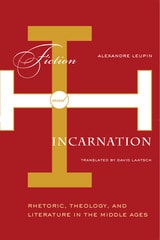
cover of Fiction And Incarnation: Rhetoric, Theology, and Literature in the Middle Ages

Fiction And Incarnation

Rhetoric, Theology, and Literature in the Middle Ages

Alexandre Leupin

University of Minnesota Press, 2002

A fresh look at the relationship between theology and rhetoric.

Focusing on the Incarnation-the only dogma original to Christianity, in which God becomes man and history-this book offers a wide-ranging and theoretically sophisticated investigation of the relationship between Christian discourse and literature from Roman antiquity to the fourteenth century through a look at texts by Cicero, Quintilian, Martianus Capella, Tertullian, Saint Augustine, Alain of Lille, Guillaume de Machaut, and others.

Alexandre Leupin asks if it is possible to go beyond the dialectics of the Incarnated God and the Devil without harking back to the beautiful but partially obsolete truths of paganism and sophistry. Employing a method inspired by psychoanalysis, Leupin repudiates the sophistry and relativism of postmodern theory while calling into question old commonplaces that have been invalidated by modernity. He does so by attending to the larger and deeper structures hidden within the discourses of theology, rhetoric, literature, and psychoanalysis. The result is an innovative perspective on the Middle Ages, an original and promising view of the problems of Western literature in relation to theology and rhetoric. Alexandre Leupin is Gregorie Professor in French studies at Louisiana State University. He is the author of many books, including, in English translation, Barbarolexis: Medieval Literature and Sexuality (1989).David Laatsch is a Ph.D. candidate in the French department of Louisiana State University.
[more]
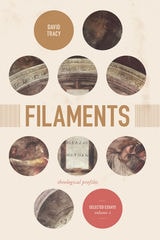
cover of Filaments: Theological Profiles: Selected Essays, Volume 2

Filaments

Theological Profiles: Selected Essays, Volume 2

David Tracy

University of Chicago Press, 2020

Two volumes of selected essays from the most important Catholic theologian in North America.

In the second volume of his two-volume collection of essays from the 1980s to 2018, renowned Catholic theologian David Tracy gathers profiles of significant theologians, philosophers, and religious thinkers. These essays, he suggests, can be thought of in terms of Walt Whitman’s “filaments,” which are thrown out from the speaking self to others—ancient, medieval, modern, and contemporary—in order to be caught elsewhere.

Filaments arranges its subjects in rough chronological order, from choices in ancient theology, such as Augustine, through the likes of William of St. Thierry in the medieval period and Martin Luther and Michelangelo in the early modern, and, finally, to modern and contemporary thinkers, including Bernard Lonergan, Paul Tillich, Simone Weil, Karl Rahner, Reinhold Niebuhr, and Iris Murdoch. Taken together, these essays can be understood as a partial initiation into a history of Christian theology defined by Tracy’s key virtues of plurality and ambiguity. Filaments bring the work of one of North America’s most important religious thinkers once again to the forefront to be celebrated by long-time readers and new ones alike.
[more]
cover of Formerly God: Rethinking God after God

Formerly God

Rethinking God after God

Rick Benjamins

Amsterdam University Press, 2026

God is and remains a meaningful term, even after “the death of God,” but its meaning is by no means clear or unambiguous. Clearly and with a broad perspective, this book challenges classical theology with the criticism that “onto-theology” is no longer possible today and shows in what drastically changed way it might “survive.” It shows how the academic theological conversation about God after God has developed over time and in different places.
This book begins with the controversial work of Dutch theologian Harry Kuitert, who bid farewell to old representations of God but got stuck finding new ones. It turns back to the important and indispensable insights of Hegel and Heidegger. It presents contemporary post-theistic thinking about God, using German, French, and American thinkers, distinguishing interpretive theologians, deconstructionists, and constructive theologians, finally formulating a new position.
[more]
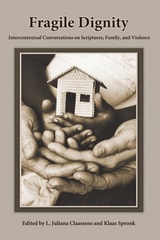
cover of Fragile Dignity: Intercontextual Conversations on Scriptures, Family, and Violence

Fragile Dignity

Intercontextual Conversations on Scriptures, Family, and Violence

L. Juliana Claassens

SBL Press, 2013

Human dignity insists that every human deserves respect and a safe place to live. For many, this is not a reality. The essays collected here analyze the background of this problem in contemporary family life and society at large, with special emphasis on the role of women and on the Bible as a source of inspiration and transformation. The collection is the product of a six-year conversation on family, violence, and human dignity between the Protestant Theological University in Kampen, The Netherlands, and the Faculty of Theology at Stellenbosch University, South Africa, a North-South dialogue that included annual conferences, a series of responsive letters, and additional external responses. The contributors are Cheryl B. Anderson, Hendrik Bosman, Gerrit Brand, Athalya Brenner, L. Juliana Claassens, Dorothea Erbele-Küster, Leo J. Koffeman, Frits de Lange, Monica Jyotsna Melanchthon, Magda Misset-van de Weg, Beverly Eileen Mitchell, Anne-Claire Mulder, Ian Nell, Mary-Anne Plaatjies-van Huffel, Jeremy Punt, Petruschka Schaafsma, D. Xolile Simon, Lee-Ann J. Simon, Gé Speelman, Klaas Spronk, Ciska Stark, Elsa Tamez, Charlene van der Walt, Robert Vosloo, and Yusef Waghid.
[more]
cover of Fragile Finitude: A Jewish Hermeneutical Theology

Fragile Finitude

A Jewish Hermeneutical Theology

Michael Fishbane

University of Chicago Press, 2021

The world we engage with is a vibrant collage brought to consciousness by language and our creative imagination. It is through the symbolic forms of language that the human world of value is revealed—this is where religious scholar Michael Fishbane dwells in his latest contribution to Jewish thought.

In Fragile Finitude, Fishbane clears new ground for a theological life through a novel reinterpretation of the Book of Job. On this basis, he offers a contemporary engagement with the four classical types of Jewish Scriptural exegesis. The first focuses on worldly experience, the second on communal forms of practice and thought in the rabbinical tradition, the third on personal development, and the fourth on transcendent, cosmic orientations. Through these four modes, Fishbane manages to transform Jewish theology from within, at once reinvigorating a long tradition and moving beyond it. What he offers is nothing short of a way to reorient our lives in relation to the divine and our fellow humans. Written from within the Jewish tradition, Fragile Finitude is intended for readers across the religious spectrum.
[more]
cover of Fragments: The Existential Situation of Our Time: Selected Essays, Volume 1

Fragments

The Existential Situation of Our Time: Selected Essays, Volume 1

David Tracy

University of Chicago Press, 2020

Two volumes of selected essays from the most important Catholic theologian in North America.
 
David Tracy is widely considered one of the most important religious thinkers in North America, known for his pluralistic vision and disciplinary breadth. His first books in more than twenty years, Fragments and Filaments reflect Tracy’s range and erudition, collecting essays from the 1980s to 2018 into a two-volume work.

In the first volume, Fragments, Tracy gathers his most important essays on broad theological questions, beginning with the problem of suffering across Greek tragedy, Christianity, and Buddhism. The volume goes on to address the Infinite, and the many attempts to categorize and name it by Plato, Aristotle, Rilke, Heidegger, and others. In the remaining essays, he reflects on questions of the invisible, contemplation, hermeneutics, and public theology. Throughout, Tracy evokes the potential of fragments (understood both as concepts and events) to shatter closed systems and open us to difference and Infinity. Covering science, literature, philosophy, psychoanalysis, and non-Western religious traditions, Tracy provides in Fragments a guide for any open reader to rethink our fragmenting contemporary culture.
[more]
cover of From the Trinity : The Coming of God in Revelation and Theology

From the Trinity

The Coming of God in Revelation and Theology

Piero Coda

Catholic University of America Press, 2020

From the Trinity provides an overall view of the history and the philosophical and theological significance of God the Trinity, not only from a religious point of view but from an anthropological and socio-cultural view as well. The perspective is that of Christian doctrine, specifically Catholic, in dialogue with the cultural sensitivity of our times and with the religious pluralism that characterizes it. Following the generative-progressive method proposed by Vatican II, the book begins with a phenomenological reading of the signs of the times, with special focus upon the performative aspect of the announcement and the doctrine of faith. In particular, constant attention to the contribution made by the mystics and great charisms (from Augustine of Hippo to Francis of Assisi and Theresa of Avila up until Therese of Lisieux, Edith Stein and Chaira Lubich) toward a deeper understanding of the Trinitarian truth. From the Trinity is unique in what it offers not only for Trinitarian theology, but also for other theological disciplines (Christology, Pneumatology, Anthropology, Ecclesiology, etc.) – in which the Trinity shines forth as the central and enlightening truth – as well as for philosophy, the humanities and the natural sciences. This perspective is especially developed in terms of a Trinitarian ontology (see Part V) by which reality is understood in light of the revelation of the Trinity. The implications of the incarnation of the Son of God and the gift of the Holy Spirit are taken seriously in studying the truth of all things as they are perceived in the space created by living and thinking “in” Jesus, united to the Father in the Spirit, as suggested by the title of the book, looking upon reality “From the Trinity.”
[more]