Results by title
104 books match the query 'Times' and 6 start with f

Fannie Bloomfield-Zeisler
The Life and Times of a Piano VirtuosoBeth Abelson Macleod
University of Illinois Press, 2015
In this new biography, Beth Abelson Macleod reintroduces a figure long, and unjustly, overlooked by music history. Trained in Vienna, Bloomfield-Zeisler significantly advanced the development of classical music in the United States. Her powerful and sensitive performances, both in recital and with major orchestras, won her followers across the United States and Europe and often provided her American audiences with their first exposure to the pieces she played. The European-style salon in her Chicago home welcomed musicians, scientists, authors, artists, and politicians, while her marriage to attorney Sigmund Zeisler placed her at the center of a historical moment when Sigmund defended the anarchists in the 1886 Haymarket trial.
In its re-creation of a musical and social milieu, Fannie Bloomfield-Zeisler paints a vivid portrait of a dynamic artistic life.
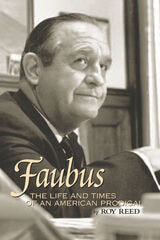
Faubus
The Life and Times of an American ProdigalRoy Reed
University of Arkansas Press, 1999
New York Times Book Review Notable Book for 1997
1998 Certificate of Commendation, American Association for State and Local History

Fela
Life And Times Of An AfricanMichael Veal
Temple University Press, 2000
Although harassed, beaten, and jailed by Nigerian authorities, he continued his outspoken and derisive criticism of political corruption at home and economic exploitation from abroad. A volatile mixture of personal characteristics -- charisma, musical talent, maverick lifestyle, populist ideology, and persistence in the face of persecution -- made him a legend throughout Africa and the world. Celebrated during the 1970s as a musical innovator and spokesman for the continent's oppressed masses, he enjoyed worldwide celebrity during the 1980s and was recognized in the 1990s as a major pioneer and elder statesman of African music. By the time of his death in 1997 from AIDS-related complications, Fela had become something of a Nigerian institution.
In Africa, the idea of transnational alliance, once thought to be outmoded, has gained new currency. In African America, during a period of increasing social conservatism and ethnic polarization, Africa has re-emerged as a symbol of cultural affirmation. At such an historical moment, Fela's music offers a perspective on race, class, and nation on both sides of the Atlantic. As Professor Veal demonstrates, over three decades Fela synthesized a unique musical language while also clearing -- if only temporarily -- a space for popular political dissent and a type of counter-cultural expression rarely seen in West Africa. In the midst of political turmoil in Africa, as well as renewal of pro-African cultural nationalism throughout the diaspora, Fela's political music functions as a post-colonial art form that uses cross-cultural exchange to voice a unique and powerful African essentialism.

Flow
The Life and Times of Philadelphia's Schuylkill RiverBeth Kephart
Temple University Press, 2014

Forbes Burnham
The Life and Times of the Comrade LeaderLinden F. Lewis
Rutgers University Press, 2024
Forbes Burnham: The Life and Times of the Comrade Leader is the first political biography of this complex and influential figure. It charts how the political party he founded, the People’s National Congress, combined nationalist rhetoric, socialist policies, and Pan-Africanist philosophies. It also explores how, in a country already deeply divided between the descendants of African slaves and Indian indentured servants, Burnham consolidated political power by intensifying ethnic polarizations. Drawing from historical archives as well as new interviews with the people who knew Burnham best, sociologist Linden F. Lewis examines how his dictatorial tendencies coexisted with his progressive convictions. Forbes Burnham is a compelling study of the nature of postcolonial leadership and its pitfalls.

Franklin Evans, or The Inebriate
A Tale of the TimesWalt Whitman
Duke University Press, 2007
The novel tells the rags-to-riches story of Franklin Evans, an innocent young man from the Long Island countryside who seeks his fortune in New York City. Corrupted by music halls, theaters, and above all taverns, he gradually becomes a drunkard. Until the very end of the tale, Evans’s efforts to abstain fail, and each time he resumes drinking, another series of misadventures ensues. Along the way, Evans encounters a world of mores and conventions rapidly changing in response to the vicissitudes of slavery, investment capital, urban mass culture, and fervent reform. Although Evans finally signs a temperance pledge, his sobriety remains haunted by the often contradictory and unsettling changes in antebellum American culture.
The editors’ substantial introduction situates Franklin Evans in relation to Whitman’s life and career, mid-nineteenth-century American print culture, and many of the developments and institutions the novel depicts, including urbanization, immigration, slavery, the temperance movement, and new understandings of class, race, gender, and sexuality. This edition includes a short temperance story Whitman published at about the same time as he did Franklin Evans, the surviving fragment of what appears to be another unfinished temperance novel by Whitman, and a temperance speech Abraham Lincoln gave the same year that Franklin Evans was published.