Results by title
59 books match the query 'Tragedy' and 2 start with f
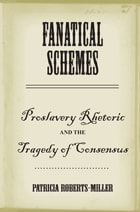
Fanatical Schemes
Proslavery Rhetoric and the Tragedy of ConsensusPatricia Roberts-Miller
University of Alabama Press, 2009
What was the relationship between rhetoric and slavery, and how did rhetoric fail as an alternative to violence, becoming instead its precursor?
Fanatical Schemes is a study of proslavery rhetoric in the 1830s. A common understanding of the antebellum slavery debate is that the increased stridency of abolitionists in the 1830s, particularly the abolitionist pamphlet campaign of 1835, provoked proslavery politicians into greater intransigence and inflammatory rhetoric. Patricia Roberts-Miller argues that, on the contrary, inflammatory rhetoric was inherent to proslavery ideology and predated any shift in abolitionist practices.
She examines novels, speeches, and defenses of slavery written after the pamphlet controversy to underscore the tenets of proslavery ideology and the qualities that made proslavery rhetoric effective. She also examines anti-abolitionist rhetoric in newspapers from the spring of 1835 and the history of slave codes (especially anti-literacy laws) to show that anti-abolitionism and extremist rhetoric long preceded more strident abolitionist activity in the 1830s.
The consensus that was achieved by proslavery advocates, argues Roberts-Miller, was not just about slavery, nor even simply about race. It was also about manhood, honor, authority, education, and political action. In the end, proslavery activists worked to keep the realm of public discourse from being a place in which dominant points of view could be criticized--an achievement that was, paradoxically, both a rhetorical success and a tragedy.
[more]

Faust
A Tragedy, Part IEugene Stelzig
Bucknell University Press, 2019
Goethe is the most famous German author, and the poetic drama Faust, Part I (1808) is his best-known work, one that stands in the company of other leading canonical works of European literature such as Dante’s Inferno and Shakespeare’s Hamlet. This is the first new translation into English since David Constantine’s 2005 version. Why another translation when there are several currently in print? To invoke Goethe’s own authority when speaking of his favorite author, Shakespeare, Goethe asserts that so much has already been said about the poet-dramatist “that it would seem there’s nothing left to say,” but adds, “yet it is the peculiar attribute of the spirit that it constantly motivates the spirit.” Goethe’s great dramatic poem continues to speak to us in new ways as we and our world continually change, and thus a new or updated translation is always necessary to bring to light Faust’s almost inexhaustible, mysterious, and enchanting poetic and cultural power. Eugene Stelzig’s new translation renders the text of the play in clear and crisp English for a contemporary undergraduate audience while at the same time maintaining its leading poetic features, including the use of rhyme.
Published by Bucknell University Press. Distributed worldwide by Rutgers University Press.
Published by Bucknell University Press. Distributed worldwide by Rutgers University Press.
[more]