Results by title
1185 books match the query 'Travel' and 41 start with f
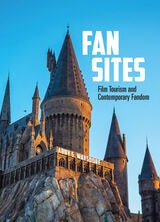
Fan Sites
Film Tourism and Contemporary FandomAbby S. Waysdorf
University of Iowa Press, 2021
Fan Sites explores the different relationships that fans build with these places of fandom, from the exploratory knowledge-building of Game of Thrones fans on vacation, the appreciative evaluations of Harry Potter fans at the Wizarding World of Harry Potter, to the frequent “homecoming” visits of Prisoner fans, who see Portmeirion as a “safe vault” and the home of their fandom. Including engaging accounts of real fans at each location, Fan Sites addresses what the rise of fan tourism and places of fandom might mean for the future of fandom and its relationship with the media industry.
Far Flung
Improvisations on National Parks, Driving to Russia, Not Marrying a Ranger, the Language of Heartbreak, and Other Natural DisastersCassandra Kircher
West Virginia University Press, 2019
Cassandra Kircher was in her twenties when she was hired by the National Park Service, landing a life that allowed her to reinvent herself. For four years she collected entrance fees and worked in the dispatch office before being assigned as the first woman to patrol an isolated backcountry district of Colorado’s Rocky Mountain National Park. There, Kircher encountered wonder and beauty, accidents and death. Although she always suspected the mountains might captivate her, she didn’t realize that her adopted landscape would give her strength to confront where she was from—both the Midwest that Willa Cather fans will recognize, and a childhood filled with problems and secrets.
Divided and defined by geographic and psychological space, Far Flung begins in the Rockies but broadens its focus as Kircher negotiates places as distant as Alaska’s Kenai Peninsula, Russia’s Siberian valleys, and Wisconsin’s lake country, always with Colorado as a heartfelt pivot. These thirteen essays depict a woman coming to terms with her adoration for the wilds of the West and will resonate with all of us longing to better understand ourselves and our relationships to the places and people we love most.
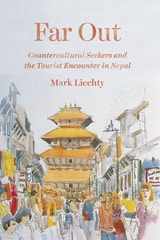
Far Out
Countercultural Seekers and the Tourist Encounter in NepalMark Liechty
University of Chicago Press, 2017
Emerging from centuries of political isolation but eager to engage the world, Nepalis struggled to make sense of the hordes of exotic, enthusiastic foreigners. They quickly embraced the phenomenon, however, and harnessed it to their own ends by building tourists’ fantasies into their national image and crafting Nepal as a premier tourist destination. Liechty describes three distinct phases: the postwar era, when the country provided a Raj-like throwback experience for rich Americans; Nepal’s emergence as an exotic outpost of hippie counterculture in the 1960s; and its rebranding into a hip adventure destination, which began in the 1970s and continues today. He shows how Western projections of Nepal as an isolated place inspired creative enterprises and, paradoxically, allowed locals to participate in the global economy. Based on twenty-five years of research, Far Out blends ethnographic analysis, a lifelong passion for Nepal, and a touch of humor to produce the first comprehensive history of what tourists looked for—and found—on the road to Kathmandu.
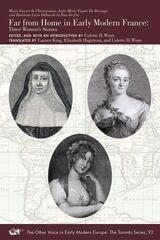
Far from Home in Early Modern France
Three Women’s StoriesMarie Guyart de l’Incarnation, Anne-Marie Fiquet du Boccage, and Henriette-Lucie Dillon de la Tour du Pin
Iter Press, 2022
This book showcases three Frenchwomen who ventured far from home at a time when such traveling was rare. In 1639, Marie de l’Incarnation embarked for New France where she founded the first Ursuline monastery in present-day Canada. In 1750, Madame du Boccage set out at the age of forty on her first “grand tour.” She visited England, the Netherlands, and Italy where she experienced firsthand the intellectual liberty offered there to educated women. As the Reign of Terror gripped France, the Marquise de la Tour du Pin fled to America with her husband and their two young children, where they ran a farm from 1794 to 1796. The writings these women left behind detailing their respective journeys abroad represent significant contributions to early modern travel literature. This book makes available to anglophone readers three texts that are rich in both historical and literary terms.

Field Guide to Illinois Mammals
Joyce E. Hofmann
University of Illinois Press, 2026
Designed to use in the field or the backyard, Field Guide to Illinois Mammals updates a singular reference for wildlife biologists, ecologists, hikers, armchair adventurers, and anyone else fascinated by the state’s wildlife.

Field Guide to New England Barns and Farm Buildings
Thomas Durant Visser
University Press of New England, 1997
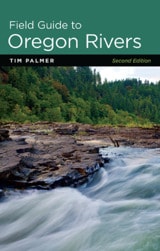
Field Guide to Oregon Rivers
Tim Palmer
Oregon State University Press, 2024

Field Guide to the Wild Flowers of the Canary Islands
Chris Thorogood, Mark Carine, and Alfredo Reyes-Betancourt
Royal Botanic Gardens, Kew, 2024
Situated in the North Atlantic off the coast of northwestern Africa, the Canary Islands are a volcanic archipelago, comprising seven large and several smaller islands. The region attracts millions of visitors every year, with an abundance of ecotourists drawn by its famously rich flora. This book presents previously inaccessible information on the islands through the collaboration of British scientists and local experts.
This long-awaited field guide covers more than two thousand of the region’s exceptionally diverse and important plants, from the most common species to local endemics. Illustrated throughout with color photographs, each species profile includes nomenclature, description, dimensions, habitat, flowering times, and distribution.
With comprehensive, up-to-date coverage sorted by habitat, this is the essential guide for students, professional botanists, scientists, gardeners, and plant enthusiasts alike.
Field Guide to the Wild Flowers of the Western Alps
France, Italy and SwitzerlandChristopher Grey-Wilson
Royal Botanic Gardens, Kew, 2025
The Western Alps, a large region of dramatic scenery and varied habitats, is noted for its biodiversity and beauty. From woodlands and forests, through colorful hay meadows, to the higher alpine elevations, the region boasts one of the most diverse and colorful mountain floras found anywhere on earth. This book is a celebration of the great biological diversity found in one of the most beautiful and inviting regions of Europe.
This comprehensive guide features the fascinating flora to be found across the region in the French Alps, the Massif Central and Cevennes, the Swiss Jura Mountains and the Italian Alps east to Como and Bergamo. Illustrated throughout with over 2000 photographs, each species profile includes nomenclature, description, dimensions, habitat, flowering times, and distribution.
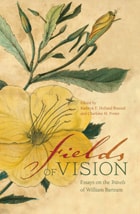
Fields of Vision
Essays on the Travels of William BartramEdited by Kathryn E. Holland Braund and Charlotte M. Porter
University of Alabama Press, 2010
A classic work of history, ethnography, and botany, and an examination of the life and environs of the 18th-century south
William Bartram was a naturalist, artist, and author of Travels through North and South Carolina, Georgia, East and West Florida, the Cherokee Country, the ExtensiveTerritories of the Muscogulees, or Creek Confederacy, and the Country of the Choctaws. The book, based on his journey across the South, reflects a remarkable coming of age. In 1773, Bartram departed his family home near Philadelphia, Pennsylvania, as a British colonist; in 1777, he returned as a citizen of an emerging nation of the United States. The account of his journey, published in 1791, established a national benchmark for nature writing and remains a classic of American literature, scientific writing, and history. Brought up as a Quaker, Bartram portrayed nature through a poetic lens of experience as well as scientific observation, and his work provides a window on 18th-century southern landscapes. Particularly enlightening and appealing are Bartram’s detailed accounts of Seminole, Creek, and Cherokee peoples.The Bartram Trail Conference fosters Bartram scholarship through biennial conferences held along the route of his travels. This richly illustrated volume of essays, a selection from recent conferences, brings together scholarly contributions from history, archaeology, and botany. The authors discuss the political and personal context of his travels; species of interest to Bartram; Creek architecture; foodways in the 18th-century south, particularly those of Indian groups that Bartram encountered; rediscovery of a lost Bartram manuscript; new techniques for charting Bartram’s trail and imaging his collections; and a fine analysis of Bartram’s place in contemporary environmental issues.

Fighting Horse Of Stanislaus
Stories Essays Dan De QuilleLAWRENCE I. BERKOVE
University of Iowa Press, 1990
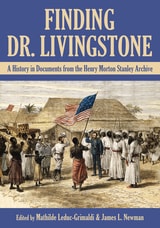
Finding Dr. Livingstone
A History in Documents from the Henry Morton Stanley ArchivesMathilde Leduc-Grimaldi
Ohio University Press, 2020
This eye-opening perspective on Stanley’s expedition reveals new details about the Victorian explorer and his African crew on the brink of the colonial Scramble for Africa.
In 1871, Welsh American journalist Henry M. Stanley traveled to Zanzibar in search of the “missing” Scottish explorer and missionary David Livingstone. A year later, Stanley emerged to announce that he had “found” and met with Livingstone on Lake Tanganyika. His alleged utterance there, “Dr. Livingstone, I presume,” was one of the most famous phrases of the nineteenth century, and Stanley’s book, How I Found Livingstone, became an international bestseller.
In this fascinating volume Mathilde Leduc-Grimaldi and James L. Newman transcribe and annotate the entirety of Stanley’s documentation, making available for the first time in print a broader narrative of Stanley’s journey that includes never-before-seen primary source documents—worker contracts, vernacular plant names, maps, ruminations on life, lines of poetry, bills of lading—all scribbled in his field notebooks.
Finding Dr. Livingstone is a crucial resource for those interested in exploration and colonization in the Victorian era, the scientific knowledge of the time, and the peoples and conditions of Tanzania prior to its colonization by Germany.
Finding England
An Auslander's Guide to Perfidious AlbionHolger Ehling
Haus Publishing, 2013
Finding Higher Ground
A Life Of TravelsCatharine Savage Brosman
University of Nevada Press, 2003
Essayist Catharine Savage Brosman explores the relationship of human beings to their environment, traveling from American deserts to dense European urban settings. Whether sipping wine in a Parisian café, partying with the jet set in Aspen, or contemplating the arid desert West that she loves, Brosman inhabits these settings, and many others, with a sense of adventure and discovery. To read these essays is to enjoy the company of a lively, thoughtful, original mind. Brosman’s "higher ground" is that place we all seek, where we can find and express our own best selves.
Finding Italy
Travel, Nation, and Colonization in Vergil's AeneidK. F. B. Fletcher
University of Michigan Press, 2014
Finding Italy explores the journey of the Romans’ ancestor Aeneas and his fellow Trojans from their old home, Troy, to their new country, Italy, narrated in Vergil’s epic poem Aeneid. K. F. B. Fletcher argues that a main narrative theme is patriotism, specifically the problem of how one comes to love one’s new country. The various directions Aeneas receives throughout the first half of the poem are meant to create this love, explaining both to Aeneas and to Vergil’s readers how they should respond to the new, unified Italy synonymous with Rome. These directions come from the gods, or from people close to Aeneas who have divine connections, and they all serve to instill an emotional connection to the land, creating a mental image of Italy that tells him far more about his destination than merely its location, and ultimately making him fall in love with Italy enough to fight for it soon after his arrival. The poem thus dramatizes the birth of nationalism, as Italy is only a concept to Aeneas throughout his trip; these directions do not describe Italy as it is at the time of Aeneas’ journey, but as an ideal to be realized by Aeneas and his descendants, reaching its final, perfect form under Augustus Caesar.
Finding Italy provides a very detailed reading of the directions Aeneas receives by situating them within their relevant contexts: ancient geography, Greek colonization narratives, prophecy, and ancient views of wandering. Vergil draws on all of these concepts to craft instructions that create in Aeneas an attachment to Italy before he ever arrives, a process that dramatizes a key emotional problem in the late first century BCE in the wake of the Social and Civil Wars: how to balance the love of one's modest birthplace with the love of Rome, the larger city that now encompasses it.

Finding Mr. Perfect
K-Drama, Pop Culture, Romance, and RaceMin Joo Lee
Rutgers University Press, 2026
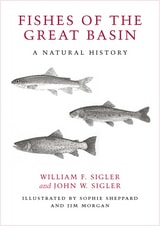
Fishes of the Great Basin
A Natural HistoryJohn W. Sigler
University of Nevada Press, 2014
Folk Stories from the Hills of Puerto Rico / Cuentos folklóricos de las montañas de Puerto Rico
Rafael Ocasio
Rutgers University Press, 2021
Some stories provide a distinctive Caribbean twist on classic tales including “Snow White” and “Cinderella.” Others fictionalize the lives of local historical figures, such as infamous pirate Roberto Cofresí, rendered here as a Robin Hood figure who subverts the colonial social order. The collection also introduces such beloved local characters as Cucarachita Martina, the kind cockroach who falls in love with Ratoncito Pérez, her devoted mouse husband who brings her delicious food.
Including a fresh English translation of each folktale as well as the original Spanish version, the collection also contains an introduction from literary historian Rafael Ocasio that highlights the historical importance of these tales and the Jíbaro cultural values they impart. These vibrant, funny, and poignant stories will give readers unique insights into Puerto Rico’s rich cultural heritage.
Esta nueva y emocionante antología reúne cuentos populares puertorriqueños que fueron transmitidos oralmente durante generaciones antes de ser finalmente transcritos comenzando en 1914 por el equipo del famoso antropólogo Franz Boas. Estos encantadores cuentos ofrecen a los lectores un vistazo a la imaginación y las aspiraciones de los jíbaros, los campesinos de Puerto Rico.
Algunas historias brindan un distintivo toque caribeño a cuentos clásicos como "Blanca Nieves" y "Cenicienta". Otros ficcionalizan la vida de personajes históricos locales, como el famoso pirata Roberto Cofresí, representado como una figura al estilo de Robin Hood, quien subvierte el orden social colonial. La colección también presenta personajes locales tan queridos como Cucarachita Martina, la amable cucaracha que se enamora de Ratoncito Pérez, su devoto esposo ratón que le trae deliciosa comida.
Incluyendo una nueva traducción al inglés de estos cuentos populares, así como las versiones originales en español, la colección también contiene una introducción del historiador literario Rafael Ocasio, quien destaca la importancia histórica de estos cuentos y los valores culturales del jíbaro que éstos imparten en los relatos. Estas historias vibrantes, divertidas y conmovedoras brindarán a los lectores una visión única de la rica herencia cultural de Puerto Rico.
Introducción en español (https://d3tto5i5w9ogdd.cloudfront.net/wp-content/uploads/2021/02/03154419/Ocasio_Cuentos_Intro_Espan%CC%83ol.pdf)
Rafael Ocasio will discussing his book, 'Folk Stories from the Hills of Puerto Rico / Cuentos folklóricos de las montañas de Puerto Rico' at Biblioteca Juvenil de Mayagüez in Puerto Rico (https://youtu.be/o6Tub094EoI)
Folklore in Motion
Texas Travel LoreKenneth L. Untiedt
University of North Texas Press, 2007

Follow the Blue Blazes
A Guide To Hiking Ohio's Buckeye TrailRobert J. Pond
Ohio University Press, 2003
Unique among hiking trails is the one that forms a complete loop around the state of Ohio. That 1,200-mile trail is called the Buckeye Trail. Showing the way on tree trunks, rocks, and other natural signposts are the blue painted markings called “the blue blazes.” In Follow the Blue Blazes, the reader embarks on a journey to discover a part of Ohio largely unseen except along this great path.
Beginning with the startling rock formations and graceful waterfalls of Old Man’s Cave in southern Ohio, and leading clockwise around the state to visit expansive forests, lovely parks, ancient mounds, historic canals and battlefields, and scenic river trails, experienced trailsman Robert J. Pond provides a captivating look at each section of the trail.
Each chapter features an overview of a 100-mile section of the trail and three self-guided featured hikes. The overviews, with accompanying maps, may be read consecutively to acquaint the reader with the entire course of the blue blazes. But most readers will best enjoy the Buckeye Trail by taking the guide along on featured hikes. Each hike is supported by a detailed but easy-to-follow map and includes explicit directions to trailheads and approximate hiking times.
In addition to many outlying areas, the extensive Buckeye Trail is accessible in or near Cincinnati, Dayton, Toledo, Cleveland, and Akron. Robert Pond has supplemented each description with interesting details about the geology and the diverse habitats of flora and fauna. Readers, too, can enjoy the beauty and wonders of Ohio if they Follow the Blue Blazes.
Follow the Blue Blazes
A Guide to Hiking Ohio’s Buckeye TrailConnie Pond
Ohio University Press, 2014
Many changes have taken place in the decade since Follow the Blue Blazes was first published, changes in the trails themselves and in the way we hike them. The Buckeye Trail still wends its way around the state of Ohio, following the course marked out by the characteristic blue blazes on trees and signposts along the way. In the intervening years, however, sections of the trail have changed their route, added amenities, or just grown more interesting. From the startling rock formations and graceful waterfalls of Old Man’s Cave, to Native American mounds, battlefields, and scenic rivers, Connie and Robert J. Pond provide a captivating guide to often-overlooked treasures around the state.
Each chapter features an overview of a 100-mile section of the trail and three self-guided featured hikes. The overviews and the accompanying maps may be read consecutively to acquaint the reader with the entire course of the trail. But most readers will best enjoy the trail by taking the guide along on one of the featured hikes. Each route is outlined on an easy-to-read map with GPS coordinates and waypoints to guide the hiker, as well as explicit directions from parking lot to trailhead.
The Buckeye Trail is readily accessible from Cincinnati, Dayton, Toledo, Cleveland, and Akron. Even a short trip can lead to an adventure near your own backyard.
Following Michigan's Ink Trails
Writing Michigan, Reading MichiganDave Dempsey
Michigan State University Press, 2027
Michigan is renowned for its natural beauty and automotive history, yet its rich literary heritage often goes unrecognized. This engaging and extensively researched book aims to change that by providing vivid portraits of both well-known and overlooked authors. It also offers an enjoyable tour through the state’s libraries and bookstores. The book takes readers on a fascinating journey across the back roads and highways of Michigan writing, showcasing the remarkable diversity of authors who have called the state home as well as those who have found it inspirational. It is perfect for anyone interested in reading, Michigan’s literary heritage, and its culture.

Following the Barn Quilt Trail
Suzi Parron
Ohio University Press, 2016
Suzi Parron, in cooperation with Donna Sue Groves, documented the massive public art project known as the barn quilt trail in her 2012 book Barn Quilts and the American Quilt Trail Movement. The first of these projects began in 2001, when Groves and community members created a series of twenty painted quilt squares in Adams County, Ohio. Since then, barn quilts have spread throughout forty-eight states and several Canadian provinces.
In Following the Barn Quilt Trail, Parron brings readers along as she, her new love, Glen, their dog Gracie, and their converted bus Ruby, leave the stationary life behind. Suzi and Glen follow the barn quilt trail through thirty states across thirteen thousand miles as Suzi collects the stories behind the brightly painted squares. With plentiful color photographs, this endearing hybrid of memoir and travelogue is for quilt lovers, Americana and folk art enthusiasts, or anyone up for a good story.
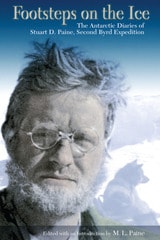
Footsteps on the Ice
The Antarctic Diaries of Stuart D. Paine, Second Byrd ExpeditionStuart D. Paine, Edited & Intro by M. L. Paine
University of Missouri Press, 2007
In 1933 Antarctica was essentially unexplored. Admiral Richard Byrd launched his Second Expedition to chart the southernmost continent, primarily relying on the muscle power of dog teams and their drivers who skied or ran beside the loaded sledges as they traveled. The life-threatening challenges of moving glaciers, invisible crevasses, and horrific storms compounded the difficulties of isolation, darkness, and the unimaginable cold that defined the men’s lives.
Stuart Paine was a dog driver, radio operator, and navigator on the fifty-six-man expedition, the bold and complex venture that is now famous for Byrd’s dramatic rescue from Bolling Advance Weather Base located 115 miles inland. Paine’s diaries represent the only published contemporary account written by a member of the Second Expedition. They reveal a behind-the-scenes look at the contentiousness surrounding the planned winter rescue of Byrd and offer unprecedented insights into the expedition’s internal dynamics.
Equally riveting is Paine’s breathtaking narrative of the fall and summer field operations as the field parties depended on their own resources in the face of interminable uncertainty and peril. Undertaking the longest and most hazardous sledging journey of the expedition, Paine guided the first American party from the edge of the Ross Sea more than seven hundred miles up the Ross Ice Shelf and the massive Thorne (Scott) Glacier to approach the South Pole. He and two other men skied more than fourteen hundred miles in eighty-eight days to explore and map part of Antarctica for the first time.
Footsteps on the Ice reveals the daily struggles, extreme personalities, and the matter-of-fact bravery of early explorers who are now fading into history. Detailing the men’s frustrations, annoyances, and questioning of their leader, Paine’s entries provide rare insight into how Byrd conducted his expeditions. Paine exposes the stresses of living under the snow in Little America during the four-month-long winter night, trapped in dim, crowded huts and black tunnels, while the men uneasily mulled over their leader’s isolation at Advance Base. The fates of Paine’s dogs, which provided some of his most difficult and rewarding experiences, are also described—his relationship with Jack, his lead dog, is an entrancing story in itself.
Featuring previously unpublished photographs and illustrations, Footsteps on the Ice documents the period in Antarctic exploration that bridged the “heroic era” and the modern age of mechanized travel. Depicting almost incomprehensible mental and physical duress and unhesitating courage, Paine’s tale is one of the most compelling stories in polar history, surpassing other accounts with its immediacy and adventure as it captures the majesty and mystery of the untouched Antarctic.

For the Love of Cod
A Father and Son's Search for Norwegian HappinessEric Dregni
University of Minnesota Press, 2021
A journey to find Norway’s supposed bliss makes for a comic travelogue that asks, seriously, what makes Norwegians so damn happy—and does it translate?
Norway is usually near or at the top of the World Happiness Report. But is it really one of the happiest countries on Earth? Eric Dregni had his doubts. Years ago he and his wife had lived in this country his great-great-grandfather once fled. When their son Eilif was born there, the Norwegian government paid for the birth, gave them $5,000, and deposited $150 into their bank account every month, but surely happiness was more than a generous health care system. What about all those grim months without sun? When Eilif turned fifteen, father and son decided to go back together and investigate. For the Love of Cod is their droll report on the state of purported Norwegian bliss.
Arriving in May, a month of festivals and eternal sun, the Dregnis are thrust into Norway at its merriest—and into the reality of the astronomical cost of living, which forces them to find lodging with friends and relatives. But this gives them an inside look at the secrets to a better life. It’s not the massive amounts of money flowing from the North Sea oil fields but how these funds are distributed that fuels the Norwegian version of democratic socialism—resulting in miniscule differences between rich and poor. Locals introduce them to the principles underlying their avowed contentment, from an active environmentalism that translates into flyskam (flight shame), which keeps Norwegians in the family cabin for the long vacations prescribed by law and charges a 150 percent tax on gas guzzlers (which, Eilif observes, means more Teslas seen in one hour than in a year in Minnesota!).
From a passion for dugnad or community volunteerism and sakte or “slow,” a rejection of the mad pace of modernity, to the commodification of Viking history and the dark side of Black Metal music that turns the idea of quaint, traditional Norway upside down, this idiosyncratic father and son tour lets readers, free of flyskam, see how, or whether, Norwegian happiness translates.

Forbidden Journey
Ella Maillart
Northwestern University Press, 2003
In 1935 Ella Maillart contemplated one of the most arduous journeys in the world: the "impossible journey" from Peking, then a part of Japanese-occupied China, through the distant province of Sinkiang (present day Tukestan), to Kashmir. Enlisting with newswriter Peter Fleming (with the caveat that his company remain tolerable), Maillart undertook a journey considered almost beyond imagination for any European and doubly so for a woman.
The trip promised hardships such as typhus and bandits, as well as the countless hazards surrounding the civil war between Chinese communists and Chiang Kai-shek's nationalists. Setting out with pockets full of Mexican money (the currency used in China at the time), Maillart encountered a way of life now lost, but one that then had gone unchanged for centuries.
Maillart describes it all with the sharp eye and unvarnished prose of a veteran reporter-the missionaries and rogues, parents binding daughters' feet with rags, the impatient Fleming lighting fires under stubborn camels. It's a hard road, not that Maillart cares. At all times she is a witty, always-enchanted guide-except when it comes to bureaucrats.
Forbidden Journey ranks among other travel narratives like Fleming's News from Tartary, (based on the same journey) and Robert Byron's The Road to Oxiana. But it is also a portrait of a fascinating woman, one of many women from the pre-WWII era who ignored convention and traveled in hidden lands. It remains a vivid account of its time and a classic of travel literature.
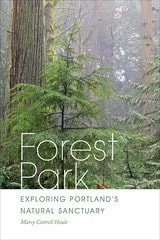
Forest Park
Exploring Portland's Natural SanctuaryMarcy Cottrell Houle
Oregon State University Press, 2023
Situated in the rugged hills west of downtown Portland, Forest Park is the nation’s premier urban natural sanctuary. It supports essential habitat for hundreds of native plants and animals, including species at risk, and is one of the largest city parks in the world. While extending critical ecosystem services to the region, it offers miles of outstanding hiking trails, all within minutes of the downtown core.
Forest Park: Exploring Portland’s Natural Sanctuary showcases this treasure in new light, offering a compendium of the most up-to-date and comprehensive information available. Twenty-one hikes covering 75 miles bring a full awareness of the park’s outstanding attributes. Hikes are grouped by theme to encourage people to explore Forest Park’s watersheds; geology; lichens and mosses; vegetation; amphibians and reptiles; pollinators; native wildlife; and wildlife corridors. Beautiful photographs and full-color maps accompany each trail description.
Forest Park is a shining example of the Pacific Northwest western hemlock community--an ecosystem unique among all temperate forests of the world. It is also an exciting model for a future Urban Biodiversity Reserve, a concept under development recognizing the park’s scientific, natural, and cultural qualities. Forest Park: Exploring Portland’s Natural Sanctuary will help all visitors discover the beauty and wonders of this extraordinary natural resource.
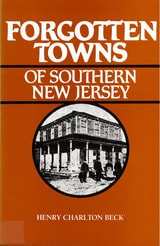
Forgotten Towns of Southern New Jersey
Beck, Henry
Rutgers University Press, 1983
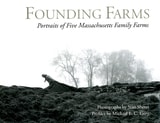
Founding Farms
Portraits of Five Massachusetts Family FarmsStanley E. Sherer
University of Massachusetts Press, 1993
With each passing year, the number of family farms in the United States diminishes. Fewer people have the persistence and ingenuity to wrest a livelihood from the land in an era of corporate ownership and mass production. Yet some family farms survive.
Through words and photographs, this book documents the long lives of five of the oldest farms in Massachusetts. Each has remained in the same family for more than two, sometimes three, centuries and each has a distinctive history. The devotion to the land and family heritage is palpable in the stories these five families tell.
Stan Sherer’s remarkable photographs depict the activities of the family members as they go about their daily labors, planting crops, feeding animals, applying new technologies to ancient tasks, and coping with the vagaries of weather and state regulations. Michael E. C. Gery’s narrative traces how the farms began, what has sustained them through the generations, and how the families who run them today feel about their past, present, and future. These stories are told largely through the words of the people themselves.
The result is a complex portrait that moves beyond traditional stereotypes to reveal the realities of family farm life in an increasingly urbanized society.
Fresh Water
Women Writing on the Great LakesAlison Swan
Michigan State University Press, 2006
Fresh Water: Women Writing on the Great Lakes is a collection of nonfiction works by women writers. These works focus on the Midwest: living with the five interconnected freshwater seas that we know as the Great Lakes. Contributing to this collection are renowned poets, essayists, and fiction writers, all of whom write about their own creative streams of consciousness, the fresh waters of the Great Lakes, and the region's many rivers: Loraine Anderson, Judith Arcana, Rachel Azima, Mary Blocksma, Gayle Boss, Sharon Dilworth, Beth Ann Fennelly, Linda Nemec Foster, Gail Griffin, Rasma Haidri, Aleta Karstad, Laura Kasischke, Janet Kauffman, Jacqueline Kolosov, Susan Laidlaw, Lisa Lenzo, Linda Loomis, Anna Mills, Stephanie Mills, Judith Minty, Anne-Marie Oomen, Rachael Perry, Susan Power, Donna Seaman, Heather Sellers, Gail Louise Siegel, Sue William Silverman,Claudia Skutar, Annick Smith, Leslie Stainton, Kathleen Stocking, Judith Strasser, Alison Swan, Elizabeth A.Trembley, Jane Urquhart, Diane Wakoski, and Leigh Allison Wilson.

Freud's Couch, Scott's Buttocks, Brontë's Grave
Simon Goldhill
University of Chicago Press, 2011
The Victorian era was the high point of literary tourism. Writers such as Charles Dickens, George Eliot, and Sir Walter Scott became celebrities, and readers trekked far and wide for a glimpse of the places where their heroes wrote and thought, walked and talked. Even Shakespeare was roped in, as Victorian entrepreneurs transformed quiet Stratford-upon-Avon into a combination shrine and tourist trap.
Stratford continues to lure the tourists today, as do many other sites of literary pilgrimage throughout Britain. And our modern age could have no better guide to such places than Simon Goldhill. In Freud's Couch, Scott’s Buttocks, Brontë's Grave, Goldhill makes a pilgrimage to Sir Walter Scott's baronial mansion, Wordsworth's cottage in the Lake District, the Bront ë parsonage, Shakespeare's birthplace, and Freud's office in Hampstead. Traveling, as much as possible, by methods available to Victorians—and gamely negotiating distractions ranging from broken bicycles to a flock of giggling Japanese schoolgirls—he tries to discern what our forebears were looking for at these sites, as well as what they have to say to the modern mind. What does it matter that Emily Brontë’s hidden passions burned in this specific room? What does it mean, especially now that his fame has faded, that Scott self-consciously built an extravagant castle suitable for Ivanhoe—and star-struck tourists visited it while he was still living there? Or that Freud's meticulous recreation of his Vienna office is now a meticulously preserved museum of itself? Or that Shakespeare’s birthplace features student actors declaiming snippets of his plays . . . in the garden of a house where he almost certainly never wrote a single line?
Goldhill brings to these inquiries his trademark wry humor and a lifetime's engagement with literature. The result is a travel book like no other, a reminder that even today, the writing life still has the power to inspire.
From Azaleas to Zydeco
My 4,600-Mile Journey through the SouthMark W. Nichols
Butler Center for Arkansas Studies, 2013
From Beacon Hill to the Crystal Palace
The 1851 Travel Diary of a Working-Class WomanLorenza Stevens Berbineau
University of Iowa Press, 2002
Because prior studies of American women’s travel writing have focused exclusively on middle-class and wealthy travelers, it has been difficult to assess the genre and its participants in a holistic fashion. One of the very few surviving working-class travel diaries, Lorenza Stevens Berbineau’s account provides readers with a unique perspective of a domestic servant in the wealthy Lowell family in Boston. Staying in luxurious hotels and caring for her young charge Eddie during her six-month grand tour, Berbineau wrote detailed and insightful entries about the people and places she saw.
Contributing to the traditions of women’s, diary, and travel literature from the perspective of a domestic servant, Berbineau's narrative reveals an arresting and intimate outlook on both her own life and the activities, places, and people she encounters. For example, she carefully records Europeans’ religious practices, working people and their behavior, and each region’s aesthetic qualities. Clearly writing in haste and with a pleasing freedom from the constraints of orthographic and stylistic convention, Berbineau offers a distinctive voice and a discerning perspective. Alert to nuances of social class, her narrative is as appealing and informative to today's readers as it no doubt was to her fellow domestics in the Lowell household.
Unobtrusively edited to retain as much as possible the individuality and texture of the author’s original manuscript, From Beacon Hill to the Crystal Palace offers readers brief framing summaries, informative endnotes, and a valuable introduction that analyzes Berbineau’s narrative in relation to gender and class issues and compares it to the published travel writing of her famous contemporary, Harriet Beecher Stowe.
From Cape Wrath to Finisterre
Sailing the Celtic FringeBjorn Larsson
Haus Publishing, 2005

From Little Houses to Little Women
Revisiting a Literary ChildhoodNancy McCabe
University of Missouri Press, 2018
McCabe, who grew up in Kansas just a few hours from the Ingalls family’s home in Little House on the Prairie, always felt a deep connection with Laura Ingalls Wilder, author of the Little House series. McCabe read Little House on the Prairie during her childhood and visited Wilder sites around the Midwest with her aunt when she was thirteen. But then she didn’t read the series again until she decided to revisit in adulthood the books that had so influenced her childhood. It was this decision that ultimately sparked her desire to visit the places that inspired many of her childhood favorites, taking her on a journey that included stops in the Missouri of Laura Ingalls Wilder, the Minnesota of Maud Hart Lovelace, the Massachusetts of Louisa May Alcott, and even the Canada of Lucy Maud Montgomery.
From Little Houses to Little Women reveals McCabe’s powerful connection to the characters and authors who inspired many generations of readers. Traveling with McCabe as she rediscovers the books that shaped her and ultimately helped her to forge her own path, readers will enjoy revisiting their own childhood favorites as well.
From Squaw Tit to Whorehouse Meadow
How Maps Name, Claim, and InflameMark Monmonier
University of Chicago Press, 2006
From Squaw Tit to Whorehouse Meadow probes this little-known chapter in American cartographic history by considering the intersecting efforts to computerize mapmaking, standardize geographic names, and respond to public concern over ethnically offensive appellations. Interweaving cartographic history with tales of politics and power, celebrated geographer Mark Monmonier locates his story within the past and present struggles of mapmakers to create an orderly process for naming that avoids confusion, preserves history, and serves different political aims. Anchored by a diverse selection of naming controversies—in the United States, Canada, Cyprus, Israel, Palestine, and Antarctica; on the ocean floor and the surface of the moon; and in other parts of our solar system—From Squaw Tit to Whorehouse Meadow richly reveals the map’s role as a mediated portrait of the cultural landscape. And unlike other books that consider place names, this is the first to reflect on both the real cartographic and political imbroglios they engender.
From Squaw Tit to Whorehouse Meadow is Mark Monmonier at his finest: a learned analysis of a timely and controversial subject rendered accessible—and even entertaining—to the general reader.
From Temporary Migrants to Permanent Attractions
Tourism, Cultural Heritage, and Afro-Antillean Identities in PanamaCarla Guerrón Montero
University of Alabama Press, 2020
A new reading of Panama’s nation-building process, interpreted through a lens of transnational tourism
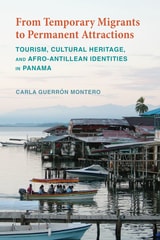
Based on long-term ethnographic and archival research, From Temporary Migrants to Permanent Attractions: Tourism, Cultural Heritage, and Afro-Antillean Identities in Panama considers the intersection of tourism, multiculturalism, and nation building. Carla Guerrón Montero analyzes the ways in which tourism becomes a vehicle for the development of specific kinds of institutional multiculturalism and nation-building projects in a country that prides itself on being multiethnic and racially democratic.
The narrative centers on Panamanian Afro-Antilleans who arrived in Panama in the nineteenth century from the Greater and Leeward Antilles as a labor force for infrastructural projects and settled in Panama City, Colón, and the Bocas del Toro Archipelago. The volume discusses how Afro-Antilleans, particularly in Bocas del Toro, have struggled since their arrival to become part of Panama’s narrative of nationhood and traces their evolution from plantation workers for the United Fruit Company to tourism workers. Guerrón Montero notes that in the current climate of official tolerance, they have seized the moment to improve their status within Panamanian society, while also continuing to identify with their Caribbean heritage in ways that conflict with their national identity.
From a Year in Greece
By Frederic Will
University of Texas Press, 1967
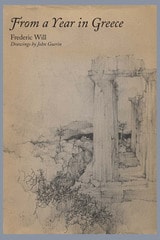
In this book, the reader is privileged to take a leisurely and thoroughly enjoyable trip through the Greece of the mid-twentieth century, led by a poet-narrator who is a comfortable and engaging guide and complemented by the artwork of John Guerin.
Frederic Will recounts his odyssey: from Austria through Yugoslavia, across the northern Greek border, from Salonika to Athens and the Aegean Sea, to the site of remnants of Old Greece in Smyrna, Pergamum, and Ephesus, and finally to the monasteries on Mount Athos.
The author not only presents vivid descriptions of the towns and people in contemporary Greece but also conveys the still-present aura of the ancient Greek deities, in both the ruins and the modern cities. Witness the following passage written at Salonika, in Northern Greece, Will’s first stop of importance:
The sense-binding, sense-shaping ocean is omnipresent there. It is visible from nearly any point in the city. You only need to go up to your second story—if you have one. There is that pure, rhythmic, bounded but boundless element, spread somewhere at the bottom of the street. The same vision glimmers or stirs at the end of nearly every east-west-running street. Many townsmen spend much of their time promenading along the harbor. They seem to be subliminally magnetized to the sea.
I spent several weeks there. During that time I would often go up to the crowning Venetian walls, and look down onto Salonika and its harbor. From there Salonika’s deep dependence on the ocean became a fact proved by eyesight. The city is built on the half-moon-shaped plain of the Axios River. Two images came to me repeatedly: that Salonika is an amphitheater facing the ocean; or that she is a lover, reaching to embrace the ocean. Here are the hot, white (or cream-colored) buildings of the city; there is the element they thirst for.
Will gives a great deal of fascinating information but gives it gracefully and without excess. Above all, the narrative is suffused with the atmosphere, the emotions, and the beauty of Greece. The author has said he intends for this work to dramatize, not to instruct. Actually, it does both.

From that Place and Time
A Memoir, 1938-1947Dawidowicz, Lucy
Rutgers University Press, 2008
Nancy Sinkoff's new introduction explores the historical forces, particularly the dynamic world of secular Yiddish culture, which shaped Dawidowicz's decision to journey to Poland and her reassessment of those forces in the last years of her life.

From the Lookout
Memories of Peninsula State Park’s Summer Camp for GirlsKathleen Harris
Wisconsin Historical Society Press, 2020
With big ideas, little money, and no experience, Alice Orr Clark and Frances Louise “Kidy” Mabley founded Meenahga as a place for young women to refine their manners, enjoy outdoor leisure activities, and learn woodcraft. From the Lookout is an account of these experiences, a history of Camp Meenahga informed by what campers, counselors, and others left behind, including letters home, notes from Clark and Mabley, and many pages from the camp yearbook and newsletter Pack and Paddle.
Brimming with nostalgia, From the Lookout brings to life the sights, sounds, and smells of an idyllic summer retreat, one that long after it closed lived on as a place of respite in the memories of those who knew and loved it best.
Fêting the Queen
Civic Entertainments and the Elizabethan ProgressJohn M Adrian
University of Massachusetts Press, 2021
While previous scholars have studied Elizabeth I and her visits to the homes of influential courtiers, Fêting the Queen places a new emphasis on the civic communities that hosted the monarch and their efforts to secure much needed support. Case studies of the cities of Oxford, Canterbury, Sandwich, Bristol, Worcester, and Norwich focus on the concepts of hospitality and space—including the intimate details of the built environment.