Results by title
53 books match the query 'Trial' and 3 start with f
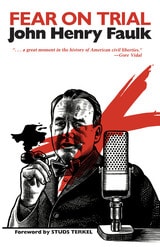
Fear on Trial
By John Henry Faulk
University of Texas Press, 1983
John Henry Faulk was a popular radio and television personality during the McCarthy era. He was host of his own radio program on WCBS in New York when he publicly challenged AWARE, Inc., an ultrapatriotic group engaged in the systematic blacklisting of entertainment personalities. In response, an AWARE bulletin accused Faulk himself of subversive associations. Angry and frightened by this accusation, Faulk brought suit against AWARE, charging conspiracy to libel him and to destroy his career. Thus began one of the great civil rights cases of the twentieth century.
John Henry Faulk recounts the story of this harrowing time in Fear on Trial, the dramatic account of his six years on the "blacklist"—an exile that began with the AWARE bulletin and ended with his vindication by a jury award of $3,500,000—the largest libel award in U.S. history at that time. The heart of the book is the trial of Faulk's libel action against AWARE, in which attorney Louis Nizer relentlessly exposed the blacklist for what it was—a cynical disdain of elementary decency couched in the rhetoric of patriotism.
Many of the people involved in the Faulk case were and are famous: attorneys Nizer and Roy Cohn; Edward R. Murrow and Charles Collingwood; Myrna Loy, Kim Hunter, Tony Randall, and Lee Grant; J. Frank Dobie; Ed Sullivan, David Susskind, and Mark Goodson. But the hero is Faulk himself, a man who—in the words of Studs Terkel—"faced the bastards and beat them down."
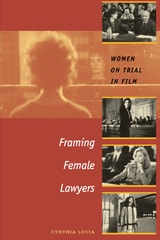
Framing Female Lawyers
Women on Trial in FilmBy Cynthia Lucia
University of Texas Press, 2005
As real women increasingly entered the professions from the 1970s onward, their cinematic counterparts followed suit. Women lawyers, in particular, were the protagonists of many Hollywood films of the Reagan-Bush era, serving as a kind of shorthand reference any time a script needed a powerful career woman. Yet a close viewing of these films reveals contradictions and anxieties that belie the films' apparent acceptance of women's professional roles. In film after film, the woman lawyer herself effectively ends up "on trial" for violating norms of femininity and patriarchal authority.
In this book, Cynthia Lucia offers a sustained analysis of women lawyer films as a genre and as a site where other genres including film noir, maternal melodrama, thrillers, action romance, and romantic comedy intersect. She traces Hollywood representations of female lawyers through close readings of films from the 1949 Adam's Rib through films of the 1980s and 1990s, including Jagged Edge, The Accused, and The Client, among others. She also examines several key male lawyer films and two independent films, Lizzie Borden's Love Crimes and Susan Streitfeld's Female Perversions. Lucia convincingly demonstrates that making movies about women lawyers and the law provides unusually fertile ground for exploring patriarchy in crisis. This, she argues, is the cultural stimulus that prompts filmmakers to create stories about powerful women that simultaneously question and undermine women's right to wield authority.
Free Speech On Trial
Communication Perspectives on Landmark Supreme Court DecisionsEdited by Richard A. Parker
University of Alabama Press, 2008
Describes landmark free speech decisions of the Supreme Court while highlighting the issues of language, rhetoric, and communication that underlie them.
At the intersection of communication and First Amendment law reside two significant questions: What is the speech we ought to protect, and why should we protect it? The 20 scholars of legal communication whose essays are gathered in this volume propose various answers to these questions, but their essays share an abiding concern with a constitutional guarantee of free speech and its symbiotic relationship with communication practices.
Free Speech on Trial fills a gap between textbooks that summarize First Amendment law and books that analyze case law and legal theory. These essays explore questions regarding the significance of unregulated speech in a marketplace of goods and ideas, the limits of offensive language and obscenity as expression, the power of symbols, and consequences of restraint prior to publication versus the subsequent punishment of sources. As one example, Craig Smith cites Buckley vs. Valeo to examine how the context of corruption in the 1974 elections shaped the Court's view of the constitutionality of campaign contributions and expenditures.
Collectively, the essays in this volume suggest that the life of free speech law is communication. The contributors reveal how the Court's free speech opinions constitute discursive performances that fashion, deconstruct, and reformulate the contours and parameters of the Constitution’s guarantee of free expression and that, ultimately, reconstitute our government, our culture, and our society.