Results by title
141 books match the query 'Twentieth Century' and 7 start with f

Fashion, Desire and Anxiety
Image and Morality in the Twentieth CenturyArnold, Rebecca
Rutgers University Press, 2001
These dreams and freedoms, Rebecca Arnold proposes, are contradictory. Fashion and its surrounding imagery elicit fear and anxiety in their consumers as well as pleasure. Fashion has come to incorporate the underside of modern life, with violence and decay becoming a dominant theme in clothing design and photography.
Arnold draws on diverse written sources to explore the complex nature of modern fashion. She discusses a range of key themes: how fashion uses and abuses the power of wealth; the alienating promotion of "good" taste; the power plays of sex and display; and how identities can be blurred to disguise and confuse. In order to unravel the contradictory emotions of desire and anxiety they provoke, she never loses sight of the historical and cultural contexts in which fashion designers and photographers perform.
Generously illustrated, Fashion, Desire and Anxiety focuses on the last thirty years, from photographic works of the 1970s to the beginning of the twenty-first century.

Fashion, Desire and Anxiety
Image and Morality in the Twentieth CenturyArnold, Rebecca
Rutgers University Press, 2001
These dreams and freedoms, Rebecca Arnold proposes, are contradictory. Fashion and its surrounding imagery elicit fear and anxiety in their consumers as well as pleasure. Fashion has come to incorporate the underside of modern life, with violence and decay becoming a dominant theme in clothing design and photography.
Arnold draws on diverse written sources to explore the complex nature of modern fashion. She discusses a range of key themes: how fashion uses and abuses the power of wealth; the alienating promotion of "good" taste; the power plays of sex and display; and how identities can be blurred to disguise and confuse. In order to unravel the contradictory emotions of desire and anxiety they provoke, she never loses sight of the historical and cultural contexts in which fashion designers and photographers perform.
Generously illustrated, Fashion, Desire and Anxiety focuses on the last thirty years, from photographic works of the 1970s to the beginning of the twenty-first century.
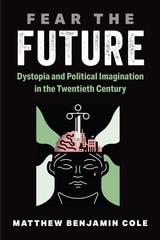
Fear the Future
Dystopia and Political Imagination in the Twentieth CenturyMatthew Benjamin Cole
University of Michigan Press, 2025
Offering a novel reading of major themes and thinkers, Fear the Future explores visions of the future from literary figures such as Yevgeny Zamyatin, Aldous Huxley, and George Orwell; political theorists such as Max Weber, Hannah Arendt, Herbert Marcuse, Jürgen Habermas, and Michel Foucault; and mid-century social scientists such as Erich Fromm, Max Horkheimer, Theodor Adorno, David Reisman, C. Wright Mills, and Jacques Ellul. It offers a comparative analysis of distinct intellectual and literary traditions, including modern utopianism and anti-utopianism, midcentury social science, Frankfurt School critical theory, and continental political philosophy. With detailed case studies of key thinkers from the Enlightenment to the late twentieth century, the book synthesizes secondary literature and research from a range of disciplinary areas, including in political theory, intellectual history, literary studies, and utopian studies. This wide-ranging reconstruction shows that while dystopian thinking has illustrated the dangers of domination and dehumanization, it has also illuminated new possibilities for freedom.
Feminist Biblical Studies in the Twentieth Century
Scholarship and MovementElisabeth Schüssler Fiorenza
SBL Press, 2014
Chart the development of feminist approaches and theories of interpretation during the period when women first joined the ranks of biblical scholars
This collection of essays on feminist biblical studies in the twentieth century seeks to explore four areas of inquiry demanding further investigation. In the first section, articles chart the beginnings and developments of feminist biblical studies as a conversation among feminists around the world. The second section introduces, reviews, and discusses the hermeneutic religious spaces created by feminist biblical studies. The third segment discusses academic methods of reading and interpretation that dismantle androcentric language and kyriarchal authority. The fourth section returns to the first with work that transgresses academic boundaries in order to exemplify the transforming, inspiring, and institutionalizing feminist work that has been and is being done to change religious mindsets of domination and to enable wo/men to engage in critical readings of the Bible.
Features:
- Essays examine the rupture or break in the malestream reception history of the Bible
- Exploration of the term feminism in different social-cultural and theoretical-religious locations
- Authors from around the world present research and future directions for research challenging the next generation of feminist interpreters

Finland in the Twentieth Century
A History and an InterpretationD.G. Kirby
University of Minnesota Press, 1980
Finland in the Twentieth Century was first published in 1980. Minnesota Archive Editions uses digital technology to make long-unavailable books once again accessible, and are published unaltered from the original University of Minnesota Press editions.
Finland's search for a national identity is the underlying theme of this book. A small nation, geographically isolated and linguistically distinct from its neighbors, Finland has long maintained close ties with Sweden and also has had to come to terms with a powerful eastern neighbor, the Soviet Union. D.G. Kirby opens his history with a description of Finland at the turn of the century, when it was a Grand Duchy in the Russian Empire, and traces its emergence as an independent state with the collapse of the Empire in 1917. He examines the new republic's struggle for survival—and identity—after the civil war of 1918, which left a legacy of political instability through the interwar years.
Finland's complex political history is closely tied to its external relations. Kirby describes the evolution of Finnish foreign policy from the period when Finland and the Soviet Union were distrustful and then warring neighbors down to the present policy of friendship and cooperation which grew out of the treaty of 1948. The book closes with an account of Finland's international and domestic status in the Kekkonen era.
Throughout, Kirby provides a substantial socio-economic background to round out his political and diplomatic themes. He also brings to the English-language readers the results of modern Finish historical research. Since historians have played a key role in Finland as interpreters of the nation's recent past, his analysis of their debates helps clarify the ways in which Finland has developed as an independent state in the twentieth century.
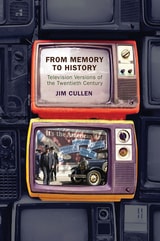
From Memory to History
Television Versions of the Twentieth CenturyJim Cullen
Rutgers University Press, 2021
From Memory to History takes readers on a journey through over fifty years of historical dramas and sitcoms that were set in earlier decades of the twentieth century. Along the way, it explores how comedies like M*A*S*H and Hogan’s Heroes offered veiled commentary on the Vietnam War, how dramas ranging like Mad Men echoed current economic concerns, and how The Americans and Halt and Catch Fire used the Cold War and the rise of the internet to reflect upon the present day. Cultural critic Jim Cullen is lively, informative, and incisive, and this book will help readers look at past times, present times, and prime time in a new light.
Future
A Recent HistoryBy Lawrence R. Samuel
University of Texas Press, 2009
The future is not a fixed idea but a highly variable one that reflects the values of those who are imagining it. By studying the ways that visionaries imagined the future—particularly that of America—in the past century, much can be learned about the cultural dynamics of the time.
In this social history, Lawrence R. Samuel examines the future visions of intellectuals, artists, scientists, businesspeople, and others to tell a chronological story about the history of the future in the past century. He defines six separate eras of future narratives from 1920 to the present day, and argues that the milestones reached during these years—especially related to air and space travel, atomic and nuclear weapons, the women's and civil rights movements, and the advent of biological and genetic engineering—sparked the possibilities of tomorrow in the public's imagination, and helped make the twentieth century the first century to be significantly more about the future than the past.
The idea of the future grew both in volume and importance as it rode the technological wave into the new millennium, and the author tracks the process by which most people, to some degree, have now become futurists as the need to anticipate tomorrow accelerates.