65 books match the query 'Virginia' and 4 start with f
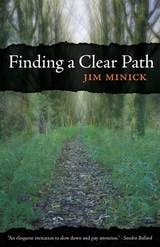
cover of Finding a Clear Path

Finding a Clear Path

JIM MINICK

West Virginia University Press, 2006

Finding a Clear Path intertwines literature, agriculture, and ecology as author Jim Minick takes the reader on many journeys, allowing you to float on a pond, fly with a titmouse, gather ginseng, and grow the lowly potato. The reader visits monarch butterflies and morel mushrooms, encountering beavers, black snakes, and bloodroot along the way. Using his background as a blueberry farmer, gardener and naturalist, Minick explores the Appalachian region and also introduces information that can be appreciated from a scientific point of view, explaining, for example, the ears of an owl, or the problems with the typical Christmas tree. Reading this collection of essays invites you to search for ways to better understand and appreciate this marvelous world, opening paths for journeys of your own.
[more]
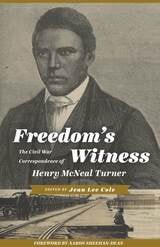
cover of Freedom's Witness: The Civil War Correspondence of Henry McNeal Turner

Freedom's Witness

The Civil War Correspondence of Henry McNeal Turner

Jean Lee Cole

West Virginia University Press, 2013
In a series of columns published in the African American newspaper The Christian Recorder, the young, charismatic preacher Henry McNeal Turner described his experience of the Civil War, first from the perspective of a civilian observer in Washington, D.C., and later, as one of the Union army’s first black chaplains.
 
In the halls of Congress, Turner witnessed the debates surrounding emancipation and black enlistment. As army chaplain, Turner dodged “grape” and cannon, comforted the sick and wounded, and settled disputes between white southerners and their former slaves. He was dismayed by the destruction left by Sherman’s army in the Carolinas, but buoyed by the bravery displayed by black soldiers in battle. After the war ended, he helped establish churches and schools for the freedmen, who previously had been prohibited from attending either.
 
Throughout his columns, Turner evinces his firm belief in the absolute equality of blacks with whites, and insists on civil rights for all black citizens. In vivid, detailed prose, laced with a combination of trenchant commentary and self-deprecating humor, Turner established himself as more than an observer: he became a distinctive and authoritative voice for the black community, and a leader in the African Methodist Episcopal church. After Reconstruction failed, Turner became disillusioned with the American dream and became a vocal advocate of black emigration to Africa, prefiguring black nationalists such as Marcus Garvey and Malcolm X. Here, however, we see Turner’s youthful exuberance and optimism, and his open-eyed wonder at the momentous changes taking place in American society.
 
Well-known in his day, Turner has been relegated to the fringes of African American history, in large part because neither his views nor the forms in which he expressed them were recognized by either the black or white elite. With an introduction by Jean Lee Cole and a foreword by Aaron Sheehan-Dean, Freedom’s Witness: The Civil War Correspondence of Henry McNeal Turner restores this important figure to the historical and literary record.

[more]
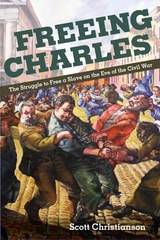
cover of Freeing Charles: The Struggle to Free a Slave on the Eve of the Civil War

Freeing Charles

The Struggle to Free a Slave on the Eve of the Civil War

Scott Christianson

University of Illinois Press, 2010
Freeing Charles recounts the life and epic rescue of captured fugitive slave Charles Nalle of Culpeper, Virginia, who was forcibly liberated by Harriet Tubman and others in Troy, New York, on April 27, 1860. Scott Christianson follows Nalle from his enslavement by the Hansborough family in Virginia through his escape by the Underground Railroad and his experiences in the North on the eve of the Civil War. This engaging narrative represents the first in-depth historical study of this crucial incident, one of the fiercest anti-slavery riots after Harpers Ferry. Christianson also presents a richly detailed look at slavery culture in antebellum Virginia and probes the deepest political and psychological aspects of this epic tale. His account underscores fundamental questions about racial inequality, the rule of law, civil disobedience, and violent resistance to slavery in the antebellum North and South.
[more]
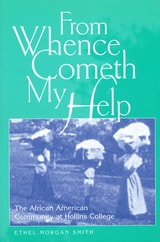
cover of From Whence Cometh My Help: The African American Community at Hollins College

From Whence Cometh My Help

The African American Community at Hollins College

Ethel Morgan Smith

University of Missouri Press, 2000

In 1842 Charles Lewis Cocke arrived in Roanoke, Virginia, with sixteen slaves; there, he founded Hollins College, an elite woman's school. Many of the early students also brought their slaves to the college with them. Upon Emancipation some of the African Americans of the community "mostly women" stayed on as servants, forming what is now called the Hollins Community. Although the servants played an integral part in the college's success, students were strongly discouraged from acknowledging them as people. Rules forbidding any "familiarity" with the servants perpetuated a prejudicial attitude toward the African American community that would persist well into the 1940s.

Determined to give voice to the African American community that served as the silent workforce for Hollins College, Ethel Morgan Smith succeeded in finding individuals to step forward and tell their stories. From Whence Cometh My Help examines the dynamics of an institution built on the foundations of slavery and so steeped in tradition that it managed to perpetuate servitude for generations. Interviewing senior community members, Smith gives recognition to the invisible population that provided and continues to provide the labor support for Hollins College for more than 150 years.

Although African American students have been admitted to the college for roughly thirty years, to date only one person from the Hollins Community has graduated from the college. From Whence Cometh My Help explores the subtle and complex relationship between the affluent white world of Hollins College and the proud African American community that has served it since its inception. Interweaving personal observations, historical documents, and poetry throughout a revealing oral history, Smith shares her fascinating discoveries and the challenges involved in telling a story silenced for so long.

[more]