Results by title
106 books match the query 'Western' and 3 start with f
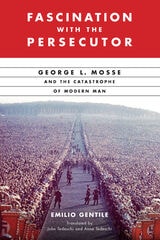
Fascination with the Persecutor
George L. Mosse and the Catastrophe of Modern ManEmilio Gentile and and Stanley G. Payne, translated by John and Anne Tedeschi
University of Wisconsin Press, 2021
In 1933, George L. Mosse fled Berlin and settled in the United States, where he went on to become a renowned historian at the University of Wisconsin–Madison. Through rigorous and innovative scholarship, Mosse uncovered the forces that spurred antisemitism, racism, nationalism, and populism. His transformative work was propelled by a desire to know his own persecutors and has been vital to generations of scholars seeking to understand the cultural and intellectual origins and mechanisms of Nazism.
This translation makes Emilio Gentile’s groundbreaking study of Mosse’s life and work available to English language readers. A leading authority on fascism, totalitarianism, and Mosse’s legacy, Gentile draws on a wealth of published and unpublished material, including letters, interviews, lecture plans, and marginalia from Mosse’s personal library. Gentile details how the senior scholar eschewed polemics and employed rigorous academic standards to better understand fascism and the “catastrophe of the modern man”—how masculinity transformed into a destructive ideology. As long as wars are waged over political beliefs in popular culture, Mosse’s theories of totalitarianism will remain as relevant as ever.
This translation makes Emilio Gentile’s groundbreaking study of Mosse’s life and work available to English language readers. A leading authority on fascism, totalitarianism, and Mosse’s legacy, Gentile draws on a wealth of published and unpublished material, including letters, interviews, lecture plans, and marginalia from Mosse’s personal library. Gentile details how the senior scholar eschewed polemics and employed rigorous academic standards to better understand fascism and the “catastrophe of the modern man”—how masculinity transformed into a destructive ideology. As long as wars are waged over political beliefs in popular culture, Mosse’s theories of totalitarianism will remain as relevant as ever.
[more]
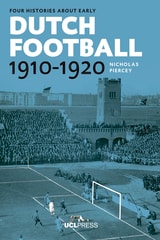
Four Histories about Early Dutch Football, 1910-1920
Constructing DiscoursesNicholas Piercey
University College London, 2016
What is the purpose of history today, and how can sporting research help us understand the world around us? In this stimulating book, Nicholas Piercey constructs four new histories of early Dutch football, exploring urban change, club members, the media, and the diaries of Cornelis Johannes Karel van Aalst, a stadium director, to propose practical examples of how history can become an important democratic tool for the 21st century. Using early Dutch football as a field for experimental thinking about the past, the four histories offer new insights into the lives, interests and passions of those connected to the sport in the 1910s and the cities they lived in. How did the First World War impact on Dutch football? Were new stadia a form of social control? Is the spread of the beautiful game really a good thing? And why was one of the sport’s most prominent figures more concerned with potatoes? These stories of early Dutch football suggest how vital sport and history can be in shaping our lives, perceptions and actions, and why we need to challenge the influence they have today. This book also includes a downloadable appendix. Download it here(.xlsx).
[more]
From Revolt to Riches
Culture and History of the Low Countries, 1500–1700Edited by Theo Hermans, Reinier Salverda, and Ulrich Tiedau
University College London, 2017
This collection investigates the culture and history of the Low Countries in the 16th and 17th centuries from both international and interdisciplinary perspectives. The period was one of extraordinary upheaval and change, as the combined impact of Renaissance, Reformation and Revolt resulted in the radically new conditions – political, economic and intellectual – of the Dutch Republic in its Golden Age. While many aspects of this rich and nuanced era have been studied before, the emphasis of this volume is on a series of interactions and interrelations: between communities and their varying but often cognate languages; between different but overlapping spheres of human activity; between culture and history. The chapters are written by historians, linguists, bibliographers, art historians and literary scholars based in the Netherlands, Belgium, Great Britain and the United States. In continually crossing disciplinary, linguistic and national boundaries, while keeping the culture and history of the Low Countries in the Renaissance and Golden Age in focus, this book opens up new and often surprising perspectives on a region all the more intriguing for the very complexity of its entanglements.
[more]