Results by title
272 books match the query 'Work' and 9 start with f

Families and Work
Naomi Gerstel
Temple University Press, 1987

Family and Work in Everyday Ethnography
Tamara M. Brown
Temple University Press, 2013

Fassbinder
The Life And Work Of A Provocative GeniusChristian Braad Thomsen
University of Minnesota Press, 2004
The revealing biography of this highly productive and radical film director
Rainer Werner Fassbinder was the most innovative practitioner of New German Cinema. He worked at breakneck speed and in fourteen years made forty-four films, including Ali: Fear Eats the Soul (1973) and The Marriage of Maria Braun (1978). Fassbinder ruthlessly attacked both German bourgeois society and the larger limitations of humanity, and his films detail the desperate yearning for love and freedom and the many ways in which society defeats that desire.
In Fassbinder, Christian Thomsen, a close friend of the director, illuminates Fassbinder’s body of work while revealing his insider views of a man who, despite a furious temper, manic working habits, and rampant drug addiction, supported an extended family—including his mother, a string of male lovers, lovelorn women, and even a pair of frustrated wives—with his intoxicating and prolific imagination. This book, like Fassbinder’s often-used image of the mirror, brilliantly reflects the sexual, political, and overwhelmingly human contradictions inherent in the life of this intensely creative man and the remarkable films he directed.
Fighting For Time
Shifting Boundaries of Work and Social LifeCynthia Fuchs Epstein
Russell Sage Foundation, 2004

Finding Jobs
Work and Welfare ReformDavid Card
Russell Sage Foundation, 2000

Food Storage in Michigan's Late Woodland
The Work of Indigenous WomenKathryn M. Frederick
University of Alabama Press, 2026
Incorporates experimental archaeology to understand the food-caching strategies led by Indigenous women in Late Woodland Michigan.
This experimental archaeology book centers on the decision of Indigenous women in Michigan’s Late Woodland to store food in cache pits for later use, to ensure a stable food supply. These food storage techniques were efforts to increase communal chances of survival in direct responses to sociopolitical changes. Kathryn M. Frederick highlights the importance of food storage in these communities and the decision-making and behaviors behind it.
To discover why food storage became a popular practice at that period, Frederick considered the efficacy of subterranean food storage and constructed experiments to understand the timing and use of cache pits and to test their reliability and efficiency. She also compiled ethnographic data on location, environmental conditions, movement strategies, and types of foodstuffs stored for dozens of hunter-gatherer groups. Two distinct patterns of food storage emerged: “reliant” and “redundant.” Frederick argues that the Indigenous women utilized a system of reliant storage during times of abundance but could switch to a redundant system as the socioeconomic climate shifted. This book will interest a wide swath of archaeologists and others interested in Indigenous foodways and women’s key roles.
Food and Work in the Americas
Susan Levine and Steve Striffler, special issue editors
Duke University Press, 0
Susan Levine is Professor of History and Director of the Institute for the Humanities at the University of Illinois at Chicago. She is the author of School Lunch Politics: The Surprising History of America’s Favorite Welfare Program. Steve Striffler is the Doris Zemurray Stone Chair in Latin American Studies and Professor of Anthropology at the University of New Orleans. He is the author of In the Shadows of State and Capital: The United Fruit Company, Popular Struggle, and Agrarian Restructuring in Ecuador, 1900–1995, also published by Duke University Press.
Contributors: William Bauer, Sarah Besky, Sandy Brown, Rachel Herrmann, Felicia Kornbluh, Susan Levine, Sarah Lyon, Vanessa May, April Merleaux, Liesl Orenic, Sara Ries, Steve Striffler
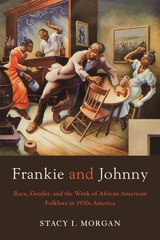
Frankie and Johnny
Race, Gender, and the Work of African American Folklore in 1930s AmericaBy Stacy I. Morgan
University of Texas Press, 2017
Winner, Wayland D. Hand Prize, American Folklore Society, 2018
Originating in a homicide in St. Louis in 1899, the ballad of “Frankie and Johnny” became one of America’s most familiar songs during the first half of the twentieth century. It crossed lines of race, class, and artistic genres, taking form in such varied expressions as a folk song performed by Huddie Ledbetter (Lead Belly); a ballet choreographed by Ruth Page and Bentley Stone under New Deal sponsorship; a mural in the Missouri State Capitol by Thomas Hart Benton; a play by John Huston; a motion picture, She Done Him Wrong, that made Mae West a national celebrity; and an anti-lynching poem by Sterling Brown.
In this innovative book, Stacy I. Morgan explores why African American folklore—and “Frankie and Johnny” in particular—became prized source material for artists of diverse political and aesthetic sensibilities. He looks at a confluence of factors, including the Harlem Renaissance, the Great Depression, and resurgent nationalism, that led those creators to engage with this ubiquitous song. Morgan’s research uncovers the wide range of work that artists called upon African American folklore to perform in the 1930s, as it alternately reinforced and challenged norms of race, gender, and appropriate subjects for artistic expression. He demonstrates that the folklorists and creative artists of that generation forged a new national culture in which African American folk songs featured centrally not only in folk and popular culture but in the fine arts as well.

From Welfare to Work
Judith M. Gueron
Russell Sage Foundation, 1991