Results by title
1713 books match the query '21st century' and 76 start with f
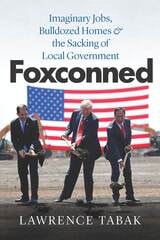
Foxconned
Imaginary Jobs, Bulldozed Homes, and the Sacking of Local GovernmentLawrence Tabak
University of Chicago Press, 2021
When Wisconsin governor Scott Walker stood shoulder to shoulder with President Trump and Speaker of the House Paul Ryan at the White House in July 2017, they painted a glorious picture of his state’s future. Foxconn, the enormous China-based electronics firm, was promising to bring TV manufacturing back to the United States with a $10 billion investment and 13,000 well-paying jobs. They actually were making America great again, they crowed.
Two years later, the project was in shambles. Ten thousand construction workers were supposed to have been building what Trump had promised would be “the eighth wonder of the world.” Instead, land had been seized, homes had been destroyed, and hundreds of millions of municipal dollars had been committed for just a few hundred jobs—nowhere near enough for Foxconn to earn the incentives Walker had shoveled at them. In Foxconned, journalist Lawrence Tabak details the full story of this utter collapse, which was disturbingly inevitable.
As Tabak shows, everything about Foxconn was a disaster. But worse, he reveals how the economic incentive infrastructure across the country is broken, leading to waste, cronyism, and the steady transfer of tax revenue to corporations. Tabak details every kind of financial chicanery, from eminent domain abuse to good old-fashioned looting—all to benefit a coterie of consultants, politicians, and contractors. With compassion and care, he also reports the distressing stories of the many individuals whose lives were upended by Foxconn.
Fragile Dreams
Tales of Liberalism and Power in Central EuropeJohn A. Gould
University of Michigan Press, 2021
In Fragile Dreams, John A. Gould examines Central European communism, why it failed, and what has come since. Moving loosely chronologically from 1989 to the present, each chapter focuses on topics of importance to the fields of comparative politics, sociology, and feminist and gender studies. He draws heavily from his own research and experience as well as case studies of the former Czechoslovakia, Western Balkans, and Hungary—but much of the analysis has general applicability to the broader postcommunist region.
Broad in its coverage, this academically rigorous book is ideal for students, travelers, and general readers. Gould writes in the first person and seamlessly blends theory with stories both from the existing literature and from 30 years of regional personal experience with family and friends. Throughout, Gould introduces key concepts, players, and events with precise definitions. Wherever possible, he emphasizes marginalized narratives, centering theory and stories that are often overlooked in standard comparative political science literature.
Fragile but Resilient?
Turkish Electoral Dynamics, 2002-2015Ali Çarkoglu and Ersin Kalaycioglu
University of Michigan Press, 2021
Ersin Kalaycıoğlu and Ali Çarkoğlu, who conducted surveys comparable to the American National Election Survey for the 2002 and 2015 national elections in Turkey, chart the dynamics that brought the pro-Islamist conservative Justice and Development Party (Adalet ve Kalkınma Partisi-AKP) to power in 2002, and that continue to influence electoral politics. The authors trace the uneven course of democratization in Turkey, as revealed through elections, since the first competitive, multi-party elections in 1950. Since the market liberalization reforms of 1980, Turkey has been rapidly evolving from a closed, agricultural, comparatively underdeveloped polity into an open and industrial state primarily integrated with the global economy. Kalaycıoğlu and Çarkoğlu analyze different dimensions of five elections surveys in 2002-2015 period to show how the consequent socio-economic changes and traditional socio-cultural divisions have affected elections, political parties, and individual voters. The authors conclude that the historical-cultural divide between rural, peripheral, conservative groups and more urban, centrist, and modernized groups not only persists but shapes elections more than ever. This book not only provides an original comprehensive and critical evaluation of the Turkish electoral and party politics, it also offers a case study of voting behavior in a state undergoing both democratization and market liberalization in a rapidly changing and volatile international environment.
Framing the Sixties
The Use and Abuse of a Decade from Ronald Reagan to George W. BushBernard von Bothmer
University of Massachusetts Press, 2010
Over the past quarter century, American liberals and conservatives alike have invoked memories of the 1960s to define their respective ideological positions and to influence voters. Liberals recall the positive associations of what might be called the “good Sixties”—the “Camelot” years of JFK, the early civil rights movement, and the dreams of the Great Society—while conservatives conjure images of the “bad Sixties”—a time of urban riots, antiwar protests, and countercultural revolt.
In Framing the Sixties, Bernard von Bothmer examines this battle over the collective memory of the decade primarily through the lens of presidential politics. He shows how four presidents—Ronald Reagan, George H. W. Bush, Bill Clinton, and George W. Bush—each sought to advance his political agenda by consciously shaping public understanding of the meaning of “the Sixties.” He compares not only the way that each depicted the decade as a whole, but also their commentary on a set of specific topics: the presidency of John F. Kennedy, Lyndon Johnson's “Great Society” initiatives, the civil rights movement, and the Vietnam War.
In addition to analyzing the pronouncements of the presidents themselves, von Bothmer draws on interviews he conducted with more than one hundred and twenty cabinet members, speechwriters, advisers, strategists, historians, journalists, and activists from across the political spectrum—from Julian Bond, Daniel Ellsberg, Todd Gitlin, and Arthur Schlesinger to James Baker, Robert Bork, Phyllis Schlafly, and Paul Weyrich.
It is no secret that the upheavals of the 1960s opened fissures within American society that have continued to affect the nation's politics and to intensify its so-called culture wars. What this book documents is the extent to which political leaders, left and right, consciously exploited those divisions by “framing” the memory of that turbulent decade to serve their own partisan interests.
France and Algeria
A History of Decolonization and TransformationPhillip Naylor
University of Texas Press, 2024
An examination of the complicated history between France and Algeria since the latter’s independence.
While most related studies concentrate on the colonial era and Algeria's War of Independence, France and Algeria details the nations' postcolonial relationship. Phillip Naylor provides a philosophical approach, contending that France reformulated, rather than repudiated, “essential” strategic values during decolonization. It thus continued to pursue grandeur and independence, especially with regard to the Third World and Algeria, an essentialism that expedited France’s postcolonial transformation. But as a new nation, Algeria needed to pursue the “existential” project of self-definition. It became involved in state-building while also promulgating socialism, and it recognized how French oil concessions in the Sahara impeded its independence, leading to the industry's postcolonial decolonization. Finally, the postcolonial relationship has featured a human dimension involving immigrants, pieds-noirs (colonial settlers), and harkis (Algerian soldiers loyal to France), all of them central to bilateral relations.
In this revised and updated edition of his seminal work, first published over twenty years ago, Naylor expands his coverage of the decolonization era, drawing on new information while continuing to study the ever-evolving relationship between the two countries. These new additions expose the continually shifting relations of power, perception, and identity between the two states.

Franciscan Notes
Alan Williamson
Tupelo Press, 2019

Franklin Furnace and the Spirit of the Avant-Garde
A History of the FutureToni Sant
Intellect Books, 2011
Franklin Furnace is a renowned New York–based artsorganization whose mission is to preserve, document, and present works of avant-garde art by emerging artists—particularly those whose works may be vulnerable due to institutional neglect or politically unpopular content. Over more than thirty years, Franklin Furnace has exhibited works by hundreds of avant-garde artists, some of whom—Laurie Anderson, Vito Acconci, Karen Finley, Guillermo Gómez-Peña, Jenny Holzer, and the Blue Man Group, to name a few—are now established names in contemporary art.
Here, for the first time, is a comprehensive history of this remarkable organization from its conception to the present. Organized around the major art genres that emerged in the second half of the twentieth century, this book intersperses first-person narratives with readings by artists and scholars on issues critical to the organization's success as well as Franklin Furnace's many contributions to avant-garde art.
Fraternal Critique
The Politics of Muslim Community in FranceKirsten Wesselhoeft
University of Chicago Press, 2025
The conversation about Islam in France is framed by the presumption that Muslim communities are a threat to secular solidarity or fraternité. In the face of state repression, French Muslims have not closed ranks around a narrow range of voices; instead, Kirsten Wesselhoeft finds that young Muslim activists have continued to purposefully spark debate about the values that anchor community life. Wesselhoeft argues that such disagreements, far from dividing communities, actually constitute a form of belonging. Some activists call this ethic “fraternal critique,” and Wesselhoeft finds in it profound insights about the place for critique in civic life. The French state has reacted to Muslim solidarity with repression, but Wesselhoeft argues that unity need not come at the expense of dissent. Instead, fraternal critique can teach us how to build communities that are worth fighting over and fighting for.

Fratricide in the Holy Land
A Psychoanalytic View of the Arab-Israeli ConflictAvner Falk
University of Wisconsin Press, 2004
Falk suggests that a way to understand and explain such irrational matters is to examine the unconscious aspects of the conflict. He examines large-group psychology, nationalism, group narcissism, psychogeography, the Arab and Israeli minds, and suicidal terrorism, and he offers psychobiographical studies of Ariel Sharon and Yasser Arafat, two key players in this tragic conflict today.

Frederik Pohl
Michael Page
University of Illinois Press, 2015
Free Speech and Censorship Around the Globe
Peter Molnar
Central European University Press, 2015
Freedom and Despair
Notes from the South Hebron HillsDavid Shulman
University of Chicago Press, 2018
David Shulman knows intimately what it takes to live your beliefs, to return, day after day, to the struggle, despite knowing you are often more likely to lose than win. Interweaving powerful stories and deep meditations, Freedom and Despair offers vivid firsthand reports from the occupied West Bank in Palestine as seen through the eyes of an experienced Israeli peace activist who has seen the Israeli occupation close up as it impacts on the lives of all Palestinian civilians.
Alongside a handful of beautifully written and often shocking tales from the field, Shulman meditates deeply on how to understand the evils around him, what it means to persevere as an activist decade after decade, and what it truly means to be free. The violent realities of the occupation are on full display. We get to know and understand the Palestinian shepherds and farmers and Israeli volunteers who face this situation head-on with nonviolent resistance. Shulman does not hold back on acknowledging the daily struggles that often leave him and his fellow activists full of despair. Inspired by these committed individuals who are not prepared to be silent or passive, Shulman suggests a model for ordinary people everywhere. Anyone prepared to take a risk and fight their oppressive political systems, he argues, can make a difference—if they strive to act with compassion and to keep hope alive.
This is the moving story of a man who continues to fight for good in the midst of despair. An indispensable book in our era of reactionary politics and refugee crises, political violence and ecological devastation, Freedom and Despair is a gripping memoir of struggle, activism, and hope for peace.
Freedom without Permission
Bodies and Space in the Arab RevolutionsFrances S. Hasso and Zakia Salime, editors
Duke University Press, 2016

French Theatre Today
The View from New York, Paris, and AvignonTurk, Edward B.
University of Iowa Press, 2011
@font-face { font-family: "Times";}@font-face { font-family: "Palatino";}p.MsoNormal, li.MsoNormal, div.MsoNormal { margin: 0in 0in 0.0001pt; font-size: 12pt; font-family: "Times New Roman"; }div.Section1 { page: Section1; }
In 2005 literary and film critic Edward Turk immersed himself in New York City’s ACT FRENCH festival, a bold effort to enhance American contact with the contemporary French stage. This dizzying crash course on numerous aspects of current French theatre paved the way for six months of theatregoing in Paris and a month’s sojourn at the 2006 Avignon Festival. In French Theatre Today he turns his yearlong involvement with this rich topic into an accessible, intelligent, and comprehensive overview of contemporary French theatre. Situating many of the nearly 150 stage pieces he attended within contexts and timeframes that stretch backward and forward over a number of years, he reveals French theatre during the first decade of the twenty-first century to be remarkably vital, inclined toward both innovation and concern for its audience, and as open to international influence as it is respectful of national tradition.
French Theatre Today provides a seamless mix of critical analysis with lively description, theoretical considerations with reflexive remarks by the theatremakers themselves, and matters of current French and American cultural politics. In the first part, “New York,” Turk offers close-ups of French theatre works singled out during the ACT FRENCH festival for their presumed attractiveness to American audiences and critics. The second part, “Paris,” depicts a more expansive range of French theatre pieces as they play out on their own soil. In the third part, “Avignon,” Turk captures the subject within a more fluid context that is, most interestingly, both eminently French and resolutely international. The Paris and Avignon chapters contain valuable and well-informed contextual and background information as well as descriptions of the milieus of the Avignon Festival and the various neighborhoods in Paris where he attended performances, information that readers cannot find easily elsewhere. Finally, in the spirit of inclusiveness that characterizes so much new French theatre and to give a representative account of his own experiences as a spectator, Turk rounds out his survey with observations on Paris’s lively opera scene and France’s wealth of circus entertainments, both traditional and newly envisioned
With his shrewd assessments of contemporary French theatre, Turk conveys an excitement and an affection for his topic destined to arouse similar responses in his readers. His book’s freshness and openness will reward theatre enthusiasts who are curious about an aspect of French culture that is inadequately known in this country, veteran scholars and students of contemporary world theatre, and those American theatre professionals who have the ultimate authority and good fortune to determine which new French works will reach audie
From Broadway to The Bronx
New York City’s History through SongVeronika Keller and Sabrina Mittermeier
Intellect Books, 2026
From Broadway to the Bronx tells the history of New York City in song across a variety of different genres that the city has been home to and instrumental in developing, covering everything from early twentieth-century sheet music to Broadway’s musical theater, hip-hop, disco, punk, dancehall, but also contemporary metal, rock, and pop. It features an analysis of the work of artists with intimate connections to the city, like Billy Joel, Lin-Manuel Miranda, Debbie Harry, Shinehead, and the Wu-Tang Clan, as well as an exclusive interview with RENT original cast member Anthony Rapp. The collection includes essays from authors across the disciplines of cultural studies, media studies, cultural history, and musicology, resulting in a far-ranging treatment of the interconnection of the city space and its musical history.
From Central Planning to the Market
Transformation of the Czech Economy 1989 – 2004Libor Zidek
Central European University Press, 2018
From Du Bois to Obama
African American Intellectuals in the Public ForumCharles Pete Banner-Haley
Southern Illinois University Press, 2014
In his groundbreaking new book Charles Pete Banner-Haley explores the history of African American intellectualism and reveals the efforts of black intellectuals in the ongoing struggle against racism, showing how they have responded to Jim Crow segregation, violence against black Americans, and the more subtle racism of the postintegration age. Banner-Haley asserts that African American intellectuals—including academicians, social critics, activists, and writers—serve to generate debate, policy, and change, acting as a moral force to persuade Americans to acknowledge their history of slavery and racism, become more inclusive and accepting of humanity, and take responsibility for social justice.
Other topics addressed in this insightful study include the disconnection over time between black intellectuals and the masses for which they speak; the ways African American intellectuals identify themselves in relation to the larger black community, America as a whole, and the rest of the world; how black intellectuals have gained legitimacy in American society and have accrued moral capital, especially in the area of civil rights; and how that moral capital has been expended. Among the influential figures covered in the book are W. E. B. Du Bois, Ralph Ellison, Richard Wright, James Weldon Johnson, E. Franklin Frazier, Ralph Bunche, Oliver C. Cox, George S. Schuyler, Zora Neale Hurston, Martin Luther King, Jr., Jesse Jackson, Cornel West, Toni Morrison, bell hooks, Charles Johnson, and Barack Obama.
African American intellectuals, as Banner-Haley makes clear, run the political gamut from liberal to conservative. He discusses the emergence of black conservatism, with its accompanying questions about affirmative action, government intervention on behalf of African Americans, and the notion of a color-blind society. He also looks at how popular music—particularly rap and hip-hop—television, movies, cartoons, and other media have functioned as arenas for investigating questions of identity, exploring whether African American intellectuals can also be authentically black.
A concluding discussion of the so-called browning of America, and the subsequent rise in visibility and influence of black intellectuals culminates with the historic election of President Barack Obama, an African American intellectual who has made significant contributions to American society through his books, articles, and speeches. Banner-Haley ponders what Obama’s election will mean for the future of race relations and black intellectualism in America.
From Environmental Loss to Resistance
Infrastructure and the Struggle for Justice in North AmericaMichael Loadenthal
University of Massachusetts Press, 2020
In this new collection, a range of contributors—among them researchers, practitioners, organizers, and activists—explore the ways in which people counter or cope with feelings of despair, leverage action for positive change, and formulate pathways to achieve environmental justice goals. These essays pay particular attention to issues of race, class, economic liberalization, and geography; place contemporary environmental struggles in a critical context that emphasizes justice, connection, and reconciliation; and raise important questions about the challenges and responses that concern those pursuing environmental justice.
Contributors include the volume editors, Carol J. Adams, Randall Amster, Jan Inglis, Eileen Delehanty Pearkes, Zoë Roller, and Michael Truscello.

From Laughter to Forgetting
A Sourcebook of Czech Avant-Garde DiscoursesEdited by Zuzana Ríhová
Karolinum Press, 2023
In recent years a prominent trend in the study of European modernism and the avant-garde has been increased attention to texts and traditions that have long stood in the shadow of the French, German, and British traditions that dominate the canon. Yet this more expansive view of European modernism and the avant-garde has been hindered by the limited range of texts available outside the original languages. This book addresses that problem by offering a wide-ranging selection of literary, theoretical, and documentary sources from one of the most dynamic and original European avant-garde traditions: that of the first Czechoslovak Republic and of the Bohemian lands. The Czech avant-garde is in many respects the ideal “alternative” avant-garde to present in detail to a wider readership: it tracks Central European developments and was often influential internationally while being deeply embedded in particular cultural dynamics that produced original forms. This volume returns interwar Czech avant-garde writings to their place as a firmly embedded component of the European avant-garde.
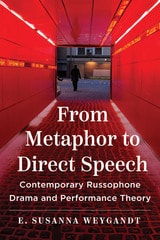
From Metaphor to Direct Speech
Contemporary Russophone Drama and Performance TheoryE. Susanna Weygandt
University of Wisconsin Press, 2025
As a result, the Russophone New Dramatists speak dissent and dramatize resistance. Ultimately, they shift theatrical productions from something constrained and limited, in both place and time, to an ephemeral but unbounded gateway for social activism. The sonic stage thus effectively functions as a social forum, transposing action from the actors to the audience. From Metaphor to Direct Speech therefore contributes to cultural as well as performance studies, offering a compelling look not just at developments in theatrical modes but also at dissent and cultural aesthetics in Russia today.
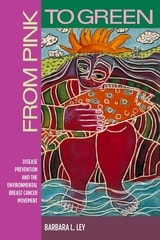
From Pink to Green
Disease Prevention and the Environmental Breast Cancer MovementLey, Barbara L
Rutgers University Press, 2009
Challenging the broader cultural milieu of pink ribbon symbolism and breast cancer "awareness" campaigns, this movement has grown from a handful of community-based organizations into a national entity, shaping the cultural, political, and public health landscape. Much of the activists' everyday work revolves around describing how the so called "cancer industry" downplays possible environmental links to protect their political and economic interests and they demand that the public play a role in scientific, policy, and public health decision-making to build a new framework of breast cancer prevention.
From Pink to Green successfully explores the intersection between breast cancer activism and the environmental health sciences, incorporating public and scientific debates as well as policy implications to public health and environmental agendas.
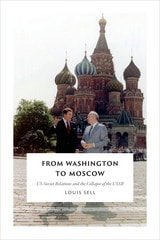
From Washington to Moscow
US-Soviet Relations and the Collapse of the USSRLouis Sell
Duke University Press, 2016
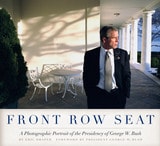
Front Row Seat
A Photographic Portrait of the Presidency of George W. BushBy Eric Draper
University of Texas Press, 2013
America’s forty-third president, George W. Bush, presided over eight of the most dramatic years in recent history, from the 9/11 attacks early in his administration to the worldwide economic crisis of 2008. By his side, recording every event from the momentous to the intimate, was his personal White House photographer, Eric Draper. From a collection of nearly one million photographs, Draper has selected more than one hundred images of President Bush that portray both the public figure and the private man.
Front Row Seat presents a compelling, behind-the-scenes view of the presidency of George W. Bush. Through Draper’s lens, we follow Bush through moments of crisis that called for strong leadership, such as 9/11; emotional meetings with troops in war zones, wounded soldiers at home, and Katrina survivors; and happy, relaxed times with his wife Laura, daughters Barbara and Jenna, and parents President George H. W. and Barbara Bush. We also see Bush at work within his inner circle of trusted advisors, including Vice President Richard Cheney, National Security Advisor and Secretary of State Condoleezza Rice, and Secretary of Defense Donald Rumsfeld.
Capturing moments that reveal the essence of the man, Front Row Seat is an irreplaceable portrait of George W. Bush.

Full Metal Jhacket
Matthew Derby
University of Michigan Press, 2014
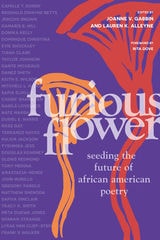
Furious Flower
Seeding the Future of African American PoetryEdited by Joanne V. Gabbin and Lauren K. Alleyne; Foreword by Rita Dove
Northwestern University Press, 2020
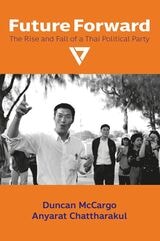
Future Forward
The Rise and Fall of a Thai Political PartyDuncan McCargo and Anyarat Chattharakul
National University of Singapore Press, 2020