Results by title
1563 books match the query 'African American & Black Studies' and 73 start with f
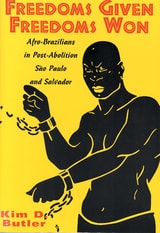
Freedoms Given, Freedoms Won
Afro-Brazilians in Post-Abolition São Paolo and SalvadorButler, Kim D
Rutgers University Press, 1998
Freedoms Given, Freedoms Won explores the ways Afro-Brazilians in two major cities adapted to the new conditions of life after the abolition of slavery and how they confronted limitations placed on their new freedom. The book sets forth new ways of understanding why the abolition of slavery did not yield equitable fruits of citizenship, not only in Brazil, but throughout the Americas and the Caribbean.
Afro-Brazilians in Sao Paulo and Salvador lived out their new freedom in ways that raise issues common to the entire Afro-Atlantic diaspora. In Sao Paulo, they initiated a vocal struggle for inclusion in the creation of the nation's first black civil rights organization and political party, and they appropriated a discriminatory identity that isolated blacks. In contrast, African identity prevaled over black identity in Salvador, where social protest was oriented toward protecting the right of cultural pluralism.
Of all the eras and issues studied in Afro-Brazilian history, post-abolition social and political action has been the most neglected. Butler provides many details of this period for the first time in English and supplements published sources with original oral histories, Afro-Brazilian newspapers, and new state archival documents currently being catalogued in Bahia. Freedoms Given, Freedoms Won sets the Afro-Brazilian experience in a national context as well as situating it within the Afro-Atlantic diaspora through a series of explicit parallels, particularly with Cuba and Jamaica.
Freeing Black Girls
A Black Feminist Bible on Racism and Revolutionary MotheringTamura Lomax
Duke University Press, 2025
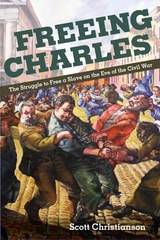
Freeing Charles
The Struggle to Free a Slave on the Eve of the Civil WarScott Christianson
University of Illinois Press, 2010
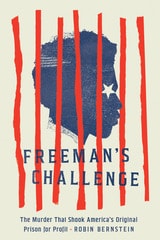
Freeman's Challenge
The Murder That Shook America's Original Prison for ProfitRobin Bernstein
University of Chicago Press, 2024
An award-winning historian tells a gripping, morally complicated story of murder, greed, race, and the true origins of prison for profit.
In the early nineteenth century, as slavery gradually ended in the North, a village in New York State invented a new form of unfreedom: the profit-driven prison. Uniting incarceration and capitalism, the village of Auburn built a prison that enclosed industrial factories. There, “slaves of the state” were leased to private companies. The prisoners earned no wages, yet they manufactured furniture, animal harnesses, carpets, and combs, which consumers bought throughout the North. Then one young man challenged the system.
In Freeman’s Challenge, Robin Bernstein tells the story of an Afro-Native teenager named William Freeman who was convicted of a horse theft he insisted he did not commit and sentenced to five years of hard labor in Auburn’s prison. Incensed at being forced to work without pay, Freeman demanded wages. His challenge triggered violence: first against him, then by him. Freeman committed a murder that terrified and bewildered white America. And white America struck back—with aftereffects that reverberate into our lives today in the persistent myth of inherent Black criminality. William Freeman’s unforgettable story reveals how the North invented prison for profit half a century before the Thirteenth Amendment outlawed slavery “except as a punishment for crime”—and how Frederick Douglass, Harriet Tubman, and other African Americans invented strategies of resilience and resistance in a city dominated by a citadel of unfreedom.
Through one Black man, his family, and his city, Bernstein tells an explosive, moving story about the entangled origins of prison for profit and anti-Black racism.
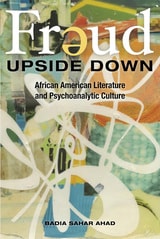
Freud Upside Down
African American Literature and Psychoanalytic CultureBadia Sahar Ahad
University of Illinois Press, 2010

Friends Disappear
The Battle for Racial Equality in EvanstonMary Barr
University of Chicago Press, 2014
In Friends Disappear Barr goes back to her old neighborhood and pieces together a history of Evanston with a particular emphasis on its neighborhoods, its schools, and its work life. She finds that there is a detrimental myth of integration surrounding Evanston despite bountiful evidence of actual segregation, both in the archives and from the life stories of her subjects. Curiously, the city’s own desegregation plan is partly to blame. The initiative called for the redistribution of students from an all-black elementary school to institutions situated in white neighborhoods. That, however, required busing, and between the tensions it generated and obvious markers of class difference, the racial divide, far from being closed, was widened. Friends Disappear highlights how racial divides limited the life chances of blacks while providing opportunities for whites, and offers an insider’s perspective on the social practices that doled out benefits and penalties based on race—despite attempts to integrate.
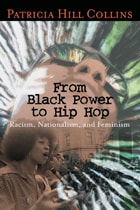
From Black Power to Hip Hop
Racism, Nationalism, and FeminismPatricia Hill Collins
Temple University Press, 2006
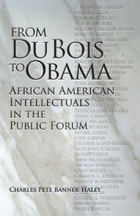
From Du Bois to Obama
African American Intellectuals in the Public ForumCharles Pete Banner-Haley
Southern Illinois University Press, 2014
In his groundbreaking new book Charles Pete Banner-Haley explores the history of African American intellectualism and reveals the efforts of black intellectuals in the ongoing struggle against racism, showing how they have responded to Jim Crow segregation, violence against black Americans, and the more subtle racism of the postintegration age. Banner-Haley asserts that African American intellectuals—including academicians, social critics, activists, and writers—serve to generate debate, policy, and change, acting as a moral force to persuade Americans to acknowledge their history of slavery and racism, become more inclusive and accepting of humanity, and take responsibility for social justice.
Other topics addressed in this insightful study include the disconnection over time between black intellectuals and the masses for which they speak; the ways African American intellectuals identify themselves in relation to the larger black community, America as a whole, and the rest of the world; how black intellectuals have gained legitimacy in American society and have accrued moral capital, especially in the area of civil rights; and how that moral capital has been expended. Among the influential figures covered in the book are W. E. B. Du Bois, Ralph Ellison, Richard Wright, James Weldon Johnson, E. Franklin Frazier, Ralph Bunche, Oliver C. Cox, George S. Schuyler, Zora Neale Hurston, Martin Luther King, Jr., Jesse Jackson, Cornel West, Toni Morrison, bell hooks, Charles Johnson, and Barack Obama.
African American intellectuals, as Banner-Haley makes clear, run the political gamut from liberal to conservative. He discusses the emergence of black conservatism, with its accompanying questions about affirmative action, government intervention on behalf of African Americans, and the notion of a color-blind society. He also looks at how popular music—particularly rap and hip-hop—television, movies, cartoons, and other media have functioned as arenas for investigating questions of identity, exploring whether African American intellectuals can also be authentically black.
A concluding discussion of the so-called browning of America, and the subsequent rise in visibility and influence of black intellectuals culminates with the historic election of President Barack Obama, an African American intellectual who has made significant contributions to American society through his books, articles, and speeches. Banner-Haley ponders what Obama’s election will mean for the future of race relations and black intellectualism in America.
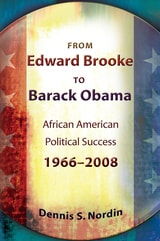
From Edward Brooke to Barack Obama
African American Political Success, 1966-2008Dennis S. Nordin
University of Missouri Press, 2012
In From Edward Brooke to Barack Obama, Dennis S. Nordin navigates the history of biracial elections by examining the experiences of a variety of African American politicians from across the country, revealing how voters, both black and white, respond to the issue of race in an election.
From Edward Brooke to Barack Obama investigates the implications of race in politics, a highly relevant topic in today’s American society. It offers readers a chronological overview of the progress made over the last several decades as well as shows where there is room for growth in the political arena. By taking a pertinent topic for the era and placing it in the context of history, Nordin successfully chronicles the roles of race and race relations in American politics.
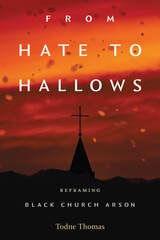
From Hate to Hallows
Reframing Black Church ArsonTodne Thomas
Duke University Press, 2026
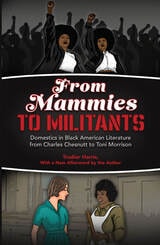
From Mammies to Militants
Domestics in Black American Literature from Charles Chesnutt to Toni MorrisonTrudier Harris
University of Alabama Press, 2023
Unmasking stereotypes and reclaiming identity of Black Womanhood in American Culture.
Welfare queen, hot momma, unwed mother: these stereotypes of Black women share their historical conception in the image of the Black woman as domestic. Focusing on the issue of stereotypes, the new edition of Trudier Harris’s classic 1982 study From Mammies to Militants examines the position of the domestic in Black American literature with a new afterword bringing her analysis into the present.
From Charles Chesnutt’s The Marrow of Tradition to Toni Morrison’s The Bluest Eye, Black writers, some of whom worked as maids themselves, have manipulated the stereotype in a strategic way as a figure to comment on Black-white relations or to dramatize the conflicts of the Black protagonists. In fact, the characters themselves, like real-life maids, often use the stereotype to their advantage or to trick their oppressors.
Harris combines folkloristic, sociological, historical, and psychological analyses with literary ones, drawing on her own interviews with Black women who worked as domestics. She explores the differences between Northern and Southern maids and between “mammy” and “militant.” Her invaluable book provides a sweeping exploration of Black American writers of the twentieth century, with extended discussion of works by Charles Chesnutt, Kristin Hunter, Toni Morrison, Richard Wright, Ann Petry, William Melvin Kelley, Alice Childress, John A. Williams, Douglas Turner Ward, Barbara Woods, Ted Shine, and Ed Bullins. Often privileging political statements over realistic characterization in the design of their texts, the authors in Harris’s study urged Black Americans to take action to change their powerless conditions, politely if possible, violently if necessary. Through their commitment to improving the conditions of Black people in America, these writers demonstrate the connectedness of art and politics.
In her new afterword, “From Militants to Movie Stars,” Harris looks at domestic workers in African American literature after the original publication of her book in 1982. Exploring five subsequent literary treatments of Black domestic workers from Ernest J. Gaines’s A Lesson Before Dying to Lynn Nottage’s By the Way, Meet Vera Stark, Harris tracks how the landscape of representation of domestic workers has broken with tradition and continues to transform into something entirely new.
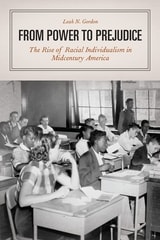
From Power to Prejudice
The Rise of Racial Individualism in Midcentury AmericaLeah N. Gordon
University of Chicago Press, 2015
To answer these questions, From Power to Prejudice examines American academia—both black and white—in the 1940s and ’50s. Gordon presents four competing visions of “the race problem” and documents how an individualistic paradigm, which presented white attitudes as the source of racial injustice, gained traction. A number of factors, Gordon shows, explain racial individualism’s postwar influence: individuals were easier to measure than social forces; psychology was well funded; studying political economy was difficult amid McCarthyism; and individualism was useful in legal attacks on segregation. Highlighting vigorous midcentury debate over the meanings of racial justice and equality, From Power to Prejudice reveals how one particular vision of social justice won out among many contenders.
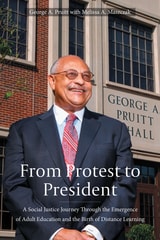
From Protest to President
A Social Justice Journey through the Emergence of Adult Education and the Birth of Distance LearningGeorge A Pruitt
Rutgers University Press, 2023
From barbershop encounters with Malcolm X to death threats at Illinois State University and gunfire at Towson State, Pruitt provides a powerful narrative poised at the intersection of social justice, higher education and politics. He recounts leadership experiences at HBCUs and public universities across the country, as he advocated for autonomy at Morgan State and fought to preserve Tennessee State University.
His steadfast activism, integrity and courage led to groundbreaking work in providing access to higher education for working adults and the military.
From his days as a student protester in high school and college to his appearances on Capitol Hill, Pruitt has earned the reputation as a candid and influential leader in higher education.
From SWEETBACK to SUPER FLY
Race and Film Audiences in Chicago's LoopGerald R. Butters, Jr.
University of Missouri Press, 2014
From Slave Cabins to the White House
Homemade Citizenship in African American CultureKoritha Mitchell
University of Illinois Press, 2021
Koritha Mitchell analyzes canonical texts by and about African American women to lay bare the hostility these women face as they invest in traditional domesticity. Instead of the respectability and safety granted white homemakers, black women endure pejorative labels, racist governmental policies, attacks on their citizenship, and aggression meant to keep them in "their place."
Tracing how African Americans define and redefine success in a nation determined to deprive them of it, Mitchell plumbs the works of Frances Harper, Zora Neale Hurston, Lorraine Hansberry, Toni Morrison, Michelle Obama, and others. These artists honor black homes from slavery and post-emancipation through the Civil Rights era to "post-racial" America. Mitchell follows black families asserting their citizenship in domestic settings while the larger society and culture marginalize and attack them, not because they are deviants or failures but because they meet American standards.
Powerful and provocative, From Slave Cabins to the White House illuminates the links between African American women's homemaking and citizenship in history and across literature.
From Slave Ship to Supermax
Mass Incarceration, Prisoner Abuse, and the New Neo-Slave NovelPatrick Elliot Alexander
Temple University Press, 2017
In his cogent and groundbreaking book, From Slave Ship to Supermax, Patrick Elliot Alexander argues that the disciplinary logic and violence of slavery haunt depictions of the contemporary U.S. prison in late twentieth-century Black fiction. Alexander links representations of prison life in James Baldwin’s novel If Beale Street Could Talk to his engagements with imprisoned intellectuals like George Jackson, who exposed historical continuities between slavery and mass incarceration. Likewise, Alexander reveals how Toni Morrison’s Beloved was informed by Angela Y. Davis’s jail writings on slavery-reminiscent practices in contemporary women’s facilities. Alexander also examines recurring associations between slave ships and prisons in Charles Johnson’s Middle Passage, and connects slavery’s logic of racialized premature death to scenes of death row imprisonment in Ernest Gaines’ A Lesson Before Dying.
Alexander ultimately makes the case that contemporary Black novelists depict racial terror as a centuries-spanning social control practice that structured carceral life on slave ships and slave plantations—and that mass-produces prisoners and prisoner abuse in post–Civil Rights America. These authors expand free society’s view of torment confronted and combated in the prison industrial complex, where discriminatory laws and the institutionalization of secrecy have reinstated slavery’s system of dehumanization.
From Spirituals to Symphonies
African-American Women Composers and Their MusicHelen Walker-Hill
University of Illinois Press, 2006
Helen Walker-Hill's unique study provides a carefully researched examination of the history and scope of musical composition by African American women composers from the nineteenth and twentieth centuries. Focusing on the effect of race, gender, and class, From Spirituals to Symphonies notes the important role played by individual personalities and circumstances in shaping this underappreciated category of American art. The study also provides in-depth exploration of the backgrounds, experiences, and musical compositions of eight African American women including Margaret Bonds, Undine Smith Moore, and Julia Perry, who combined the techniques of Western art music with their own cultural traditions and individual gifts. Despite having gained national and international recognition during their lifetimes, the contributions of many of these women are today forgotten.
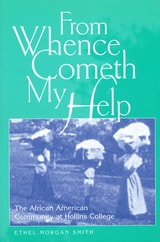
From Whence Cometh My Help
The African American Community at Hollins CollegeEthel Morgan Smith
University of Missouri Press, 2000
In 1842 Charles Lewis Cocke arrived in Roanoke, Virginia, with sixteen slaves; there, he founded Hollins College, an elite woman's school. Many of the early students also brought their slaves to the college with them. Upon Emancipation some of the African Americans of the community "mostly women" stayed on as servants, forming what is now called the Hollins Community. Although the servants played an integral part in the college's success, students were strongly discouraged from acknowledging them as people. Rules forbidding any "familiarity" with the servants perpetuated a prejudicial attitude toward the African American community that would persist well into the 1940s.
Determined to give voice to the African American community that served as the silent workforce for Hollins College, Ethel Morgan Smith succeeded in finding individuals to step forward and tell their stories. From Whence Cometh My Help examines the dynamics of an institution built on the foundations of slavery and so steeped in tradition that it managed to perpetuate servitude for generations. Interviewing senior community members, Smith gives recognition to the invisible population that provided and continues to provide the labor support for Hollins College for more than 150 years.
Although African American students have been admitted to the college for roughly thirty years, to date only one person from the Hollins Community has graduated from the college. From Whence Cometh My Help explores the subtle and complex relationship between the affluent white world of Hollins College and the proud African American community that has served it since its inception. Interweaving personal observations, historical documents, and poetry throughout a revealing oral history, Smith shares her fascinating discoveries and the challenges involved in telling a story silenced for so long.
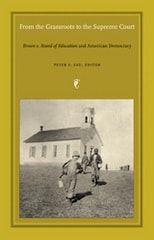
From the Grassroots to the Supreme Court
Brown v. Board of Education and American DemocracyPeter F. Lau, ed.
Duke University Press, 2004
The contributors illuminate the breadth of developments that led to Brown, from the parallel struggles for social justice among African Americans in the South and Mexican, Asian, and Native Americans in the West during the late nineteenth century to the political and legal strategies implemented by the National Association for the Advancement of Colored People (naacp) in the twentieth century. Describing the decision’s impact on local communities, essayists explore the conflict among African Americans over the implementation of Brown in Atlanta’s public schools as well as understandings of the ruling and its relevance among Puerto Rican migrants in New York City. Assessing the legacy of Brown today, contributors analyze its influence on contemporary law, African American thought, and educational opportunities for minority children.
Contributors
Tomiko Brown-Nagin
Davison M. Douglas
Raymond Gavins
Laurie B. Green
Christina Greene
Blair L. M. Kelley
Michael J. Klarman
Peter F. Lau
Madeleine E. Lopez
Waldo E. Martin Jr.
Vicki L. Ruiz
Christopher Schmidt
Larissa M. Smith
Patricia Sullivan
Kara Miles Turner
Mark V. Tushnet
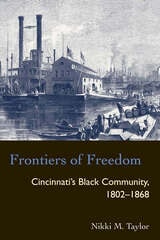
Frontiers of Freedom
Cincinnati’s Black Community 1802–1868Nikki M. Taylor
Ohio University Press, 2004
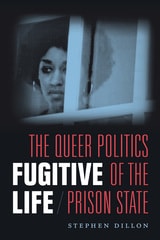
Fugitive Life
The Queer Politics of the Prison StateStephen Dillon
Duke University Press, 2018
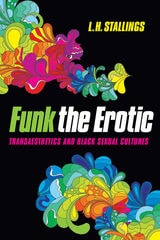
Funk the Erotic
Transaesthetics and Black Sexual CulturesL.H. Stallings
University of Illinois Press, 2015
Stallings uses funk to highlight the importance of the erotic and eroticism in Black cultural and political movements, debunking "the truth of sex" and its histories. Brandishing funk as a theoretical tool, Stallings argues that Western theories of the erotic fail as universally applicable terms or philosophies, and thus lack utility in discussions of black bodies, subjects, and culture. In considering the Victorian concept of freak in black funk, Stallings proposes that black artists across all media have fashioned a tradition that embraces the superfreak, sexual guerrilla, sexual magic, mama's porn, black trans narratives, and sex work in a post-human subject position. Their goal: to ensure survival and evolution in a world that exploits black bodies in capitalist endeavors, imperialism, and colonization.
Revitalizing and wide-ranging, Funk the Erotic offers a needed examination of black sexual cultures, a discursive evolution of black ideas about eroticism, a critique of work society, a reexamination of love, and an articulation of the body in black movements.
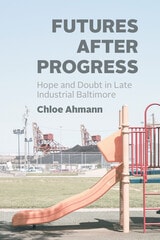
Futures after Progress
Hope and Doubt in Late Industrial BaltimoreChloe Ahmann
University of Chicago Press, 2024
Factory fires, chemical explosions, and aerial pollutants have inexorably shaped South Baltimore into one of the most polluted places in the country. In Futures after Progress, anthropologist Chloe Ahmann explores the rise and fall of industrial lifeways on this edge of the city and the uncertainties that linger in their wake. Writing from the community of Curtis Bay, where two hundred years of technocratic hubris have carried lethal costs, Ahmann also follows local efforts to realize a good future after industry and the rifts competing visions opened between neighbors.
Examining tensions between White and Black residents, environmental activists and industrial enthusiasts, local elders and younger generations, Ahmann shows how this community has become a battleground for competing political futures whose stakes reverberate beyond its six square miles in a present after progress has lost steam. And yet—as one young resident explains—“that’s not how the story ends.” Rigorous and moving, Futures after Progress probes the deep roots of our ecological predicament, offering insight into what lies ahead for a country beset by dreams deferred and a planet on the precipice of change.