Results by title
3369 books match the query 'Cultural & Social' and 148 start with f

Financial Derivatives and the Globalization of Risk
Edward LiPuma and Benjamin Lee
Duke University Press, 2005
LiPuma and Lee explain how derivatives are essentially wagers—often on the fluctuations of national currencies—based on models that aggregate and price risk. They describe how these financial instruments are changing the face of capitalism, undermining the power of nations and perpetrating a new and less visible form of domination on postcolonial societies. As they ask: How does one know about, let alone demonstrate against, an unlisted, virtual, offshore corporation that operates in an unregulated electronic space using a secret proprietary trading strategy to buy and sell arcane financial instruments? LiPuma and Lee provide a necessary look at the obscure but consequential role of financial derivatives in the global economy.
Finding Cholita
Billie Jean Isbell
University of Illinois Press, 2008

First Light
Kanaka 'Oiwi Resistance to Settler Science at Mauna a WakeaIokepa Casumbal-Salazar
University of Minnesota Press, 2025
Understanding the Hawai‘i Island summit of Mauna a Wākea as a place of ancestral connection, cultural resurgence, and political resistance for Native Hawaiians
First Light is a site-specific study of Native Hawaiian resistance to the construction of the Thirty Meter Telescope (TMT) on the summit of Mauna a Wākea, the sacred mountain on the island of Hawai‘i. Drawing on personal interviews, oral histories, archival research, participant observation, and popular, legal, scientific, and Indigenous discourses, Iokepa Casumbal-Salazar explores both the campaign to build the observatory and the movement against it. He asks how astronomers have become stewards of Mauna a Wākea while Kānaka ‘Ōiwi (Aboriginal Hawaiians), in protest, are recast as obstructing progress and clinging to ancient superstitions.
Contextualizing contemporary resistance to telescope expansion within the past 132 years of struggle against U.S. empire in Hawai‘i, Casumbal-Salazar argues the Kanaka-led efforts to protect their ancestral lands did not begin with the TMT and only become legible when understood in the broader history of resistance to U.S. settler hegemony as told through the voices and actions of kiaʻi ʻāina (land defenders). First Light explores how settler science, capital, and law have been mobilized in ways that rationalize industrial development projects like the TMT and promote a vision of “coexistence” that enables the dehumanization of Kānaka ‘Ōiwi and their alienation from ʻāina.
Challenging the assumptions and aggressions of neoliberal environmental policy, settler multiculturalism, and U.S. military occupation, First Light reinforces calls for a moratorium on new telescope development and a literacy in Kanaka ‘Ōiwi movements for life, land, and ea (independence, sovereignty).
Retail e-book files for this title are screen-reader friendly with images accompanied by short alt text and/or extended descriptions.
Fistula Politics
Birthing Injuries and the Quest for Continence in NigerHeller, Alison
Rutgers University Press, 2019

Fixing Sex
Intersex, Medical Authority, and Lived ExperienceKatrina Karkazis
Duke University Press, 2008
Drawing extensively on interviews with adults with intersex conditions, parents, and physicians, Karkazis moves beyond the heated rhetoric to reveal the complex reality of how intersexuality is understood, treated, and experienced today. As she unravels the historical, technological, social, and political forces that have culminated in debates surrounding intersexuality, Karkazis exposes the contentious disagreements among theorists, physicians, intersex adults, activists, and parents—and all that those debates imply about gender and the changing landscape of intersex management. She argues that by viewing intersexuality exclusively through a narrow medical lens we avoid much more difficult questions. Do gender atypical bodies require treatment? Should physicians intervene to control the “sex” of the body? As this illuminating book reveals, debates over treatment for intersexuality force reassessment of the seemingly natural connections between gender, biology, and the body.

Flame Wars
The Discourse of CybercultureMark Dery
Duke University Press, 1994
The subcultural practices of the "incurably informed," to borrow the cyberpunk novelist Pat Cadigan’s coinage, offer a precognitive glimpse of mainstream culture in the near future, when many of us will be part-time residents in virtual communities. Yet, as the essays in this expanded edition of a special issue of the South Atlantic Quarterly confirm, there is more to fringe computer culture than cyberspace. Within these pages, readers will encounter flame warriors; new age mutant ninja hackers; technopagans for whom the computer is an occult engine; and William Gibson’s "Agrippa," a short story on software that can only be read once because it gobbles itself up as soon as the last page is reached. Here, too, is Lady El, an African American cleaning woman reincarnated as an all-powerful cyborg; devotees of on-line swinging, or "compu-sex"; the teleoperated weaponry and amok robots of the mechanical performance art group, Survival Research Laboratories; an interview with Samuel Delany, and more.
Rallying around Fredric Jameson’s call for a cognitive cartography that "seeks to endow the individual subject with some new heightened sense of place in the global system," the contributors to Flame Wars have sketched a corner of that map, an outline for a wiring diagram of a terminally wired world.
Contributors. Anne Balsamo, Gareth Branwyn, Scott Bukatman, Pat Cadigan, Gary Chapman, Erik Davis, Manuel De Landa, Mark Dery, Julian Dibbell, Marc Laidlaw, Mark Pauline, Peter Schwenger, Vivian Sobchack, Claudia Springer

Flexible Citizenship
The Cultural Logics of TransnationalityAihwa Ong
Duke University Press, 1998
Explaining how intensified travel, communications, and mass media have created a transnational Chinese public, Aihwa Ong argues that previous studies have mistakenly viewed transnationality as necessarily detrimental to the nation-state and have ignored individual agency in the large-scale flow of people, images, and cultural forces across borders. She describes how political upheavals and global markets have induced Asian investors, in particular, to blend strategies of migration and of capital accumulation and how these transnational subjects have come to symbolize both the fluidity of capital and the tension between national and personal identities. Refuting claims about the end of the nation-state and about “the clash of civilizations,” Ong presents a clear account of the cultural logics of globalization and an incisive contribution to the anthropology of Asia-Pacific modernity and its links to global social change.
This pioneering investigation of transnational cultural forms will appeal to those in anthropology, globalization studies, postcolonial studies, history, Asian studies, Marxist theory, and cultural studies.
Flexible Families
Nicaraguan Transnational Families in Costa RicaCaitlin Fouratt
Vanderbilt University Press, 2022
The book situates transnational families in an analysis of the history of unstable family life in Nicaragua due to decades of war and economic crisis, rather than in the migration process itself, which is often blamed for family breakdown in public discourse. Fouratt argues that the kinds of family configurations often seen as problematic consequences of migration—specifically single mothers, absent fathers, and grandmother caregivers—represent flexible family configurations that have enabled Nicaraguan families to survive the chronic crises of the past decades. By examining the work that goes into forging and sustaining transnational kinship, the book argues for a rethinking of national belonging and discourses of solidarity.
In parallel, the book critically examines conditions in Costa Rica, especially the ways the instabilities and inequalities that have haunted the rest of the region have begun to take shape there, resulting in perceptions of increased crime rates and a declining quality of life. By linking this crisis of Costa Rican exceptionalism to recent immigration reform, the book also builds on scholarship about the production and experiences of immigrant exclusion. Flexible Families offers insight into the impacts of increasingly restrictive immigration policies in the everyday lives of transnational families within the developing world.

Flip the Script
European Hip Hop and the Politics of PostcolonialityJ. Griffith Rollefson
University of Chicago Press, 2017
Through analysis of recorded music and other media, as well as interviews and fieldwork with hip hop communities, J. Griffith Rollefson shows how this music created by black Americans is deployed by Senegalese Parisians, Turkish Berliners, and South Asian Londoners to both differentiate themselves from and relate themselves to the dominant culture. By listening closely to the ways these postcolonial citizens in Europe express their solidarity with African Americans through music, Rollefson shows, we can literally hear the hybrid realities of a global double consciousness.

Floating Power
Energy, Infrastructure, and South-South RelationsGökçe Günel
Duke University Press, 2026

Florentine Codex
Book 10: Book 10: The PeopleBernardino de Sahagun
University of Utah Press, 1981
Two of the world’s leading scholars of the Aztec language and culture have translated Sahagún’s monumental and encyclopedic study of native life in Mexico at the time of the Spanish Conquest. This immense undertaking is the first complete translation into any language of Sahagún’s Nahuatl text, and represents one of the most distinguished contributions in the fields of anthropology, ethnography, and linguistics.
Written between 1540 and 1585, the Florentine Codex (so named because the manuscript has been part of the Laurentian Library’s collections since at least 1791) is the most authoritative statement we have of the Aztecs’ lifeways and traditions—a rich and intimate yet panoramic view of a doomed people.
The Florentine Codex is divided by subject area into twelve books and includes over 2,000 illustrations drawn by Nahua artists in the sixteenth century.
Book Ten gives a broad overview of the different occupations, classes, and characteristics of Aztecs during this time period. Arguably the most fascinating part of this book is the detailed documentation of human anatomy and commonly used cures for physical ailments.
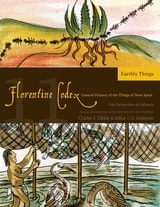
Florentine Codex
Book 11: Book 11: Earthly ThingsBernardino de Sahagun
University of Utah Press, 1963
Two of the world’s leading scholars of the Aztec language and culture have translated Sahagún’s monumental and encyclopedic study of native life in Mexico at the time of the Spanish Conquest. This immense undertaking is the first complete translation into any language of Sahagún’s Nahuatl text, and represents one of the most distinguished contributions in the fields of anthropology, ethnography, and linguistics.
Written between 1540 and 1585, the Florentine Codex (so named because the manuscript has been part of the Laurentian Library’s collections since at least 1791) is the most authoritative statement we have of the Aztecs’ lifeways and traditions—a rich and intimate yet panoramic view of a doomed people.
The Florentine Codex is divided by subject area into twelve books and includes over 2,000 illustrations drawn by Nahua artists in the sixteenth century.
Book Eleven is a beautifully written and careful documentation of all of the animals and plants known to the Aztecs in the sixteenth century. As the volume with the most illustrations, Earthly Things allows the reader to look at the natural world through the eyes of the Aztec.
Florentine Codex
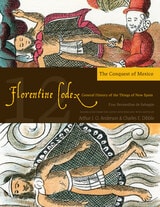
Book 12: Book 12: The Conquest of MexicoBernardino de Sahagun
University of Utah Press, 1975
Two of the world’s leading scholars of the Aztec language and culture have translated Sahagún’s monumental and encyclopedic study of native life in Mexico at the time of the Spanish Conquest. This immense undertaking is the first complete translation into any language of Sahagún’s Nahuatl text, and represents one of the most distinguished contributions in the fields of anthropology, ethnography, and linguistics.
Written between 1540 and 1585, the Florentine Codex (so named because the manuscript has been part of the Laurentian Library’s collections since at least 1791) is the most authoritative statement we have of the Aztecs’ lifeways and traditions—a rich and intimate yet panoramic view of a doomed people.
The Florentine Codex is divided by subject area into twelve books and includes over 2,000 illustrations drawn by Nahua artists in the sixteenth century.
Book Twelve contains a meticulous retelling of the Spanish conquest of Mexico, from the days leading up to the first arrival of Cortes to the eventual submission of the Tlatilulcans, the Tenochtitlans, and their rulers to the Spaniards.

Florentine Codex
Book 1: Book 1: The GodsBernardino de Sahagun
University of Utah Press, 1981
Two of the world’s leading scholars of the Aztec language and culture have translated Sahagún’s monumental and encyclopedic study of native life in Mexico at the time of the Spanish Conquest. This immense undertaking is the first complete translation into any language of Sahagún’s Nahuatl text, and represents one of the most distinguished contributions in the fields of anthropology, ethnography, and linguistics.
Written between 1540 and 1585, the Florentine Codex (so named because the manuscript has been part of the Laurentian Library’s collections since at least 1791) is the most authoritative statement we have of the Aztecs’ lifeways and traditions—a rich and intimate yet panoramic view of a doomed people.
The Florentine Codex is divided by subject area into twelve books and includes over 2,000 illustrations drawn by Nahua artists in the sixteenth century.
Book One describes in detail the gods of the Aztec people, including Uitzilopochtli, Tlatoc, and Quetzalcoatl. This colorful and clear translation brings to life characteristics of each god, describing such items as clothing or adornment worn by individual gods, as well as specific personality traits.

Florentine Codex
Book 2: The CeremoniesBernardino de Sahagun
University of Utah Press, 1981
Two of the world’s leading scholars of the Aztec language and culture have translated Sahagún’s monumental and encyclopedic study of native life in Mexico at the time of the Spanish Conquest. This immense undertaking is the first complete translation into any language of Sahagún’s Nahuatl text, and represents one of the most distinguished contributions in the fields of anthropology, ethnography, and linguistics.
Written between 1540 and 1585, the Florentine Codex (so named because the manuscript has been part of the Laurentian Library’s collections since at least 1791) is the most authoritative statement we have of the Aztecs’ lifeways and traditions—a rich and intimate yet panoramic view of a doomed people.
The Florentine Codex is divided by subject area into twelve books and includes over 2,000 illustrations drawn by Nahua artists in the sixteenth century.
Book Two gives comprehensive accounts of the religious ceremonies and days of feasting during the time of the Aztecs, including prayers, songs, and the duties and roles of Aztecs inside the temples during the ceremonies. This book also details the various tributes and sacrifices given to specific gods.

Florentine Codex
Book 6: Book 6: Rhetoric and Moral PhilosophyBernardino de Sahagun
University of Utah Press, 1969
Two of the world’s leading scholars of the Aztec language and culture have translated Sahagún’s monumental and encyclopedic study of native life in Mexico at the time of the Spanish Conquest. This immense undertaking is the first complete translation into any language of Sahagún’s Nahuatl text, and represents one of the most distinguished contributions in the fields of anthropology, ethnography, and linguistics.
Written between 1540 and 1585, the Florentine Codex (so named because the manuscript has been part of the Laurentian Library’s collections since at least 1791) is the most authoritative statement we have of the Aztecs’ lifeways and traditions—a rich and intimate yet panoramic view of a doomed people.
The Florentine Codex is divided by subject area into twelve books and includes over 2,000 illustrations drawn by Nahua artists in the sixteenth century.
Book Six includes prayers to various gods asking for cures, riches, rain, and for the gods to bless or admonish a chosen ruler. In addition to these prayers, the book displays examples of formal conversation used in Aztec life, from the ruler and ambassador to others in the noble class.

Florentine Codex
Book 7: Book 7: The Sun, the Moon and Stars, and the Binding of the YearsBernardino de Sahagun
University of Utah Press, 1953
Two of the world’s leading scholars of the Aztec language and culture have translated Sahagún’s monumental and encyclopedic study of native life in Mexico at the time of the Spanish Conquest. This immense undertaking is the first complete translation into any language of Sahagún’s Nahuatl text, and represents one of the most distinguished contributions in the fields of anthropology, ethnography, and linguistics.
Written between 1540 and 1585, the Florentine Codex (so named because the manuscript has been part of the Laurentian Library’s collections since at least 1791) is the most authoritative statement we have of the Aztecs’ lifeways and traditions—a rich and intimate yet panoramic view of a doomed people.
The Florentine Codex is divided by subject area into twelve books and includes over 2,000 illustrations drawn by Nahua artists in the sixteenth century.
Book Seven tells the origin stories of the sun, the moon, and the stars—which gods created them, what powers they each embody, and how they are related to Aztec astrology. This book also discusses the meaning and cause behind hail, lightning, rainbows, wind, and different types of weather.

Florentine Codex
Book 8: Book 8: Kings and LordsBernardino de Sahagun
University of Utah Press, 1954
Two of the world’s leading scholars of the Aztec language and culture have translated Sahagún’s monumental and encyclopedic study of native life in Mexico at the time of the Spanish Conquest. This immense undertaking is the first complete translation into any language of Sahagún’s Nahuatl text, and represents one of the most distinguished contributions in the fields of anthropology, ethnography, and linguistics.
Written between 1540 and 1585, the Florentine Codex (so named because the manuscript has been part of the Laurentian Library’s collections since at least 1791) is the most authoritative statement we have of the Aztecs’ lifeways and traditions—a rich and intimate yet panoramic view of a doomed people.
The Florentine Codex is divided by subject area into twelve books and includes over 2,000 illustrations drawn by Nahua artists in the sixteenth century.
Book Eight lists the rulers of Tenochtitlan from the first, Acamapichtli, to the sixteenth, Don Cristobal Cecepatic. It also documents the rulers of the ancient Aztec cities of Tlatillco, Texcoco, and Uexotla. Several chapters are devoted to describing the various articles of clothing that the rulers and noblemen wore and the foods they ate for differing ceremonies and activities.

Florentine Codex
Book 9: Book 9: The MerchantsBernardino de Sahagun
University of Utah Press, 1959
Two of the world’s leading scholars of the Aztec language and culture have translated Sahagún’s monumental and encyclopedic study of native life in Mexico at the time of the Spanish Conquest. This immense undertaking is the first complete translation into any language of Sahagún’s Nahuatl text, and represents one of the most distinguished contributions in the fields of anthropology, ethnography, and linguistics.
Written between 1540 and 1585, the Florentine Codex (so named because the manuscript has been part of the Laurentian Library’s collections since at least 1791) is the most authoritative statement we have of the Aztecs’ lifeways and traditions—a rich and intimate yet panoramic view of a doomed people.
The Florentine Codex is divided by subject area into twelve books and includes over 2,000 illustrations drawn by Nahua artists in the sixteenth century.
Book Nine begins with how commerce grew in Mexico from the trade of only feathers to jewelry, precious stones, animal skins, embroidered clothing, and chocolate. It discusses how the merchants prepare for a journey and the celebrations that take place when they arrive home safely. This book also lists different types of merchants, such as lapidaries, who worked with precious stones, and ornamenters, who made feather articles.
Flower Worlds
Religion, Aesthetics, and Ideology in Mesoamerica and the American SouthwestEdited by Michael D. Mathiowetz and Andrew D. Turner
University of Arizona Press, 2021
The recognition of Flower Worlds is one of the most significant breakthroughs in the study of Indigenous spirituality in the Americas. These worlds are solar and floral spiritual domains that are widely shared among both pre-Hispanic and contemporary Native cultures in Mesoamerica and the American Southwest. Flower Worldsis the first volume to bring together a diverse range of scholars to create a truly multidisciplinary understanding of Flower Worlds. During the last thirty years, archaeologists, art historians, ethnologists, Indigenous scholars, and linguists have emphasized the antiquity and geographical extent of similar Flower World beliefs among ethnic and linguistic groups in the New World.
Flower Worlds are not simply ethereal, otherworldly domains, but rather they are embodied in lived experience, activated, invoked, and materialized through ritual practices, expressed in verbal and visual metaphors, and embedded in the use of material objects and ritual spaces. This comprehensive book illuminates the origins of Flower Worlds as a key aspect of religions and histories among societies in Mesoamerica and the American Southwest. It also explores the role of Flower Worlds in shaping ritual economies, politics, and cross-cultural interaction among Indigenous peoples.
Flower Worlds reaches into multisensory realms that extend back at least 2,500 years, offering many different disciplines, perspectives, and collaborations to understand these domains. Today, Flower Worlds are expressed in everyday work and lived experiences, embedded in sacred geographies, and ritually practiced both individually and in communities. This volume stresses the importance of contemporary perspectives and experiences by opening with living traditions before delving into the historical trajectories of Flower Worlds, creating a book that melds scientific and humanistic research and emphasizes Indigenous voices.
Contributors: Oswaldo Chinchilla Mazariegos, James M. Córdova, Davide Domenici, Ángel González López, Kelley Hays-Gilpin, Michael D. Mathiowetz, Cameron L. McNeil, Felipe S. Molina, Johannes Neurath, John M. D. Pohl, Alan R. Sandstrom, David Delgado Shorter, Karl A. Taube, Andrew D. Turner, Lorena Vázquez Vallín, Dorothy Washburn

Flowering of the Cumberland
Harriette Simpson Arnow
Michigan State University Press, 2013

Flows of Violence
Water, Infrastructures, and the State in Buenaventura, ColombiaFelipe Fernández
University of Arizona Press, 2025
Flows of Violence offers a profound ethnographic exploration of the intricate relationship between violence and water infrastructure in one of Colombia’s most marginalized cities. This groundbreaking work engages with the concept of “infrastructural violence,” revealing how the Colombian state’s neglect and inadequate provision of water services perpetuate inequality and suffering among Buenaventura’s residents. Through extensive fieldwork, Fernández provides rich empirical data and firsthand accounts that bring to light the daily struggles and resilience of the city’s inhabitants.
The book critically examines how everyday crime and state neglect intersect, altering the improvised practices of water storage and access among the population. It also highlights the innovative mechanisms employed by social movements and ordinary citizens to cope with and resist these challenges.
Flows of Violence is an essential read for scholars in anthropology, geography, and Latin American studies, offering valuable insights into the sociopolitical impacts of infrastructure. This timely contribution underscores the urgent need for equitable infrastructure development and social justice, making it a pivotal text for understanding urban poverty and state dynamics in Latin America and beyond.
Fluent Bodies
Ayurvedic Remedies for Postcolonial ImbalanceJean M. Langford
Duke University Press, 2002
Interweaving theory with narrative, Langford explores the strategies of contemporary practitioners who reconfigure Ayurvedic knowledge through institutions and technologies such as hospitals, anatomy labs, clinical trials, and sonograms. She shows how practitioners appropriate, transform, or circumvent the knowledge practices implicit in these institutions and technologies, destabilizing such categories as medicine, culture, science, symptom, and self, even as they deploy them in clinical practice. Ultimately, this study points to the future of Ayurveda in a transnational era as a remedy not only for the wounds of colonialism but also for an imagined cultural emptiness at the heart of global modernity.
Folk Practices in North Mexico
Birth Customs, Folk Medicine, and Spiritualism in the Laguna ZoneBy Isabel Kelly
University of Texas Press, 1965
The Mexican folkways described in this monograph, of scientific interest to anthropologists, will fascinate laypeople as well. Isabel Kelly collected these notes in the 1950s, as a diversion when official field work was not feasible, in the vicinity of Torreón and particularly in the nearby village of El Cuije, in northern Mexico. She recounts folk customs and habits, focusing on beliefs and practices related to health and healing and on notions concerning magic. These form, Kelly believes, a core of folk culture which has survived tenaciously in the rural areas and on the outskirts of the cities, among mestizo families of scant education and limited economic resources.
These people are well acquainted with simple, matter-of-fact illnesses which result from natural causes and which respond to treatment by herbal and other home remedies or by modern medicines. But they also recognize the evil eye and the emotional upset known as “fright.” They are thoroughly familiar with the ever-present danger of ailments which are not “natural” and God-sent, but which are deliberately inflicted by an enemy, through the artifice of a sorcerer or a spiritualist. Such “instigated” illnesses may take any form, from a cold in the head to a false pregnancy. If a person suspects that poor health results from such malevolence, he or she spurns Western medicine and looks instead to the witch or to the spiritualist as the only hope of a cure.
El Cuije pays an annual quota from community funds to make available modern health services provided by the government. But community funds are similarly drawn upon to provide “medical” attention for those who repair to the sorcerers. Once a week the village truck takes all presumed witchcraft victims to a nearby town, where they receive clinical treatment from professional sorcerers.
Kelly sees little that is genuinely indigenous in the beliefs and practices described; many of them demonstrably result from infiltration from the Old World in the years following the Spanish Conquest. She considers spiritualistic curing—important in northern Mexico and many other parts of Latin America—in some detail, but the specific outlines of its history in northern Mexico still awaited clarification at the time of her research.

Folklore in Utah
A History and Guide to ResourcesDavid Stanley
Utah State University Press, 2004
Over thirty scholars examine the development of folklore studies through the lens of over one hundred years of significant activity in a state that has provided grist for the mills of many prominent folklorists. In the past the Folklore Society of Utah has examined the work of such scholars in biographical and other essays published in its newsletters. This book incorporates those essays and goes well beyond them to include many other topices, offering a thorough history of folklore studies and a guide to resources for those pursuing research in Utah now and in the future.
The essays survey the development and contributions of folklore studies in Utah from 1892 to 2004 but also represent developments in both academic and public-sector folklore throughout the United States. Following a thorough historical introduction, part I profiles the first folklorists working in the state, including Hector Lee, Thomas Cheney, Austin and Alta Fife, Wayland Hand, and Lester Hubbard. Part II looks at the careers of prominent Utah folklorists Jan Harold Brunvand, Barre Toelken, and William B. Wilson, as well as the works of the next, current generation of folklorists. Part III covers studies in major folklore genres, with essays on the study of material culture, vernacular architecture, and Mormon, ethnic, Native American, and Latino folklore. Part IV examines public folklore programs including organizations, conferences, and tourism. Back matter describes academic programs at Utah institutions of higher education, summarizes the holdings of the various folklore archives in the state, and provides a complete cross-indexed bibliography of articles, books, and recordings of Utah folklore.

Food Allergy Advocacy
Parenting and the Politics of CareDanya Glabau
University of Minnesota Press, 2022
A detailed exploration of parents’ fight for a safe environment for their kids, interrogating how race, class, and gender shape health advocacy
The success of food allergy activism in highlighting the dangers of foodborne allergens shows how illness communities can effectively advocate for the needs of their members. In Food Allergy Advocacy, Danya Glabau follows parents and activists as they fight for allergen-free environments, accurate labeling, the fair application of disability law, and access to life-saving medications for food-allergic children in the United States. At the same time, she shows how this activism also reproduces the culturally dominant politics of personhood and responsibility, based on an idealized version of the American family, centered around white, middle-class, and heteronormative motherhood.
By holding up the threat of food allergens to the white nuclear family to galvanize political and scientific action, Glabau shows, the movement excludes many, including Black women and disabled adults, whose families and health have too often been marginalized from public health and social safety net programs. Further, its strategies are founded on the assumption that market-based solutions will address issues of social exclusion and equal access to healthcare.
Sharing the personal experiences of a wide spectrum of people, including parents, support group leaders, physicians, entrepreneurs, and scientists, Food Allergy Advocacy raises important questions about who controls illness activism. Using critical, intersectional feminism to interrogate how race, class, and gender shape activist priorities and platforms, it shows the way to new, justice-focused models of advocacy.

Food Margins
Lessons from an Unlikely GrocerCathy Stanton
University of Massachusetts Press, 2024
Winner of the 2025 New England Society Book Award for Specialty Titles
Winner of the 2024 Readable Feast Award for Social Consciousness
Named one of Food Tank's 20 Food Systems Reads that Will Inspire You this Summer
In a food industry shaped by the abundance, cheapness, and convenience that giant corporations can offer, small-scale ventures struggle to survive, as anthropologist Cathy Stanton discovered when she joined the effort to save a small food co-op in a former mill town in western Massachusetts. On the margins of the dominant system, Stanton found herself reckoning with its deep racial and class inequities, and learning that making real change requires a fierce commitment to community and a willingness to change herself as well.
Part memoir and part history lesson, Food Margins traces the tangled economic and political histories of the plantation, the factory, and the supermarket through the life of one New England town. Stanton tells a complex and compelling story of a rural community imagining and creating a viable alternative to the mainstream in a time of increasingly urgent need to build a more socially and ecologically just food system.

Food Margins
Lessons from an Unlikely GrocerCathy Stanton
University of Massachusetts Press, 2024
Winner of the 2025 New England Society Book Award for Specialty Titles
Winner of the 2024 Readable Feast Award for Social Consciousness
Named one of Food Tank's 20 Food Systems Reads that Will Inspire You this Summer
In a food industry shaped by the abundance, cheapness, and convenience that giant corporations can offer, small-scale ventures struggle to survive, as anthropologist Cathy Stanton discovered when she joined the effort to save a small food co-op in a former mill town in western Massachusetts. On the margins of the dominant system, Stanton found herself reckoning with its deep racial and class inequities, and learning that making real change requires a fierce commitment to community and a willingness to change herself as well.
Part memoir and part history lesson, Food Margins traces the tangled economic and political histories of the plantation, the factory, and the supermarket through the life of one New England town. Stanton tells a complex and compelling story of a rural community imagining and creating a viable alternative to the mainstream in a time of increasingly urgent need to build a more socially and ecologically just food system.
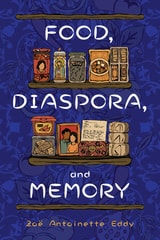
Food, Diaspora, and Memory
Edited by Zoë Antoinette Eddy
Lever Press, 2027
Across diasporic communities, food serves as a repository of memory, a marker of identity, and a powerful means of creating and sustaining belonging in the face of displacement. Food, Diaspora, and Memory brings together an international collection of contributors to explore how food mediates the complex relationships among migration, culture, family, and place. The essays explore how recipes, meals, culinary traditions, and food narratives function as living archives through which individuals and communities maintain connections to ancestral homelands while simultaneously creating new forms of belonging in their adopted homes. Together, the contributors reveal food as both a deeply personal and profoundly social medium through which diasporic communities navigate questions of identity, memory, and cultural negotiation.
By bringing together global perspectives on food, diaspora, and cultural resilience, Food, Diaspora, and Memory offers a timely contribution to some of the most pressing social and cultural questions of our time and demonstrates the continuing power of food to sustain communities across borders, generations, and histories.
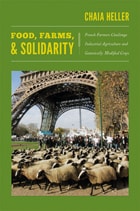
Food, Farms, and Solidarity
French Farmers Challenge Industrial Agriculture and Genetically Modified CropsChaia Heller
Duke University Press, 2012
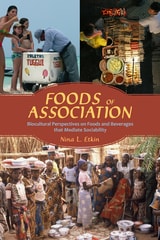
Foods of Association
Biocultural Perspectives on Foods and Beverages that Mediate SociabilityNina L. Etkin
University of Arizona Press, 2009
This fascinating book examines the biology and culture of foods and beverages that are consumed in communal settings, with special attention to their health implications. Nina Etkin covers a wealth of topics, exploring human evolutionary history, the Slow Food movement, ritual and ceremonial foods, caffeinated beverages, spices, the street foods of Hawaii and northern Nigeria, and even bottled water. Her work is framed by a biocultural perspective that considers both the physiological implications of consumption and the cultural construction and circulation of foods. For Etkin, the foods and beverages we consume are simultaneously “biodynamic substances and cultural objects.”
The book begins with a look at the social eating habits of our primate relatives and discusses our evolutionary adaptations. It then offers a history of social foods in the era of European expansion, with a focus on spices and “caffeinated cordials.” (Of course, there were some powerful physiological consequences of eating foods brought home by returning explorers, and those are considered too—along with consequences for native peoples.) From there, the book describes “street food,” which is always served in communal settings. Etkin then scrutinizes ceremonial foods and beverages, and considers their pharmacological effects as well. Her extensive examination concludes by assessing the biological and cultural implications of bottled water.
While intended primarily for scholars, this enticing book serves up a tantalizing smorgasbord of food for thought.
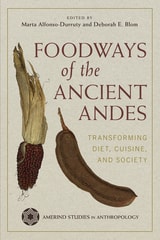
Foodways of the Ancient Andes
Transforming Diet, Cuisine, and SocietyMarta P Alfonso-Durruty
University of Arizona Press, 2023
Exploring the multiple social, ecological, cultural, and ontological dimensions of food in the Andean past, the contributors of Foodways of the Ancient Andes offer diverse theoretical perspectives and methodological approaches that reveal the richness, sophistication, and ingenuity of Andean peoples. The volume spans time periods and localities in the Andean region to reveal how food is intertwined with multiple aspects of the human experience, from production and consumption to ideology and sociopolitical organization. It illustrates the Andean peoples’ resilience in the face of challenges brought about by food scarcity and environmental change. Chapters dissect the intersection of food, power, and status in early states and empires; examine the impact of food during times of conflict and instability; and illuminate how sacred and high-status foods contributed to the building of the Inka Empire.
Featuring forty-six contributors from ten countries, the chapters employ new analytical methods, integrating different food data and interdisciplinary research to show that food can provide not only simple nutrition but also a multitude of strategies, social and political relationships, and ontologies that are otherwise invisible in the archaeological record.
Contributors
Aleksa K. Alaica
Sonia Alconini
Marta Alfonso-Durruty
Sarah I. Baitzel
Véronique Bélisle
Carolina Belmar
Carrie Anne Berryman
Matthew E. Biwer
Deborah E. Blom
Tamara L. Bray
Matthew T. Brown
Maria C. Bruno
José M. Capriles
Katherine L. Chiou
Susan D. deFrance
Lucia M. Diaz
Richard P. Evershed
Maureen E. Folk
Alexandra Greenwald
Chris Harrod
Christine A. Hastorf
Iain Kendall
Kelly J. Knudson
BrieAnna S. Langlie
Cecilia Lemp
Petrus le Roux
Marcos Martinez
Anahí Maturana-Fernández
Weston C. McCool
Melanie J. Miller
Nicole Misarti
Flavia Morello
Patricia Quiñonez Cuzcano
Omar Reyes
Arturo F. Rivera Infante
Manuel San Román
Francisca Santana-Sagredo
Beth K. Scaffidi
Augusto Tessone
Andrés Troncoso
Tiffiny A. Tung
Mauricio Uribe
Natasha P. Vang
Sadie L. Weber
Kurt M. Wilson
Michelle E. Young

Footnotes
On ShoesEdited by Shari Benstock and Suzanne Ferriss
Rutgers University Press, 2002
Footprints of Hopi History
Hopihiniwtiput Kukveni'atEdited by Leigh J. Kuwanwisiwma, T. J. Ferguson, and Chip Colwell
University of Arizona Press, 2018
The fourteen chapters in Footprints of Hopi History: Hopihiniwtiput Kukveni’at focus on these Hopi footprints as they are understood through a variety of research techniques, including archaeology, ethnography, documentary history, plant genetics, and educational outreach. The editors and contributors offer fresh and innovative perspectives on Hopi archaeology and history, and demonstrate how one tribe has significantly advanced knowledge about its past through collaboration with archaeologists and cultural anthropologists.
The book features managerial uses of research, cultural landscape theory, use of GIS in research, archaeological interpretations of social identity and immigration, analysis of corn genetics, heritage education of youth, and research of oral traditions and documentary history. Footprints of Hopi History highlights the Hopi tribe’s leadership in sustained efforts to create bridges between tribal goals and anthropology, forging a path for others to follow.
Contributors
E. Charles Adams
Wesley Bernardini
Joëlle Clark
Chip Colwell
T. J. Ferguson
Dennis Gilpin
Kelley Hays-Gilpin
George Gumerman IV
Saul L. Hedquist
Maren P. Hopkins
Stewart B. Koyiyumptewa
Leigh J. Kuwanwisiwma
Lee Wayne Lomayestewa
Patrick D. Lyons
Shirley Powell
Gregson Schachner
Thomas E. Sheridan
Mark D. Varien
Laurie D. Webster
Peter M. Whiteley
Michael Yeatts

For Money and Elders
Ritual, Sovereignty, and the Sacred in KenyaRobert W. Blunt
University of Chicago Press, 2019
In For Money and Elders, Robert W. Blunt addresses these questions by turning to the political, economic, and religious signs in circulation in Kenya today. He examines how Kenyans attempt to make sense of political instability caused by the uncertainty of authority behind everything from currency to title deeds. When the symbolic order of a society is up for grabs, he shows, violence may seem like an expedient way to enforce the authority of signs. Drawing on fertile concepts of sovereignty, elderhood, counterfeiting, acephaly, and more, Blunt explores phenomena as diverse as the destabilization of ritual “oaths,” public anxieties about Satanism with the advent of democratic reform, and mistrust of official signs. The result is a fascinating glimpse into Kenya’s past and present and a penetrating reflection on meanings of violence in African politics.

For the Birds
Protecting Wildlife through the Naturalist GazeElizabeth Cherry
Rutgers University Press, 2019
One in five people in the United States is a birdwatcher, yet the popular understanding of birders reduces them to comical stereotypes, obsessives who only have eyes for their favorite rare species. In real life, however, birders are paying equally close attention to the world around them, observing the devastating effects of climate change and mass extinction, while discovering small pockets of biodiversity in unexpected places.
For the Birds offers readers a glimpse behind the binoculars and reveals birders to be important allies in the larger environmental conservation movement. With a wealth of data from in-depth interviews and over three years of observing birders in the field, environmental sociologist Elizabeth Cherry argues that birders learn to watch wildlife in ways that make an invaluable contribution to contemporary conservation efforts. She investigates how birders develop a “naturalist gaze” that enables them to understand the shared ecosystem that intertwines humans and wild animals, an appreciation that motivates them to participate in citizen science projects and wildlife conservation.
For the Public Good
Women, Health, and Equity in Rural IndiaPatricia Antoniello
Vanderbilt University Press, 2020
In one generation, village health workers have progressed from child brides and sequestered wives to knowledgeable health practitioners, valued teachers, and community leaders. Through collective efforts, CRHP has reduced infant and maternal mortality, eliminated some endemic health problems, and advanced economic well-being in villages with women's cooperative lending groups.
This book describes how the recognition and elimination of embedded inequalities—in this case caste discrimination, gender subordination, and class injustice—promote health and well-being and collaboratively establish the public good.

Force Of Prejudice
On Racism and Its DoublesPierre-Andre Taguieff
University of Minnesota Press, 2001
Can humanity escape segregating behavior or master the tendency to exclusion? Where does the force of prejudice come from? How might one conceive the philosophical foundations of an effective antiracism? Pursuing these questions, Pierre-André Taguieff puts forward a powerful thesis: that racism has evolved from an argument about races, naturalizing inequality between "biologically" defined groups on the basis of fear of the other, to an argument about cultures, naturalizing historical differences and justifying exclusion. Correspondingly, he shows how antiracism must adopt the strategy that fits the variety of racism it opposes.
Looking at racial and racist theories one by one and then at their antiracist counterparts, Taguieff traces an intellectual genealogy of differentialist and inegalitarian ways of thinking. Already viewed as an essential work of reference in France, The Force of Prejudice is an invaluable tool for identifying and understanding both racism and its antidote in our day.
Forcing Divorce
Intimate and Non-Intimate Coercive Control in Marriage DissolutionPéter Berta
Rutgers University Press, 2027
Forcing Divorce seeks to contribute to a more nuanced understanding of what possible causes, motivations, constraints, and dynamics may lie behind forced divorce cases in various social and political contexts. This volume points out that coercive and controlling behavior plays a key role in forcing divorce and provides a detailed insight into the diverse set of strategies and tactics of marital coercive control, as well as the negative emotional, psychological, social, economic, legal , and physical consequences of their use. The chapters reveal that marital coercive control can develop not only in cases of forced divorce related to intimate partnerships, but also in non-intimate, large-scale social contexts, such as the relationship between the state and its citizens, or between religious leaders and their followers. They also highlight why contextual pressure is significant and how it operates, and why it is useful to distinguish between conducive contexts (soft contextual pressure) and coercive contexts (hard contextual pressure) in order to gain a more thorough understanding of the dynamics of restriction of individual marital choice and consent in cases of forced divorce.

Foreign Devils on the Silk Road
The Search for the Lost Cities and Treasures of Chinese Central AsiaPeter Hopkirk
University of Massachusetts Press, 1980

Foreign News
Exploring the World of Foreign CorrespondentsUlf Hannerz
University of Chicago Press, 2003
Hannerz draws on extensive interviews with correspondents in cities as diverse as Jerusalem, Tokyo, and Johannesburg. He shows not only how different story lines evolve in different correspondent beats, but also how the correspondents' home country and personal interests influence the stories they write. Reporting can go well beyond coverage of a specific event, using the news instead to reveal deeper insights into a country or a people to link them to long-term trends or structures of global significance. Ultimately, Hannerz argues that both anthropologists and foreign correspondents can learn from each other in their efforts to educate a public about events and peoples far beyond our homelands.
The result of nearly a decade's worth of work, Foreign News is a provocative study that will appeal to both general readers and those concerned with globalization.

Foreign Objects
Rethinking Indigenous Consumption in American ArchaeologyEdited by Craig N. Cipolla
University of Arizona Press, 2017
Brass tinklers and pendants. Owl effigies, copper kettles, crucifixes with blue glass stones. What do they have in common? The answer spans thousands of years and a multitude of peoples and places, and reveals how people made sense of their world as they collected and used the objects they encountered.
Foreign Objects demonstrates the breadth and vibrancy of contemporary archaeology. Taking a broad set of archaeological cases from across the Americas, editor Craig N. Cipolla and the volume contributors explore how indigenous communities have socialized foreign objects over time. The book critiques the artificial divide between prehistory and history, studying instead the long-term indigenous histories of consumption, a term typically associated with capitalism and modern-world colonialism.
The case studies range from “exotic” stone tools used millennia ago to nineteenth-century patent medicines made and marketed by an Indian doctress. Foreign Objects focuses on how indigenous groups and foreign objects became entangled with one another in myriad ways. The book explores how the framework of consumption can shed new light on trade, exchange, materiality, and cultural production.
Contributors place foreign objects in the spotlight and offer a comparison of how this general class of material played a part in indigenous and colonial worlds. Each chapter illustrates how notions of consumption fit into their place in time and also delves into how foreign objects related to ideas of the body and personhood, how people used them to participate in political and spiritual worlds, and how they presented new ways of enduring or resisting European colonialism and capitalism. Foreign Objects is a critical look at consumption through the lens of indigenous knowledge and archaeological theory.
Contributors:
Matthew A. Beaudoin
Lewis Borck
Kathleen J. Bragdon
Craig N. Cipolla
Charles R. Cobb
John L. Creese
Diana DiPaolo Loren
Martin Gallivan
Meghan C. L. Howey
Barbara J. Mills
Maxine Oland
Lee M. Panich
Patricia E. Rubertone
Christopher Shephard
Keith D. Stephenson

Forensics of Capital
Michael Ralph
University of Chicago Press, 2015
Ralph examines Senegal’s crucial and pragmatic decisions related to its development and how they garnered international favor, decisions such as its opposition to Soviet involvement in African liberation—despite itself being a socialist state—or its support for the US-led war on terror—despite its population being predominately Muslim. He shows how such actions have given Senegal an inflated political and economic position and status as a highly credit-worthy nation even as its domestic economy has faltered. Exploring these and many other aspects of Senegal’s political economy and its interface with the international community, Ralph demonstrates that the international reputation of any nation—not just Senegal—is based on deep structural biases.
Forest Lost
Producing Green Capitalism in the Brazilian AmazonMaron E. Greenleaf
Duke University Press, 2024
Forever Familias
Race, Gender, and Indigeneity in Peruvian MormonismJason Palmer
University of Illinois Press, 2024
Peruvian members of the Church of Jesus Christ of Latter-day Saints face the dilemma of embracing their faith while finding space to nourish their Peruvianness. Jason Palmer draws on eight years of fieldwork to provide an on-the-ground look at the relationship between Peruvian Saints and the racial and gender complexities of the contemporary Church.
Peruvian Saints discovered that the foundational ideas of kinship and religion ceased being distinct categories in their faith. At the same time, they came to see that LDS rituals and reenactments placed coloniality in opposition to the Peruvians’ indigenous roots and family against the more expansive Peruvian idea of familia. In part one, Palmer explores how Peruvian Saints resolved the first clash by creating the idea of a new pioneer indigeneity that rejected victimhood in favor of subtle engagements with power. Part two illuminates the work performed by Peruvian Saints as they stretched the Anglo Church’s model of the nuclear family to encompass familia.

Foreword to The Past
A Cultural History of the Baltic PeopleEndre Bojtar
Central European University Press, 2000
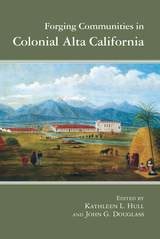
Forging Communities in Colonial Alta California
Edited by Kathleen L. Hull and John G. Douglass
University of Arizona Press, 2018
Forging Communities in Colonial Alta California reorients understandings of this dynamic period, which challenged both Native and non-Native people to reimagine communities not only in different places and spaces but also in novel forms and practices. The contributors draw on archaeological and historical archival sources to analyze the generative processes and nature of communities of belonging in the face of rapid demographic change and perceived or enforced difference.
Contributors provide important historical background on the effects that colonialism, missions, and lives lived beyond mission walls had on Indigenous settlement, marriage patterns, trade, and interactions. They also show the agency with which Indigenous peoples make their own decisions as they construct and reconstruct their communities. With nine different case studies and an insightful epilogue, this book offers analyses that can be applied broadly across the Americas, deepening our understanding of colonialism and community.
Contributors:
Julienne Bernard
James F. Brooks
John Dietler
Stella D’Oro
John G. Douglass
John Ellison
Glenn Farris
Heather Gibson
Kathleen L. Hull
Linda Hylkema
John R. Johnson
Kent G. Lightfoot
Lee M. Panich
Sarah Peelo
Seetha N. Reddy
David W. Robinson
Tsim D. Schneider
Christina Spellman
Benjamin Vargas
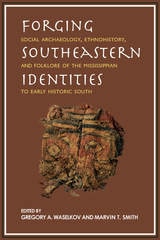
Forging Southeastern Identities
Social Archaeology, Ethnohistory, and Folklore of the Mississippian to Early Historic SouthGregory A. Waselkov
University of Alabama Press, 2017
Forging Southeastern Identities explores the many ways archaeologists and ethnohistorians define and trace the origins of Native Americans’ collective social identity.
Forging Southeastern Identities: Social Archaeology and Ethnohistory of the Mississippian to Early Historic South, a groundbreaking collection of ten essays, covers a broad expanse of time—from the ninth to the nineteenth centuries—and focuses on a common theme of identity. These essays represent the various methods used by esteemed scholars today to study how Native Americans in the distant past created new social identities when old ideas of the self were challenged by changes in circumstance or by historical contingencies.
Archaeologists, anthropologists, and folklorists working in the Southeast have always recognized the region’s social diversity; indeed, the central purpose of these disciplines is to study peoples overlooked by the mainstream. Yet the ability to define and trace the origins of a collective social identity—the means by which individuals or groups align themselves, always in contrast to others—has proven to be an elusive goal. Here, editors Gregory A. Waselkov and Marvin T. Smith champion the relational identification and categorical identification processes, taken from sociological theory, as effective analytical tools.
Taking up the challenge, the contributors have deployed an eclectic range of approaches to establish and inform an overarching theme of identity. Some investigate shell gorgets, textiles, shell trade, infrastructure, specific sites, or plant usage. Others focus on the edges of the Mississippian world or examine colonial encounters between Europeans and native peoples. A final chapter considers the adaptive malleability of historical legend in the telling and hearing of slave narratives.

Forjando Patria
Pro-NacionalismoManuel Gamio
University Press of Colorado, 2026
Armstrong-Fumero's translation allows readers to develop a more nuanced understanding of this foundational work, which is often misrepresented in contemporary critical analyses. As much about national identity as anthropology, this text gives Anglophone readers access to a particular set of topics that have been mentioned extensively in secondary literature but are rarely discussed with a sense of their original context. Forjando Patria also reveals the many textual ambiguities that can lend themselves to different interpretations.
The book highlights the history and development of Mexican anthropology and archaeology at a time when scholars in the United States are increasingly recognizing the importance of cross-cultural collaboration with their Mexican colleagues. It will be of interest to anthropologists and archaeologists studying the region, as well as those involved in the history of the discipline.

Formations of Ritual
Colonial and Anthropological Discourses on the Sinhala YaktovilDavid Scott
University of Minnesota Press, 1994
Formations of Ritual was first published in 1994. Minnesota Archive Editions uses digital technology to make long-unavailable books once again accessible, and are published unaltered from the original University of Minnesota Press editions.
Yaktovil is an elaborate healing ceremony employed by Sinhalas in Sri Lanka to dispel the effects of the eyesight of a pantheon of malevolent supernatural figures known as yakku. Anthropology, traditionally, has articulated this ceremony with the concept metaphor of "demonism." Yet, as David Scott demonstrates in this provocative book, this use of "demonism" reveals more about the discourse of anthropology than it does about the ritual itself. His investigation of yaktovil and yakku within the Sinhala cosmology is also an inquiry into the ways in which anthropology, by ignoring the discursive history of the rituals, religions, and relationships it seeks to describe, tends to reproduce ideological-often, specifically colonial-objects.
To do this, Scott describes the discursive apparatus through which yakku are positioned in the moral universe of Sinhala, traces the appearance of yakku and yaktovil in Western discourse, evaluates the contribution of these figures and this ceremony in anthropology, and attempts to show how the larger anthropology of Buddhism, in which the anthropology of yaktovil is embedded, might be reconfigured. Finally, he offers a rereading of the ritual in terms of the historically selfconscious approach he proposes.The result points to a major rethinking of the historical nature not only of the objects, but also of the concepts through which they are constructed in anthropological discourse.David Scott teaches in the Department of Anthropology at the University of Chicago.